1–1 of 1
Explore Dwarf Angelfish for sale in Singapore from marine aquarium shops, reef specialists and saltwater livestock sellers on FishyHub. Compare Coral Beauty, Flame, Lemonpeel, Bicolor and other Dwarf Angelfish by size, colour, temperament and seller.
Dwarf Angelfish are compact marine angelfish known for vivid colour, active swimming and strong personalities. They are popular in reef and fish-only aquariums, but reef compatibility can vary by species and individual fish.
Dwarf Angelfish are smaller members of the marine angelfish group and are especially popular with aquarists who want the colour and character of an angelfish without keeping the very largest species.
Exact adult size, temperament and reef compatibility still vary considerably, so species-level research remains important.
Dwarf Angelfish come in a wide range of colours and patterns, with each species offering different behaviour and aquarium requirements.
Coral Beauty Angelfish are among the most popular Dwarf Angelfish and are known for deep blue, purple and orange coloration. They are active grazers and can become attractive centrepiece fish in medium-sized marine aquariums.
Flame Angelfish are prized for intense red-orange coloration with contrasting dark vertical markings. Their bold colour makes them especially popular in reef displays.
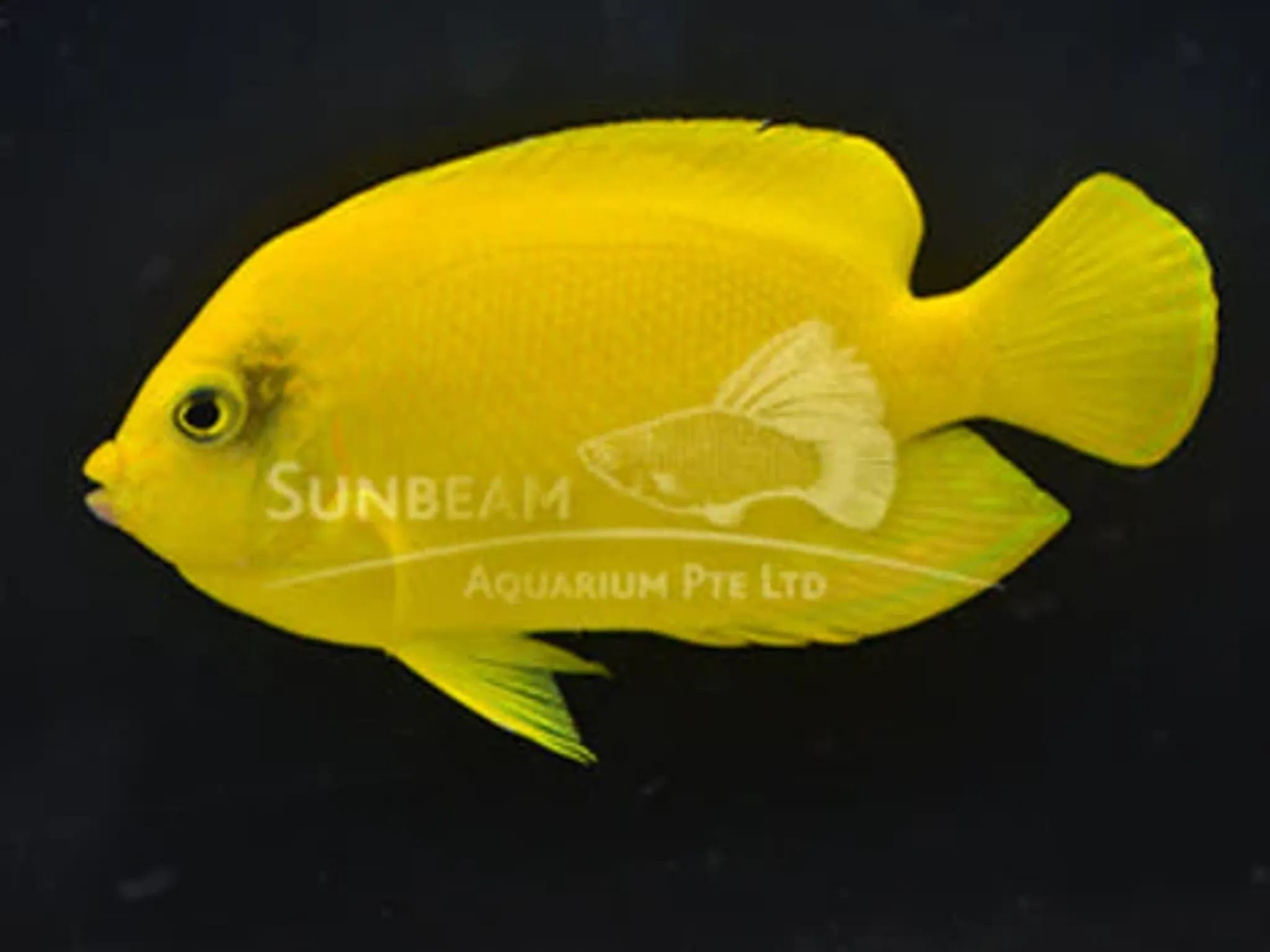
Lemonpeel Angelfish are striking yellow fish with contrasting blue accents around the eyes and fins. They can be territorial and should be chosen carefully for community reef tanks.
Bicolor Angelfish have a distinctive two-tone appearance, usually combining yellow and deep blue. They are visually striking but may be more demanding than some other Dwarf Angelfish.
Cherub Angelfish are among the smaller Dwarf Angelfish and are known for deep blue bodies with bright yellow or orange facial markings.
Other species may include Multicolor Angelfish, Fisher's Angelfish and other Centropyge species depending on seller availability.
Dwarf Angelfish are smaller marine angelfish, many of which belong to the genus Centropyge.
They are generally more compact than large marine Angelfish, but still need proper swimming space, rockwork and stable marine conditions.
Dwarf Angelfish remain smaller and are often better suited to medium-sized marine aquariums than very large Angelfish species.
Large marine Angelfish generally require much more swimming room and can become substantially more dominant as adults.
Adult size varies by species, but Dwarf Angelfish are generally smaller than full-sized marine Angelfish.
Aquarium planning should still be based on mature dimensions rather than the size of a juvenile fish at the shop.
Dwarf Angelfish benefit from aquariums with enough swimming room and substantial rockwork for grazing, shelter and territory.
Appropriate tank size depends on species, adult size, temperament and whether multiple territorial fish are being kept together.
Dwarf Angelfish are commonly kept in reef aquariums, but they are not always completely coral-safe.
Some individuals may nip at coral tissue, polyps, clams or other sessile invertebrates, while others coexist with them for long periods without obvious problems.
Many are best described as reef-compatible with caution rather than universally reef safe.
Risk varies by species and individual behaviour, so reef keepers should be prepared to monitor the fish after introduction.
Some Dwarf Angelfish may ignore corals, while others may repeatedly nip at fleshy polyps or other reef animals.
Well-fed fish may still show natural grazing or nipping behaviour, so feeding alone cannot guarantee coral safety.
Tridacnid clams can attract the attention of some Dwarf Angelfish.
If keeping clams, monitor mantle nipping carefully after introducing an Angelfish.
Dwarf Angelfish and Clownfish can often coexist in appropriately sized marine aquariums.
Both can be territorial, so enough space and well-defined areas within the rockwork can help reduce conflict.
Dwarf Angelfish and Tangs are commonly combined in larger reef aquariums.
They usually have different body shapes and feeding styles, although aggression can still occur in smaller or crowded systems.
Many Wrasses can coexist with Dwarf Angelfish when temperament and aquarium size are suitable.
Avoid combining very timid fish with unusually aggressive Angelfish individuals.
Gobies often occupy lower areas or specific burrows, while Dwarf Angelfish spend more time moving through rockwork and open water.
This difference in habitat use can make them suitable companions in many marine community tanks.
Many Dwarf Angelfish can coexist with larger ornamental shrimp.
Very small crustaceans or newly introduced invertebrates may be investigated, so compatibility should still be observed.
Keeping multiple Dwarf Angelfish can be challenging because many species are territorial toward similar fish.
Larger aquariums, species choice and careful introduction can improve the chances of success, but aggression remains possible.
Dwarf Angelfish can be assertive and territorial, especially toward similarly shaped or closely related fish.
Temperament varies between species and individuals, with some fish much more peaceful than others.
Rockwork is especially important for Dwarf Angelfish because it provides shelter, territory and natural grazing surfaces.
A mix of caves, passages and open swimming areas creates a more useful environment than a completely open aquarium.
Dwarf Angelfish are generally omnivorous grazers and consume a mix of algae, small invertebrates and other foods in the wild.
Aquarium diets can include suitable marine pellets, frozen foods, algae-based foods and other species-appropriate items.
Variety is useful because Dwarf Angelfish naturally spend much of the day grazing and searching rock surfaces for food.
Established live rock can complement prepared feeding but should not be assumed to provide complete nutrition by itself.
Many Dwarf Angelfish graze algae and other material from live rock.
They may contribute to grazing activity but should not be purchased solely as an algae-control solution.
Dwarf Angelfish benefit from stable marine water conditions and consistent aquarium maintenance.
Avoid abrupt fluctuations in temperature, salinity and overall water chemistry.
Effective biological and mechanical filtration helps maintain stable water quality in marine Angelfish systems.
Protein skimming and good circulation may also form part of the overall filtration strategy depending on aquarium size and stocking.
They generally handle moderate reef-style water movement well.
The aquarium should still provide sheltered areas where fish can rest without being exposed to strong current continuously.
Despite the word “dwarf”, most Dwarf Angelfish are not ideal for very small nano aquariums.
They are active territorial fish that benefit from meaningful swimming room and developed rockwork.
Quarantine gives aquarists an opportunity to observe feeding behaviour, body condition and health before introducing a new fish into an established marine display.
It can be especially helpful in reef tanks where catching a fish later may be difficult.
Introduce new Dwarf Angelfish carefully to avoid abrupt changes in temperature and salinity.
Also consider aggression from established fish when selecting the timing and method of introduction.
When comparing Dwarf Angelfish for sale, look for:
A healthy feeding response is particularly useful to observe because some newly imported marine Angelfish can initially be reluctant to accept prepared foods.
Some species can be suitable for aquarists with basic marine experience and a stable, established aquarium.
Their territorial nature, dietary needs and uncertain reef compatibility make them more demanding than some beginner marine fish such as selected captive-bred Clownfish.
Dwarf Angelfish prices in Singapore vary according to species, size, colour, origin, rarity and seller.
Common species such as Coral Beauty and other less frequently available Dwarf Angelfish can differ substantially in price.
FishyHub brings Dwarf Angelfish listings from marine aquarium shops, reef specialists and saltwater livestock sellers across Singapore together in one marketplace, making it easier to compare available species from multiple sources.
When comparing Dwarf Angelfish listings, consider:
Availability changes regularly, particularly for uncommon Dwarf Angelfish species and premium specimens.
Dwarf Angelfish are smaller marine Angelfish, many belonging to the genus Centropyge.
They are often considered reef-compatible with caution because some individuals may nip corals, clams or other sessile invertebrates.
Coral Beauty, Flame, Lemonpeel and Bicolor Angelfish are among the best-known aquarium species.
Many can, provided the aquarium offers enough space for both species to establish territories.
They commonly can in suitably sized marine aquariums, although individual aggression should still be monitored.
Sometimes, but many are territorial toward similar Angelfish, so species choice and aquarium size are important.
They generally eat a varied omnivorous diet that can include algae-based foods, marine pellets and suitable frozen foods.
Most benefit from more space than a very small nano aquarium provides, despite their smaller adult size compared with large marine Angelfish.
Explore Dwarf Angelfish for sale on FishyHub and compare Coral Beauty, Flame, Lemonpeel, Bicolor and other marine Angelfish from saltwater aquarium sellers across Singapore. Compare species, size, temperament, reef compatibility and price to find a suitable Dwarf Angelfish for your marine aquarium.