1–8 of 8
Explore Damselfish for sale in Singapore from marine aquarium shops, reef specialists and saltwater livestock sellers on FishyHub. Compare Blue Damselfish, Yellowtail Damselfish, Azure Damselfish, Domino Damselfish and other species by size, colour, temperament and seller.
Damselfish are colourful, active marine fish that are popular in reef and fish-only aquariums. Many species are hardy and relatively easy to feed, but temperament varies widely, with some becoming highly territorial as they mature.
Damselfish are among the most widely kept marine aquarium fish because of their bright colours, compact size and energetic behaviour.
They are often recommended to newer marine aquarists, but species choice matters because some remain fairly peaceful while others become dominant and territorial.
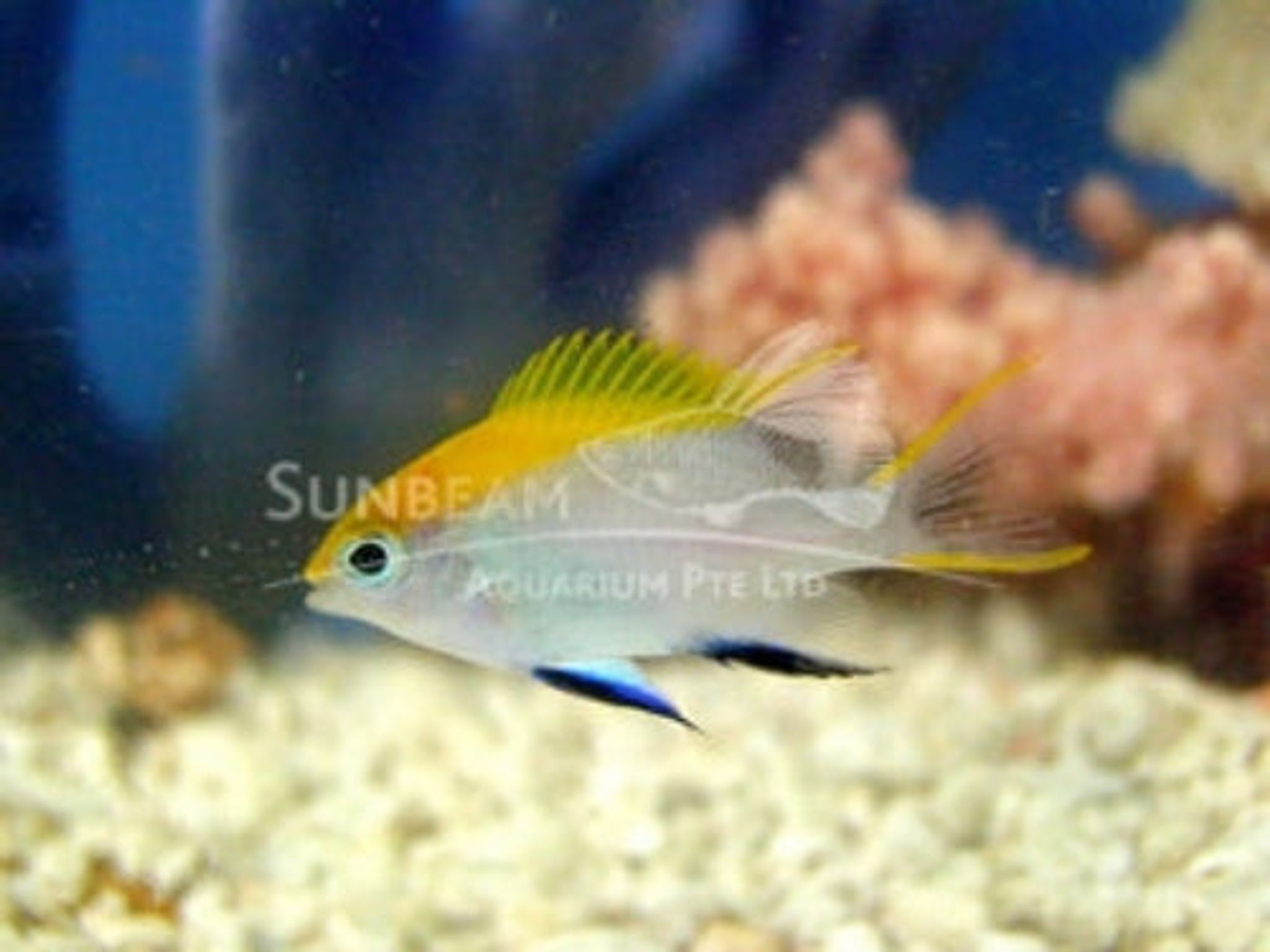
Damselfish come in a wide range of colours and temperaments, so exact species identification is important before purchase.
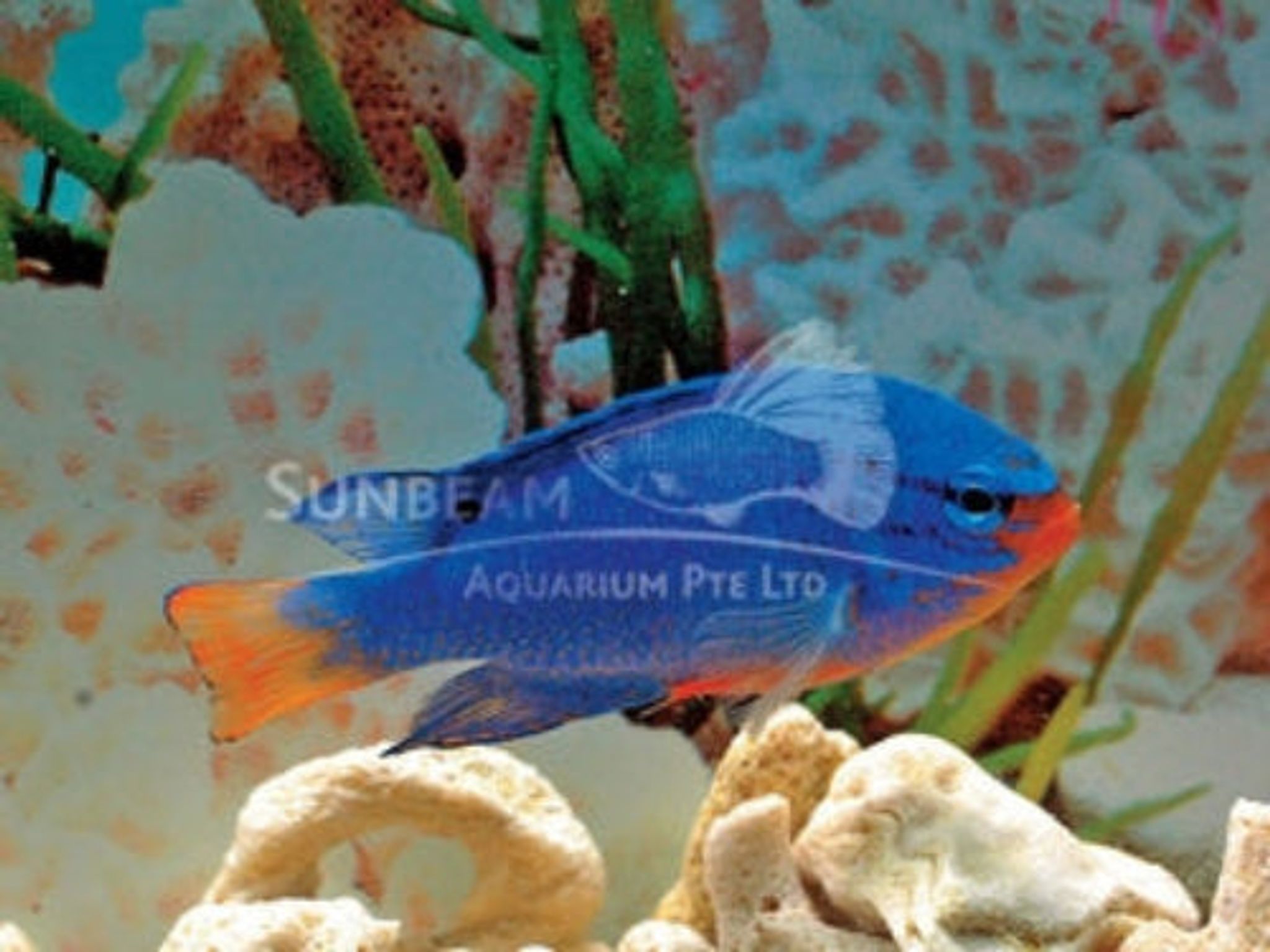
Blue Damselfish are known for vivid electric-blue coloration and active swimming. They are attractive, hardy fish but may become territorial as they mature.
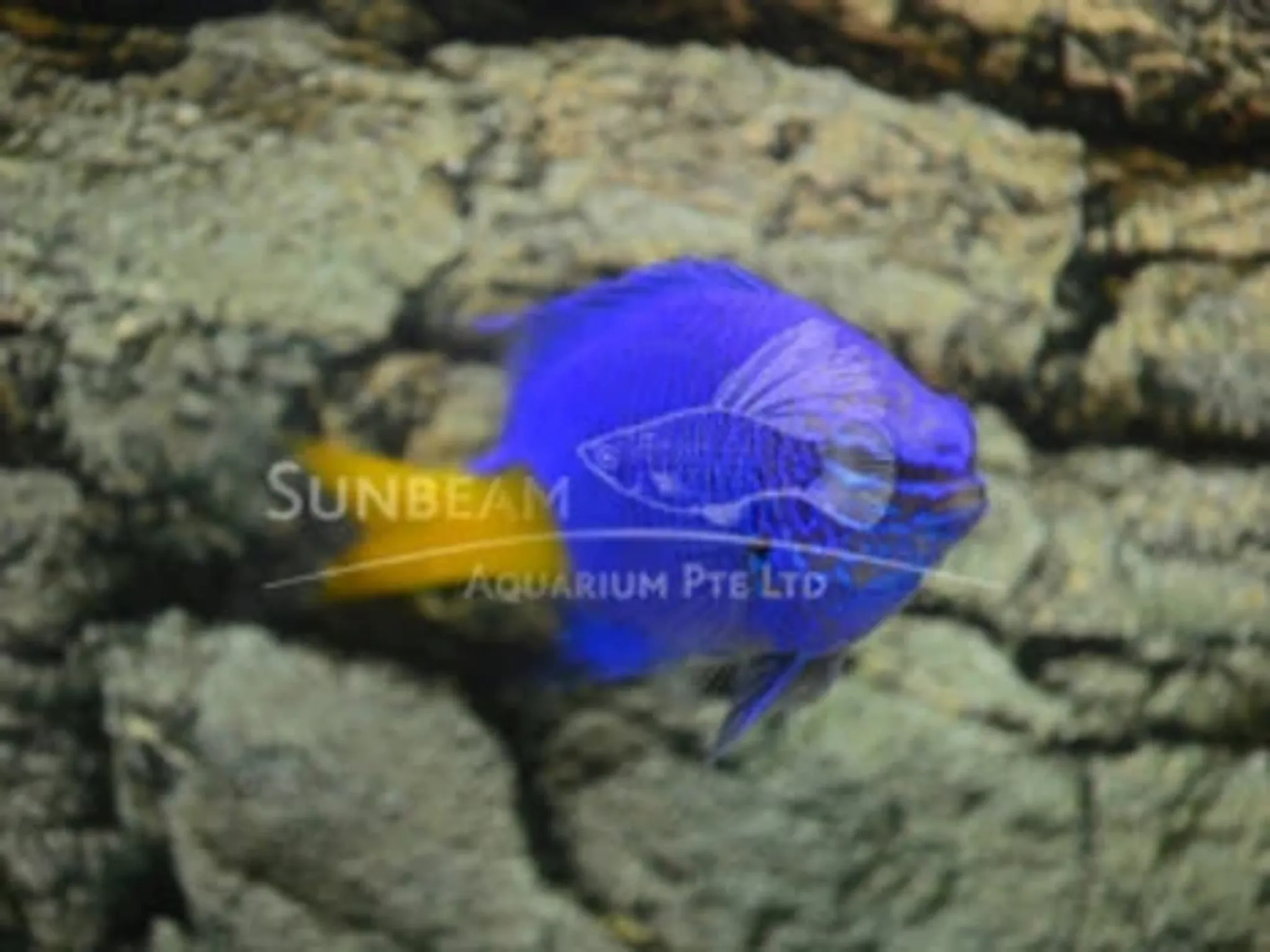
Yellowtail Damselfish combine a bright blue body with a contrasting yellow tail. They are often considered one of the more manageable Damselfish for community reef tanks.
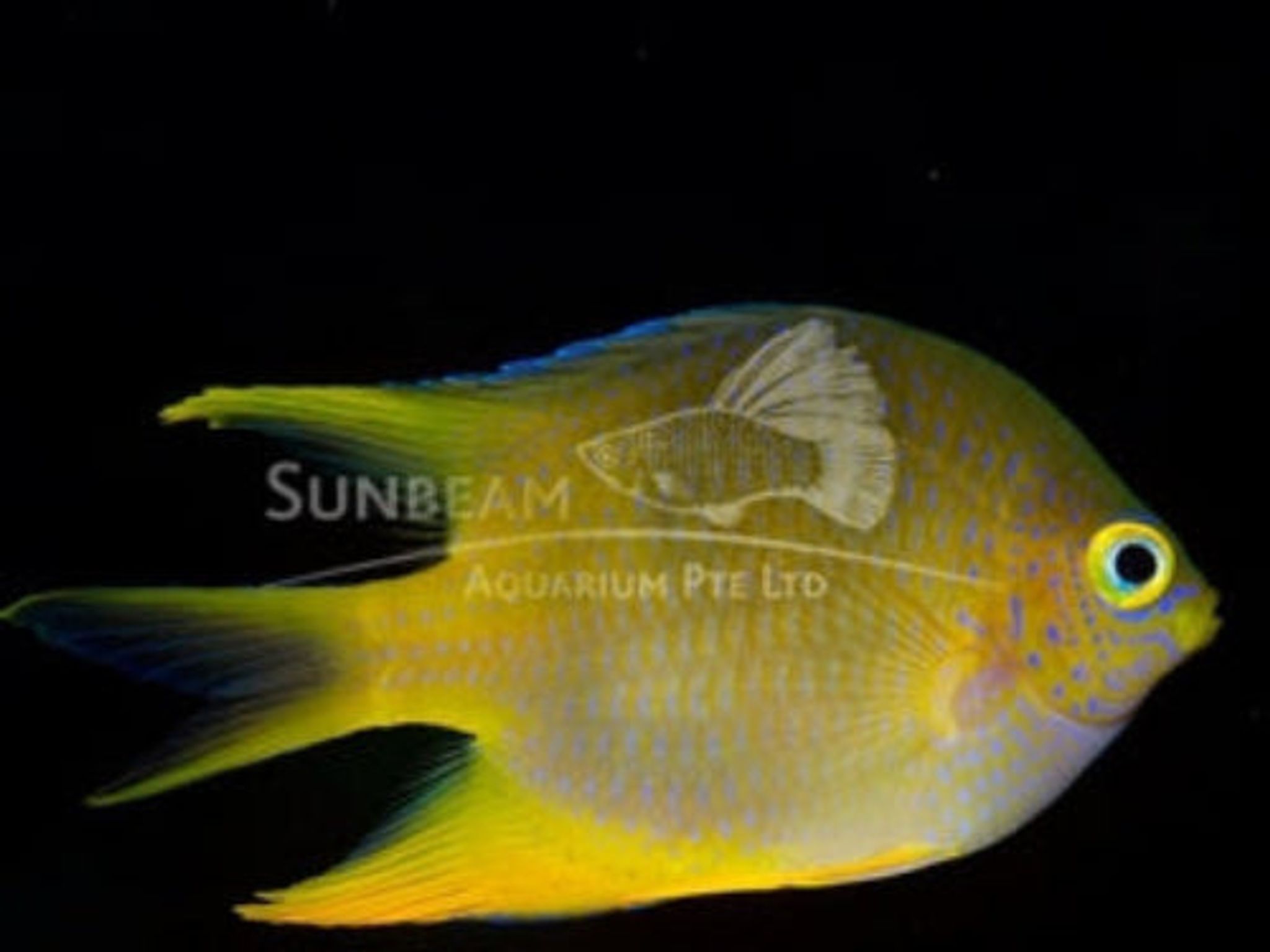
Azure Damselfish display striking blue and yellow coloration and are popular for adding movement and contrast to reef aquariums.
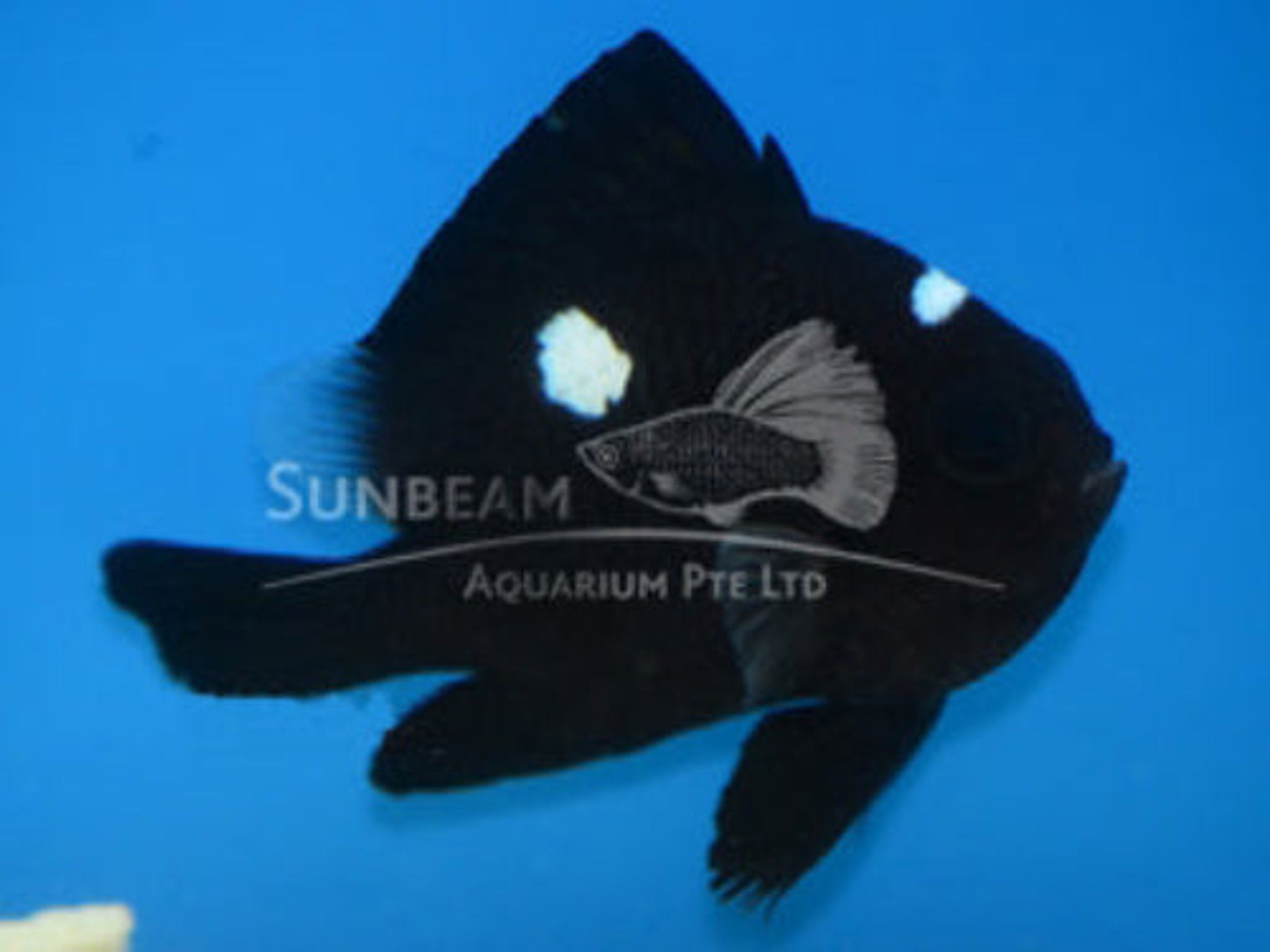
Domino Damselfish are recognisable by their dark bodies with bright white spots. Juveniles are especially striking, but adult fish can become quite territorial.
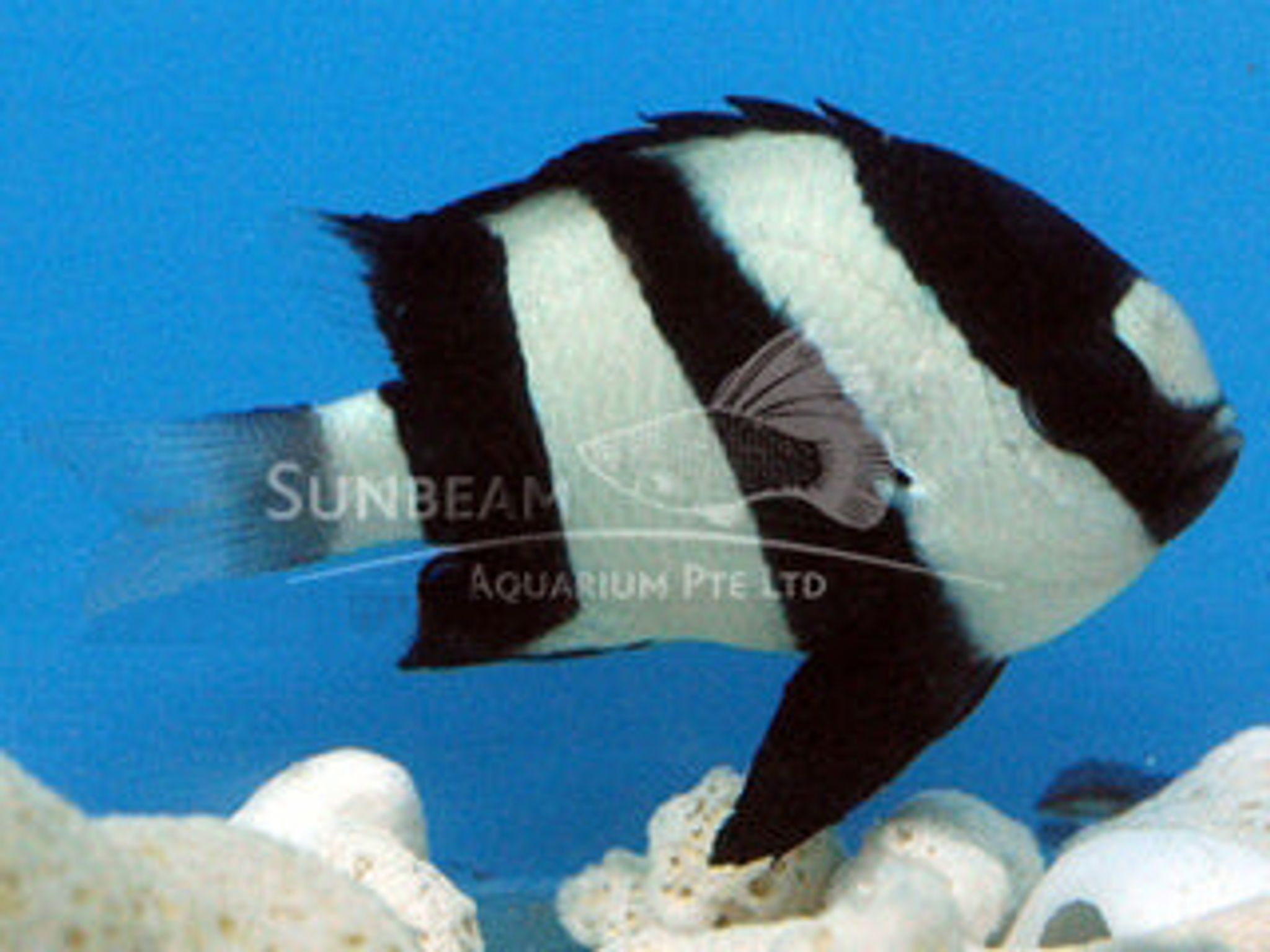
Three Stripe Damselfish have bold black-and-white vertical bands and a compact body shape. They can be assertive and may defend rockwork aggressively in smaller aquariums.
Chromis are closely related to other Damselfish and are often kept for their schooling or shoaling appearance. Some species are more peaceful than classic territorial Damselfish.
Other species may include Talbot's Damselfish, Rolland's Damselfish and other colourful reef species depending on seller availability.
Many commonly kept Damselfish remain relatively compact compared with Tangs or large Angelfish.
Adult size still varies by species, and even small fish can require meaningful territory and swimming room.
Suitable tank size depends on species, adult size, group size and aggression level.
More territorial species need enough rockwork and space to reduce constant conflict with tankmates.
Many Damselfish are popular reef fish because they are colourful, active and generally do not consume corals.
Their main challenge is often aggression toward other fish rather than coral compatibility.
Many Damselfish are generally considered reef compatible.
They usually coexist with corals, but individual behaviour and territoriality should still be considered.
Some Damselfish can be surprisingly aggressive for their size.
Territory defence often increases as fish mature, and established individuals may chase newly introduced tankmates.
Some species, including selected Yellowtail, Azure and Chromis-type fish, are often considered more manageable than highly territorial Damselfish.
Even so, individual temperament and tank size still matter.
Damselfish and Clownfish are closely related and can both be territorial.
They may coexist in suitably sized aquariums, but conflict can occur if both groups defend the same area of rockwork.
Damselfish and Tangs can often coexist because of their very different body shapes and swimming patterns.
Very territorial Damselfish may still chase larger fish from a chosen area of rockwork.
Many Wrasses can coexist with Damselfish when both species have compatible temperaments.
Avoid pairing timid Wrasses with highly aggressive established Damselfish in small tanks.
Gobies can sometimes coexist with Damselfish because they occupy different parts of the aquarium.
Small timid Gobies may still be harassed by aggressive Damselfish, especially if they share nearby shelter.
Dwarf Angelfish and Damselfish may coexist in reef aquariums with enough space and rockwork.
Both can defend territories, so stocking order and available space can influence aggression.
Many Damselfish can coexist with larger ornamental marine shrimp.
Small crustaceans may still be investigated, so compatibility should be checked by species and shrimp size.
Most commonly kept Damselfish can coexist with corals.
Some may defend territories around coral colonies or rockwork, but they are generally not purchased as coral predators.
Some Damselfish can be kept in groups, while others become increasingly aggressive toward their own kind.
Success depends on species, group structure, aquarium size and the amount of available territory.
Chromis are often chosen for group displays in reef aquariums.
Group dynamics can change over time, and dominant individuals may still chase weaker fish, so long-term behaviour should be monitored.
Rockwork provides shelter, visual barriers and territorial boundaries for Damselfish.
Multiple caves and line-of-sight breaks can reduce constant interaction between territorial fish.
Many Damselfish are omnivorous and accept a wide range of appropriately sized marine foods.
Their diet may include planktonic foods, algae-based items, pellets and suitable frozen foods depending on species.
Damselfish are usually enthusiastic feeders and adapt readily to prepared foods.
Feed appropriately sized portions and ensure timid tankmates are not consistently outcompeted by more aggressive individuals.
Damselfish benefit from stable marine water conditions and consistent aquarium maintenance.
Their reputation for hardiness should not be used as a reason to expose them to poor water quality or unstable conditions.
Effective biological and mechanical filtration can maintain good water quality in Damselfish aquariums.
Protein skimming and good circulation may also be used depending on the overall marine system and stocking level.
Most Damselfish handle moderate reef-style circulation well.
Provide sheltered areas around rockwork so fish can rest without remaining in strong current continuously.
Damselfish can jump when startled or chased.
A suitable aquarium cover can help reduce accidental escapes.
Many Damselfish are substrate spawners, with males preparing and defending nesting areas.
Territorial aggression may increase during breeding behaviour, especially toward fish approaching the nest.
Some Damselfish change colour and temperament as they mature.
A brightly coloured peaceful-looking juvenile may become darker or more territorial as an adult, so research mature appearance and behaviour before purchase.
Quarantine can help aquarists observe feeding behaviour, body condition and health before introducing Damselfish to an established marine aquarium.
It also gives the fish time to recover from transport without immediately facing territorial tankmates.
Introduce new Damselfish carefully to avoid abrupt changes in temperature and salinity.
Consider how existing territorial fish may react before releasing a new individual into the display.
When comparing Damselfish for sale, look for:
Strong colour is attractive, but health, behaviour and body condition are more important than colour intensity alone.
Many Damselfish are hardy and adapt well to aquarium foods, making them suitable for newer marine aquarists.
The main challenge is aggression, so choosing a relatively peaceful species is often more important than simply choosing the hardiest fish.
Damselfish prices in Singapore vary according to species, size, colour, rarity, origin and seller.
Common species and unusual premium Damselfish can differ substantially in price depending on availability.
FishyHub brings Damselfish listings from marine aquarium shops, reef specialists and saltwater livestock sellers across Singapore together in one marketplace, making it easier to compare available species from multiple sources.
When comparing Damselfish listings, consider:
Availability changes regularly, particularly for less common Damselfish and Chromis species.
Many Damselfish are generally reef compatible and do not normally feed on corals.
Some are highly territorial, while others are comparatively peaceful, so exact species matters.
Some Yellowtail, Azure and Chromis-type species are often considered more manageable than highly territorial varieties.
They sometimes can, but both groups may defend territories, especially in smaller aquariums.
Many can, provided the aquarium is appropriately sized and territorial behaviour is monitored.
Many can coexist with larger ornamental marine shrimp, although very small crustaceans may still be investigated.
Many are omnivorous and accept suitable marine pellets, frozen foods and algae-based foods.
Many are hardy and easy to feed, but aggressive species can create long-term stocking problems, so temperament should be considered carefully.
Explore Damselfish for sale on FishyHub and compare Blue, Yellowtail, Azure, Domino, Three Stripe, Chromis and other marine species from saltwater aquarium sellers across Singapore. Compare species, size, colour, temperament and price to find suitable Damselfish for your reef aquarium.