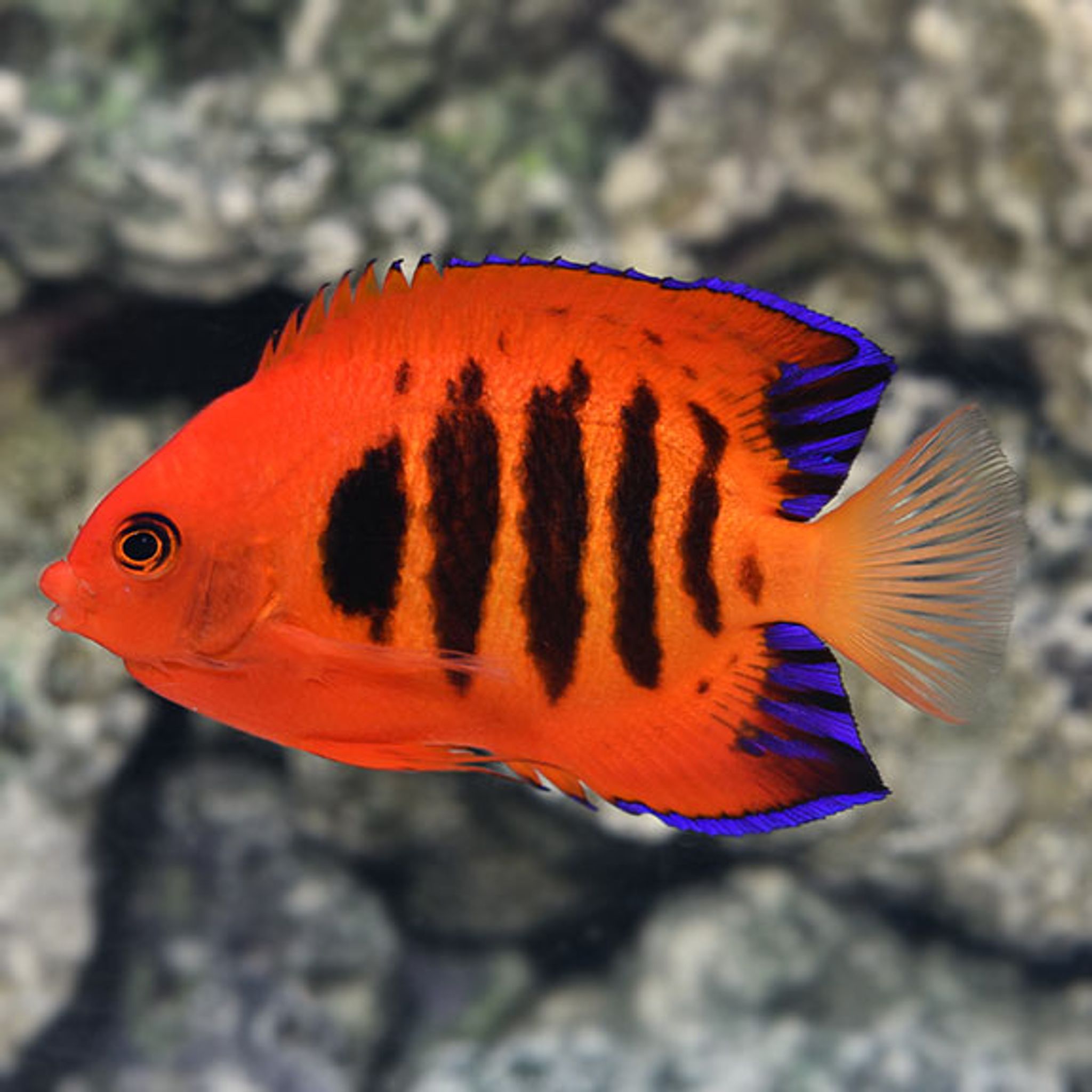
How to Feed Flame Angelfish: Foods, Frequency and Common Feeding Problems
Flame Angelfish (Centropyge loricula) are constant grazers, not once-a-day eaters, so feeding them well means matching that natural browsing habit with the right mix of foods and small, frequent meals. This guide covers exactly what to feed, how often, and how to troubleshoot the two complaints owners run into most: a new fish that won't eat, and an established fish that starts picking at corals or clams.
Why Feeding Strategy Starts With Wild Behavior
In the wild, Flame Angelfish spend the day picking at filamentous algae, biofilm, and tiny invertebrates coating the reef rock. They rarely stop to eat one large meal — they graze almost continuously between short bursts of activity. This single fact explains most of the feeding advice below: small, frequent portions and an algae-heavy diet mimic what the fish is built to do, while one big daily feeding does not.
Because grazing is instinctive, a tank with mature live rock that already carries algae film and microfauna gives the fish something to pick at between meals. This lowers stress and reduces the odds that a bored or hungry fish turns its attention to coral polyps instead.
Tank Setup Matters as Much as the Food Bowl
Feeding success is tied closely to the tank itself. Sources vary on minimum size — some allow a single specimen in a 30-gallon (114 L) tank, while others recommend 70+ gallons (265+ L) — but 55 gallons (208 L) is a sensible baseline for long-term health, swimming room, and enough rockwork to support natural grazing. Go larger if the fish will share space with corals, clams, or other angelfish-shaped tankmates.
Key setup points:
- Use established rock, ideally several months to over a year old, so it already carries algae film and pods.
- Include plenty of caves and crevices for both grazing surfaces and a sense of security.
- Avoid adding a Flame Angelfish to a brand-new, biologically immature tank — with nothing to browse between meals, stress and even starvation risk rise in the first few weeks.
What to Feed: Building a Complete Diet
A Flame Angelfish's diet should lean toward algae and plant matter but still include protein. Relying on just one food type is the single biggest feeding mistake owners make.
| Food type | Purpose | How often |
|---|---|---|
| Marine flake or pellet formulated for angelfish/herbivores | Base nutrition, convenient daily staple | Part of every feeding |
| Nori or spirulina algae sheet, clipped to rock | Replicates natural algae grazing | Several times a week to daily |
| Frozen mysis and enriched brine shrimp | Protein and natural hunting behavior | 2–3 times a week |
| Frozen angelfish/herbivore blend (often contains sponge or algae) | Fills nutritional gaps flakes miss | 2–3 times a week |
| Live or frozen copepods | Enrichment and natural grazing stimulation | Occasional, not required |
Frozen and dry foods are widely available in ounce and pound-sized packages sized for home aquariums; you can browse a range of prepared and freeze-dried options in the Food & Supplements category to build out a rotation.
A Simple Weekly Rotation
Vague "give it variety" advice is hard to act on. A concrete weekly pattern works better:
- Monday, Wednesday, Friday: flake/pellet plus a nori clip
- Tuesday, Thursday: enriched frozen mysis or brine shrimp
- Saturday: frozen angelfish/herbivore blend
- Sunday: nori plus a light dose of live or frozen copepods if available
Rotate the exact days as convenient — the goal is that algae, flake, and meaty frozen food each show up multiple times a week rather than the fish getting the same single food day after day.
Vitamin and Appetite Enrichment
Soaking frozen food in a garlic-based or vitamin/HUFA supplement for a few minutes before feeding is a common way to boost color and stimulate appetite, particularly in new or stressed fish. Doing this once or twice a week during regular feeding is enough for an established, eating fish; new arrivals that are reluctant to eat can benefit from soaked food at nearly every offering until they settle in.
Feeding Frequency: How Often and How Much
Feed 2–3 small meals per day rather than one large feeding. This is a flexible range:
- Favor 3 smaller feedings for juvenile fish, smaller tanks, or picky eaters.
- 2 feedings are usually enough in well-established tanks with heavy natural algae growth for the fish to graze on between meals.
In every case, offer only what the fish (and any tankmates) can finish in 2–3 minutes. Overfeeding is a real and common problem — uneaten food fouls water quality and fuels nuisance algae outbreaks, which is counterproductive in a species you're already feeding algae to on purpose.
Checking Body Condition, Not Just Color
Color intensity is not the only feeding-adequacy signal. Look at the fish's profile from above or the side:
- A healthy, rounded belly just behind the head indicates adequate feeding.
- A pinched or concave area behind the head suggests the fish isn't getting enough food, is being outcompeted by tankmates, or has an underlying health issue.
Checking body shape weekly is a quick, objective way to catch a feeding problem before color loss becomes obvious.
Reef Safety: Will a Flame Angelfish Eat My Corals?
This is one of the most debated points about the species. Some sources call Flame Angelfish "reef safe with caution," while others describe them flatly as known coral and clam nippers best kept in fish-only or FOWLR (fish-only-with-live-rock) setups. The honest answer is that risk varies by individual fish and tends to run inversely with how well-fed and enriched its diet is.
Practical takeaways for reef keepers:
- Feed extra algae and meaty protein to reduce the odds of exploratory nipping.
- Watch zoanthids, LPS corals, and clam mantles most closely — these are the most commonly reported targets.
- Understand that nipping can persist even in a well-fed fish, since it is often exploratory picking rather than true hunger. A varied, algae-rich diet reduces but does not eliminate the risk.
If you're stocking a reef tank and want to compare other dwarf angelfish or lower-risk options, it's worth browsing the Dwarf Angelfish category and reading up on each species' documented coral interactions before adding one to a tank with prized LPS corals.
Where Flame Angelfish Rank Among Popular Saltwater Fish
Flame Angelfish are consistently praised for their color and manageable adult size, but they are generally considered a step up from true beginner fish like clownfish, damselfish, or gobies. That's because of three combined factors: their constant grazing needs, potential for coral aggression, and territorial behavior toward other angelfish or similarly shaped and colored fish.
In practical terms, Flame Angelfish sit in an intermediate difficulty tier, alongside other dwarf angelfish — more demanding than beginner community fish, but less demanding than the most specialized grazers like tangs or mandarin gobies, which require a constant supply of live pods to thrive.
Common Feeding Mistakes
- Flakes/pellets only, no algae. This leads to poor color, a thin body, and can push the fish toward picking at coral in search of missing nutrients.
- Adding the fish to an immature tank. No biofilm or algae to graze between meals raises stress and starvation risk in the first weeks.
- Overfeeding meaty frozen food while skipping vegetable matter. This creates a nutritional imbalance and adds unnecessary bioload.
- Ignoring tankmate dynamics. A Flame Angelfish that stops eating after a new fish is added may be getting bullied, or bullying another similarly shaped fish, which suppresses appetite in both directions.
Troubleshooting a New Fish That Won't Eat
New arrivals often refuse prepared food for the first several days. This is normal, not necessarily a sign of illness. Steps that help:
- House the fish in a quiet tank or quarantine setup with established live rock to graze on while it settles.
- Offer multiple food types in the same session — frozen mysis, nori, and live brine shrimp — rather than repeating one food it may be ignoring.
- Try dimmer lighting for the first few days to reduce stress.
- Target-feed with a turkey baster placed near the rock or cave where the fish is hiding.
- Hold off on adding aggressive or territorial tankmates until the fish is confirmed eating and settled.
Quarantine-stage feeding is really a different goal than long-term maintenance feeding: the priority early on is simply getting the fish to eat anything, then broadening the diet and settling into a routine once it's established.
When Appetite Loss Signals Something Other Than Diet
A sudden drop in appetite in a fish that has been eating well for weeks is often the first visible sign of a health or water quality issue rather than a food preference problem. Before changing the diet, check for:
- Signs of disease such as marine ich or head-and-lateral-line erosion (HLLE)
- Recent spikes in ammonia, nitrite, or nitrate
- New tankmates causing territorial stress
- A drop in temperature or salinity outside the normal range
Ruling these out first prevents chasing a feeding "fix" for a problem that isn't actually about food.
Frequently Asked Questions
What do Flame Angelfish eat in the wild?
In their natural habitat, Flame Angelfish graze almost continuously on filamentous algae, biofilm, and small invertebrates picked directly off rock surfaces throughout the day.
How often should I feed my Flame Angelfish?
Feed 2–3 small meals per day, offering only what the fish can finish in about 2–3 minutes. More frequent small feedings suit juveniles and picky eaters, while well-established tanks with heavy natural grazing can get by on the lower end of that range.
Will Flame Angelfish eat corals?
Some individuals nip at zoanthids, LPS corals, or clam mantles, though this varies by fish. The risk is reduced, but not eliminated, by feeding a varied diet rich in algae and meaty protein.
Can Flame Angelfish live on flakes alone?
Not ideally. Flakes alone typically lead to poor color and thinner body condition over time. They need regular algae or nori supplementation plus some meaty frozen food for complete nutrition.
My new Flame Angelfish won't eat — what do I do?
Offer several food types, let it graze on established live rock, dim the lights initially, and minimize stress from tankmates. Most healthy new arrivals start eating within several days with patience and multiple food options on offer.
What's the minimum tank size to properly feed and house one?
55 gallons (208 L) is a safe baseline, with mature rockwork providing grazing surfaces and hiding spots. Larger tanks are recommended if the fish will share space with corals or other angelfish-shaped tankmates.
Do Flame Angelfish need copepods or live food?
Not to the extent a mandarin goby does. Occasional live or frozen copepods add enrichment and encourage natural grazing behavior, but they aren't a required daily component of the diet.
Why is my Flame Angelfish losing color?
Color loss is often diet-related, typically a lack of algae or carotenoid-rich foods, but it can also signal stress, declining water quality, or underlying illness — so it's worth checking parameters alongside the diet.
Ready to add a Flame Angelfish or plan its tankmates? Browse current stock in Marine Fish on FishyHub to compare options for your setup.


