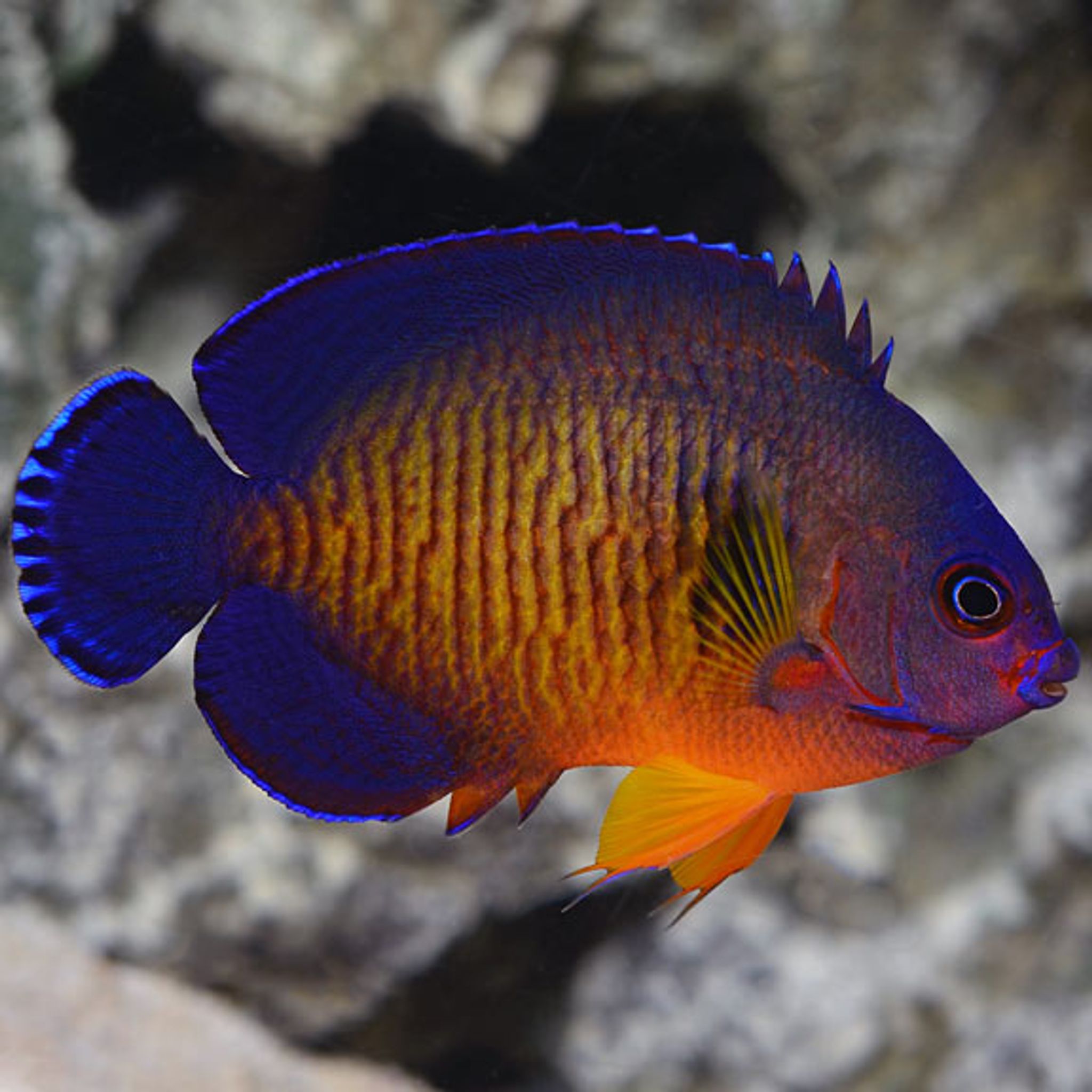
Is Coral Beauty Angelfish Reef Safe? Coral and Invertebrate Compatibility Explained
The short answer is "reef safe with caution": a Coral Beauty Angelfish (Centropyge bispinosa) is not a guaranteed coral-shredder, but it's also not risk-free like a goby or a blenny. Whether it leaves your corals alone depends on the individual fish, your tank's maturity, and how consistently you feed it. This guide breaks down exactly which corals and invertebrates are at risk, why the behavior happens, and how to stack the odds in your favor before you commit a coral colony to the same tank.
The Verdict: Moderate, Variable Risk — Not a Flat Yes or No
Care sheets disagree on this fish more than on most reef species. Some call the Coral Beauty "generally safe" because plenty of individuals never touch a coral in their lives. Others, including some big-box retail profiles, flatly warn that it's "prone to nip stony and soft corals" and isn't a good reef dweller at all.
Both camps are working from real anecdotes — they're just describing different outcomes of the same variable fish. The honest position is:
- Moderate risk, not zero risk. Coral Beauty sits well above naturally reef-safe fish (gobies, most wrasses, chromis) but below confirmed problem fish like large angelfish.
- Outcome depends on three levers you actually control: tank maturity, feeding frequency, and stocking order. Get those right and the odds shift heavily in your favor.
- Individual temperament is the wildcard. Two Coral Beauties from the same batch can behave completely differently — one may ignore corals for years, a sibling may pick relentlessly. There's no guarantee either way, which is why "reef safe with caution" — not a hands-off guarantee — is the right label.
Why Coral Beauties Nip Corals in the First Place
Coral Beauty Angelfish are dwarf (pygmy) angels that top out around 4 inches (10 cm). In the wild, they spend the day grazing algae film, sponges, and micro-fauna off rock and reef surfaces — constant, low-intensity browsing rather than dedicated coral predation.
The problem shows up in captivity when that natural grazing target is missing. A tank without an established algae film, encrusting sponge growth, and a healthy pod population gives the fish nothing to browse. Coral polyps and clam mantles are the next-closest thing texturally and nutritionally, so a hungry or under-stimulated Coral Beauty redirects its grazing instinct onto them. This is the root cause behind nearly every reported nipping incident — it's foraging behavior misapplied, not aggression.
Coral-Type Risk Breakdown
Not all corals carry the same risk. Treating "corals" as one category is where a lot of advice goes wrong — the actual risk varies sharply by coral type.
| Coral Type | Risk Level | Why |
|---|---|---|
| SPS (Acropora, Montipora, Seriatopora) | Low | Small, tightly-packed polyps aren't an attractive target; mature colonies shrug off occasional nips |
| Soft corals (zoanthids, palythoa, mushrooms, leathers) | Low-moderate | Hardy established colonies generally tolerate occasional picking; freshly placed frags are more vulnerable |
| LPS (acans, candy canes, hammers, torches, chalices) | High | Fleshy, exposed polyps are the most commonly reported target |
| Tridacnid clams | High | Mantle mucus is a natural food source for pygmy angels; repeated nipping can cause tissue damage or death |
A few practical notes on that table:
- SPS keepers generally have the easiest time. If your reef leans toward small-polyp stony corals, a Coral Beauty is one of the lower-risk fish choices for that setup.
- LPS is the category to watch most closely. Fleshy polyps that extend widely are simply easier and more rewarding for a grazing fish to sample repeatedly.
- Clams deserve a dedicated warning. Mantle nipping isn't a rare fluke — it's a documented, repeatable behavior. If you keep this fish, either forgo clams entirely or monitor mantle margins for tears on an ongoing basis.
- Newly placed frags of any type are at elevated risk regardless of overall category, because they haven't had time to heal and encrust into the rockwork.
Invertebrate Compatibility: Generally Good
Away from sessile coral and clam tissue, Coral Beauty Angelfish are typically peaceful tankmates. Cleaner shrimp, hermit crabs, and snails are not typical targets — the fish's grazing instinct is aimed at algae-like and mucus-coated surfaces, not mobile crustaceans or gastropods. If you're building a cleanup crew and reef inverts alongside marine fish and coral, this is one compatibility question you generally don't need to lose sleep over.
Tank Size and Setup Requirements
Recommendations across sources range from 50 to 70+ gallons. For a reef tank specifically, 70 gallons (265 L) is the safer minimum — more swimming space and more rockwork surface area for natural grazing measurably reduces the odds of coral-directed nipping. A 50-gallon (190 L) tank is sometimes cited as an absolute floor, but that number applies to keeping the fish alone, not to a mixed reef where you're also trying to protect corals and clams.
Tank Maturity Matters More Than Most Guides Admit
A reef system that has been running for 6 or more months develops a natural algae film, encrusting sponges, and a healthy pod population on the live rock. That background grazing layer satisfies the fish's foraging instinct without it ever needing to sample a coral. Dropping a Coral Beauty into a brand-new, low-biodiversity reef tank removes that outlet entirely and is one of the most reliable ways to trigger coral picking.
As a practical target: don't add a Coral Beauty to a reef tank until it has been established for at least 4–6 months and shows visible algae film and pod activity on the rock.
Feeding Strategy: The Single Biggest Risk-Reduction Factor
Underfeeding is the most repeated cause of coral picking across care guides, and frequent feeding is the most repeated fix. Build the diet around:
- Marine algae or spirulina — dried sheets or algae-based pellets
- Nori — clipped to rockwork for grazing
- High-quality angelfish or herbivore pellets/flake
- Meaty frozen foods — mysis and brine shrimp for protein variety
Feed 2–3 times daily, not once. A hungry Coral Beauty is a Coral Beauty looking for something to graze on between meals, and coral polyps are within easy reach. You can browse marine-safe frozen and freeze-dried options, along with the marine invertebrates that make good cleanup crew additions, when planning out a reef stocking list.
Stocking Order: Add the Angel Last
Sequence matters. Establish your corals and cleanup crew first, let them settle into the rockwork, and add the Coral Beauty last. A fish introduced into an already-furnished reef is less likely to treat new coral placements as territory or food-exploration targets than one that watches corals get added around it over time.
Best Angelfish for Reef Tanks: Where Coral Beauty Ranks
If you're choosing among angelfish for a reef, it helps to see the whole risk spectrum rather than evaluating one species in isolation.
| Risk Tier | Species | Notes |
|---|---|---|
| Lowest risk | Genicanthus (Watanabei, Lamarck's, Swallowtail) | Plankton feeders in the water column — don't graze reef surfaces at all |
| Moderate — acceptable with caution | Coral Beauty, Flame, Cherub, Fisher's (Half Black) | Variable by individual; manageable with good husbandry |
| High risk / avoid for reef | Lemonpeel, Bicolor, and large angels (Emperor, Queen, French, Regal) | Commonly flagged as more prone to sustained coral damage |
Dwarf Angelfish Reef Safety by Species
A quick reference for the Centropyge group as a whole:
- Coral Beauty — moderate risk; LPS polyps and clam mantles are the primary targets when it does pick.
- Flame Angel — similar moderate-risk tier to Coral Beauty; same feeding and tank-maturity precautions apply.
- Cherub (Pygmy) Angel — generally moderate-to-lower risk; small size limits the damage even when nipping occurs.
- Half Black / Fisher's Angel — moderate risk, comparable behavior pattern to Coral Beauty.
- Lemonpeel Angel — commonly flagged as higher-risk than Coral Beauty for coral nipping.
- Bicolor Angel — also flagged as higher-risk; more consistently reported targeting stony coral polyps.
If zero coral risk is the priority, a Genicanthus species is the closest thing to a truly reef-safe angelfish — though at 7–9 inches (18–23 cm) and needing 75–100+ gallon (285–380+ L) tanks, they're a bigger commitment in size, space, and cost. You can compare species options in the dwarf angelfish and large marine angelfish categories to see what fits your tank size.
Common Mistakes to Avoid
- Adding the fish to a brand-new, low-biodiversity reef tank. No algae film or pod population means no natural grazing outlet, which pushes it toward corals almost immediately.
- Feeding once a day, or skipping algae-based foods. Hunger drives opportunistic picking; fix it with 2–3 varied feedings daily.
- Adding fragile new coral frags right after introducing the angelfish. Frags haven't had time to heal and encrust, making them easy targets. Add corals first, angel last — and hold off on new frags for a while after the fish settles in.
- Assuming reputation alone guarantees safety. Ignoring early warning signs and hoping repeated nipping stops on its own rarely works out.
- Keeping clams without a fallback plan. Mantle nipping can escalate to serious tissue damage. Either skip clams with this species or commit to watching mantle margins closely.
- Confusing "reef safe with caution" with "won't cause problems." The caution label means active management is required — not a hands-off guarantee.
Monitoring and What to Do If Nipping Starts
Watch closely for the first several weeks after introducing the fish, and again after adding any new coral frags. Occasional exploratory nips early on are normal. The real warning sign is persistent, repeated targeting of the same coral or the same clam's mantle margin.
If that happens, work through a triage ladder rather than jumping straight to removing the fish:
- Increase feeding frequency and variety — add an extra feeding and more algae-based food.
- Rearrange rockwork or add a separate feeding station away from the targeted coral.
- Relocate the targeted coral to a different flow or light zone, away from the fish's usual foraging path.
- Remove the fish (or the coral) if damage continues despite the above.
A few setup details worth building into this plan from day one: consider a 2–4 week quarantine before adding any Coral Beauty to a display reef — it lets you confirm health and observe feeding response before risking corals. And if you're placing corals with nipping risk in mind, corals tucked into rockwork crevices tend to be more convenient, low-effort targets for a grazing fish than ones out in open, high-flow areas — placement is a quiet but useful lever. Finally, if you're already running other Centropyge species, be aware that territorial aggression between dwarf angels can compound stress and increase coral-picking behavior in a way single-angel tanks don't experience.
Frequently Asked Questions
Will a Coral Beauty Angelfish eat my corals?
Not guaranteed, but it may nip LPS corals, soft corals, and clam mantles — especially if it's underfed or the tank is young and lacks natural grazing surfaces. The risk is real but highly variable from one individual fish to the next.
Is Coral Beauty Angelfish safe with SPS corals?
Generally yes — SPS is the safest coral category for this fish. Small, tightly-packed polyps aren't an attractive target, and mature colonies tolerate occasional nips without lasting damage.
Can I keep a Coral Beauty with clams?
This is a higher-risk pairing. Mantle nipping is a documented behavior in this species, since clam mucus mirrors a natural food source. Keep clams with this fish only with dense feeding and close mantle-margin monitoring, or avoid the combination altogether.
What tank size do I need for a Coral Beauty in a reef tank?
70 gallons (265 L) or larger is the safer recommendation for a reef setup. Smaller tanks concentrate the fish and limit natural grazing area, which raises the odds of coral-directed nipping.
How do I reduce the chance my Coral Beauty nips corals?
Feed a varied diet 2–3 times daily including algae-based foods, stock a mature tank with natural grazing surfaces, add the fish last after corals and cleanup crew are established, and avoid introducing fragile new frags right after the fish arrives.
Are Coral Beauty Angelfish safe with shrimp, crabs, and snails?
Yes, generally peaceful. These invertebrates aren't typical targets — the fish's grazing instinct is directed at algae-like surfaces and sessile coral or clam tissue, not mobile crustaceans and snails.
What's a truly reef-safe alternative if I want zero coral risk?
Genicanthus angelfish (Watanabei, Lamarck's, Swallowtail) feed on plankton in the water column rather than grazing reef surfaces, making them the closest thing to a guaranteed reef-safe angelfish. The tradeoff is larger size and a bigger, pricier tank requirement.
How long should I watch a new Coral Beauty before trusting it around corals?
Give it several weeks minimum. Occasional exploratory nips early on are normal as the fish settles in, but repeated targeting of the same coral is the signal to start intervening rather than waiting it out.
Ready to plan your stocking list? Browse marine livestock and corals on FishyHub to compare coral types, dwarf angelfish, and reef invertebrates before you build out your tank.


