1–14 of 14
Shop marine Blennies online from saltwater aquarium stores and specialist sellers across the United States on FishyHub. Compare Lawnmower Blennies, Tailspot Blennies, Midas Blennies, Bicolor Blennies, Starry Blennies and other marine Blenny species by size, color, behavior and seller.
Blennies are popular saltwater aquarium fish known for expressive behavior, perching habits and strong personalities. Some species graze algae, while others feed more heavily on planktonic or animal-based foods, so exact species identification matters.
Buying Blennies online gives marine hobbyists access to a wider selection of species and sizes than may be available from a single local aquarium store.
Compare exact species, current size, diet, reef compatibility, seller information and shipping options before choosing a Blenny for your marine aquarium.
Popular Blennies in the marine aquarium hobby include:
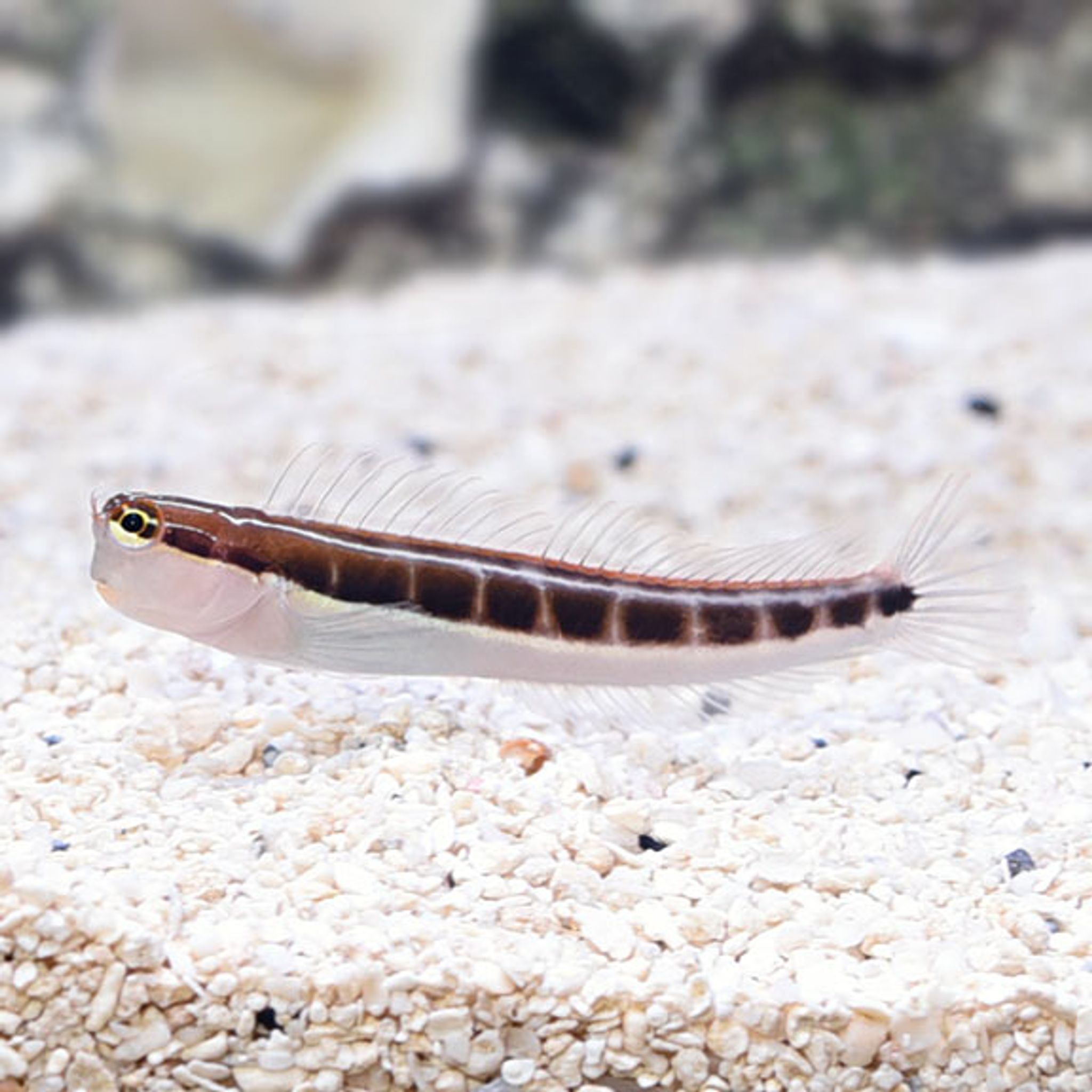
Lawnmower Blennies are among the best-known algae-grazing Blennies in the aquarium hobby.
They spend much of the day grazing rock surfaces and can help consume certain types of algae, but they still require suitable nutrition and should not be purchased as a guaranteed algae-control solution.
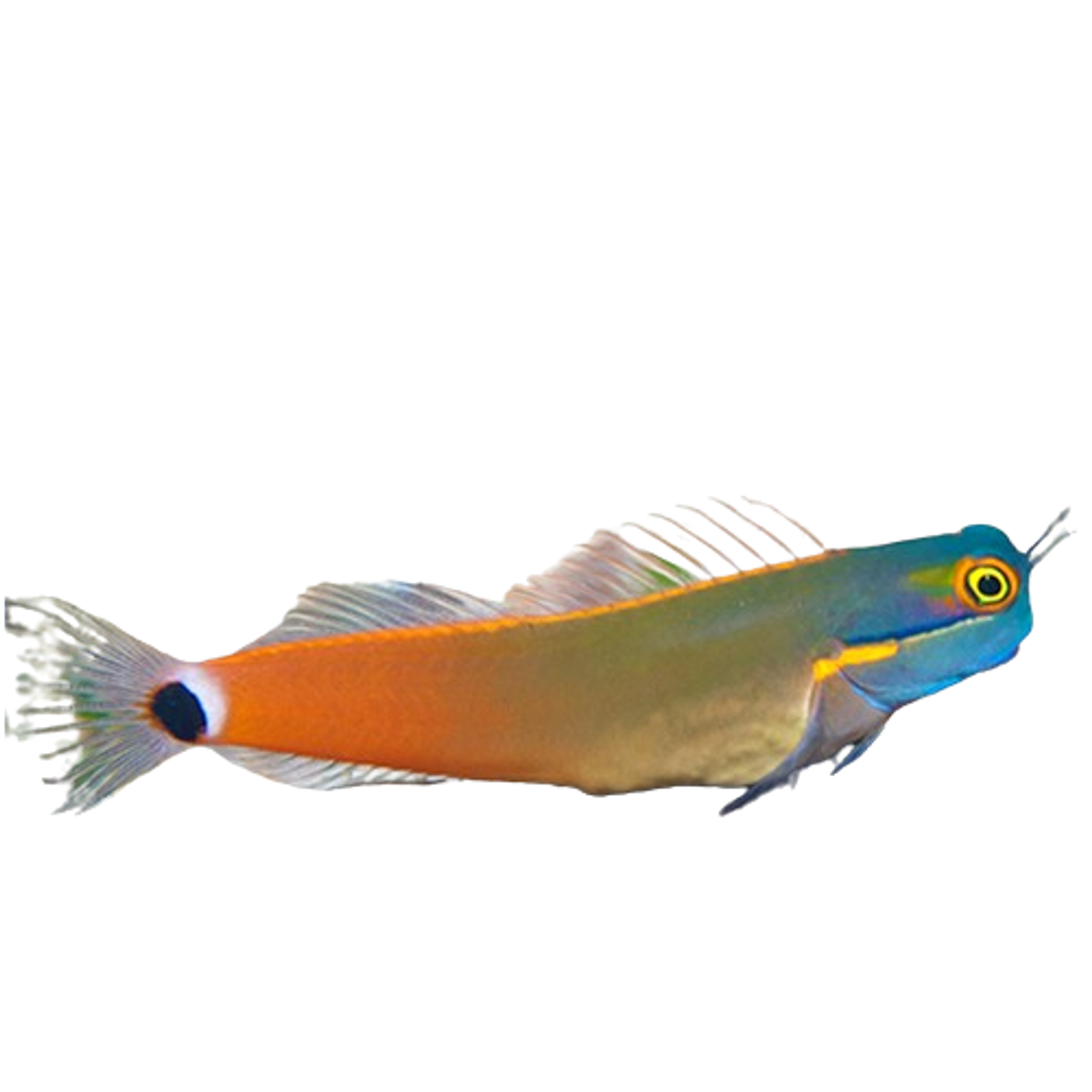
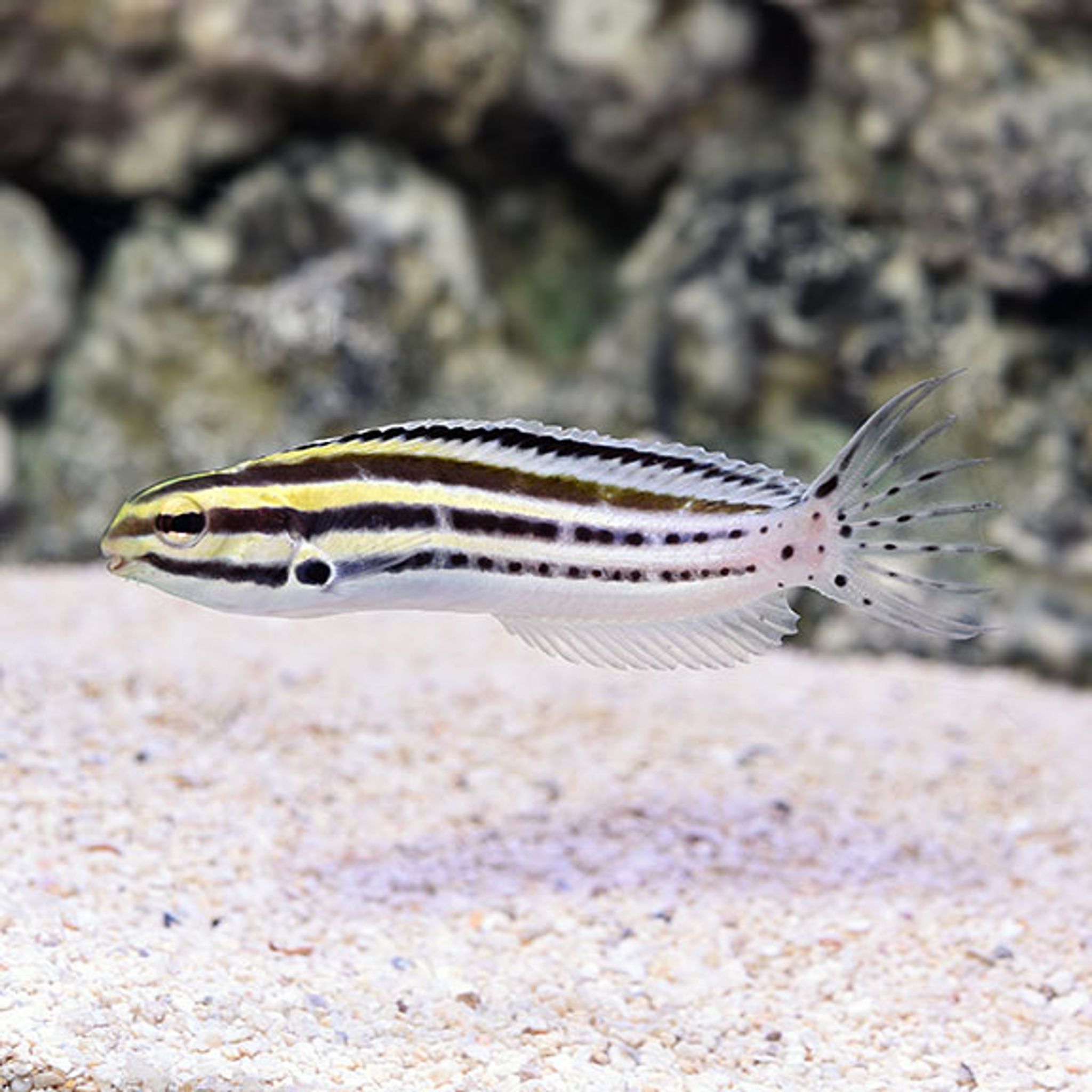
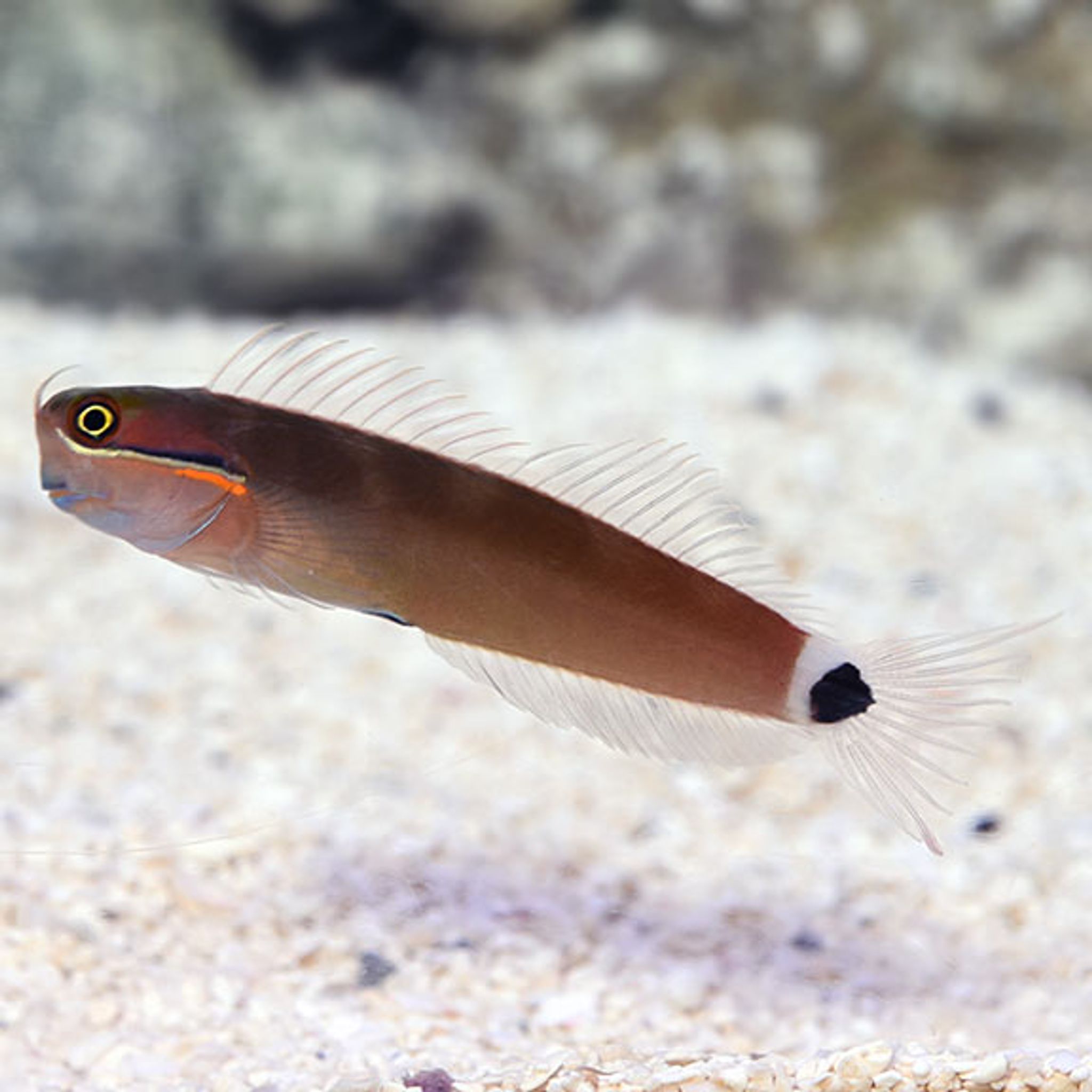
Tailspot Blennies are compact marine fish known for their small adult size, expressive faces and distinctive dark marking near the tail.
Their manageable size and generally peaceful nature make them popular for smaller reef aquariums with suitable rockwork.
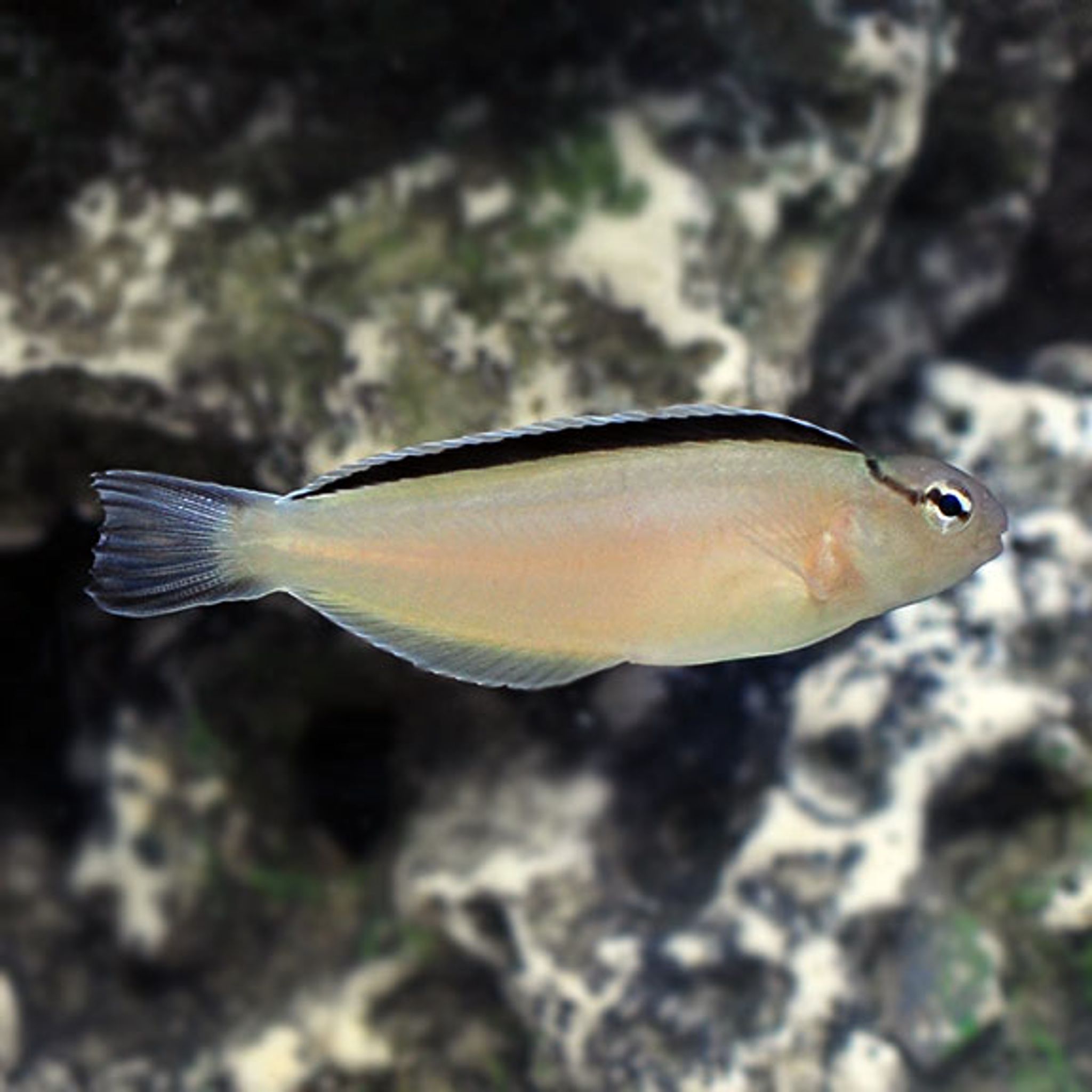
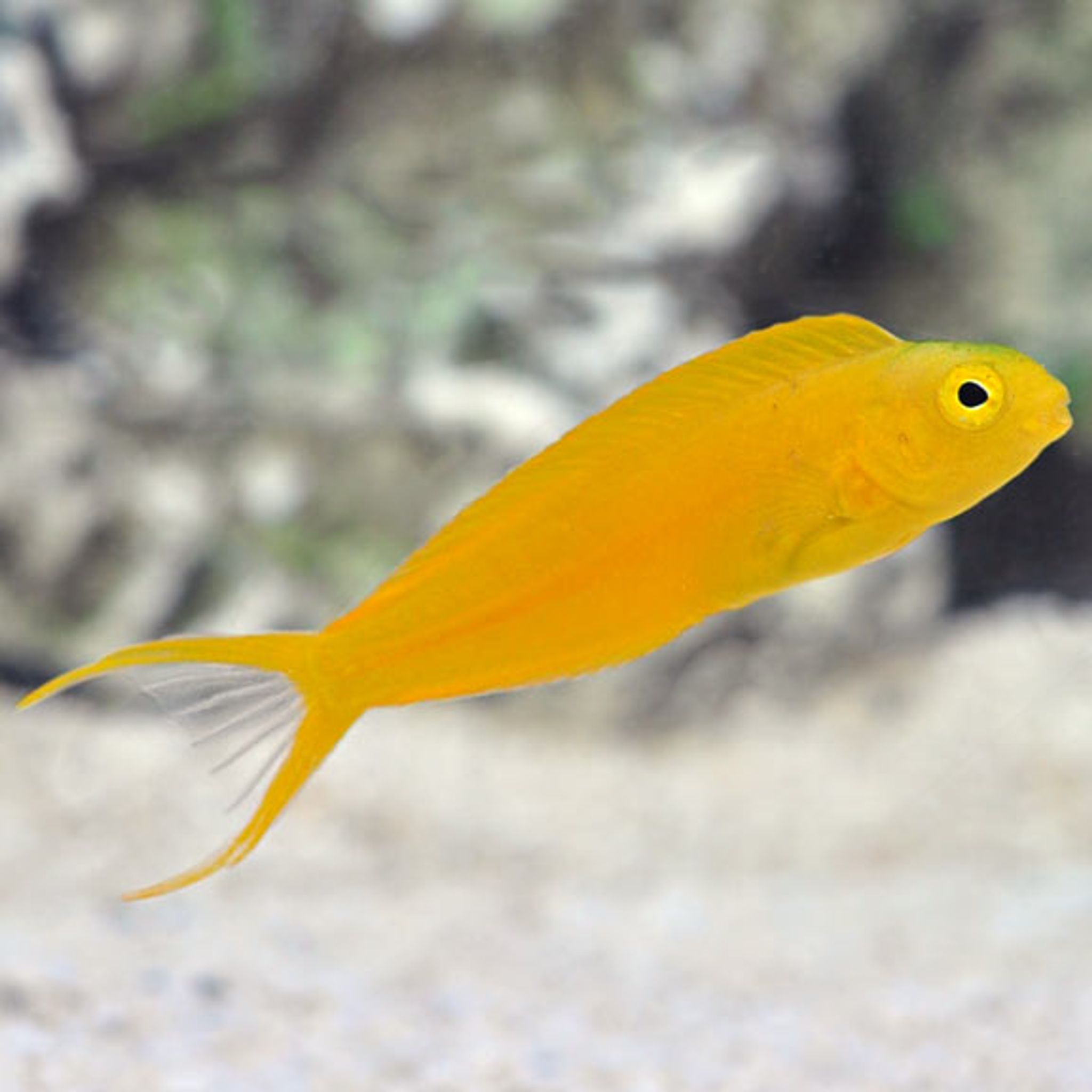
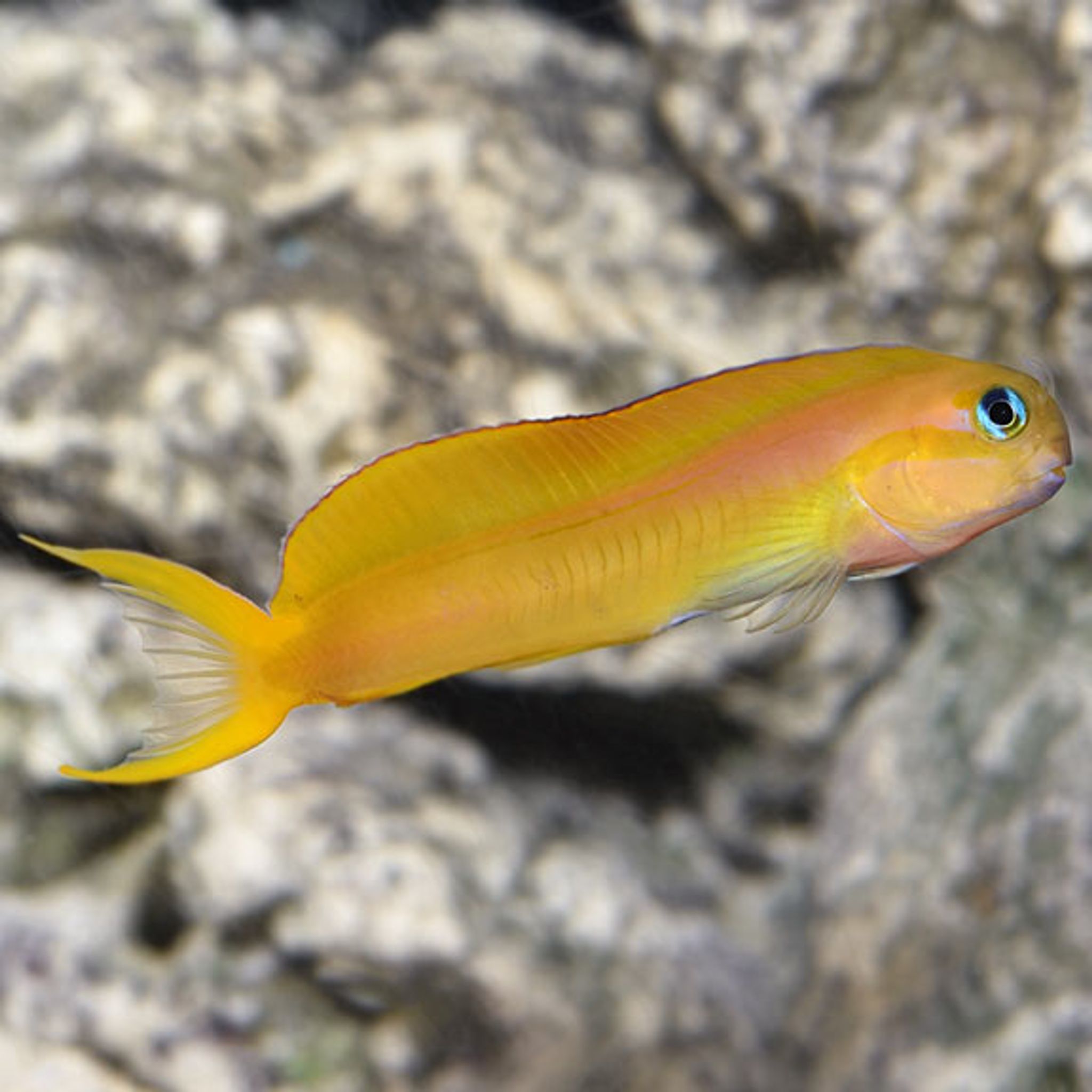
Midas Blennies are bright yellow to golden marine fish with a more active, open-water swimming style than many bottom-perching Blennies.
They often alternate between swimming in the water column and retreating into holes or crevices in the rockwork.
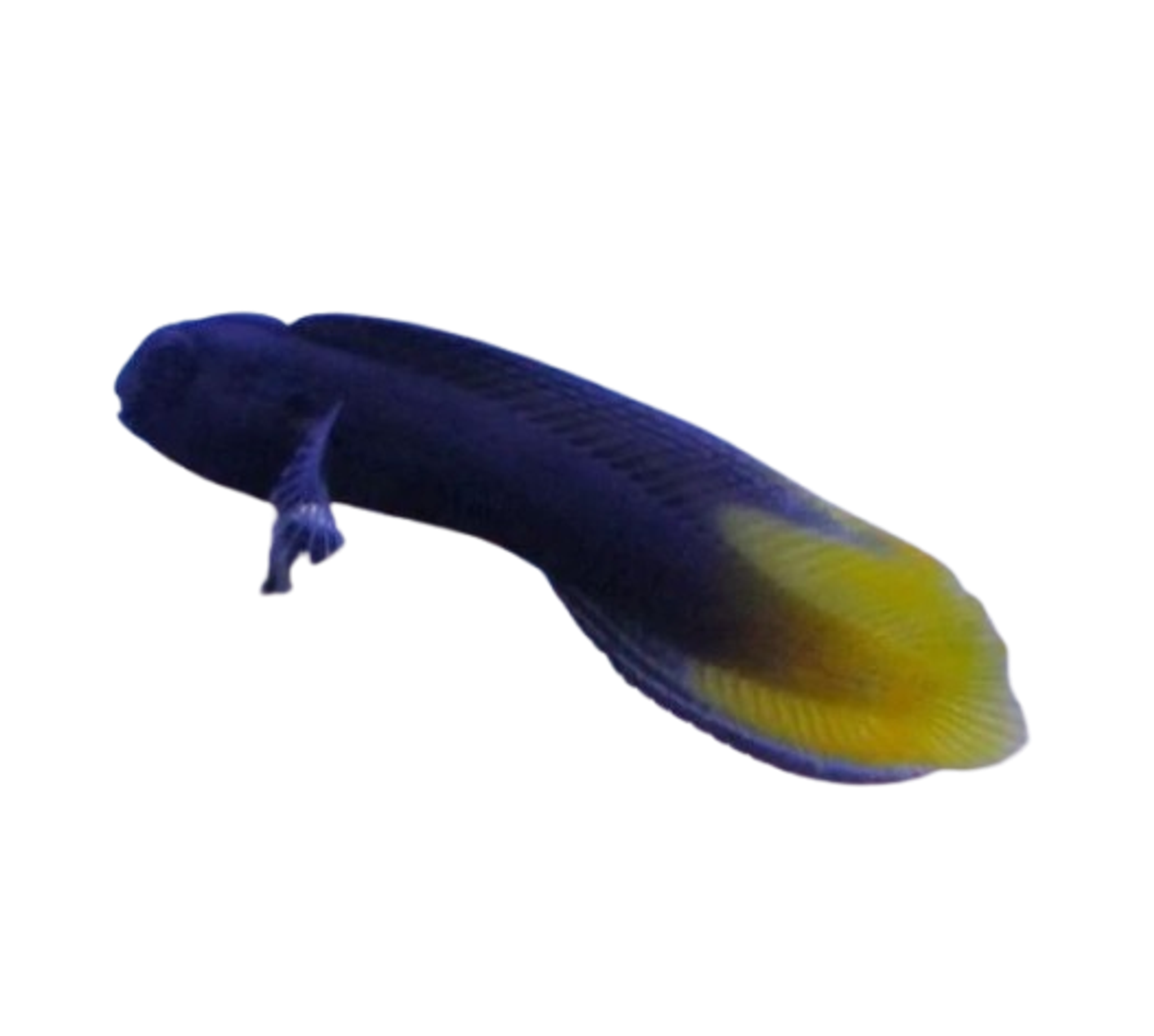
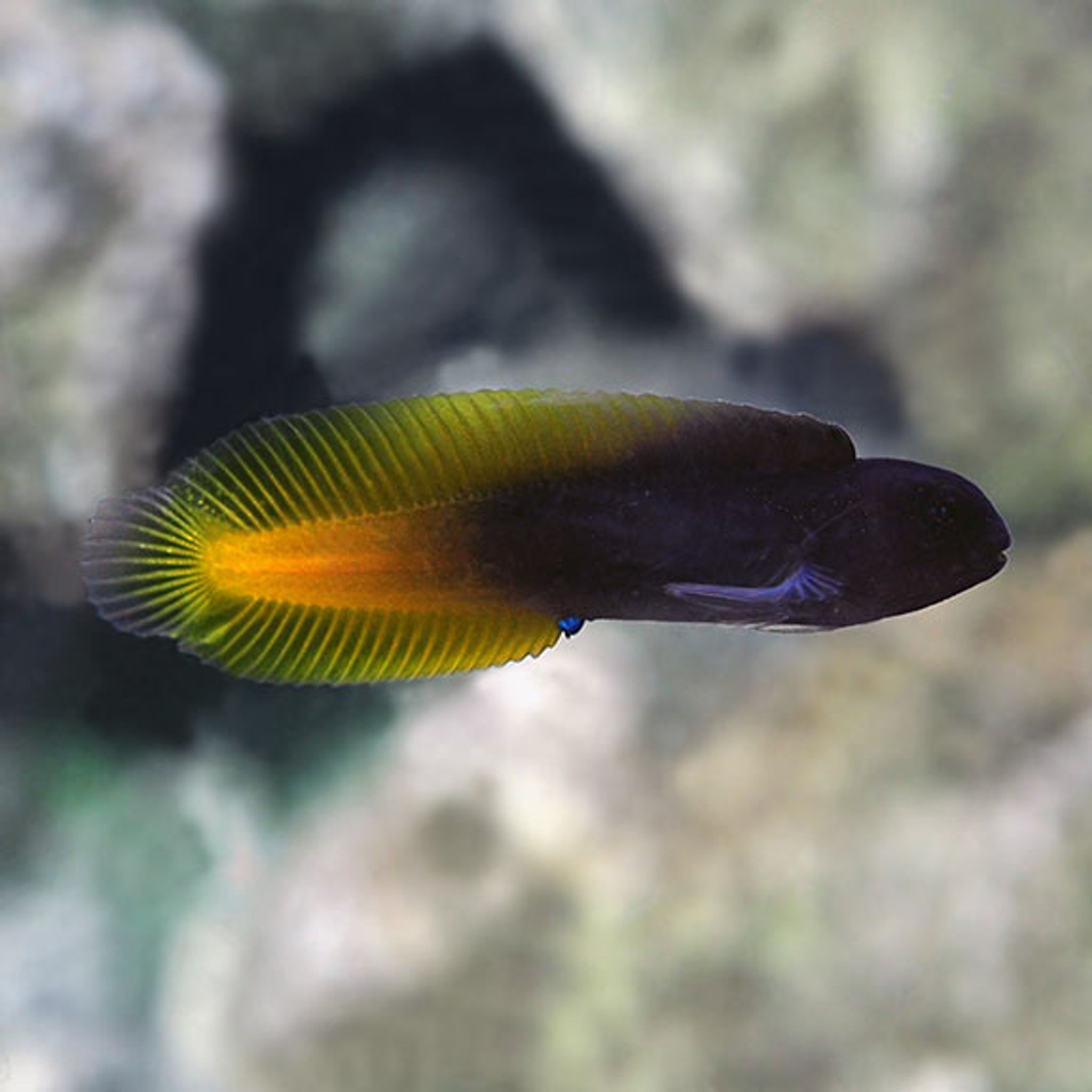
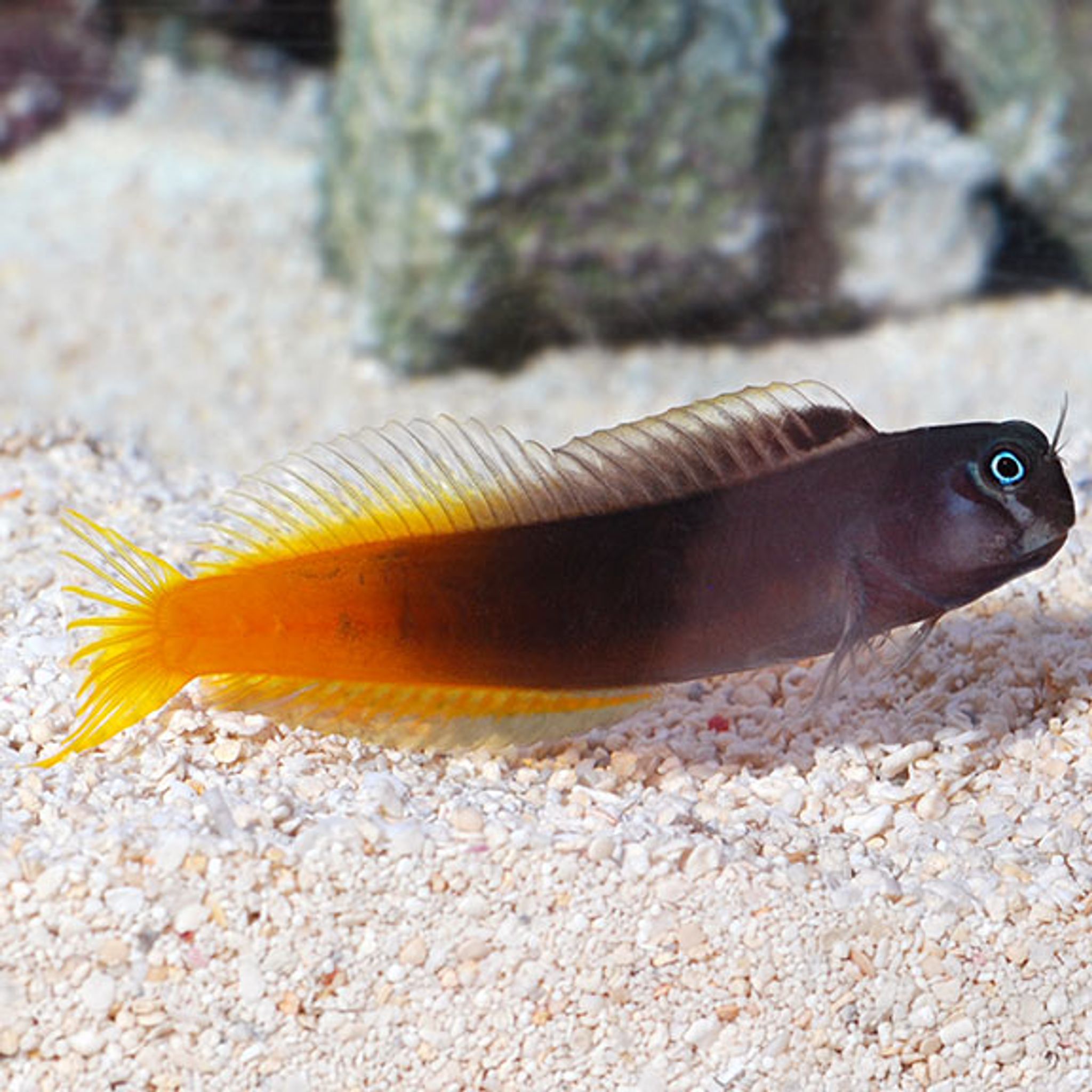
Bicolor Blennies are named for their contrasting dark front half and yellow-orange rear coloration.
They often perch on rockwork and may graze naturally occurring algae and biofilm throughout the day.
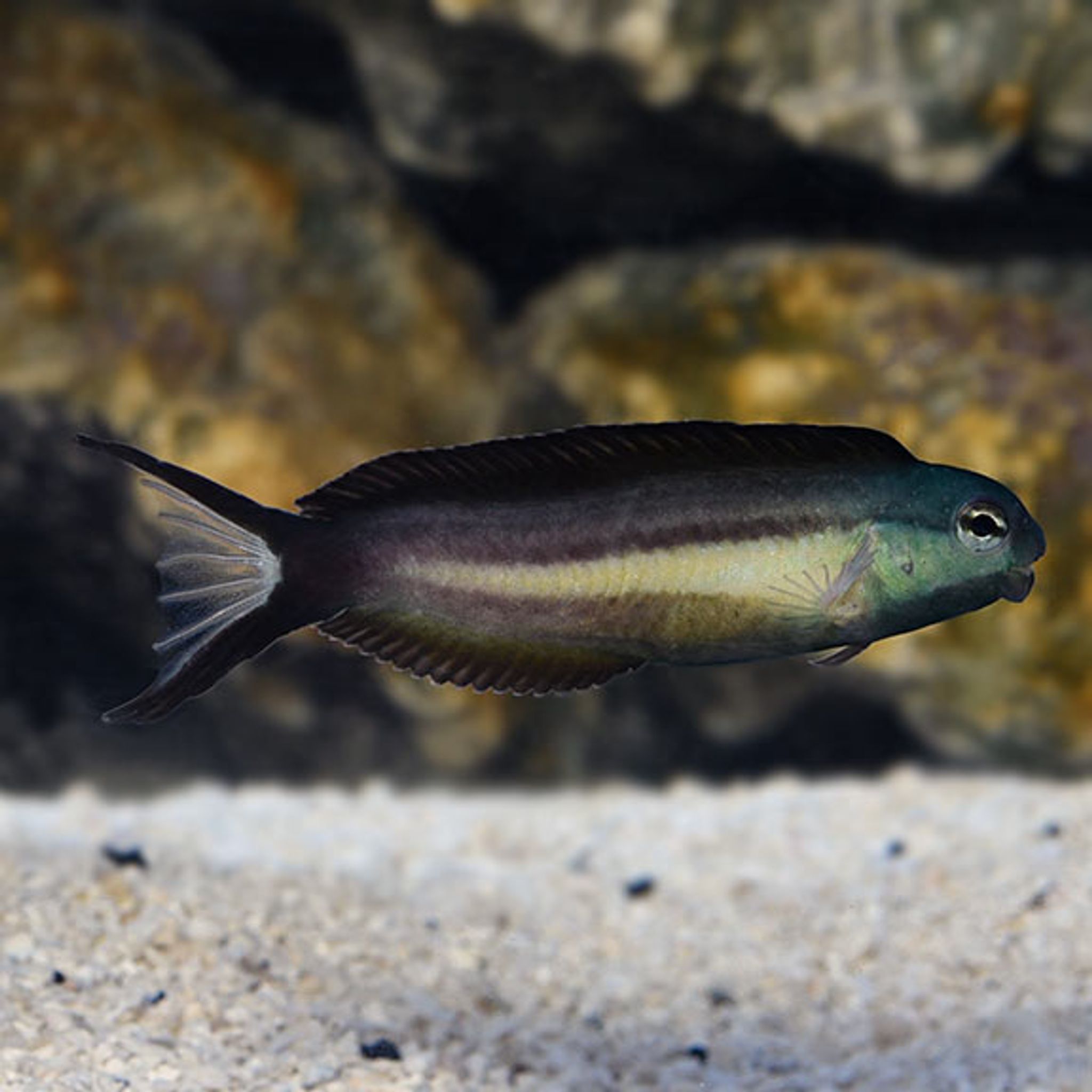
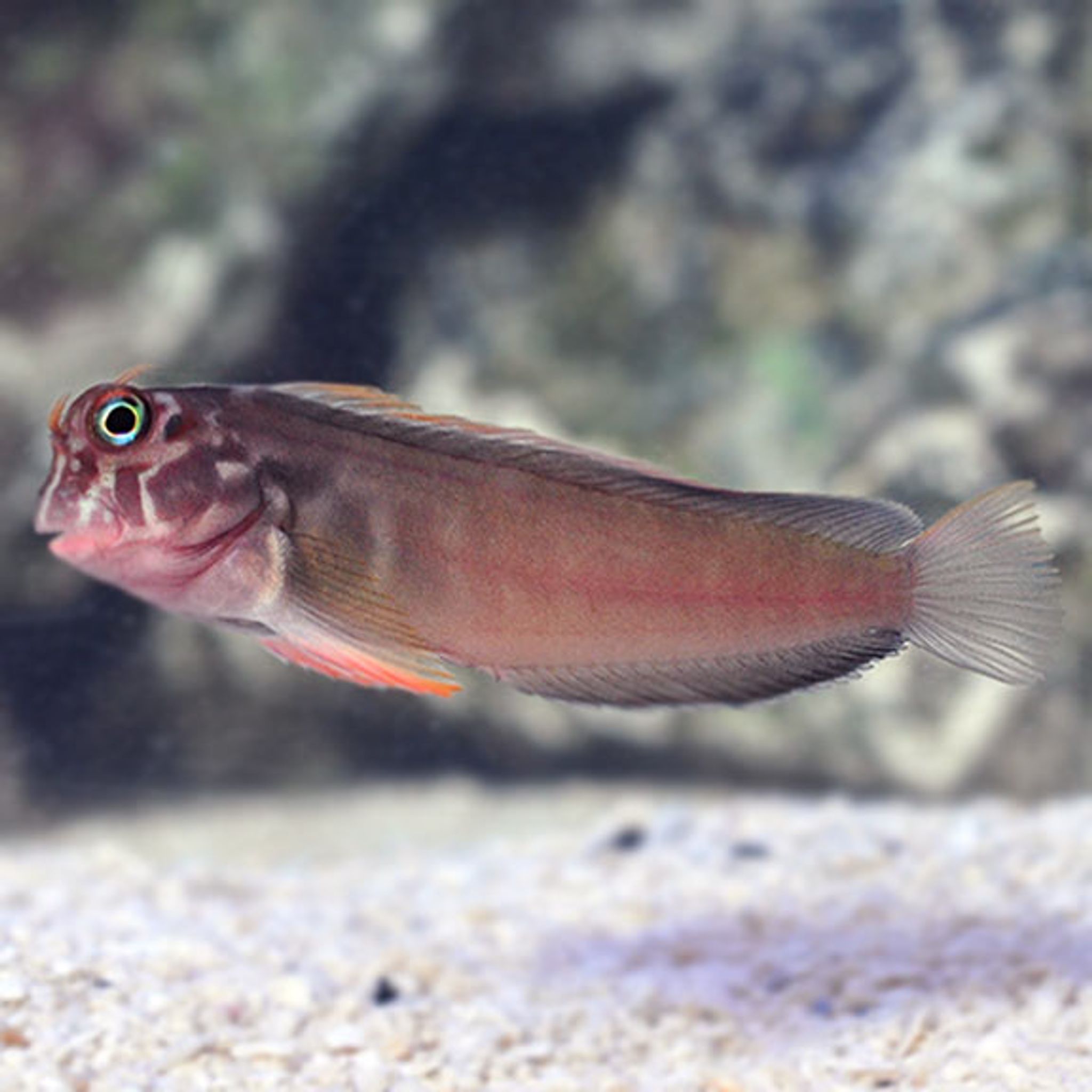
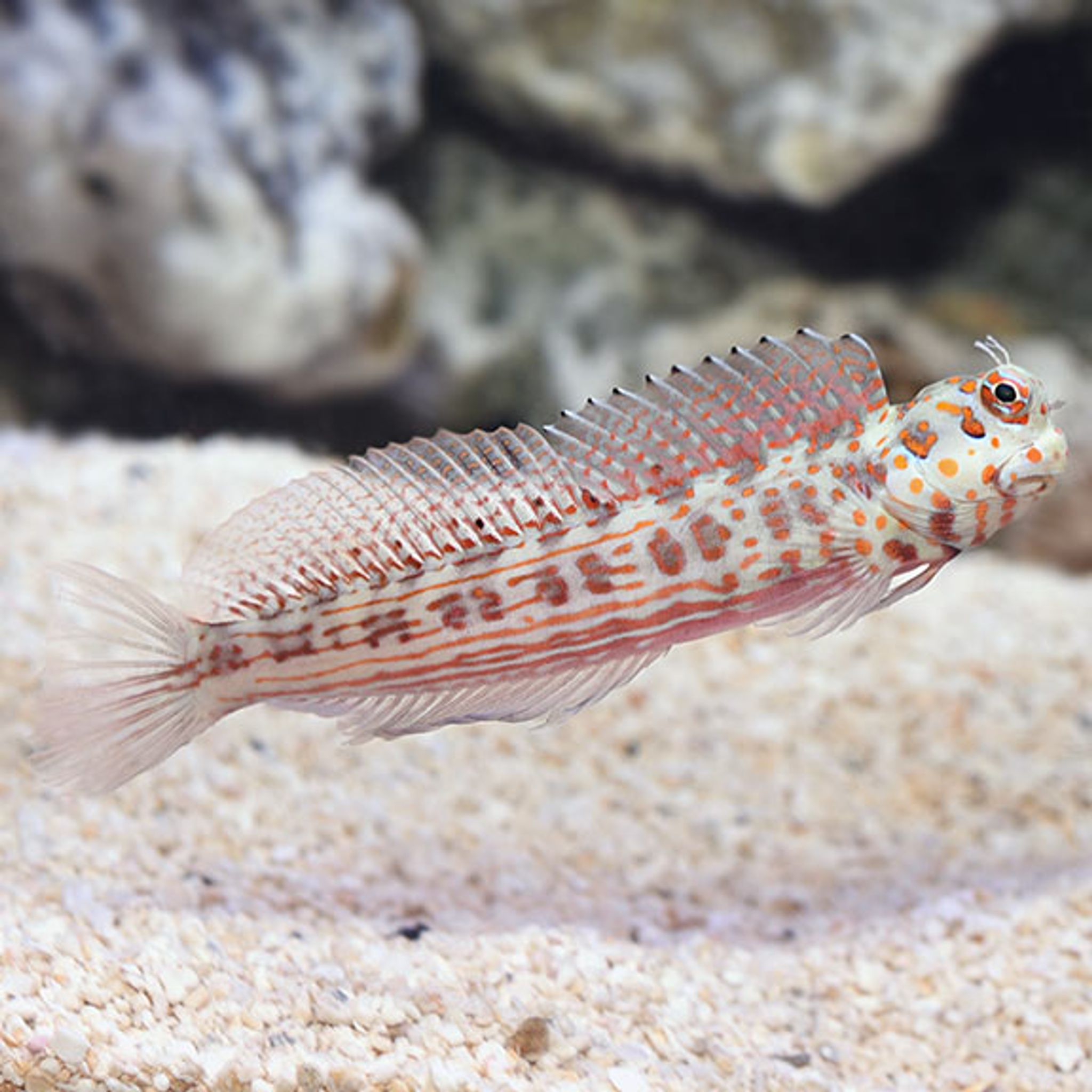
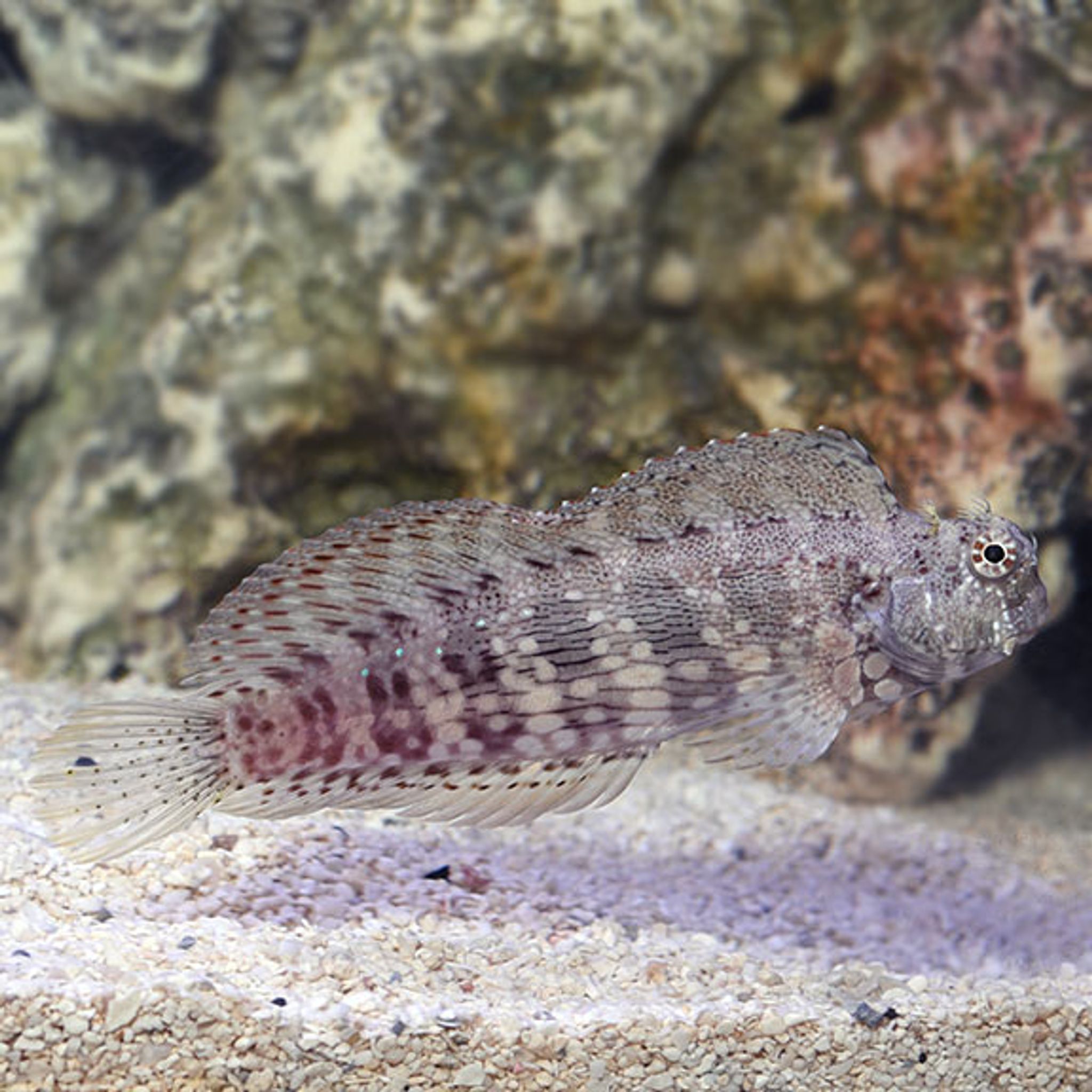
Starry Blennies are darker-bodied fish covered with numerous pale spots, giving them a distinctive star-like appearance.
Like other grazing Blennies, they benefit from established rock surfaces and should receive supplemental food when natural algae is insufficient.
Fang Blennies are sleek, active marine fish known for specialized defensive fangs.
Their feeding behavior and swimming style differ from algae-grazing combtooth Blennies, making species-level identification important when planning care.
Many of the familiar algae-grazing Blennies belong to groups commonly called combtooth Blennies.
They use specialized teeth to scrape algae and biofilm from rock and hard surfaces, although their diets vary by species.
Some Blennies are strong algae grazers, while others are not.
Lawnmower, Starry and some related species may spend much of their time grazing, while Midas and fang Blennies have different feeding habits. Always choose food and husbandry based on the exact species.
Many Blennies are popular reef aquarium fish because they generally spend their time around rockwork and do not actively hunt corals.
Reef compatibility still varies by species and individual, and some Blennies may nip at sessile invertebrates or compete with other grazing fish.
Smaller Blennies such as Tailspot Blennies can be suitable for carefully planned nano reef aquariums.
Small size does not remove the need for stable water quality, adequate feeding, hiding places and suitable territory.
Blennies benefit from mature marine aquariums with rockwork, crevices and perching surfaces.
The aquarium should provide both shelter and enough open space for the natural swimming behavior of the exact species.
Live rock can be especially valuable for Blennies because it provides shelter, territory and natural grazing surfaces.
Established rockwork can also support algae, biofilm and small organisms that supplement the diet of certain species.
Blenny species vary in adult size, from very compact reef fish to larger grazing or predatory forms.
Always research expected adult size before purchase rather than relying on the juvenile size shown in a listing.
Many Blennies are peaceful toward unrelated fish but can become territorial around favorite holes, rockwork or grazing areas.
Aggression is especially possible toward similar-looking Blennies or fish occupying the same ecological niche.
Multiple Blennies can sometimes live together in a sufficiently large and carefully structured aquarium.
Compatibility depends on species, body shape, feeding niche, available territory and individual temperament.
Blennies can coexist with many peaceful and moderately active marine fish when aquarium size and temperament are appropriate.
Clownfish, Gobies, Wrasses, Tangs and selected marine Angelfish may be possible tankmates, but compatibility should always be checked by exact species.
Blennies and Gobies can sometimes coexist because they use different feeding strategies, but both may occupy caves or bottom territories.
Provide enough rockwork and hiding areas to reduce competition between similar bottom-oriented fish.
Blennies and Tangs are often kept together in larger reef aquariums.
Both may graze algae, so make sure the aquarium provides enough natural grazing area and supplemental food to reduce competition.
Many Blennies can live with Clownfish in appropriately sized marine aquariums.
Clownfish may defend territories near anemones or preferred structures, while Blennies often establish their own holes or rock perches.
Many commonly kept Blennies can coexist with ornamental shrimp, but compatibility varies by species.
Larger or more predatory Blennies may pose greater risk to small crustaceans, so exact species should be checked before mixing them.
Blenny diets vary widely.
Some species graze algae and biofilm, while others feed on plankton, small crustaceans or prepared marine foods. Feed according to the exact species rather than assuming every Blenny is herbivorous.
Algae-grazing Blennies should not be expected to survive solely on whatever algae happens to grow in the aquarium.
Supplement natural grazing with suitable prepared and plant-based marine foods when needed, especially in very clean or newly established tanks.
Some Blennies can help graze certain algae from rock and aquarium surfaces.
They should not be treated as a universal cure for algae problems because feeding behavior varies by species and not all nuisance algae will be eaten.
Blennies benefit from stable saltwater conditions, reliable filtration and good oxygenation.
Avoid sudden changes in salinity, temperature or other water conditions, particularly after shipping.
Some Blennies may jump when startled or during territorial interactions.
A secure aquarium cover is a sensible precaution, especially during the first days after introducing a new fish.
Quarantine and observation can help reduce the risk of introducing parasites or disease into an established marine aquarium.
Pay particular attention to appetite and body condition because grazing Blennies can lose weight if they are not receiving enough suitable food.
When comparing Blennies for sale, look for:
Newly shipped Blennies may hide in rockwork or show reduced activity after transport.
Prepare a stable aquarium in advance, follow the seller's acclimation guidance and provide immediate access to appropriate shelter and food.
Blenny prices vary according to species, current size, origin, rarity, captive-bred availability and seller.
Common grazing Blennies and less frequently available specialty species can differ substantially in price, so compare exact species, condition and seller information rather than price alone.
FishyHub brings marine Blenny listings from saltwater aquarium stores and specialist sellers together in one marketplace.
When comparing Blennies online, consider:
Shipping availability depends on the seller, destination, fish size, weather and livestock-shipping policy.
Review delivery timing, packaging and live-arrival terms before ordering, and make sure the aquarium is prepared for the exact Blenny species before arrival.
Yes. Marine aquarium stores and specialist sellers offer many Blenny species online across the U.S., depending on seller shipping coverage and livestock policies.
Some species do, including Lawnmower, Starry and several other combtooth Blennies, while other Blennies rely more heavily on animal-based foods or plankton.
Many commonly kept Blennies work well in reef aquariums, but exact coral and invertebrate compatibility varies by species and individual.
Lawnmower and Starry Blennies are well known for grazing algae, but no Blenny should be treated as a guaranteed solution to every algae problem.
Often yes, but both groups may compete for caves or bottom territories, so aquarium size and habitat structure matter.
Sometimes, but territorial aggression can occur between similar species or fish using the same feeding and shelter niches.
No. Fish sold as Scooter Blennies are actually dragonets rather than true Blennies, even though the common aquarium name includes “Blenny.”
FishyHub helps U.S. hobbyists compare marine Blenny listings from saltwater aquarium stores and specialist sellers in one marketplace.
Explore Blennies for sale on FishyHub and compare Lawnmower, Tailspot, Midas, Bicolor, Starry and other marine Blenny species. Discover listings from saltwater aquarium sellers across the United States, and compare species, size, feeding behavior, reef compatibility, price and shipping options before choosing your next Blenny.