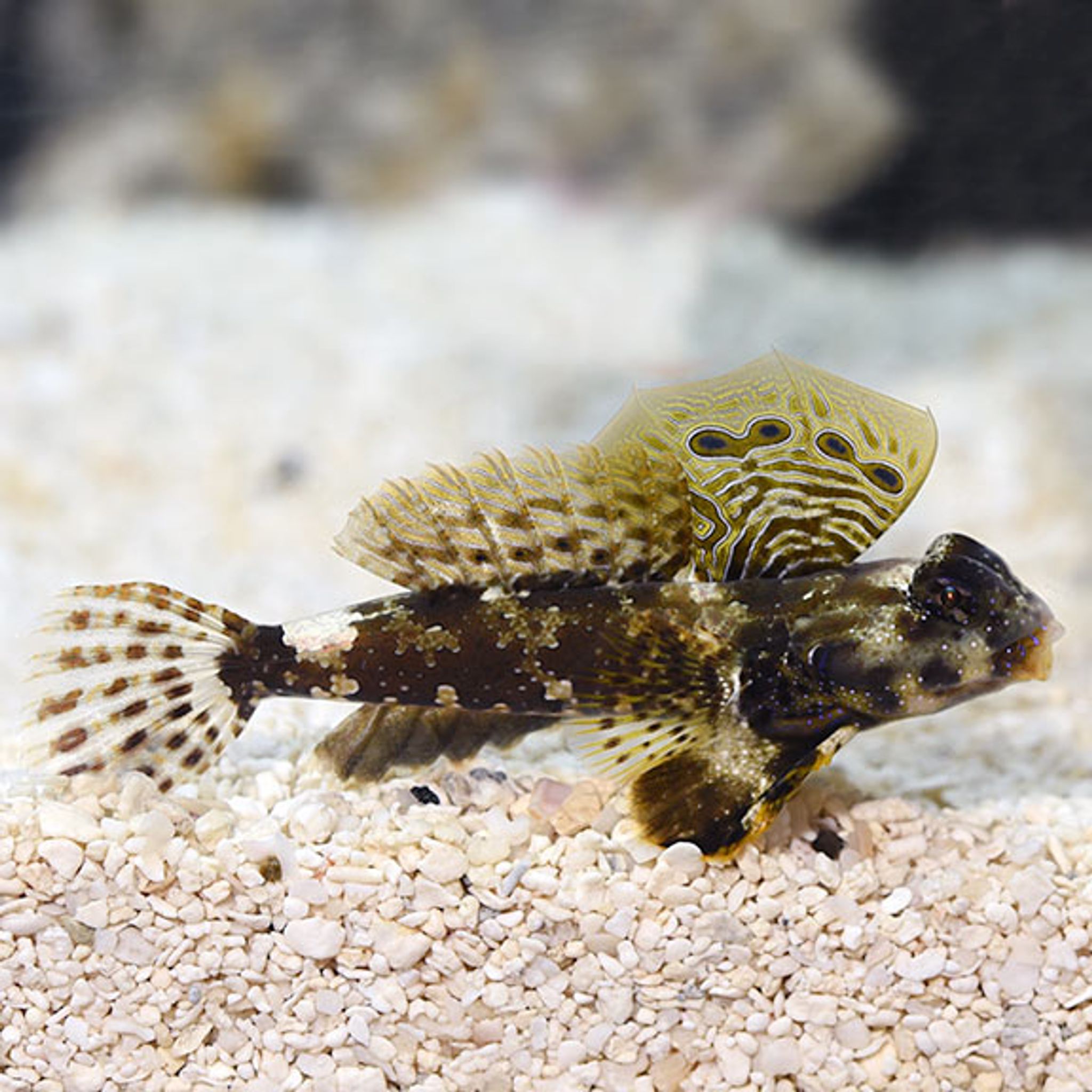

How to Feed Tailspot Blenny: Foods, Frequency and Common Feeding Problems
Tailspot Blennies (Ecsenius stigmatura) are small, herbivore-leaning grazers that need a diet built around algae, not protein. This guide covers exactly what to feed, how often, how to size portions, and how to troubleshoot the most common feeding problems — from a new arrival that won't eat to a blenny that starts picking at coral.
Species Snapshot
The Tailspot Blenny is a small Indo-Pacific reef fish, typically 2.5 to 4 inches long, that spends most of its day perched on rock or darting between crevices. It's an omnivore with a strong herbivore lean, and in the wild it grazes almost constantly on film algae, microalgae, cyanobacteria and diatoms growing on live rock and substrate. That grazing habit is the key to feeding this fish correctly in a home aquarium — prepared foods should supplement natural grazing, not replace it.
Core Diet: What to Feed a Tailspot Blenny
A well-rounded rotation keeps algae-based foods as the foundation and treats meaty foods as an occasional add-on. As a rule of thumb, algae-based foods should make up roughly 70–80% of feedings by frequency, with meaty frozen foods filling the remaining 20–30%. This reconciles the two common but conflicting views — that these fish are simple omnivores needing regular meaty food, versus the view that they're strict herbivores — and matches what the fish's digestive system is actually built for.
- Dried or pressed nori (seaweed sheets): Clip a sheet to the glass or a veggie clip. This should be a daily staple, not an occasional treat.
- Spirulina-based flake or pellet food: Choose a marine herbivore formula and crush flakes before offering them, since the blenny's mouth is small.
- Blanched or softened vegetables: Spinach or zucchini/squash, softened in tank water or lightly blanched, works well as an occasional variety item.
- Frozen meaty foods, 1–3 times a week: Mysis shrimp, brine shrimp, or cyclops in small, minced or thawed portions — a supplement, not the base diet.
- Live rock biofilm and microalgae: This is "free-feeding" that happens continuously between meals. It's essential in a mature tank but should never be relied on as the sole food source in a newer or low-nutrient system.
A Simple Weekly Feeding Rotation
Most sources skip a concrete schedule, so here's a practical starting point you can adjust to your tank's grazing supply:
| Day | Morning | Evening |
|---|---|---|
| Monday | Nori clip | Spirulina flake/pellet |
| Tuesday | Spirulina flake/pellet | Mysis or brine shrimp |
| Wednesday | Nori clip | Spirulina flake/pellet |
| Thursday | Spirulina flake/pellet | Blanched veggie |
| Friday | Nori clip | Mysis or brine shrimp |
| Saturday | Spirulina flake/pellet | Nori clip |
| Sunday | Nori clip | Cyclops or mysis |
Adjust portions and frequency based on how much natural grazing is available — a tank with heavy algae film and mature live rock can lean on fewer prepared feedings, while a newer or scrubbed-clean tank needs more.
How Often to Feed
Sources disagree here: some say once daily plus continuous grazing is enough, while others recommend two to three small meals a day. In practice, default to two small feedings daily for most home aquariums, since natural grazing rarely supplies enough food on its own. Drop to once-daily supplemental feeding only in mature, algae-rich systems with heavy live rock coverage, where the fish can graze effectively between meals.
Portion Sizing
Feed only what the fish (and tankmates) can finish within roughly 2–3 minutes. Because the Tailspot Blenny has a small mouth:
- Crush flakes before adding them to the tank.
- Thaw and mince frozen mysis, brine shrimp, or cyclops rather than dropping in a whole frozen cube.
- Offer nori in small clipped pieces rather than a full sheet in a small tank.
Vitamin and HUFA Enrichment
Soaking frozen foods in a vitamin or HUFA (highly unsaturated fatty acid) enrichment before feeding is a widely used practice for herbivore-leaning marine fish, and it's worth adopting here. A brief soak boosts the nutritional value of mysis or brine shrimp without changing how much you feed, helping offset the limited nutrient density of an occasional-supplement food.
Tank Conditions That Affect Feeding Success
Feeding success isn't just about what you put in the tank — it depends on the environment supporting natural grazing and making the fish feel secure enough to come out and eat.
| Parameter | Recommended Range |
|---|---|
| Tank size | 10 gallons (38 L) minimum; 20+ gallons (76+ L) preferred |
| Temperature | 72–78°F (22–26°C) |
| Salinity (specific gravity) | 1.020–1.025 |
| pH | 8.1–8.4 |
| Nitrate | Roughly 1–5 ppm |
| Phosphate | Roughly 0.02–0.05 ppm |
Plenty of live rock with caves and perching spots matters just as much as water chemistry — a Tailspot Blenny that doesn't feel secure will hide instead of grazing or accepting food.
The Nutrient-Starved Tank Problem
An overly "clean," nutrient-scrubbed reef system can actually work against this species. Keeping trace nitrate and phosphate in the ranges above supports the microalgae and biofilm film the blenny depends on for continuous grazing. A tank that's been stripped of all visible algae can starve a Tailspot Blenny even if you're feeding it prepared food regularly, because so much of its natural diet comes from constant grazing between meals rather than discrete feedings.
Getting Your First Reef Tank Feeding-Ready
Before adding a Tailspot Blenny, the tank should be fully cycled and have some established live rock or algae film so the fish has natural grazing available from day one. Beginners should expect an ongoing commitment to water testing — ammonia, nitrite, nitrate and pH — since stable water quality is what keeps the biofilm and algae supply healthy over time. A tank in the 20–40 gallon (76–151 L) range is a good starting point: it holds more stable parameters and offers more grazing surface than a very small nano tank, while still being manageable for a first saltwater setup. You can browse live Tailspot Blennies and other options in the Blennies category once your tank is ready.
Body-Condition Check: Is Your Blenny Getting Enough?
Body shape is the clearest sign of whether feeding is adequate:
- Well-fed: Slightly rounded belly, with full body condition in front of the tail.
- Underfed: A pinched belly or a sunken, concave area near the tail base.
Check body condition periodically, especially after introducing a new tankmate or changing your feeding routine, since either can shift how much food the blenny is actually getting.
New-Fish Acclimation and Feeding
Freshly acquired Tailspot Blennies are often shy or stressed and may be slow to accept food during the first one to two weeks. Offer a variety of foods — frozen mysis is frequently the first thing accepted — and be patient. Feed near the fish's favorite hiding spot rather than out in the open, since a stressed new arrival is more likely to eat where it feels safe. If a new fish refuses everything for more than a few days despite otherwise looking healthy, keep offering small amounts at consistent times rather than increasing portion size, which just fouls the water while the fish isn't eating.
Common Feeding Mistakes and How to Fix Them
| Mistake | Why It's a Problem | Fix |
|---|---|---|
| Feeding only frozen/meaty foods | Leads to malnutrition over time even if the fish eats eagerly | Rotate in nori and spirulina foods as the true staple |
| Running an ultra-clean, nutrient-zero tank | Strips away the biofilm/microalgae the blenny grazes on between meals | Keep trace nitrate (1–5 ppm) and phosphate (0.02–0.05 ppm) |
| Overfeeding frozen food | Fouls water and the fish starts ignoring algae grazing | Stick to 1–3 small frozen feedings per week |
| Housing with faster, aggressive eaters | Larger tangs, damsels or dottybacks outcompete the blenny at feeding time | Feed in multiple spots or target-feed near the blenny's territory |
| Assuming coral-nipping is harmless | A Tailspot Blenny that picks at coral polyps is very likely underfed | Increase feeding frequency and add more varied algae-based food |
| Assuming a hiding blenny is sick | Often just stress after introduction or intimidation by tankmates | Add more caves/rockwork and feed consistently at the same times and spots |
| Not sizing food properly | Whole flakes or large frozen cubes go uneaten by a small mouth | Crush flakes and mince frozen foods before feeding |
Target-Feeding a Shy, Small-Mouthed Grazer
In a tank with faster eaters, a Tailspot Blenny can easily get outcompeted. A few techniques help:
- Briefly turn off water flow during feeding so food doesn't get swept away before the blenny reaches it.
- Feed a small amount directly near the blenny's cave or favorite perch rather than only at the surface.
- Use a feeding tube or turkey baster to deliver food close to the fish's territory, especially in a tank with more aggressive tankmates.
Juvenile vs. Adult and Aging Fish
Juveniles generally need more frequent, smaller feedings to support growth, while adults do fine on the standard once-to-twice-daily rotation described above. In older fish, watch for a gradual decline in feeding response or activity — a general slowdown that isn't tied to a specific tankmate or water-quality issue can simply be age-related and is worth monitoring rather than immediately treating as illness.
Frequently Asked Questions
What is the best staple food for a Tailspot Blenny?
Nori and spirulina-based flake or pellet food are the best staples, supplemented by natural algae grazing on live rock. These should make up the majority of feedings, with meaty frozen foods playing only a supporting role.
How often should I feed a Tailspot Blenny?
Feed once or twice daily in small amounts, letting the fish graze on rock in between. Lean toward twice-daily feeding if the tank has little natural algae or biofilm available.
Do Tailspot Blennies need meaty or frozen food?
Yes, but only as a minor supplement a few times a week — mysis or brine shrimp work well. Meaty food should never become the main diet for this herbivore-leaning species.
Why is my Tailspot Blenny not eating?
This is usually stress from a recent move, intimidation by tankmates, or a lack of hiding spots. Offer a variety of foods near shelter and give the fish one to two weeks to adjust before assuming a bigger problem.
Why is my blenny nipping at my corals?
Coral-nipping is typically a sign of hunger or underfeeding, not aggression. Increase feeding frequency, add more algae-based food, and expand grazing surface before considering removing the fish from the reef tank.
How do I know if my Tailspot Blenny is getting enough food?
Check its body shape — a rounded belly and full area near the tail indicate good condition, while a pinched belly or sunken area near the tail signals underfeeding. Reassess your feeding schedule if you spot these signs.
Can a nutrient-poor reef tank starve a Tailspot Blenny?
Yes. Extremely low nitrate and phosphate systems can lack the biofilm and algae film this species depends on for continuous grazing, even if you're offering prepared food on schedule.
What tank conditions best support natural grazing food for this fish?
At least 10–20 gallons (38–76 L) with mature live rock, moderate flow, and stable reef parameters: 72–78°F (22–26°C), salinity 1.020–1.025, and pH 8.1–8.4. A 20–40 gallon tank gives extra stability and grazing surface for beginners.
Feeding a Tailspot Blenny well comes down to treating algae as the foundation and everything else as a supplement, while keeping the tank itself capable of growing natural grazing food. If you're stocking up on prepared foods to round out the rotation, browse the current selection in Food & Supplements, including options in Freeze Dried Food, on FishyHub.


