1–20 of 20
Shop Damselfish online from marine aquarium stores and specialist sellers across the United States on FishyHub. Compare Blue Damselfish, Yellowtail Damselfish, Azure Damselfish, Domino Damselfish, Three Stripe Damselfish and other marine Damselfish by species, size, color and seller.
Damselfish are colorful, active marine fish found throughout tropical reef environments. They range from relatively peaceful schooling species to highly territorial fish, so choosing the right species is important for long-term compatibility.
Buying Damselfish online gives marine hobbyists access to a broader range of species, color forms and sizes than may be available from a single local aquarium store.
Compare exact species, current size, temperament, reef compatibility, seller information and shipping options before choosing Damselfish for your aquarium.
Popular Damselfish in the marine aquarium hobby include:
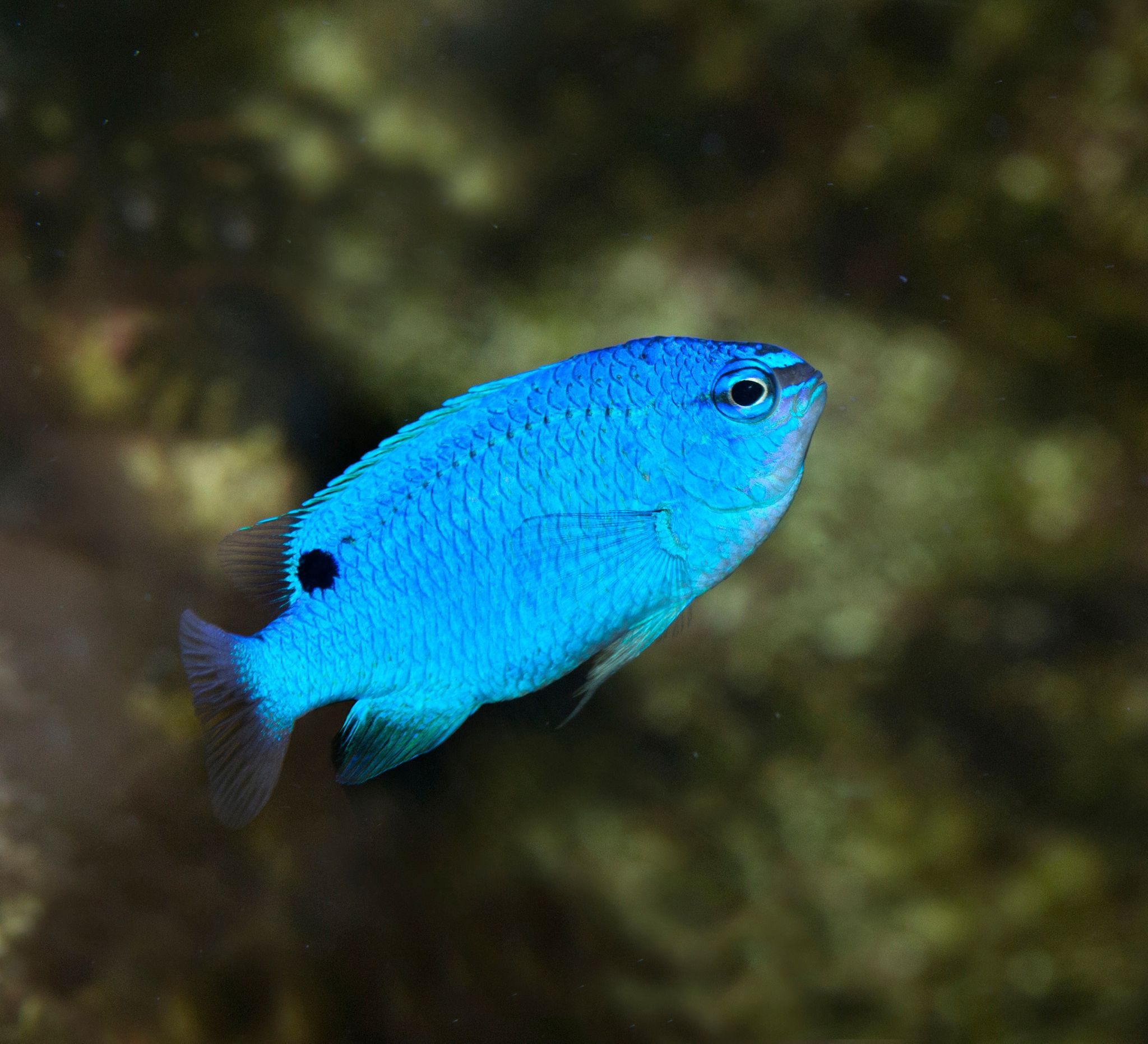
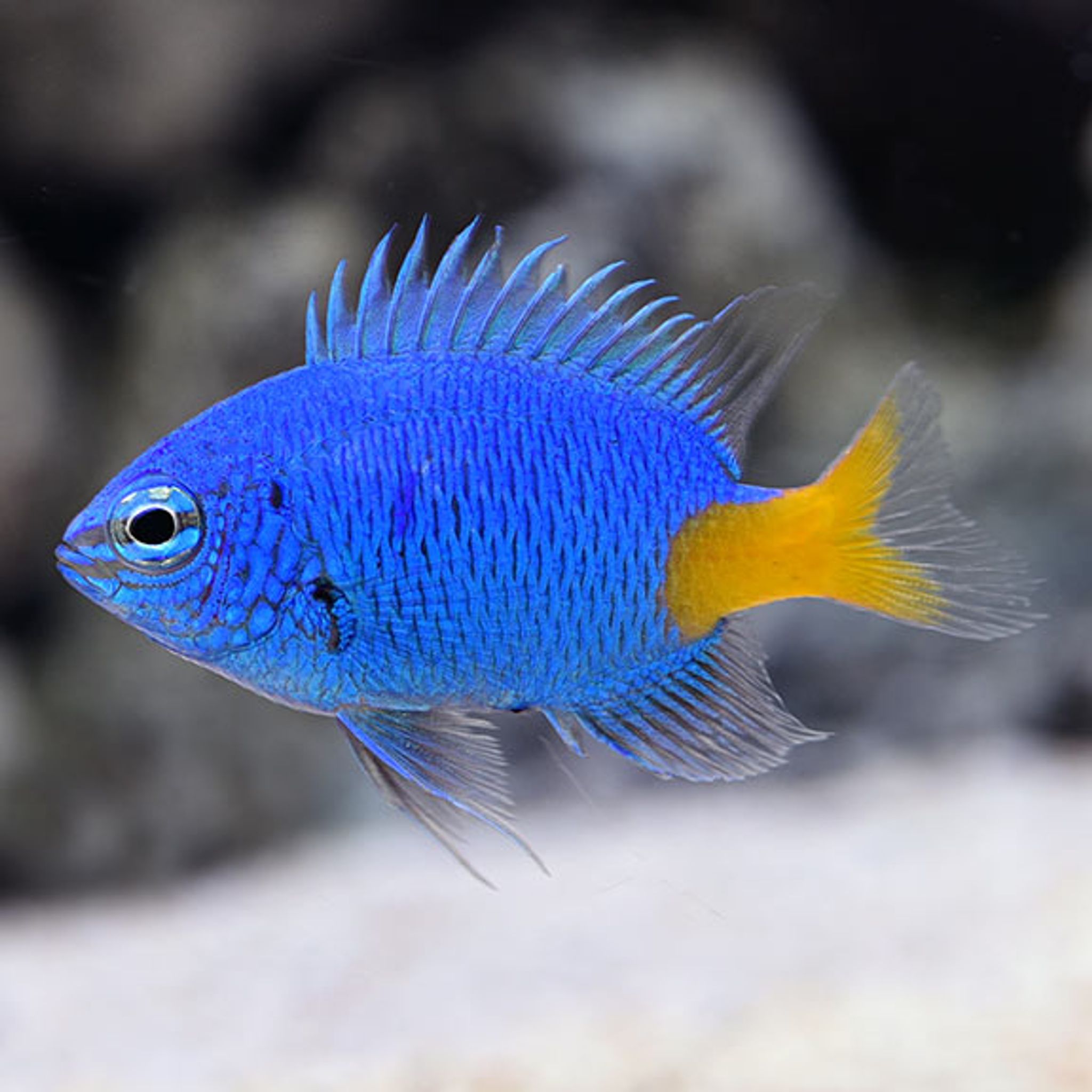
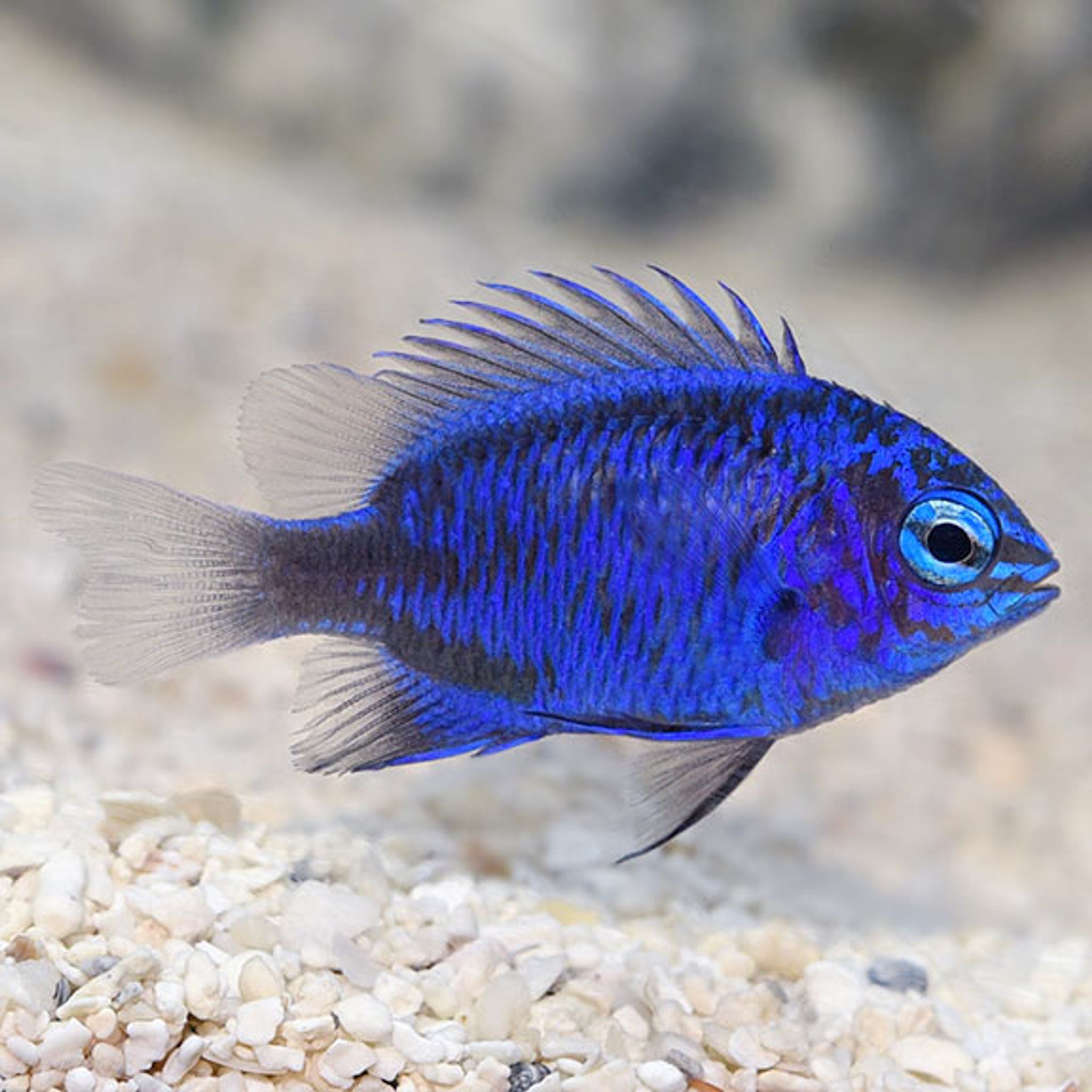
Blue Damselfish are among the most recognizable marine aquarium fish, known for vivid electric blue coloration.
They are active and hardy-looking fish, but adults can become territorial, especially in smaller aquariums or around established hiding places.
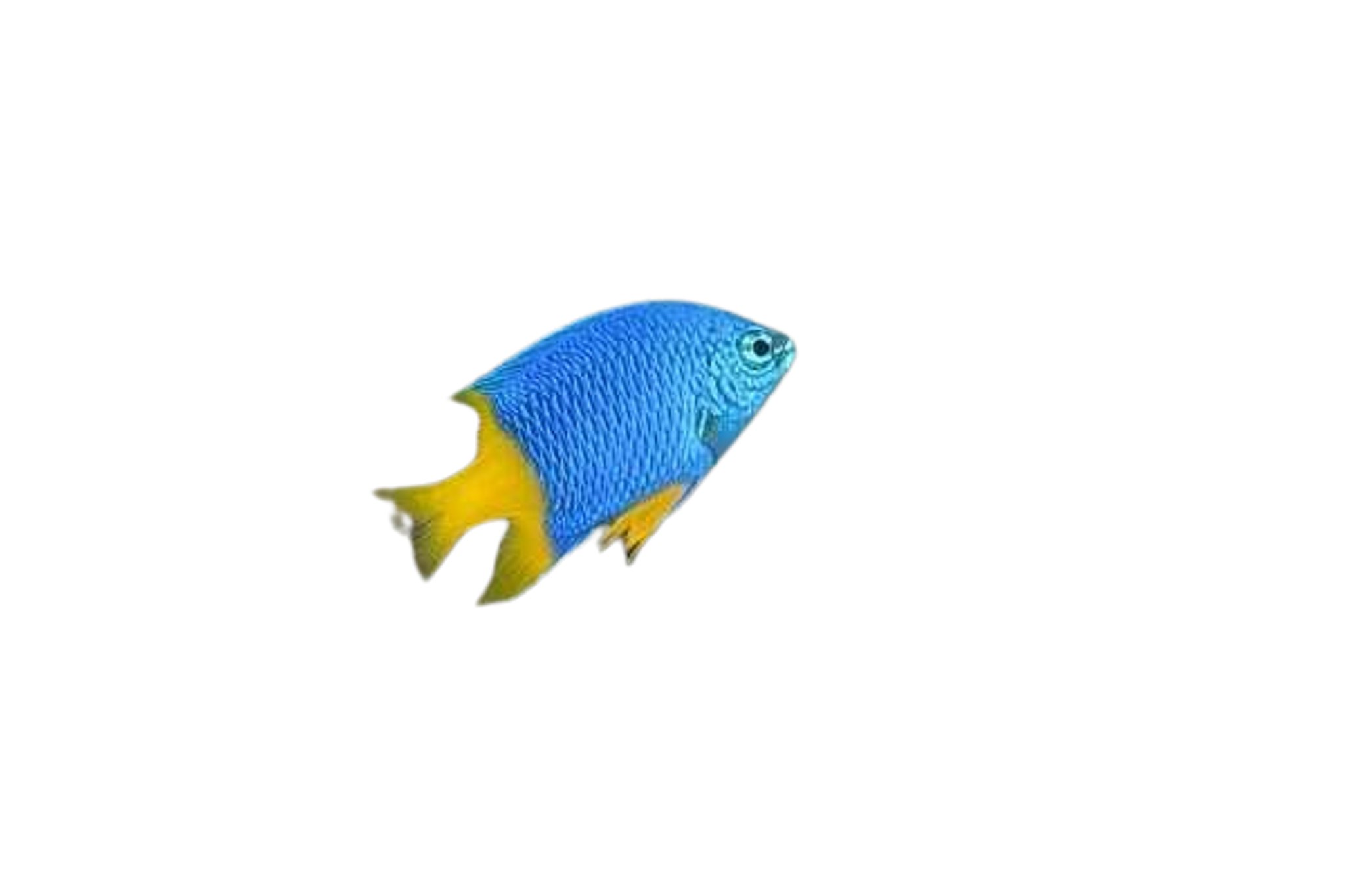
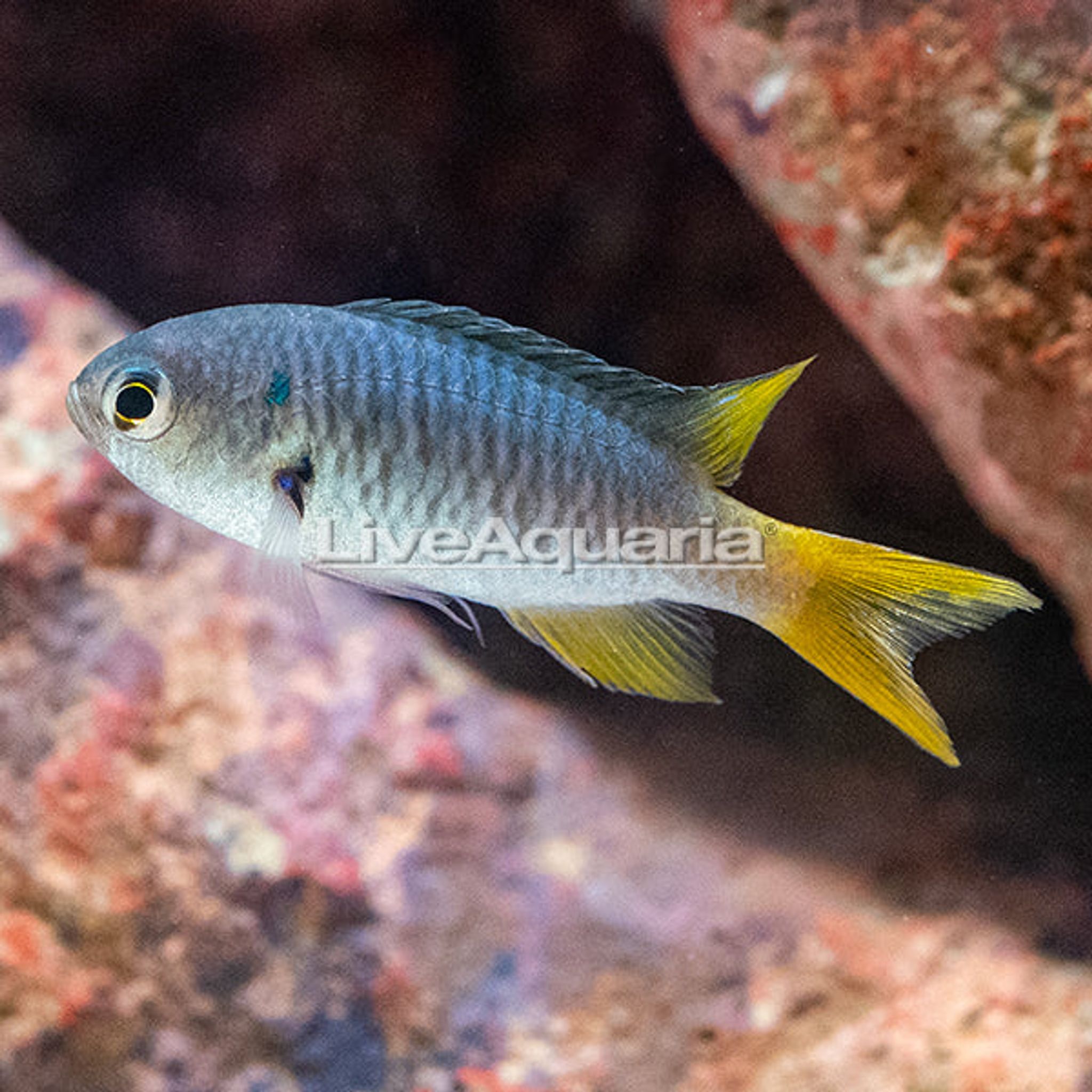
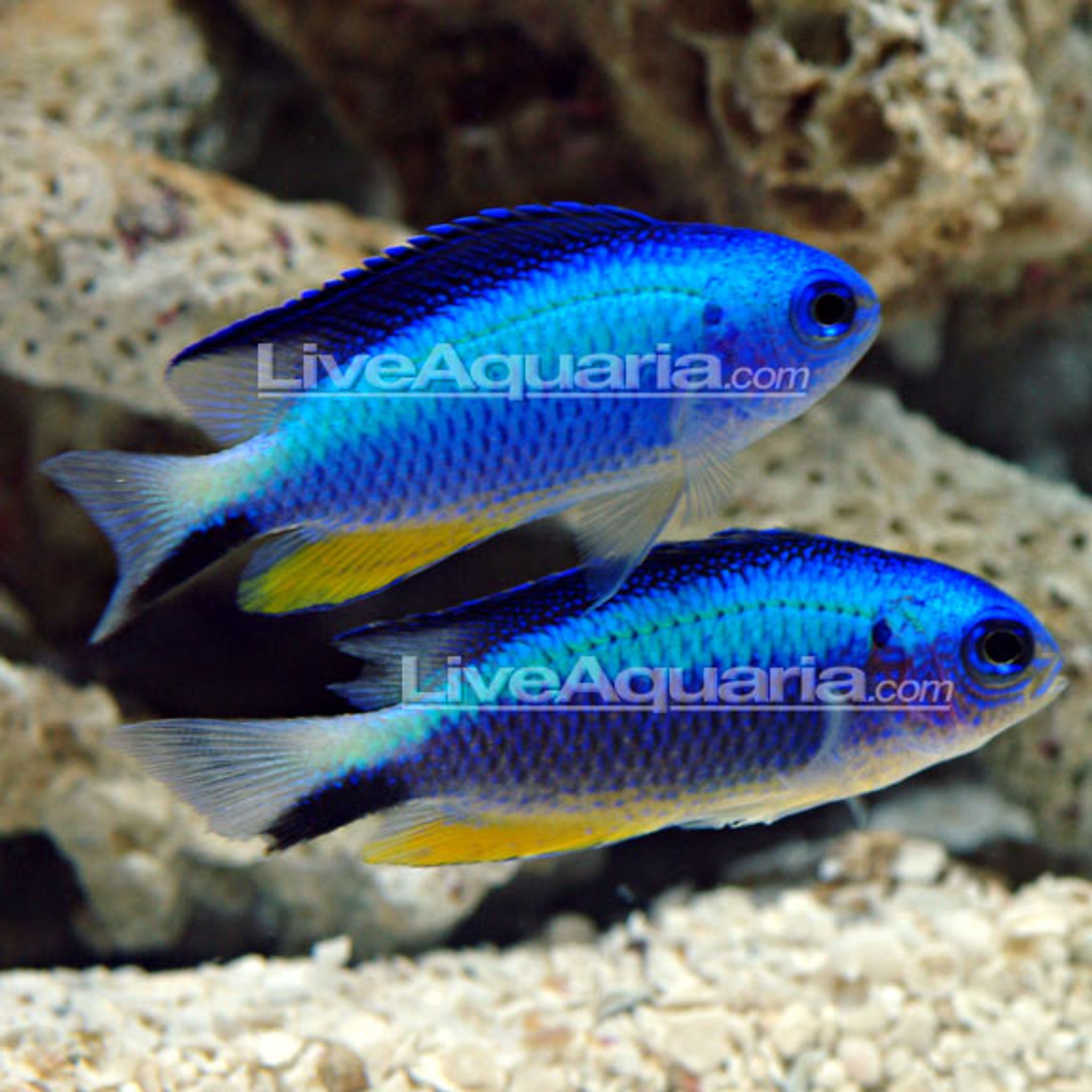
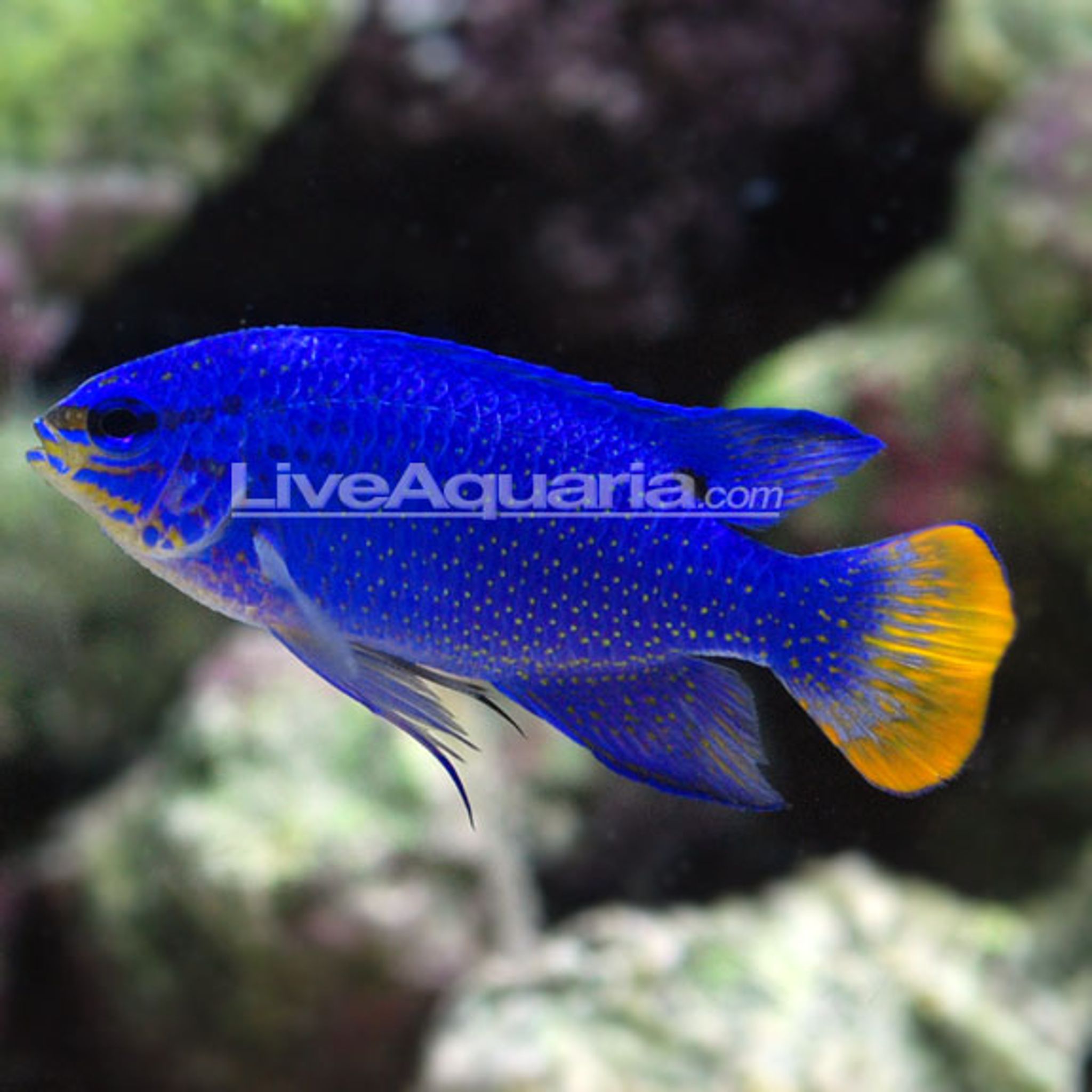
Yellowtail Damselfish combine a bright blue body with a contrasting yellow tail.
They are often considered less aggressive than some larger Damselfish, although individual temperament still varies.
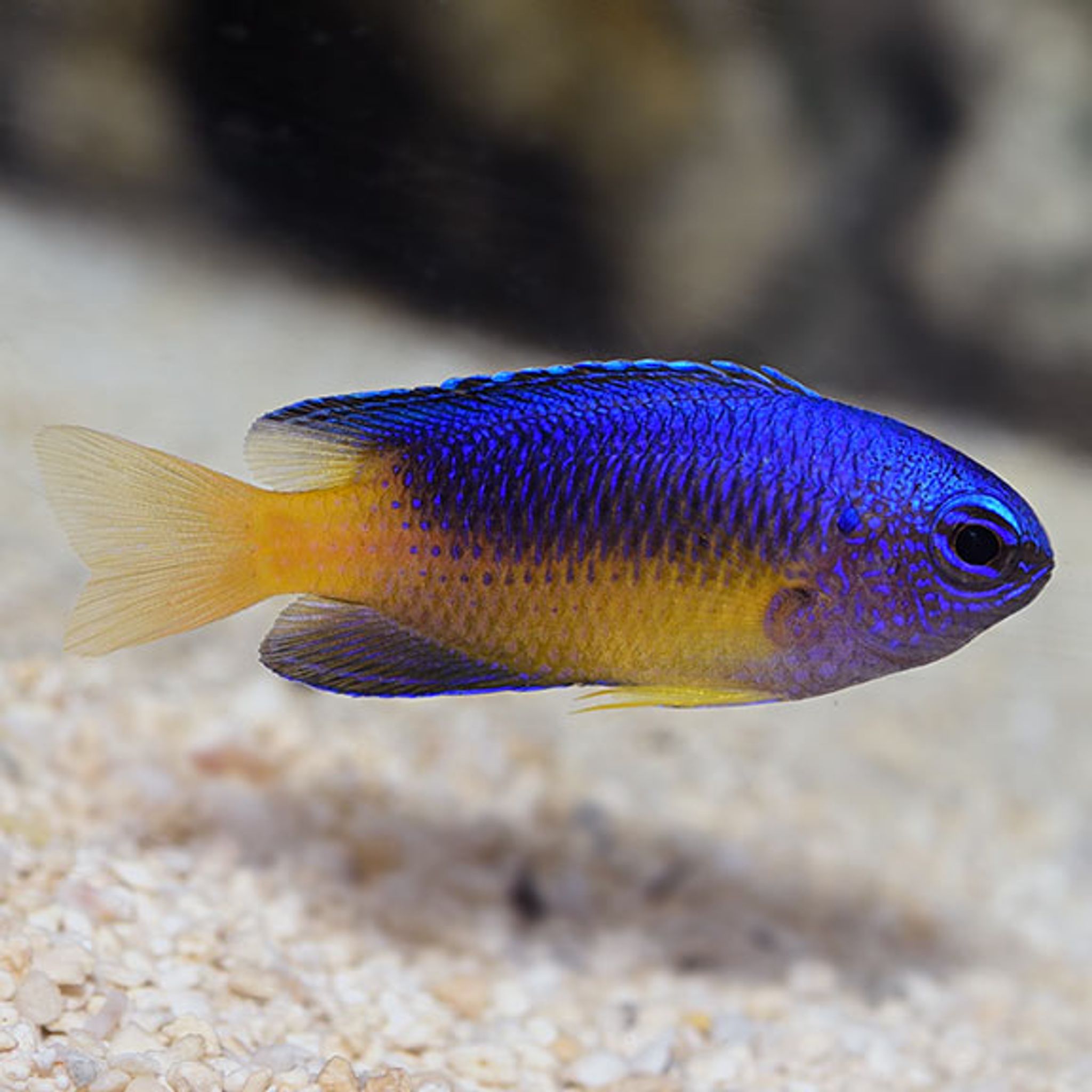
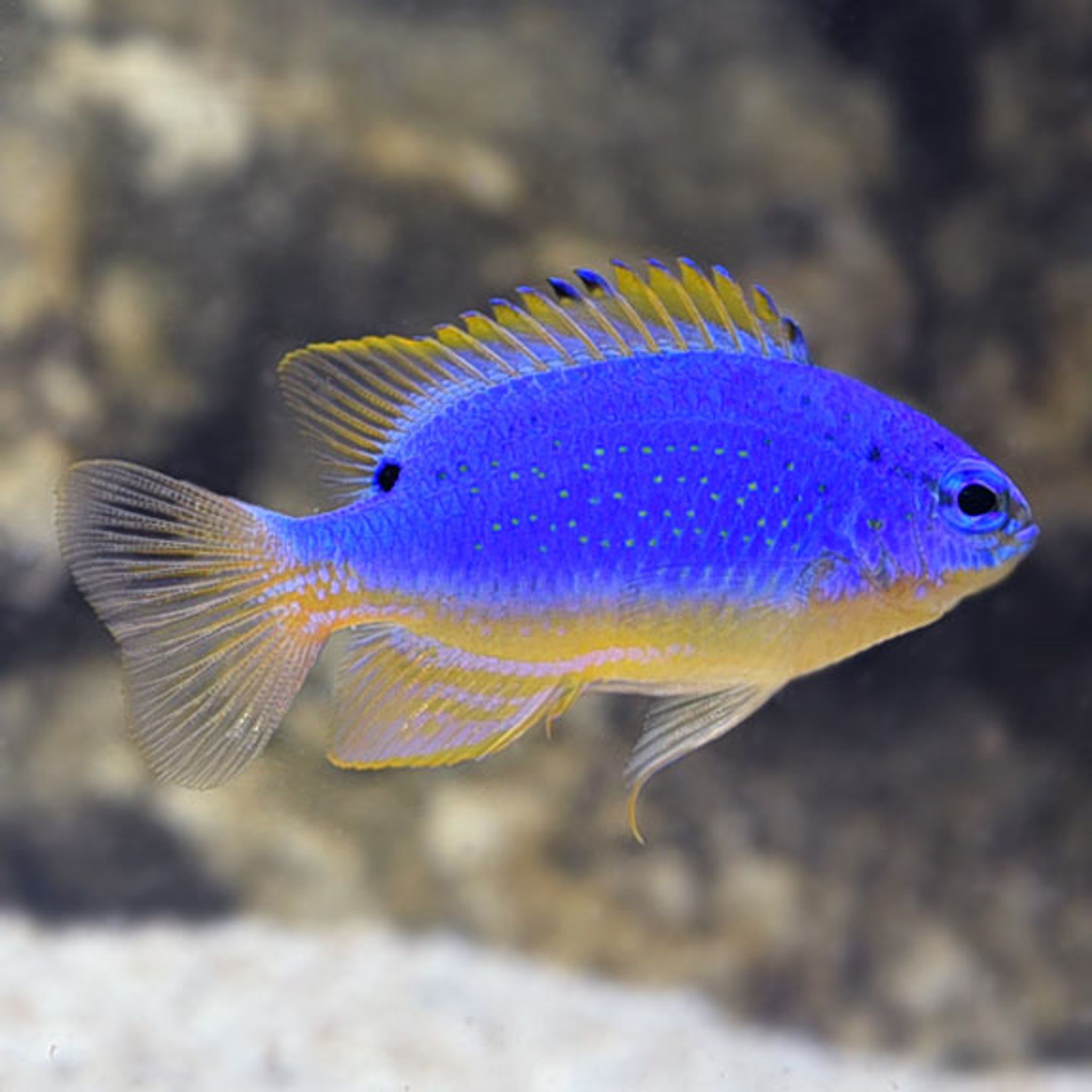
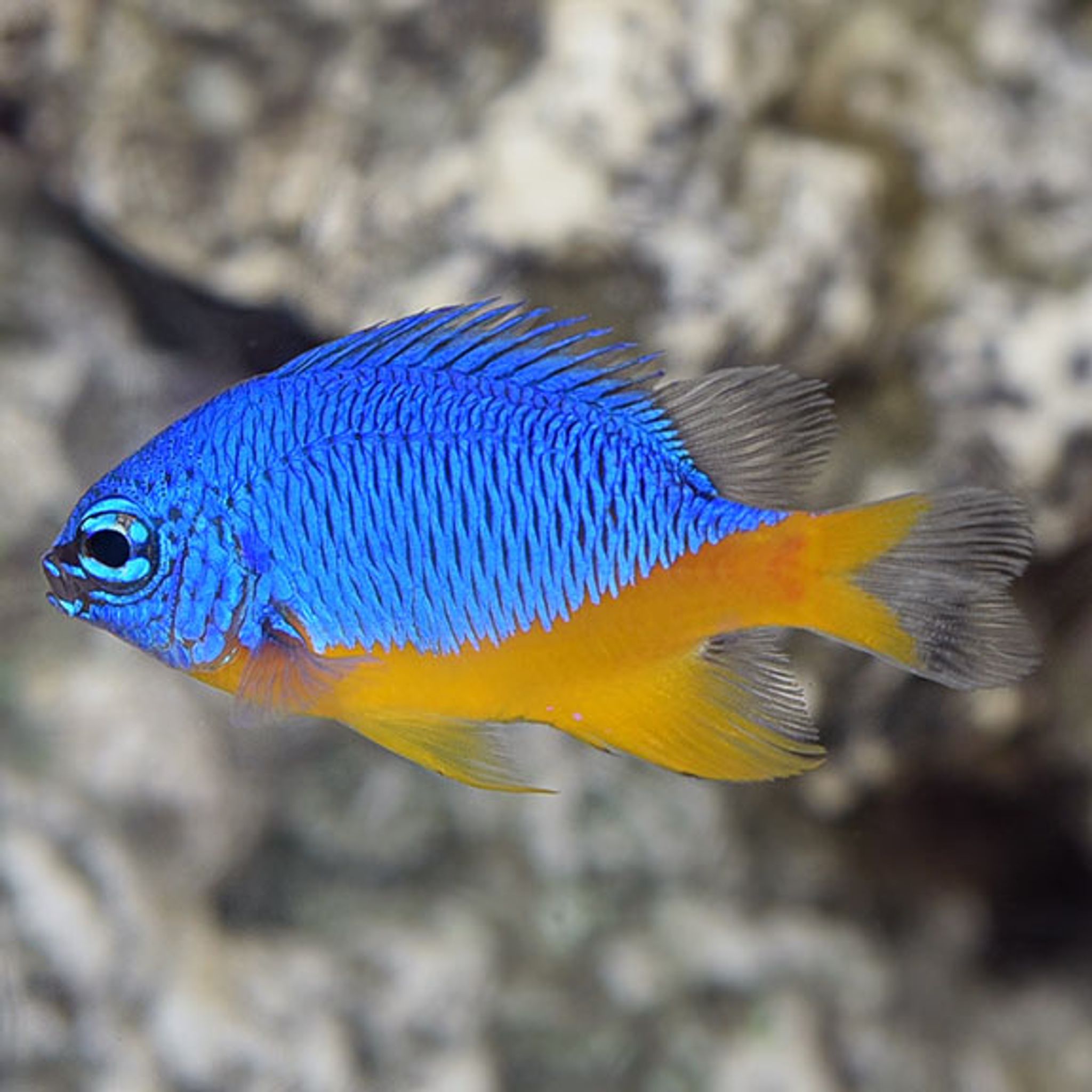
Azure Damselfish display bright blue coloration with yellow extending along the lower body and tail.
Their vivid color and relatively compact size make them popular for reef and community marine aquariums with suitable tankmates.
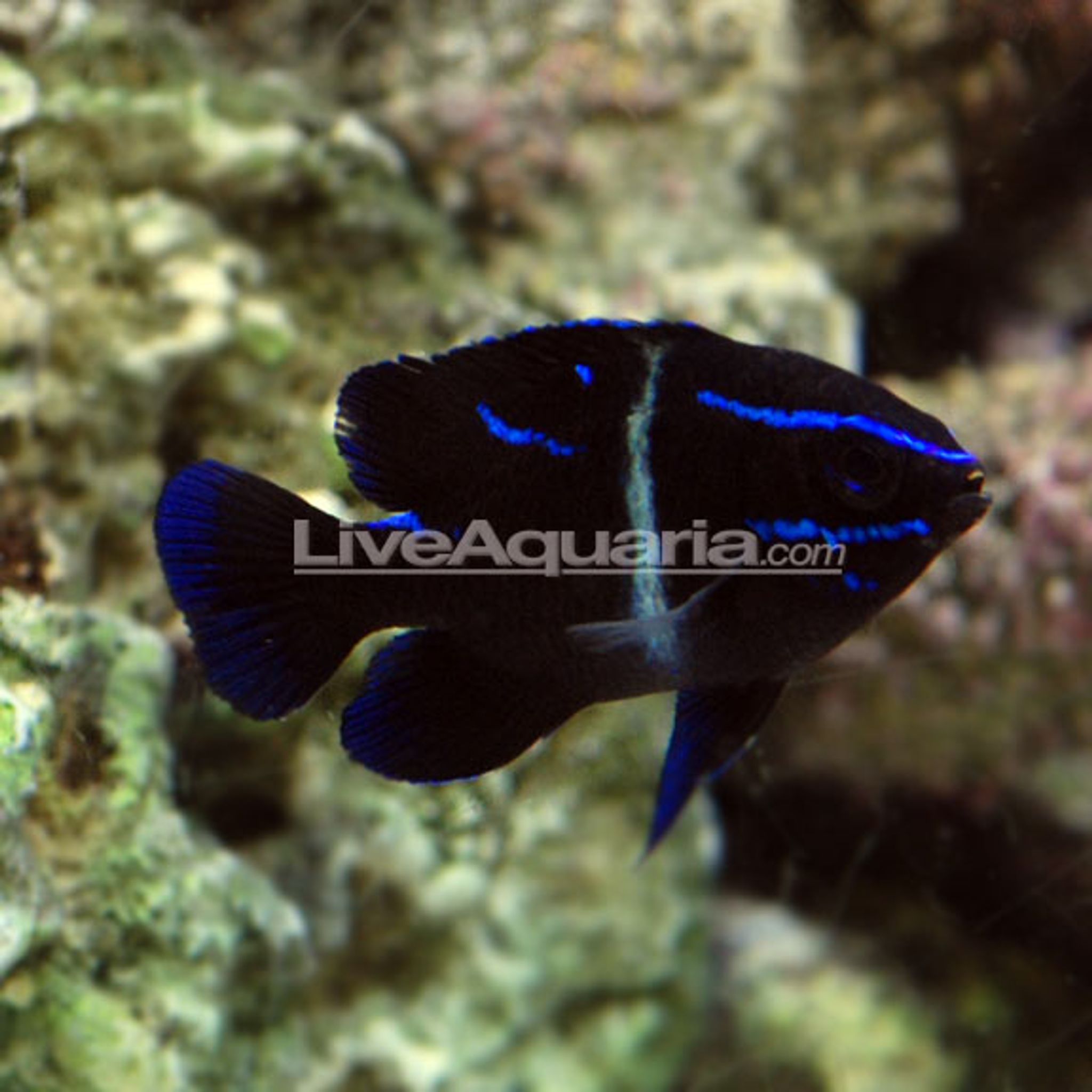
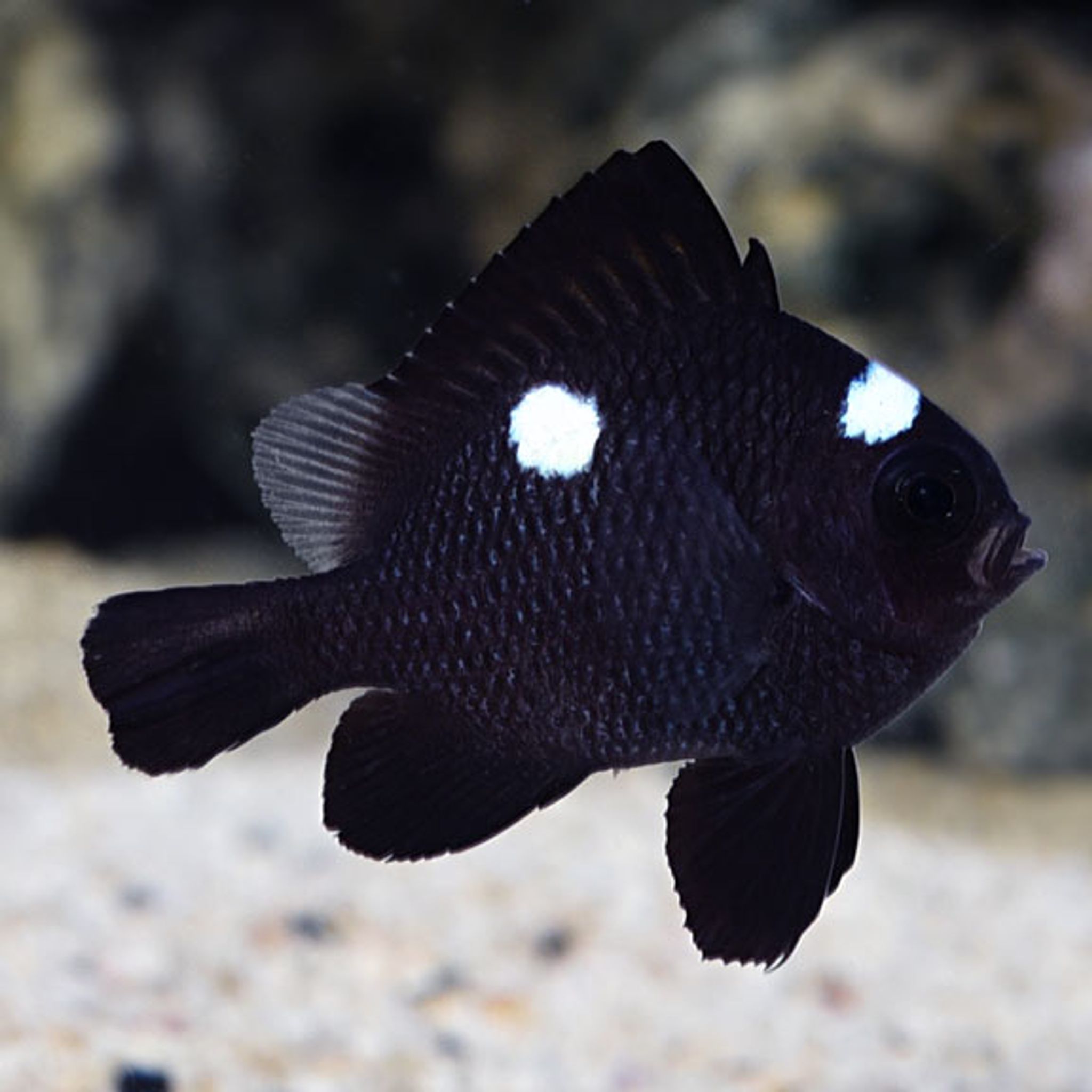
Domino Damselfish are named for their dark bodies and contrasting pale spots.
Juveniles can be especially striking, but these fish may become larger, darker and more territorial as they mature.
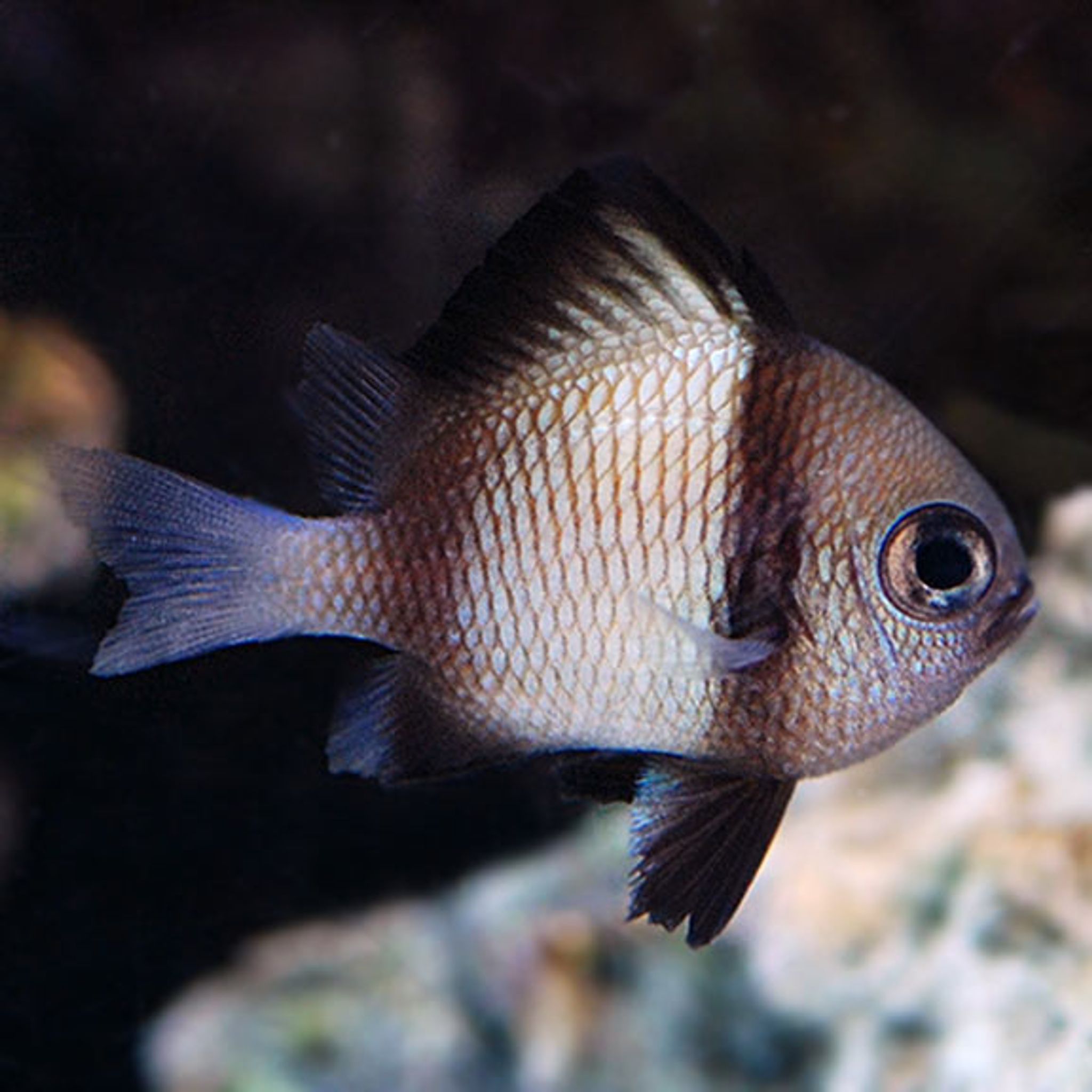
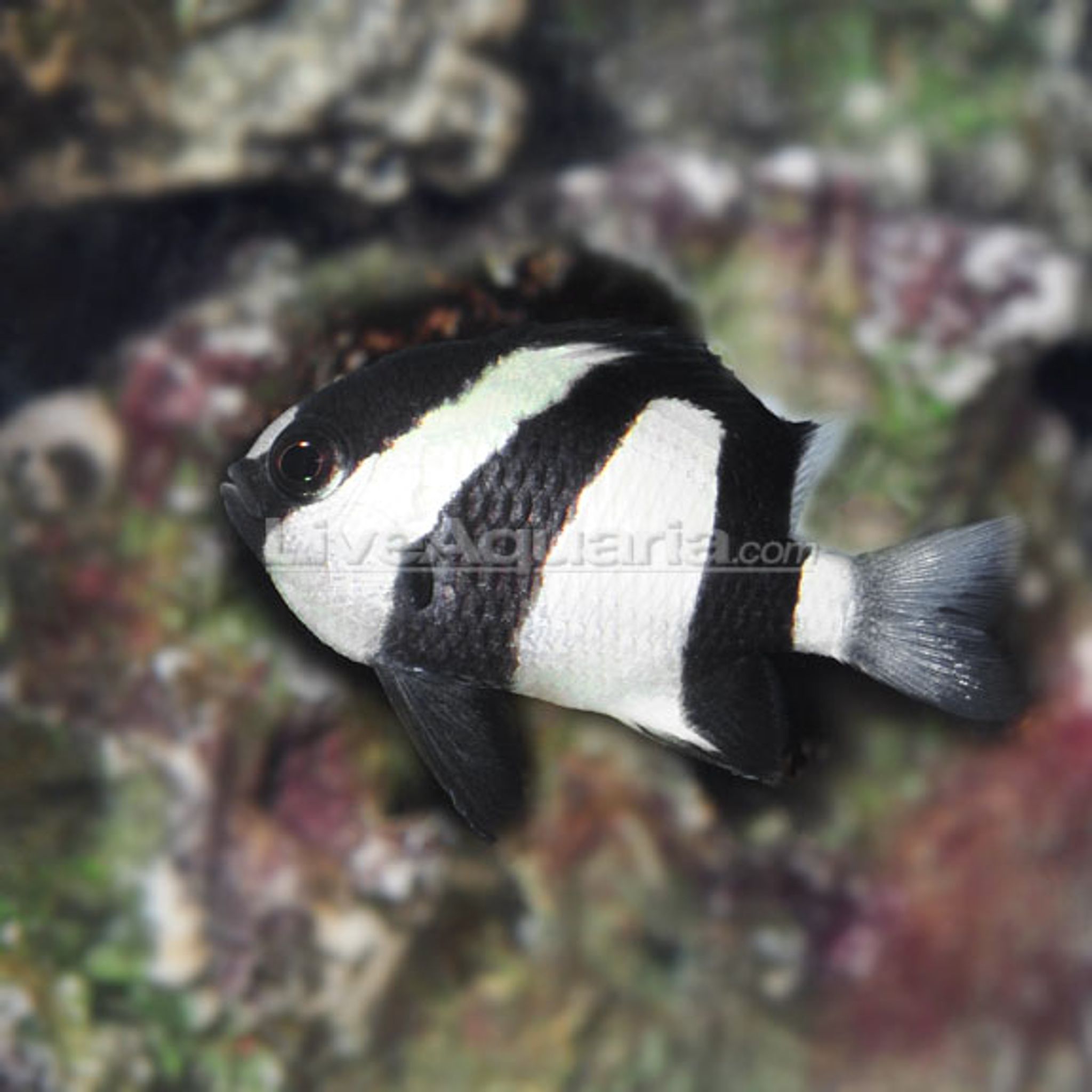
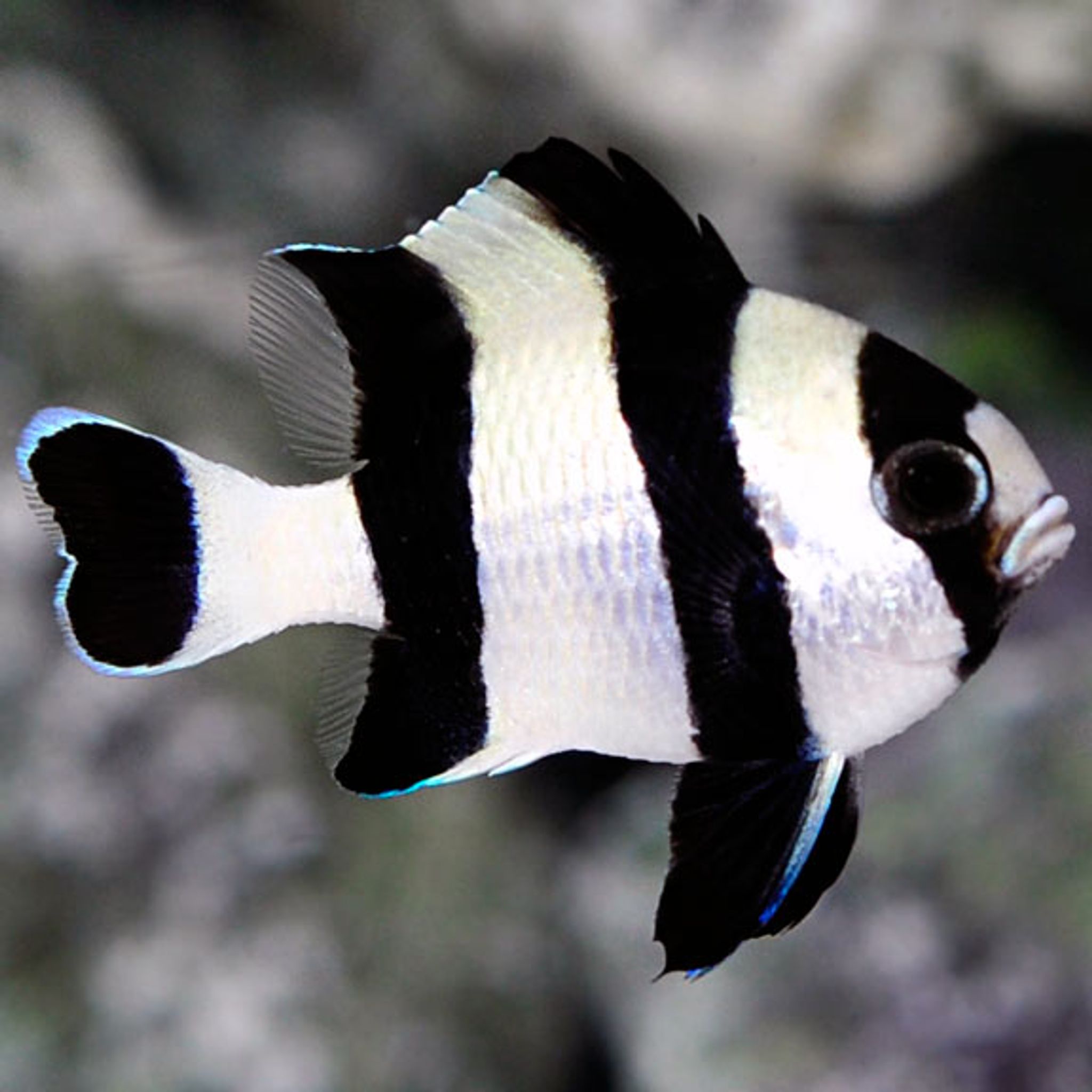
Three Stripe Damselfish have bold black-and-white vertical bands and a compact, deep-bodied shape.
They can become strongly territorial, so aquarium size and tankmate selection are particularly important.
Four Stripe Damselfish are another boldly patterned black-and-white species popular with marine aquarium keepers.
Like several related Damselfish, they may become more territorial with age and should not be chosen solely because juveniles appear small.
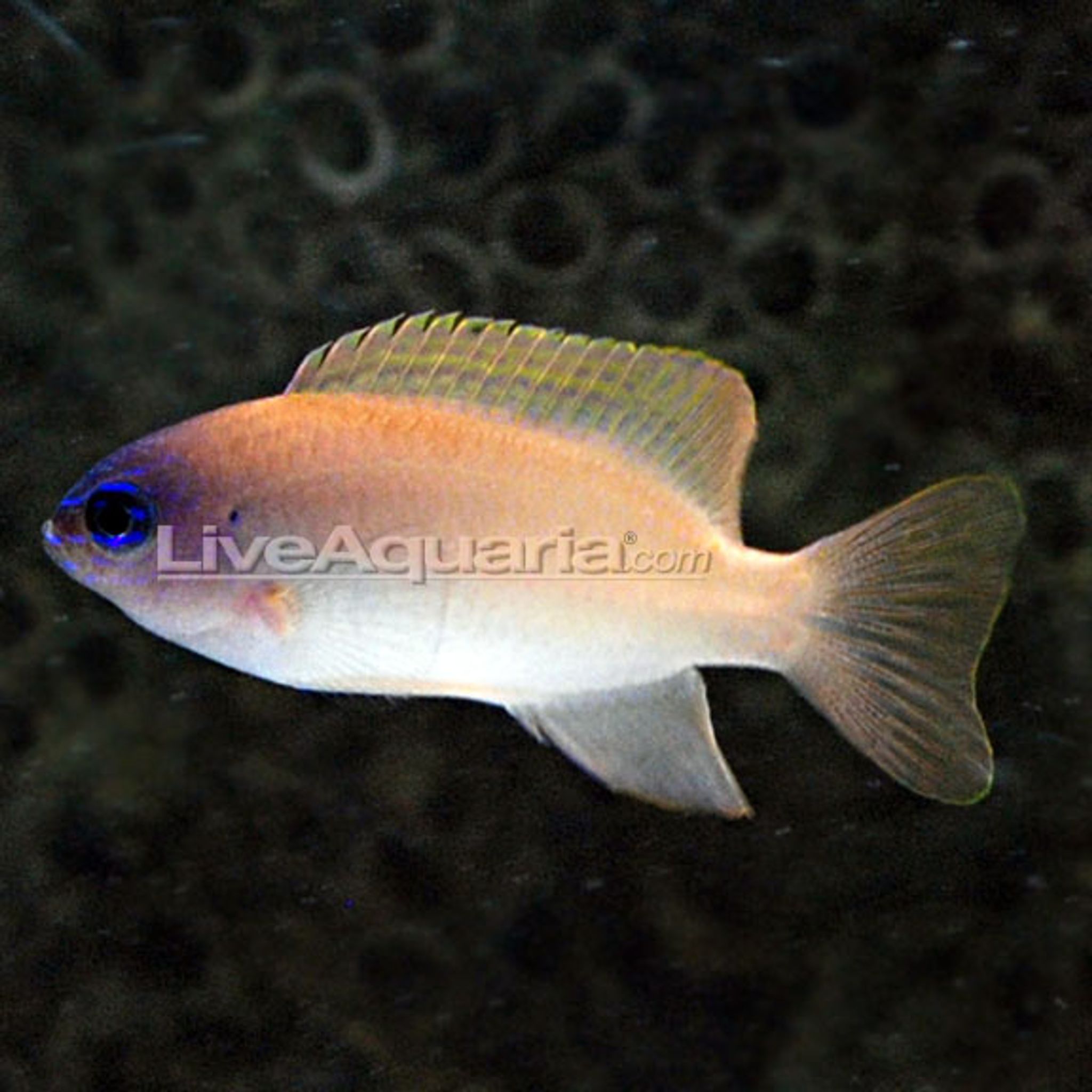
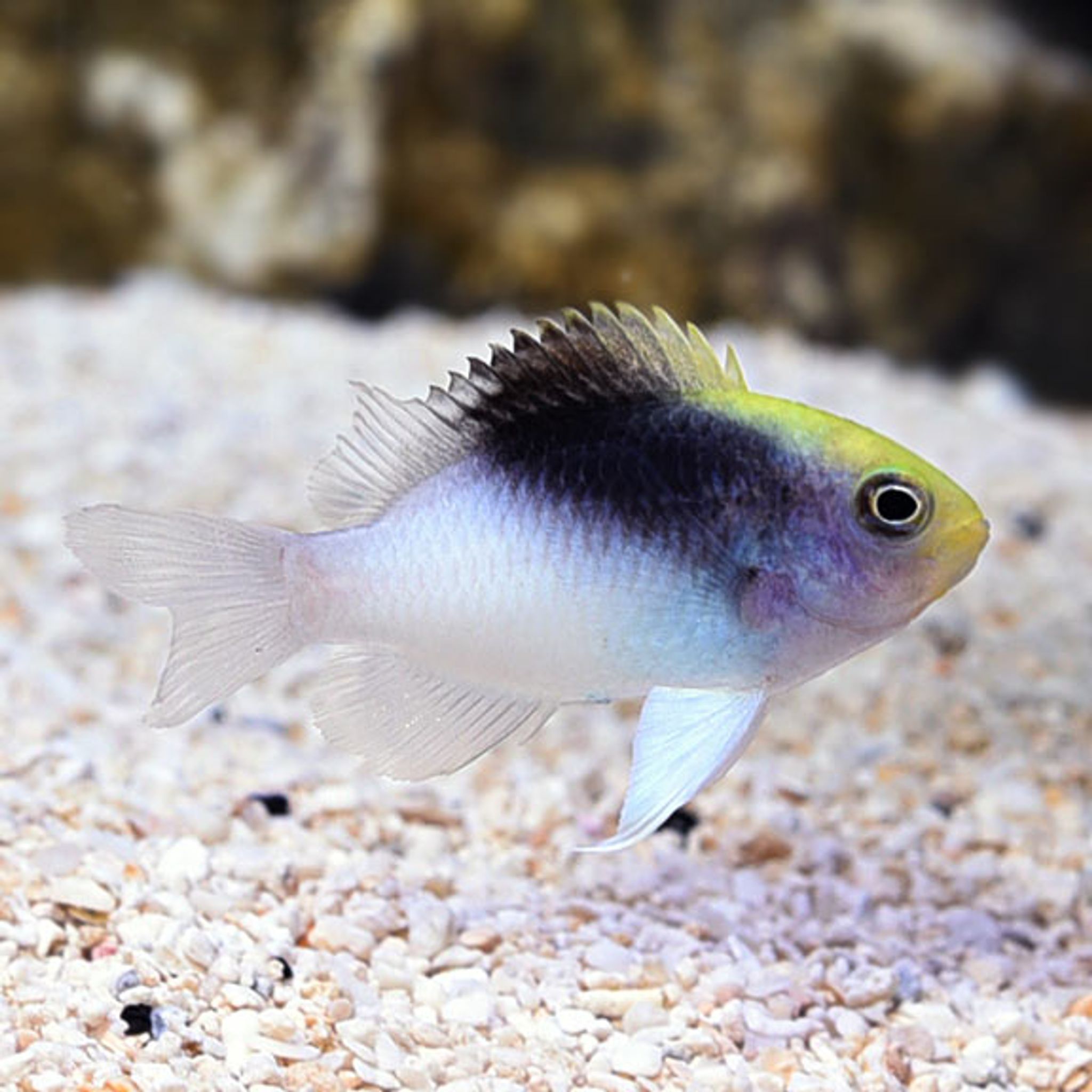
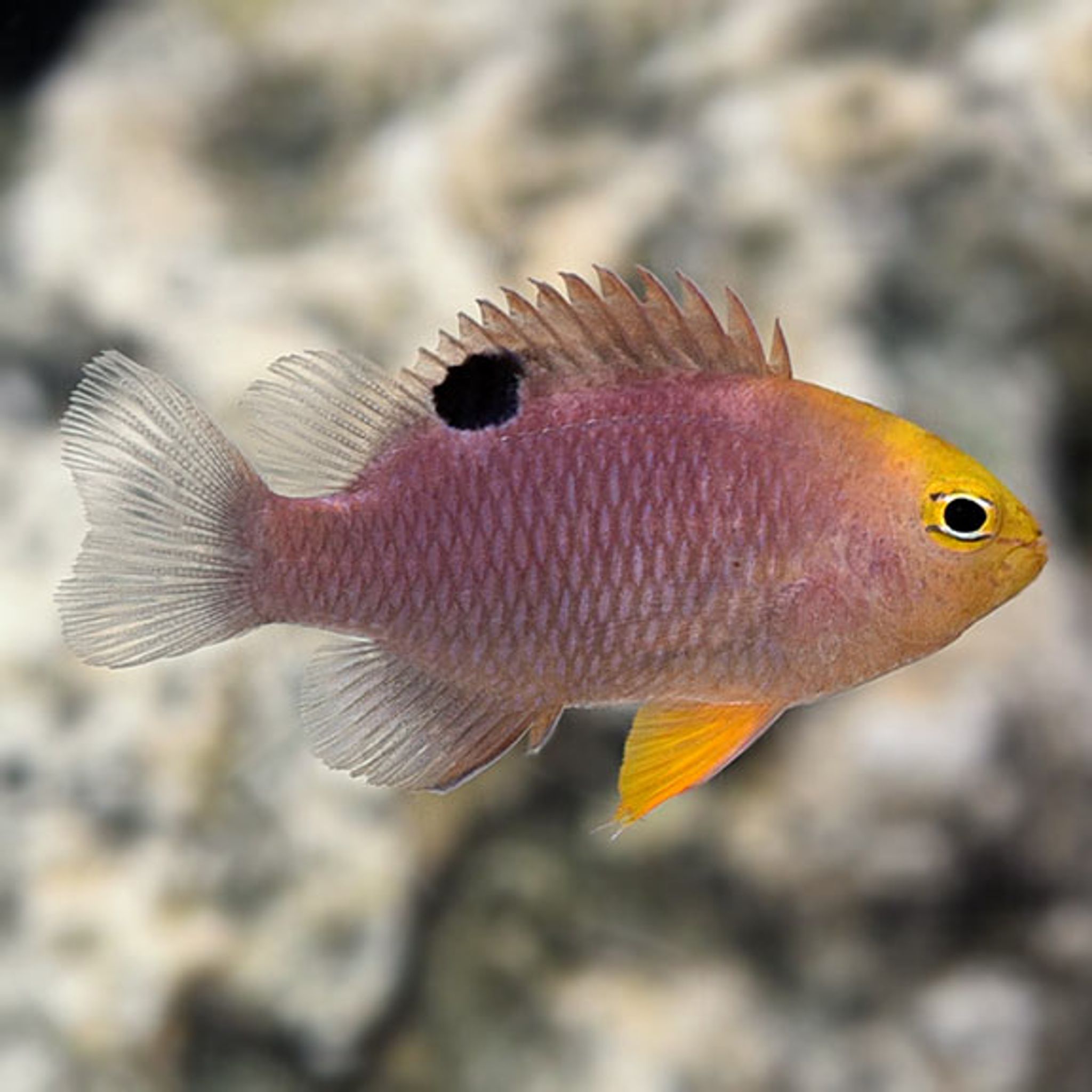
Talbot’s Damselfish are compact reef fish with soft blue-violet coloration and contrasting facial or dorsal markings.
They are often considered among the more manageable Damselfish for community-style marine aquariums, though territorial behavior is still possible.
Springer’s Damselfish are small, striking blue marine fish with dark markings.
Their compact size and vivid coloration make them popular with reef keepers looking for smaller Damselfish species.
Chromis are members of the Damselfish family and include several popular schooling or shoaling marine aquarium fish.
Green Chromis and related species are often chosen for open-water movement and a less territorial appearance than many rock-defending Damselfish.
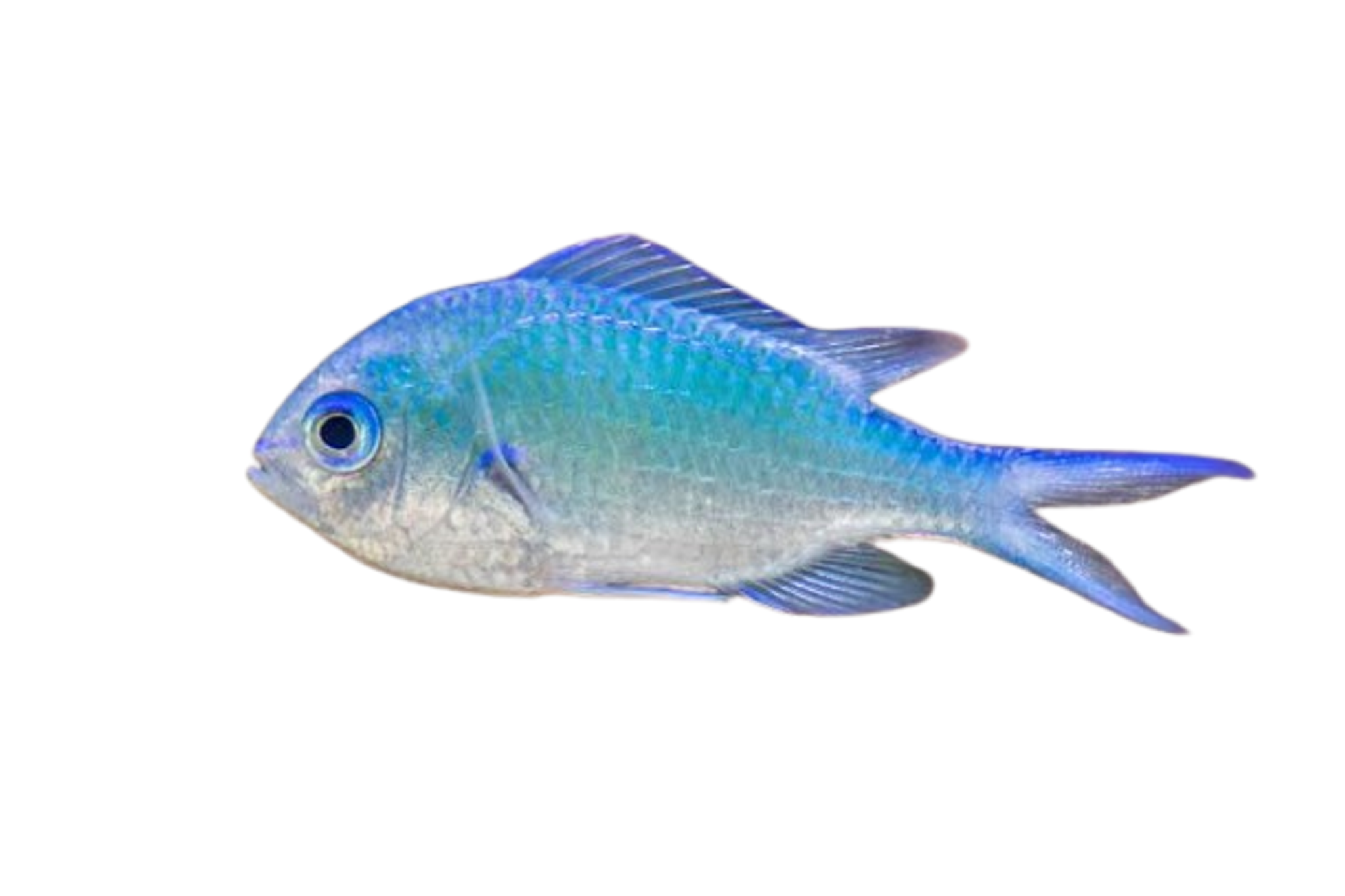
Green Chromis are shimmering blue-green marine fish commonly kept in reef aquariums.
They are often maintained in groups, although social dynamics can change over time and weaker individuals may be pressured in some groups.
Chromis belong to the same family as Damselfish but are often discussed separately in the aquarium hobby because of differences in appearance and social behavior.
Many classic Damselfish defend rock territories, while some Chromis spend more time swimming in open water. Exact behavior still varies by species.
Many Damselfish are generally compatible with corals and are commonly kept in reef aquariums.
Their biggest compatibility concern is often territorial aggression rather than coral predation, although exact behavior should always be checked by species.
Damselfish temperament ranges from relatively peaceful to highly territorial.
Some small species can work well in mixed reef communities, while larger or more assertive Damselfish may dominate a substantial area of the aquarium.
Many Damselfish naturally defend feeding areas, shelter and breeding territories.
Aggression may increase as a fish matures and establishes ownership of rockwork or a particular section of the aquarium.
Damselfish vary significantly in adult size.
Some remain relatively compact while others grow much larger than their juvenile sale size, so long-term aquarium planning should be based on the exact species.
Damselfish benefit from stable marine aquariums with rockwork, hiding places and enough swimming space.
Multiple caves and visual barriers can help reduce constant line-of-sight aggression between territorial fish.
Live rock provides shelter, territory boundaries and natural feeding surfaces for many Damselfish.
A structured aquascape can be especially important when keeping multiple fish that establish individual territories.
Multiple Damselfish can sometimes be kept together, but compatibility depends strongly on species, aquarium size and available territory.
Similar-looking fish may compete aggressively, and adding new Damselfish to an aquarium with established territorial individuals can be challenging.
Damselfish can coexist with many marine fish when tankmates are appropriately sized and able to tolerate their temperament.
Clownfish, Wrasses, Tangs, Gobies, Blennies and marine Angelfish may be possible tankmates, but exact compatibility should always be checked by species.
Clownfish and Damselfish are closely related and can both display strong territorial behavior.
They may coexist in sufficiently spacious aquariums, but overlapping territories can lead to persistent chasing or aggression.
Damselfish and Tangs can often coexist because Tangs are generally larger, active swimmers using broader areas of the aquarium.
Tank size should be based primarily on the needs of the Tang while still providing adequate territory for the Damselfish.
Peaceful Gobies can sometimes live with Damselfish, but aggressive Damselfish may chase smaller bottom-dwelling fish.
Provide plenty of hiding places and avoid combinations where a highly territorial Damselfish dominates the entire aquarium.
Many commonly kept Damselfish can coexist with larger ornamental shrimp.
Compatibility should still be checked by exact species, especially with very small crustaceans or unusually predatory fish.
Damselfish diets vary by species, with many feeding on combinations of plankton, algae and small animal-based foods.
In aquariums, provide a varied marine diet appropriate to the exact species rather than assuming every Damselfish has identical feeding requirements.
Many Damselfish readily accept quality marine pellets, flakes and appropriately sized frozen foods.
More specialized species may benefit from additional algae-based or planktonic foods depending on their natural diet.
Damselfish were historically used by some hobbyists to cycle new saltwater aquariums because of their reputation for hardiness.
This practice unnecessarily exposes fish to toxic ammonia and nitrite. Modern fishless cycling methods can establish biological filtration without subjecting live fish to harmful conditions.
Damselfish benefit from stable saltwater conditions, good oxygenation and reliable filtration.
Being relatively resilient does not mean they should be exposed to poor water quality or unstable aquarium conditions.
Quarantine and careful observation can help reduce the risk of introducing parasites or disease into an established marine aquarium.
Monitor appetite, breathing, coloration, fins and swimming behavior before combining new livestock with an existing collection.
When comparing Damselfish for sale, look for:
Newly shipped Damselfish may experience stress from transport and changes in water conditions.
Prepare a stable aquarium in advance and follow the seller's acclimation guidance while providing immediate access to shelter.
Damselfish prices vary according to species, size, color, origin, rarity and seller.
Common Damselfish and less frequently available specialty species can differ substantially in price, so compare exact species, livestock condition and seller terms rather than price alone.
FishyHub brings Damselfish listings from marine aquarium stores and specialist sellers together in one marketplace.
When comparing Damselfish online, consider:
Shipping availability depends on the seller, destination, fish size, weather and livestock-shipping policy.
Review delivery timing, packaging and live-arrival terms before ordering, and make sure the aquarium is ready for the exact Damselfish species before arrival.
Yes. Marine aquarium stores and specialist sellers offer Damselfish online across the U.S., depending on seller shipping coverage and livestock policies.
Some are relatively peaceful, while others can become highly territorial. Temperament depends strongly on species, aquarium size and the individual fish.
Many commonly kept Damselfish are compatible with corals, although territorial aggression toward other fish can still be significant.
Chromis are part of the Damselfish family but are often grouped separately by aquarists because many have a more open-water swimming style.
They can in some aquariums, but both groups may defend territories and persistent aggression can occur when their preferred areas overlap.
Sometimes, but compatibility depends on exact species, aquarium size, territory and introduction order.
No. Fishless cycling is preferred because cycling with live fish can expose them to harmful ammonia and nitrite.
FishyHub helps U.S. hobbyists compare Damselfish listings from marine aquarium stores and specialist sellers in one marketplace.
Explore Damselfish for sale on FishyHub and compare Blue, Yellowtail, Azure, Domino, Three Stripe, Chromis and other marine Damselfish species. Discover listings from saltwater aquarium sellers across the United States, and compare species, size, coloration, temperament, price and shipping options before choosing your next Damselfish.