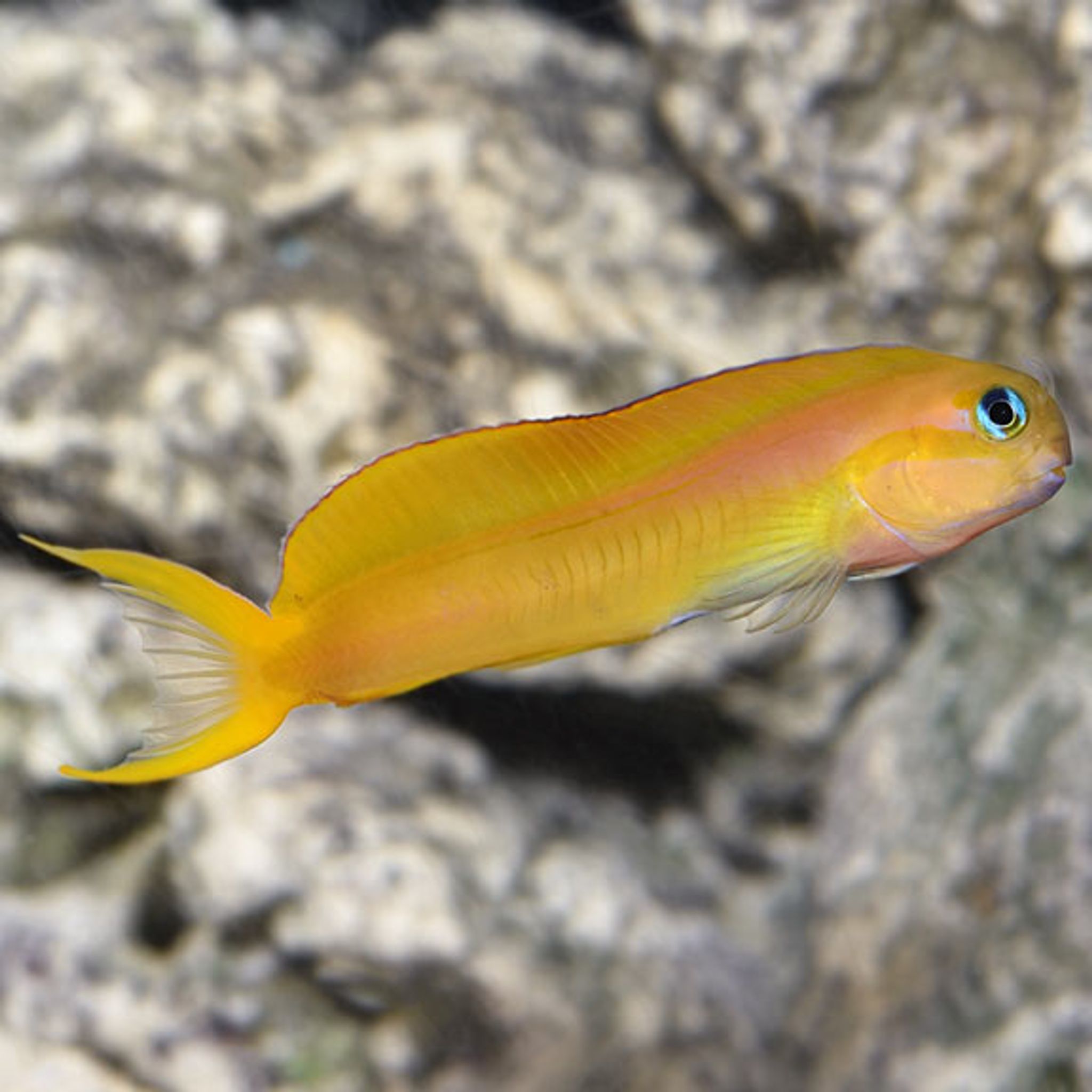

Best Tank Mates for Midas Blenny: Peaceful, Risky and Incompatible Choices
A Midas Blenny (Ecsenius midas) is one of the more relaxed personalities you can add to a reef tank, but its compatibility isn't random — it comes down to perch-site defense and shape mimicry, not general "temperament." This guide sorts tank mates into peaceful, risky, and avoid categories based on what actually triggers this fish's aggression.
Quick ID: What Exactly Is a Midas Blenny?
Ecsenius midas belongs to the Combtooth blenny family (Blenniidae) and is frequently mixed up with fang blennies (genus Meiacanthus) because both can show similar yellow-orange coloring and a similar darting swim style. They are not related in any way that matters for bite risk: fang blennies carry venomous fangs used defensively, while a Midas Blenny has none. Confusing the two leads to two opposite mistakes — expecting a Midas to bite like a fang blenny, or assuming it has zero territorial instinct at all.
Midas Blennies also come in blue-green color morphs in addition to the more common bright yellow-orange, and adults reach roughly 4–5 inches (10–13 cm). One trait rarely mentioned in basic care sheets: in the wild, this species mimics the color and swimming pattern of the orange/yellow Lyretail Anthias (Pseudanthias squamipinnis), blending into anthias shoals to sneak closer to plankton. Hobbyists can use this on purpose — more on that below.
The Real Driver of Aggression (Not "Peaceful vs. Aggressive")
Care guides disagree on whether Midas Blennies are "generally peaceful" or "semi-aggressive/territorial." Both are true depending on what you're asking. The mechanism is specific:
- Perch-site defense: a settled Midas Blenny claims one rock or cave as home base and defends that spot.
- Shape and niche overlap: aggression spikes toward fish that resemble it in size, body shape, and swimming style — mainly other combtooth blennies.
- Everything else: fish with a different body plan, swimming niche, or feeding style are largely ignored.
Once you frame it this way, most "is X compatible" questions answer themselves: does the tank mate compete for the same rock and look like a similar-shaped rival? If not, risk is low.
Peaceful / Safe Tank Mates
These fish occupy different niches or body plans and rarely trigger territorial responses:
- Clownfish (ocellaris or percula) — different swimming style, usually anchored to an anemone or coral head rather than open rockwork
- Cardinalfish (Banggai, Pajama) — mid-water, nocturnal-leaning feeders
- Dwarf/pygmy angelfish (Flame, Coral Beauty) in a large enough tank
- Anthias (Lyretail, Bartlett's) — genuinely complementary, since the Midas Blenny's coloring and movement mimic orange anthias in the wild; keeping the two together produces a visually cohesive mixed group
- Tangs and surgeonfish (Yellow Tang, Blue Tang) — completely different body plan, no perch competition
- Fairy and flasher wrasses — open-water or sand dwellers
- Sand- and rubble-based gobies (watchman gobies) — different substrate use than a rock-hopping blenny
- Most other peaceful reef community fish, given adequate tank size
If you're stocking a mixed reef community, browsing the marine fish selection with this niche-overlap framework in mind will save more headaches than any generic "peaceful fish" checklist.
The Anthias Stocking Trick
Because a Midas Blenny visually mimics orange Lyretail Anthias, pairing the two isn't just compatible — it's a deliberate aquascaping choice. A small anthias shoal with a Midas Blenny hopping among the rockwork below reads as one cohesive orange/yellow display rather than two unrelated species.
Risky / Case-by-Case Tank Mates
- Firefish and dartfish: most sources call these compatible since they occupy open water rather than rockwork. A minority flag mild competition for plankton in the water column. Treat this as low risk in a standard tank, but watch feeding behavior closely in nano tanks under about 40 gallons (150 L), where the water column is small enough that overlap becomes real.
- Other blennies of different genera or shapes: risk depends entirely on body size and how much rockwork is available to split into separate territories. A large tank with heavily divided rock reduces but doesn't eliminate friction.
- Very timid same-niche rock dwellers: a shy fish that also wants the same caves may get pushed out of hiding spots once the Midas Blenny settles in and becomes bolder.
- Small ornamental shrimp on introduction: reef-safe status generally holds for clean-up-crew inverts, but a skittish, newly introduced Midas Blenny may occasionally nip at very small ornamental shrimp. This is a minor caution, not a major incompatibility.
Incompatible / Avoid
- A second Midas Blenny in anything under roughly 90 gallons (340 L) — same-species aggression is the single biggest compatibility failure with this fish.
- Other Ecsenius or combtooth blennies of similar size and shape, regardless of species, in a small-to-medium tank. Shape mimicry among blennies triggers the same territorial response as another Midas.
- Fish requiring venomous-bite-level caution — a non-issue with a true Midas Blenny, but relevant if a buyer mistakenly picked one up expecting fang-blenny behavior (or vice versa).
Can You Keep Two Midas Blennies Together?
This is where sources genuinely disagree, so here's the practical read: one camp says never combine two Midas Blennies under any circumstances; another says it can work in 90+ gallon tanks with simultaneous introduction and heavily divided rockwork. Both are defensible. The sensible default is to treat this species as one per tank unless you have a large aquarium, add both individuals at the same time, and accept that failure (chasing, torn fins, one fish losing access to food) is a real possibility even then.
Ideal Tank Setup
| Factor | Recommendation |
|---|---|
| Minimum tank size (one Midas) | 30 gal (115 L) |
| Minimum tank size (attempting two) | 75–90+ gal (285–340+ L), success not guaranteed |
| Temperature | 72–78°F (22–26°C) |
| Specific gravity | 1.023–1.025 |
| Nitrates | Stable and low |
| Aquascape | Live rock with multiple caves/perches |
| Lid | Tight-fitting — mandatory |
| Tank maturity | Established biofilm/pod population preferred |
A Midas Blenny does fine in a reef or a fish-only-with-live-rock (FOWLR) setup — it won't touch coral tissue or typical clean-up-crew inverts, making it reef safe in the sense most hobbyists mean. Just remember "reef safe" refers to corals and clean-up inverts, not automatically to every ornamental shrimp in the tank.
Diet and Feeding Schedule
As a planktivore leaning omnivore, a Midas Blenny does best on:
- Enriched mysis and brine shrimp
- Copepods
- Algae- or spirulina-based frozen or pellet foods
Feed 2–3 small meals per day rather than one large feeding. This species burns through energy hopping around rockwork and hunting, and infrequent feeding shows up quickly as faded color or weight loss.
Breeding Notes (Brief)
Breeding in home aquaria is difficult and uncommon. Males may appear slightly larger or more vividly colored, but sexing by appearance alone is unreliable. In the wild, this species lays eggs and guards a nest site — worth knowing conceptually, but not something most home reefkeepers will attempt.
Common Mistakes to Avoid
- No lid: jumping out of an open tank is the single most common preventable cause of loss for this species — a covered overflow and tight-fitting lid are non-negotiable.
- Two similarly-shaped blennies in a small tank: leads to chasing, torn fins, and a stressed fish that stops eating.
- No established rockwork on introduction: a new Midas Blenny with nowhere to claim will hide constantly, lose color, and may refuse food.
- Assuming "reef safe" covers every invert: it does for snails, crabs, hermits, and most shrimp, but watch a newly introduced, skittish individual around very small ornamental shrimp.
- Confusing it with a fang blenny: leads either to overestimating bite risk or underestimating territorial behavior.
- Underfeeding: once-daily feeding is often too infrequent for a planktivore with this activity level.
- Adding it before any biofilm or pod population exists: a shy new arrival that hasn't learned to eat prepared food yet can starve in a tank with nothing to graze on.
A Simple Decision Framework
Instead of memorizing a fish-by-fish list, run new stocking ideas through three questions:
- How big is the tank? Under 30 gallons, stick to one Midas Blenny and skip any other combtooth blenny entirely.
- How many blennies total? One Midas Blenny per tank unless you're in 90+ gallons and willing to accept real risk with a second.
- How is the rockwork arranged? More caves and perches spread across the aquascape reduces (but never fully removes) territorial conflict between similarly shaped fish.
Frequently Asked Questions
Can I keep two Midas Blennies together?
Generally no in tanks under about 90 gallons — same-species aggression is the top compatibility issue with this fish. Some hobbyists report success in larger tanks with simultaneous introduction and heavily divided rockwork, but it isn't guaranteed.
Is the Midas Blenny reef safe?
Yes. It won't eat coral tissue or typical clean-up-crew invertebrates like snails, hermit crabs, or most shrimp, making it a safe addition to reef tanks.
Will a Midas Blenny fight my other blennies (bicolor, lawnmower, etc.)?
Risk rises with similar body size, shape, and shared rockwork rather than species identity alone. A larger tank with rock divided into separate territories lowers the odds of conflict but doesn't eliminate it.
Does it need a lid?
Yes. Jumping is one of the leading causes of loss for this species, and a tight-fitting lid or covered overflow should be considered mandatory, not optional.
What fish should I avoid with a Midas Blenny?
Other Ecsenius or combtooth blennies of similar size and shape are the main ones to avoid, along with very timid same-niche rock-dwellers that could get bullied out of their hiding spots once the Midas settles in.
Can it live with anthias?
Yes — and it's a genuinely good pairing. A Midas Blenny's coloring and swimming style mimic orange Lyretail Anthias in the wild, so the two look natural together in a mixed display.
What's the minimum tank size?
30 gallons (115 L) for a single Midas Blenny, with 75–90+ gallons recommended if you're attempting to keep two.
Is it aggressive toward shrimp or crabs?
No, it isn't a threat to typical reef clean-up crew invertebrates, though a newly introduced, skittish individual may occasionally nip at very small ornamental shrimp.
A Midas Blenny rewards a little planning more than most reef fish: get the tank size, lid, and rockwork right, avoid doubling up on similarly shaped blennies, and it will settle into almost any peaceful community. Browse the current blennies selection on FishyHub to compare available Midas Blennies and their tank mates side by side.


