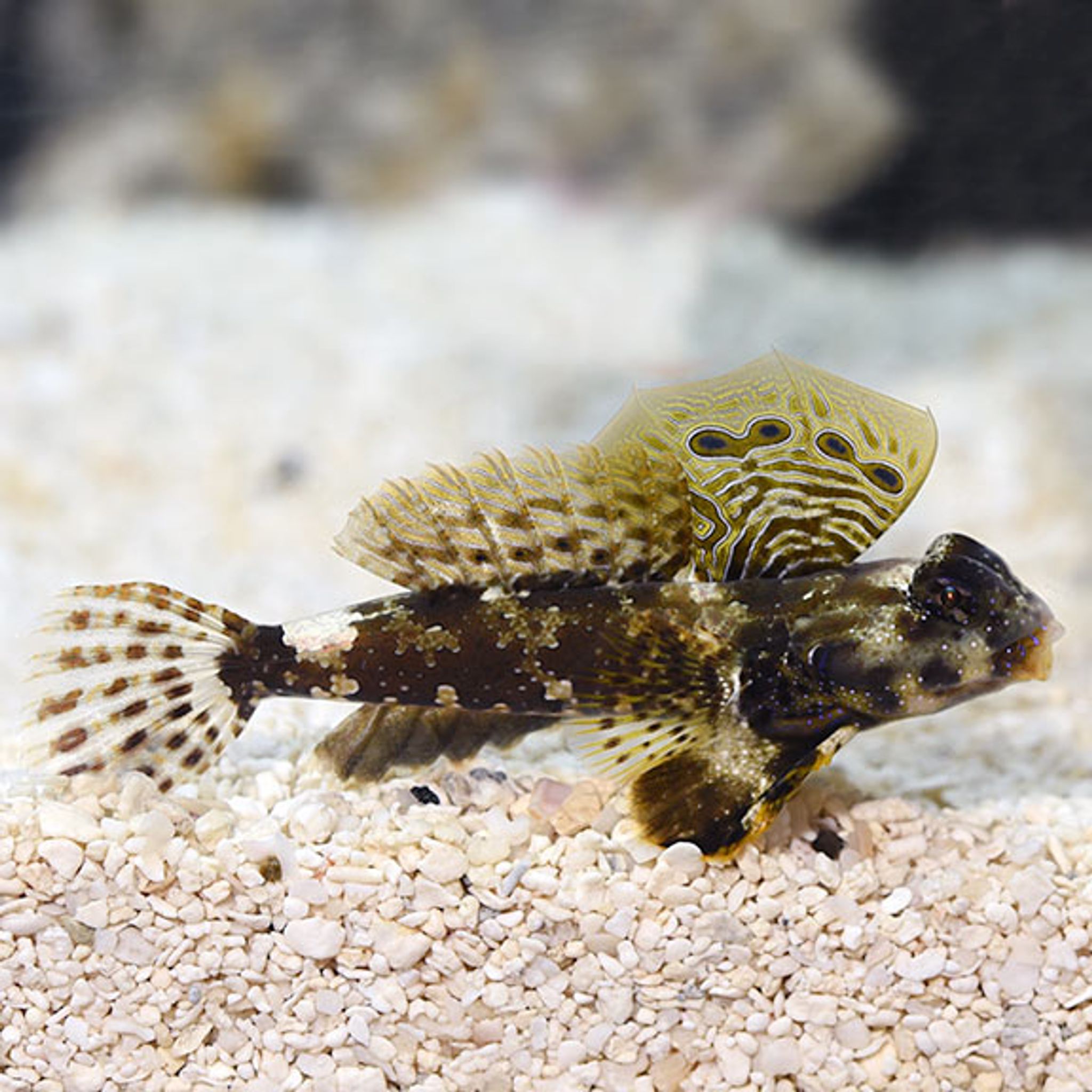

Best Tank Mates for Tailspot Blenny: Peaceful, Risky and Incompatible Choices
The tailspot blenny is one of the most low-conflict fish you can add to a nano or small reef, but "peaceful" doesn't mean "compatible with everything." This guide sorts tank mates into safe, conditional, and incompatible tiers, and ties each choice to your actual tank size so you're not guessing.
Species Snapshot: Who Is the Tailspot Blenny?
Ecsenius stigmatura, commonly called the tailspot blenny or Red Sea mimic blenny, tops out around 2.5-3.5 inches (6-9 cm). It's a rockwork-dwelling grazer that perches on live rock, glass, and rockwork ledges rather than swimming in open water.
An interesting quirk: this species is a Batesian mimic of the bicolor/canine fang blenny (Meiacanthus nigrolineatus), a venomous species with large fangs that most predators learn to avoid. The tailspot copies its coloring and body shape closely enough that predators often steer clear of it too — even though the tailspot itself has no fangs, no venom, and zero capacity to bite anything harder than a film of algae. It's a defense mechanism for the blenny, not a behavioral trait; don't expect it to act tough just because it looks like something that can.
Distinguishing it from lookalike Ecsenius species matters mainly for stocking decisions later in this guide — similar body shape and size among Ecsenius blennies is exactly what drives territorial conflict when you try to keep more than one.
Tank Setup and Water Parameters
| Parameter | Range | Notes |
|---|---|---|
| Tank size | 10-15 gal (38-57 L) minimum | 20+ gal (76+ L) better with multiple bottom dwellers |
| Temperature | 72-82°F (22-28°C) | Ideal: 74-78°F (23-26°C) |
| Specific gravity | 1.020-1.025 | Reef target 1.025-1.026 |
| pH | 8.1-8.4 | Stable reef parameters |
| Diet | Herbivore/omnivore | No special calcium/alk needs (it's a fish, not a coral) |
A tailspot blenny does best in a mature tank with established algae film on the rock and glass — it needs something to graze constantly. Rockwork should include caves and ledges the blenny can claim as a perch; this species rests on surfaces rather than hovering, so vertical rock structure with visual breaks matters more than open swimming room.
Is the Tailspot Blenny Reef Safe?
Yes — it's considered fully reef safe. It won't touch coral tissue, clam mantles, or any invertebrate under normal circumstances. The one caveat worth flagging: an underfed tailspot blenny will occasionally nip at large-polyp coral flesh out of hunger or curiosity. This is uncommon and entirely preventable — keep supplemental algae-based food available and the risk essentially disappears. Reef safety claims for this species should really read "reef safe when properly fed," not "reef safe, ignore feeding."
Peaceful Tank Mates (Safe Choices)
These fish and invertebrates coexist with a tailspot blenny with essentially no conflict risk:
- Clownfish (ocellaris or percula) — different niche, no competition for rockwork
- Peaceful gobies — clown goby, watchman goby, firefish/dartfish
- Chromis — open-water schoolers that never compete for perches
- Cardinalfish — slow, peaceful, different feeding zone
- Small dwarf angels — in tanks on the larger end of the range
- Cleaner shrimp, hermit crabs, and snails — fully ignored by the blenny
You can browse clownfish and other reef-safe community fish to pair alongside a tailspot blenny without worrying about aggression in either direction.
Risky or Conditional Tank Mates
These aren't automatic no's, but they come with a size threshold or a caveat worth knowing before you buy:
Other Blennies (Including Lawnmower Blenny)
Any similarly shaped, rock-dwelling blenny — another Ecsenius species in particular — carries real risk of chasing and nipping in a nano tank. In a tank of 40+ gallons with multiple separate rock formations and line-of-sight breaks, mixed-genus combinations (like a tailspot with a lawnmower blenny) can work because the two look and behave differently enough to avoid triggering territorial responses. Visually similar species in cramped quarters are the more common failure mode.
Six-Line and Four-Line Wrasses
This is genuinely contested territory. Some hobbyist accounts describe six-line wrasses as excellent, peaceful community fish; others flag them as semi-aggressive and territorial, especially once established. The practical read: they tend to do fine in 20+ gallon tanks when the blenny is added first and claims its perch before the wrasse arrives, but they're a bigger gamble in true nano tanks under 15 gallons where there's nowhere for a bullied fish to retreat.
Pistol Shrimp / Goby Pairs
No direct conflict here — different feeding strategy entirely — but in a small footprint, a burrowing pistol shrimp pair and a blenny both want prime rockwork real estate, which can mean more bumping and displacement than either species would show on its own.
Dottybacks
Usually fine, since the tailspot blenny is non-confrontational and won't escalate. The catch is dottyback aggression itself is unpredictable fish to fish — some individuals are calm, others are territorial toward anything nearby regardless of provocation. If you're adding a dottyback, do so after the blenny and watch the first week closely.
Incompatible Tank Mates
Avoid these outright:
- Large predators — lionfish, groupers, large triggerfish, large eels. A blenny under 3.5 inches is an easy meal.
- A second tailspot blenny in any tank under roughly 20-30 gallons — see the section below, this is the single most reliable source of conflict.
- Large, aggressive tangs or angels in small tanks, which will bully every bottom dweller, not just the blenny.
- Anything requiring brackish or freshwater conditions — obviously incompatible parameters.
Can You Keep Two Tailspot Blennies Together?
This is one of the most-asked questions, and the honest answer is: generally, no — at least not in the tank sizes most hobbyists are working with. Some individual reports describe peaceful pairs, particularly when both fish are introduced to a large tank simultaneously so neither claims territory first. But the broader pattern in care guides is consistent: same-species or same-genus blenny combinations in small tanks lead to one dominant fish harassing or starving out the subordinate one.
Default recommendation: one tailspot blenny per tank unless you're working with 40+ gallons and can offer genuinely separate rock structures. If you attempt a pair anyway, monitor feeding behavior daily for the first few weeks — a fish that stops coming out to graze is losing the territorial standoff.
A Size-Based Stocking Framework
Rather than a flat list, match your ambitions to your actual gallon count:
| Tank size | What's realistic |
|---|---|
| 10-15 gal (38-57 L) | One tailspot blenny only; pair with gobies, a clownfish pair, or shrimp/snails. Skip wrasses and second blennies. |
| 20-30 gal (76-114 L) | Add a six-line wrasse (after the blenny) or a dottyback with caution. Still avoid a second similar-bodied blenny. |
| 40+ gal (151+ L) | Room for a visually distinct second blenny species (e.g., lawnmower blenny) with separate rock formations. Two tailspots remain a gamble even here, but more survivable with distinct territories. |
Stocking Order: What to Add Before and After
Because the tailspot blenny isn't a bully, exact order matters less for it than for genuinely territorial species — but a rough sequence still helps:
- Early-to-mid stocking: add the blenny once the tank has algae film established, before more territorial species claim all the rockwork.
- After the blenny: six-line wrasses, dottybacks, and other semi-aggressive small fish — giving the blenny first claim on its preferred perch reduces friction.
- Last: any additional rock-dwelling species, once you can see which caves and ledges are already spoken for.
Feeding Guide and Signs of Malnourishment
A tailspot blenny grazes constantly on film algae, diatoms, and cyanobacteria. In a brand-new tank without established algae growth, this food source simply doesn't exist yet — and that's the single most common mistake with this species. Feed from day one in a new setup; don't wait for natural algae to catch up.
Supplement with:
- Spirulina flakes or pellets
- Dried seaweed or nori sheets, clipped to the glass
- Algae-based frozen or freeze-dried foods
- Occasional mysis once established tank algae is running steady
A good freeze-dried food with an algae or spirulina base covers the gap nicely in tanks still building up natural grazing surfaces. Watch for a sunken or pinched belly — that's the clearest visible sign of malnourishment, and it's also the leading cause of any coral-nipping behavior. An underfed blenny that starts picking at coral flesh is telling you to feed more, not that the species is untrustworthy around corals.
Common Mistakes to Avoid
- Adding a tailspot blenny to an algae-free tank without supplemental feeding
- Keeping two tailspots (or two similar Ecsenius species) in a nano tank expecting peaceful coexistence
- Leaving the tank uncovered — this species jumps, especially when stressed or being chased
- Assuming "reef safe" means feeding corals is optional insurance against nipping
- Confusing the tailspot with the fang blenny it mimics and expecting aggressive or venomous behavior — it has neither
- Overstocking rockwork-dependent fish (multiple blennies, dottybacks, gobies) without enough distinct hiding spots
Health and Jumping Risk
Tailspot blennies are generally hardy and disease-resistant once acclimated, with no unusual susceptibilities beyond standard marine quarantine practice. The one real vulnerability is jumping — this species is a notorious escape artist, particularly when stressed, chasing, or being chased by a tank mate. A tight-fitting lid or a covered overflow isn't optional; it's the single most important piece of equipment for keeping this fish long-term.
Breeding in home aquaria is rare and not something most hobbyists will encounter; the species shows minimal sexual dimorphism, so sexing pairs by sight isn't reliable.
Frequently Asked Questions
Can I keep two tailspot blennies together?
Generally no in small tanks — one fish will typically dominate and starve or stress out the other. It's possible in large tanks (40+ gallons) with distinct separate territories, but it's risky and not recommended for most home aquarium setups.
Is the tailspot blenny reef safe with corals and invertebrates?
Yes, it's fully reef safe under normal conditions. The rare exception is an underfed fish nipping at large-polyp coral flesh, which is preventable by keeping supplemental algae-based food available at all times.
What is the minimum tank size for a tailspot blenny?
10-15 gallons (38-57 liters) is the practical minimum, though more space and more rockwork are always beneficial, especially if you plan to house other bottom-dwelling fish alongside it.
Will a tailspot blenny fight with other blenny species?
Possibly, especially with similarly shaped and sized Ecsenius species kept in small tanks. Conflict is less likely with visually distinct blennies, such as a lawnmower blenny, in larger setups with separate rock structures.
What do tailspot blennies eat if there's no algae in my tank?
Supplement with spirulina flakes or pellets, dried seaweed or nori, and algae-based frozen or freeze-dried foods until natural algae growth becomes established. Feed from the very first day in a new tank rather than waiting.
Can tailspot blennies live with clownfish, gobies, or wrasses?
Yes — these are among the most commonly recommended peaceful tank mates. Wrasses like the six-line do best when added after the blenny has already claimed its territory, particularly in tanks under 20 gallons.
Why does my tailspot blenny keep jumping out of the tank?
Blennies are prone to jumping when stressed, being chased, or simply exploring their surroundings. A secure lid or a covered overflow is essential equipment for this species, not an optional extra.
Is the tailspot blenny aggressive toward shrimp or crabs?
No, it completely ignores invertebrates and is commonly and safely kept alongside cleaner shrimp, hermit crabs, and snails.
Ready to plan your stocking list? Browse wrasse options and other blennies on FishyHub to round out a nano or small reef built around a tailspot blenny centerpiece.


