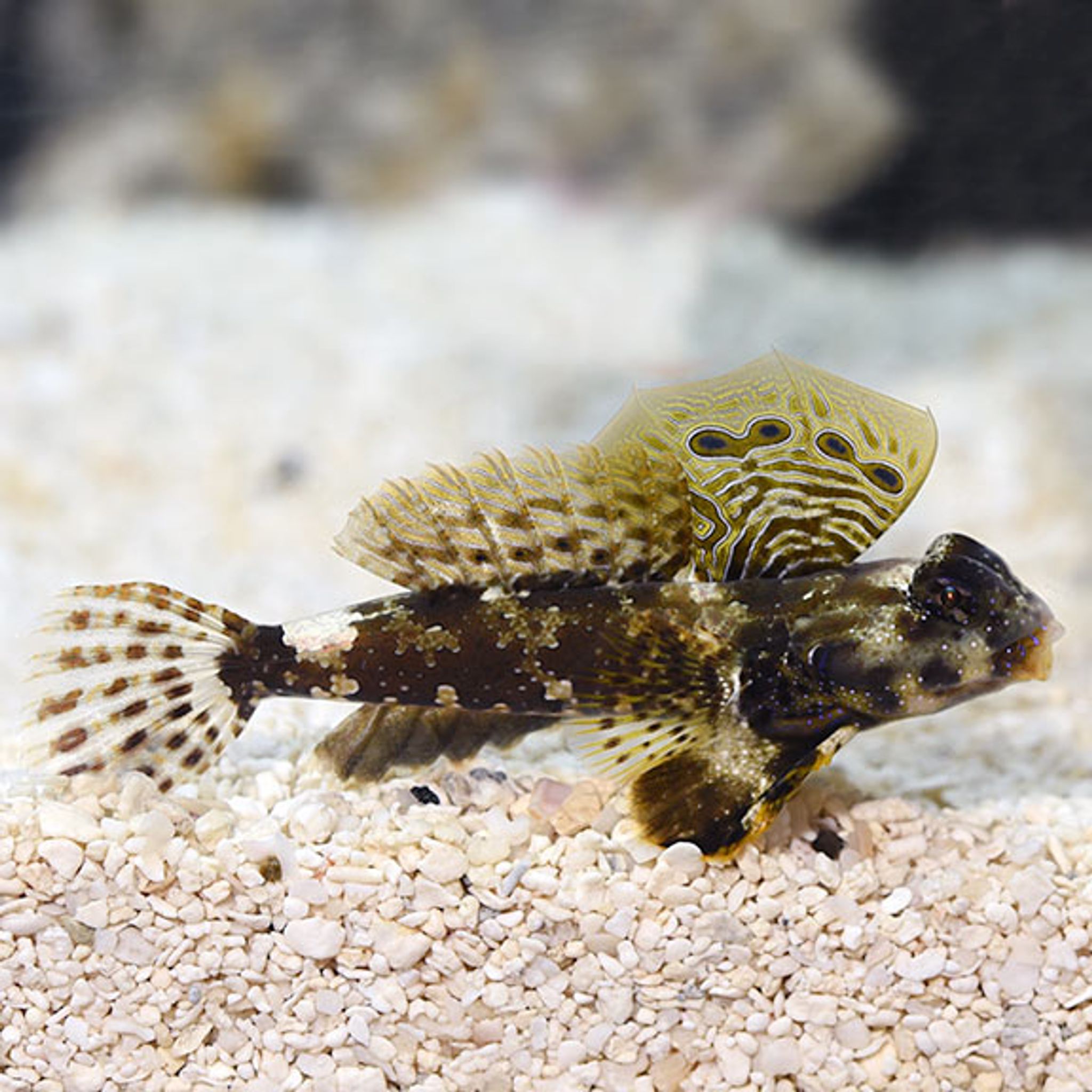

Is Midas Blenny Reef Safe? Coral and Invertebrate Compatibility Explained
Yes, the Midas Blenny is reef safe. It doesn't eat coral polyps, and it leaves anemones, clam mantles, and mobile invertebrates alone as a general rule. That said, "reef safe" isn't a guarantee for every individual fish, and a few real caveats around tankmates and tank size are worth knowing before you add one.
What Is a Midas Blenny?
The Midas Blenny (Ecsenius midas), sometimes sold as the Persian blenny, is a bright gold-to-yellow saltwater fish with the classic elongated blenny body shape. It's a member of the combtooth blenny family and is unrelated to the true fangblennies it happens to resemble.
Like most blennies, it has no swim bladder. Instead of cruising the water column, it perches and hops between rocks and crevices using its pelvic fins for support. What sets the Midas Blenny apart from typical algae-grazing blennies is that it spends noticeably more time swimming in open water, hovering above the reef to pick off plankton — a behavior tied directly to its diet.
The Mimicry Behind the Color
The Midas Blenny's gold coloring and swimming style closely mimic the venomous bicolor and fang blennies found in the same reef habitats. In the wild, this mimicry is thought to give it a measure of protection from predators, since fish that have learned to avoid the venomous look-alike tend to avoid the Midas Blenny too. It's a genuine biological curiosity, not a husbandry concern — a captive Midas Blenny isn't venomous and doesn't behave like its more aggressive lookalikes.
Is a Midas Blenny Reef Safe? The Verdict
For coral and most invertebrates, yes. The Midas Blenny has no documented pattern of coral predation and doesn't target polyps as a food source. It's considered compatible with:
- SPS corals
- LPS corals
- Soft corals
- Zoanthids and mushroom corals
- Anemones (no hosting or tentacle irritation as a rule)
Where sources sometimes disagree is on how absolute that "zero interest" really is. Most guides describe the Midas Blenny as 100% reef safe with no coral-nipping tendency at all. A minority note it's somewhat more prone to opportunistic nipping than the most conservative reef-safe blennies — though still far less than known problem species like bicolor or tailspot blennies — and a handful of individual hobbyist reports mention occasional curiosity-nipping at LPS flesh or clam mantles.
The sensible middle ground: treat "reef safe" as the reliable rule, not an absolute guarantee with every specimen. Watch a newly introduced Midas Blenny for a few weeks, particularly around large-polyp LPS corals and clam mantles, and be ready to intervene if you spot repeated nipping from one individual.
Invertebrate Compatibility
The Midas Blenny's size and feeding habits mean it generally ignores mobile invertebrates. It's considered safe alongside:
- Cleaner shrimp and peppermint or other ornamental shrimp
- Snails and hermit crabs
- Feather duster worms
- Clams
You can browse compatible marine invertebrates for your cleanup crew alongside a Midas Blenny without the same predation concerns you'd have with a more opportunistic carnivore.
What Does a Midas Blenny Actually Eat?
This is a point of real confusion. Some sources describe the Midas Blenny as primarily an algae grazer, like the classic "lawnmower" blennies. That's not accurate. In the wild, it feeds mainly on zooplankton and small invertebrates picked directly from the water column — it's a planktivore first, with only a secondary interest in algae.
In captivity, that means it needs meatier foods than a typical algae-eating blenny, offered more frequently:
| Feeding element | Recommendation |
|---|---|
| Primary foods | Mysis shrimp, enriched brine shrimp, chopped clam, mussel, or other seafood |
| Secondary foods | Algae or spirulina-based foods, offered occasionally |
| Feeding frequency | 2–3 times daily |
| Natural supplement | Established copepod population in a mature tank |
Because it's a more active feeder than most blennies, skimping on meaty foods and relying on flake or algae alone is a common mistake — the fish will slowly lose condition without regular protein-rich meals.
Tank Size and Setup
A single Midas Blenny needs a minimum of 30 gallons (114 L), stocked with plenty of live rock offering small holes and crevices for shelter and sleeping. Since it has no swim bladder, it relies on that rockwork to rest and retreat, not open swimming space alone.
Keeping two Midas Blennies together is not recommended in a typical reef tank. They're territorial toward their own species, and if you want to try it, plan on a much larger tank — roughly 90+ gallons (340+ L) — with separated rock territories to reduce direct confrontation. Even then, fighting is a real risk.
Water Parameters
The Midas Blenny does best in standard, stable reef-tank conditions:
| Parameter | Range |
|---|---|
| Temperature | 72–82°F (22–28°C) |
| pH | 8.1–8.4 |
| Specific gravity | 1.020–1.025 |
| Alkalinity | 8–12 dKH |
A mature, fully cycled tank is strongly preferred over a newly established one, partly because an established copepod population gives the fish a supplemental food source between feedings.
Don't Skip the Lid
The Midas Blenny is a strong, frequent jumper. A tight-fitting lid or cover is essential — especially during feeding time, when the lights change, or if the fish is startled. An open-top tank is one of the most common ways hobbyists lose this fish.
Fish Tankmate Compatibility
The Midas Blenny is generally peaceful and mixes well with tangs, wrasses, clownfish, gobies, dartfish, and other typical community reef fish. But "peaceful" comes with two clear exceptions worth planning around:
- Other blennies of any species. The Midas Blenny will not tolerate a second blenny in the tank. Territorial aggression is close to guaranteed, so keep to one blenny per system.
- Other small planktivores competing for the same food niche. Fish like firefish, small gobies, or anthias feed on similar open-water plankton, and a Midas Blenny can turn aggressive toward them — especially in an undersized tank where there's nowhere to retreat.
The practical takeaway: this fish is peaceful with most tankmates but not with same-niche competitors, and that territorial edge scales up as tank size shrinks. Err toward the larger end of the tank size range, and consider stocking the Midas Blenny alongside similarly sized fish rather than dropping it into a tank already crowded with small planktivores.
Stocking Order Matters
Because territorial behavior is tied to established "ownership" of space, adding a Midas Blenny mid-stocking — after the rockwork is mature but before too many small planktivores are settled in — tends to go more smoothly than adding it last to a tank already full of firefish or anthias that have claimed the open water. If you already keep several planktivorous fish, watch introductions closely and have a backup plan (like a frag tank or sump) if aggression doesn't settle within a couple of weeks.
Sourcing and Acclimation
Midas Blennies are wild-caught only — commercial captive breeding hasn't been achieved for this species. That makes proper acclimation and quarantine more important than with tank-raised stock, since wild-caught fish carry a higher baseline parasite risk and often arrive underweight from the collection and shipping process.
Before moving a new Midas Blenny into the display tank:
- Run it through a full quarantine period to screen for parasites and disease.
- Gut-load it with regular meaty feedings during quarantine so it enters the display tank in good body condition, not undernourished.
- Observe its behavior toward any tankmates it will eventually share space with, where possible.
Can You Use Artificial Decorations in the Tank?
Artificial decor is technically possible in a saltwater or reef setup, but it isn't the community norm, and it comes with real caveats. Ordinary painted or plastic decorations not marketed for marine use can leach compounds or degrade in saltwater over time, so only decor explicitly rated for marine tanks — inert resin, ceramic, or similar materials — should go in.
Live rock and coral are strongly preferred for two reasons: they provide biological filtration that plastic decor can't, and they double as the shelter and sleeping crevices a Midas Blenny relies on. If you do add rated artificial decor, expect it to accumulate algae and coralline growth like everything else in a reef tank, which means periodic cleaning.
Common Mistakes to Avoid
- Adding a second blenny. Even a different species can trigger fin-nipping or fatal aggression. Keep it to one blenny unless you have a very large tank with genuinely separate rock territories.
- Undersized tanks. Anything under 30 gallons increases stress-driven aggression toward tankmates that wouldn't otherwise be a problem.
- No secure lid. This is the single most common way hobbyists lose a Midas Blenny — it jumps during feeding, a fright response, or a lighting change.
- Feeding flake or algae only. This fish is more of a plankton and meat feeder; without regular frozen meaty foods, it will slim down.
- Mistaking hopping for illness. The perching, hopping locomotion is normal for a fish with no swim bladder — it isn't a sign of swim bladder disease.
- Skipping quarantine. Introducing an unobserved wild-caught fish straight to the display, then blaming the whole species if that one individual turns out nippy or aggressive.
- Ignoring bioload and pod depletion. Smaller or newer systems often lack the established copepod population this fish benefits from as a supplemental food source.
Quick Decision Checklist
Before adding a Midas Blenny, run through this:
- Tank size: 30+ gallons for one fish; 90+ gallons if you're attempting two.
- Existing blennies: none — a Midas Blenny won't tolerate tankmates of its own family.
- Existing planktivores: if you already keep firefish, small gobies, or anthias, expect to watch closely for food-competition aggression.
- Coral mix: SPS, LPS, softies, zoanthids, and anemones are all fine; just monitor new LPS and clam additions for the first few weeks.
- Feeding plan: meaty frozen foods 2–3 times daily, not just flake or algae.
- Lid: secure and in place before the fish goes in.
If your setup checks all of these boxes, a Midas Blenny is a reliably reef-safe, active, and colorful addition. You can browse available marine fish and compatible LPS corals to plan a stocking list around one.
Frequently Asked Questions
Will a Midas Blenny eat my coral or anemone?
No. It's considered reef safe and doesn't target coral polyps or anemone tentacles as a food source. Isolated nipping reports exist for a small number of individuals, so it's worth watching a new fish for the first few weeks.
Is the Midas Blenny safe with cleaner shrimp and snails?
Yes. Its size and feeding habits make it unlikely to bother shrimp, snails, hermit crabs, or other typical cleanup crew members.
Can I keep two Midas Blennies together?
It's not recommended in a typical reef tank. They're territorial toward their own species and need a much larger, more complex rockscape with separated territories to coexist, and even then fighting can occur.
What size tank does a Midas Blenny need?
30 gallons (114 L) minimum for one fish, with plenty of live rock for hiding spots. Bigger is better, since more space reduces territorial aggression.
Why is my Midas Blenny attacking my other fish?
This is usually territorial behavior or competition for the same food niche, often worse in smaller tanks or directed at other blennies and small planktivores like firefish or anthias. Rearranging rockwork or upgrading tank size can help ease it.
What does a Midas Blenny eat?
Mainly meaty foods — mysis shrimp, enriched brine shrimp, and chopped seafood — plus some algae or spirulina, fed two to three times a day.
Does a Midas Blenny need a lid on the tank?
Yes. It's a strong, frequent jumper, and escapes are common in tanks without a secure, tight-fitting cover.
Why does my Midas Blenny look like another blenny species people warn about?
It closely mimics the coloring and swimming pattern of venomous fang blennies. This is a natural defense mimicry that likely helps it avoid predators in the wild — it isn't a sign your fish is the more aggressive species.
Ready to stock your reef? Browse the full range of saltwater blennies on FishyHub to find a Midas Blenny and compatible tankmates for your setup.


