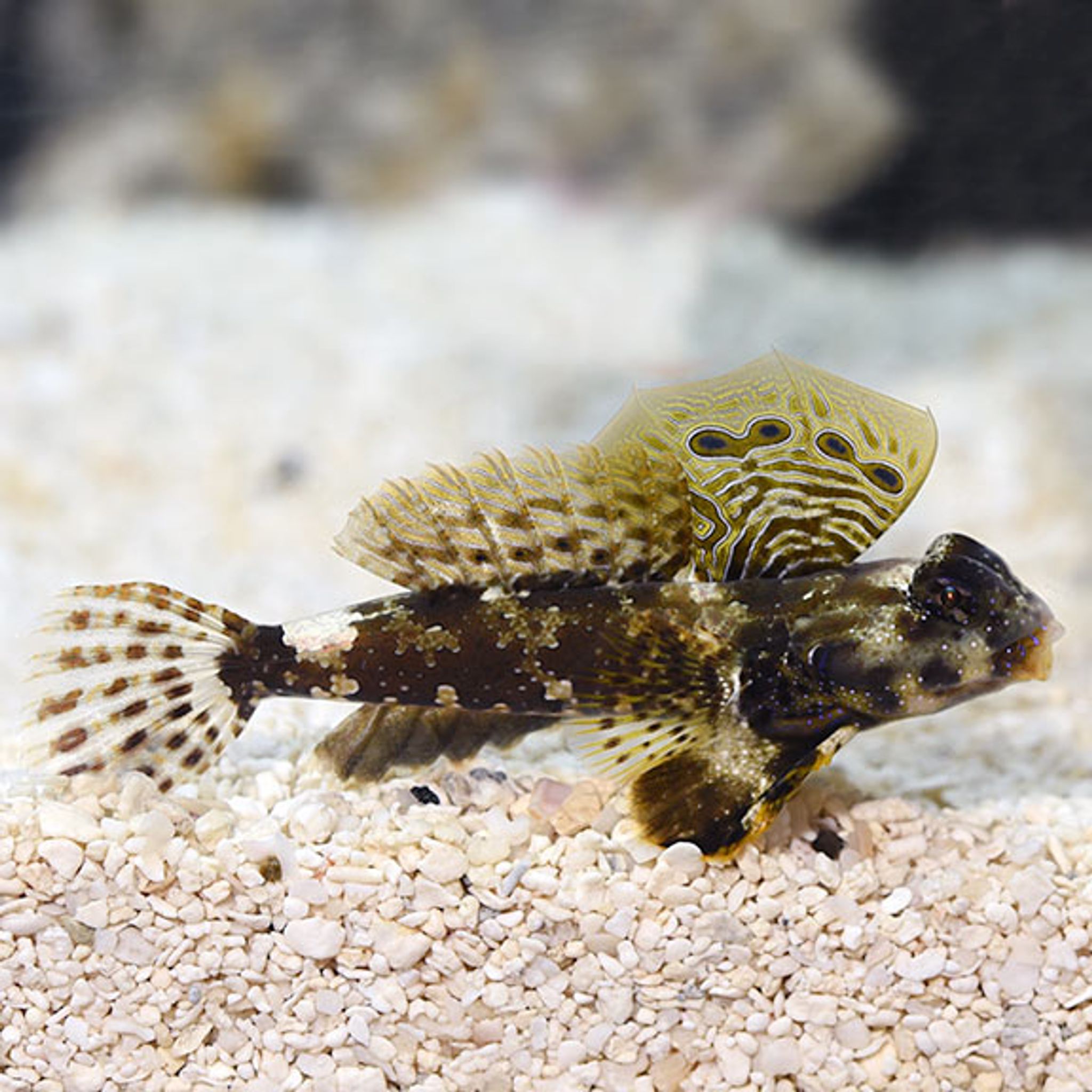

Is Lawnmower Blenny Reef Safe? Coral and Invertebrate Compatibility Explained
A lawnmower blenny (Salarias fasciatus) is reef safe in the sense that it has no natural drive to eat coral or invertebrates — but that label comes with a real condition. A hungry lawnmower blenny will sample coral polyps, clam mantle tissue, or snails once its algae supply runs dry, which is why "reef safe" reports and "avoid it" warnings can both be true depending on the tank behind them.
The Short Answer: Conditionally Reef Safe
Think of reef safety here less as a fixed trait of the fish and more as a spectrum tied to management. A well-fed lawnmower blenny in a mature system with plenty of grazing surface almost never bothers coral tissue, shrimp, crabs, or hermits. The incidents that give the species a bad reputation trace back to one root cause: insufficient food, not aggression or an inherent taste for coral.
That distinction matters for how you plan the tank. Instead of asking "is this species safe, yes or no," ask "can I keep this fish fed once the free algae runs out?" If the answer is yes, the fish is a low-risk, useful addition. If you can't commit to supplemental feeding, the risk profile changes fast.
Species Snapshot
- Scientific name: Salarias fasciatus
- Common names: Lawnmower Blenny, Jewelled Blenny, Sailfin or Rock Blenny
- Origin: Indo-Pacific reef flats and shallow lagoons
- Adult size: about 5 in (12.7 cm)
- Lifespan: roughly 2–5 years in captivity, longer with consistent feeding and stable water quality
They're browsed by reef-keepers for algae control browsing the Blennies category, and the coloring, personality, and rockwork-hugging posture make them a popular centerpiece bottom-dweller as much as a cleanup tool.
Why "Not Reef Safe" Reports Happen
Older care advice frames the lawnmower blenny as a pure hair-algae grazer, and that shorthand is only half the picture. Gut-content research on this species shows the diet leans heavily on detrital aggregates, diatoms, and filamentous algae — not exclusively the visible "lawn" on rock. That's an important nuance: a tank that looks algae-free to your eye may still be starving the fish if it lacks the detritus and film layer the blenny actually forages through.
This is also why a spotless, newly cycled tank is the riskiest possible home for one. No visible algae film, no detrital layer, nothing to graze — and within days a lawnmower blenny in that setup is running on empty. The fish doesn't turn to coral because it's aggressive; it turns to coral because it's out of options.
Tank Requirements Before You Add One
- Minimum size: 40 gallons (151 L) as a floor; 55+ gallons (208+ L) is more comfortable and gives more surface area for algae to establish
- Tank maturity: the system should be established for several months, with a visible algae film or turf already present — not a brand-new or ultra-clean setup
- One per tank: intraspecific and same-genus aggression is common; only a much larger tank in the 150–180+ gallon (568–681+ L) range can sometimes support more than one, and only with separated territories
- Secure lid or covered overflow: lawnmower blennies are strong jumpers and climbers and will go over an open overflow into a sump; this is a distinct risk from coral safety but is commonly cited in the same breath because it's one of the most frequent causes of fish loss
Coral and Invertebrate Compatibility
| Tank inhabitant | Typical risk when well fed | Notes |
|---|---|---|
| SPS corals (e.g., Acropora) | Low | Occasional polyp-tissue sampling reported, almost always hunger-driven |
| LPS corals | Low | Generally ignored |
| Soft corals, mushrooms, zoanthids, GSP | Low | Usually left alone |
| Clams (Tridacnid species) | Low, but worth watching | Mantle edges are one of the few tissues occasionally nipped when algae runs short |
| Shrimp | Very low | Typically ignored |
| Hermit crabs and most crabs | Very low | Typically ignored |
| Snails | Low-moderate | May be bumped or harassed but rarely harmed |
| Brittle and serpent stars | Very low | Rare, occasional arm nipping reported |
If you keep clams, treat that pairing as an extra reason to stay disciplined about supplemental feeding rather than a reason to avoid lawnmower blennies altogether — documented nipping cases are occasional and hunger-linked, not a common outcome. Reef-keepers building out invertebrate stock can browse options in the Marine Invertebrates category alongside coral selections from the main Corals category.
Feeding Protocol to Prevent Nipping
Once the tank's natural algae supply is depleted — which happens faster than most people expect in a well-run reef system — supplement with:
- Dried nori or seaweed sheets clipped to the glass
- Herbivore pellets or algae wafers
- Frozen herbivore or marine algae blends
Feeding frequency depends on how much natural grazing material is still present: a newer tank with modest algae may need daily supplementation, while a well-established system with ongoing film and turf growth might only need it a few times a week. The safest approach is to offer food regularly from day one rather than waiting for visible algae to disappear first.
Weekly Body-Condition Check
This is the single most useful habit most care guides skip. Once a week, look at the fish's belly profile from the side:
- Flat or slightly rounded belly: healthy, current feeding is adequate
- Pinched or concave belly: starving — increase feeding immediately and watch closely for nipping at coral, clam mantle, or even glass silicone
- Increased pecking at non-algae surfaces, lethargy: additional warning signs to pair with the belly check
Catching a concave belly early, before any nipping starts, is far easier than diagnosing coral damage after the fact.
Algae in the Tank Isn't Always the Enemy
Not all algae growth is a problem to eliminate, and a lawnmower blenny's grazing is a tool for managing nuisance types — not for scrubbing a tank bare.
- Coralline algae: beneficial; it hardens rock surfaces and helps coral frags cement in place. Leave it alone.
- Diatoms: a brown film common in new tanks, driven by available silicates; largely harmless and usually self-resolving as the tank matures.
- Nuisance algae (below): the actual targets for control, and only some of them are within a blenny's diet.
Identifying and Controlling Nuisance Algae
| Type | Cause | Control tactic |
|---|---|---|
| Green hair algae | Excess nutrients (nitrate/phosphate) | Nutrient export plus manual removal |
| Cyanobacteria (red slime) | Flow dead-spots and nutrient swings (it's a bacteria, not a true algae) | Improve flow and siphon out affected areas |
| Diatoms | Silicate levels, common in new tanks | Silicate-reducing media and grazers; usually resolves with time |
| Bryopsis | Nutrient imbalance, often linked to magnesium levels | Isolate affected rock and correct magnesium dosing |
A lawnmower blenny helps with film and turf algae specifically. If your tank still has persistent cyanobacteria or bryopsis after adding one, that's a nutrient or flow issue the fish can't solve on its own — it needs its own fix, not a second grazer.
Refugium and Macroalgae as Supporting Tools
For readers running a sump or building out a refugium, two systems-level tools support the whole "natural algae supply" approach without directly feeding the blenny:
- Macroalgae such as Chaetomorpha or Caulerpa grown in a refugium exports nitrate and phosphate, seeds the system with copepods as incidental fish food, and helps keep overall nutrient and algae balance healthy — a complementary tool rather than a direct food source.
- Mangrove propagules, grown emersed in deep substrate, are commercially propagated (wild collection is restricted and damaging to natural stands) and function as nutrient export plus a natural-looking habitat feature. They aren't a blenny food source, but they support the same nutrient-balance goal that keeps beneficial film and detritus available for grazing.
Neither directly feeds a lawnmower blenny, but both support a more stable, naturally productive system — which is exactly the kind of environment where a lawnmower blenny needs the least hand-feeding.
Tank Mates to Avoid
- Other lawnmower or rock blennies (same-species or same-genus aggression)
- Seahorses and pipefish (harassment and feeding-competition risk)
- Large, aggressive fish that could bully or injure it
Common Mistakes and Troubleshooting
- Adding one to a brand-new tank with no algae film. This is close to guaranteed starvation stress and elevated nipping risk.
- Treating "reef safe" as "set and forget." Skipping supplemental feeding once the tank looks algae-free is the single most common path to a nipping problem.
- Misreading normal grazing marks as coral damage. Check actual coral tissue and polyps, not just marks on rock near the coral's base, before assuming an attack happened.
- Housing two lawnmower blennies (or a lawnmower plus a similar algae blenny) in a modest tank. Territorial aggression gets mistaken for illness.
- Leaving a sump or overflow uncovered. Jumping is one of the most common blenny loss complaints and gets conflated with "reef safety" issues, even though it's a separate husbandry gap.
- Rehoming at the first sign of a nip. Increase feeding for one to two weeks and reassess body condition before assuming the fish is a lost cause.
Transitioning Between Tanks
If you're moving a lawnmower blenny to a new, less algae-rich display, don't rely on the new tank's grazing surface to carry it through the transition. Continue offering nori, pellets, or frozen herbivore blends on the same schedule for at least a few weeks while the new system's algae film builds up, then taper as natural grazing becomes reliable.
Quarantine Feeding Notes
Newly wild-caught individuals in quarantine often refuse prepared foods at first. Including a small piece of algae- and detritus-covered live rock in the QT tank gives them something familiar to graze while they adjust, alongside regular offers of nori and pellets to encourage the switch to prepared foods.
Best-Practice Checklist
- Cycle and mature the tank before adding a lawnmower blenny
- Confirm visible algae film or turf is already present
- Supplement the diet from day one, not after algae runs out
- Check body condition weekly using the belly-profile method
- Secure the lid and cover the overflow
- Keep to one lawnmower blenny per tank unless the system is 150+ gallons
Frequently Asked Questions
Will a lawnmower blenny eat my coral?
Rarely, and almost always only when it's underfed. A well-fed individual in a mature reef tank typically ignores coral tissue entirely, treating grazing surfaces on rock instead as its primary food source.
Is it safe with clams?
Usually, but clam mantle tissue is one of the few things a hungry lawnmower blenny will occasionally sample. Clam-keeping reefers should be a bit more vigilant about supplemental feeding and weekly body-condition checks than the average reef-keeper.
What do I feed it if my tank has no algae?
Offer nori or seaweed sheets on a veggie clip, herbivore pellets, algae wafers, or frozen herbivore and marine algae blends. Feed several times a week to daily, depending on how much natural algae and detritus the tank still provides.
Can I keep two lawnmower blennies together?
Not recommended except in very large tanks of 150+ gallons (568+ L) with clearly separated territories. In smaller systems, expect ongoing aggression between them.
What tank size does it need?
40 gallons (151 L) is the practical minimum, with 55+ gallons (208+ L) preferred. It should ideally be an established system that's been running for several months with visible algae growth already present.
How do I know if mine is starving?
Look for a sunken or concave belly, increased pecking at non-algae surfaces like coral, clam mantle, or glass silicone, and general lethargy. A weekly visual check of the belly profile catches this before it turns into a nipping problem.
Is it compatible with shrimp, crabs, and snails?
Generally yes. Shrimp and crabs are typically ignored entirely, while snails are occasionally bumped or harassed but rarely seriously harmed.
Why does my "algae eater" tank still have algae problems?
Different nuisance algae types need different fixes. A lawnmower blenny helps control film and turf algae, but it won't resolve cyanobacteria, bryopsis, or nutrient-driven blooms on its own — those need their own flow, nutrient, or dosing corrections.
A lawnmower blenny earns its reputation as a reef-safe grazer when the feeding side of the equation is handled deliberately rather than assumed. Once your tank and feeding routine are ready, you can browse available stock in the Blennies category on FishyHub.


