
Best Tank Mates for Lawnmower Blenny: Peaceful, Risky and Incompatible Choices
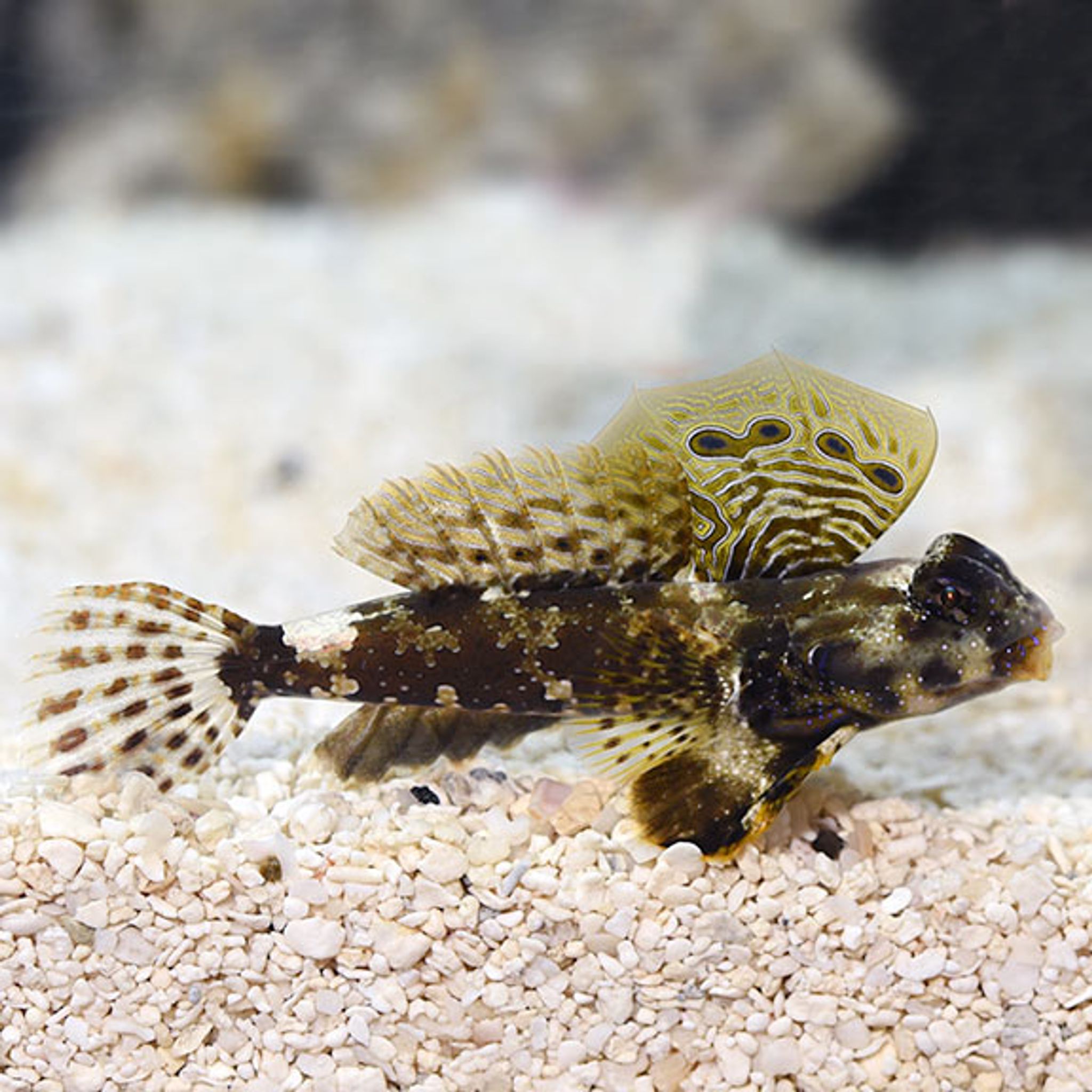
The lawnmower blenny (Salarias fasciatus) is a laid-back algae grazer toward most fish, but it turns territorial fast around other bottom dwellers and can get pushy when its food supply runs thin. This guide sorts tank mates into peaceful, risky, and incompatible tiers and explains the actual mechanisms — territory, diet overlap, size, and hunger — behind each call.
Meet the Lawnmower Blenny
Also sold as the Sailfin or Jeweled blenny, Salarias fasciatus earns its common name from its habit of grazing algae film off rock and glass like a tiny lawnmower. It's primarily herbivorous, feeding on diatoms, algae film, and cyanobacteria growing on live rock.
That diet matters for compatibility in two ways:
- It rarely competes for meaty foods, so it stays out of the way of most predatory or omnivorous fish at feeding time.
- It depends on a steady algae supply. Once display algae is grazed down, an unsupplemented blenny gets hungrier and noticeably more assertive toward anything sharing its feeding grounds. Starvation, not aggression, is the leading cause of death in this species, and a hungry blenny is far more likely to squabble with tankmates than a well-fed one.
Tank Size and Setup Basics
A single lawnmower blenny needs a minimum of 30 gallons (114 L). It's a territorial adult reef fish, not a nano-tank filler, and it will claim a patch of rock as its own once settled.
Adding a second blenny — even a different species — usually requires roughly 20-30 gallons (75-115 L) of additional volume plus physically separated territories and rockwork, since two blennies competing for the same algae turf and hiding spots is one of the most common compatibility complaints with this fish.
Setting Up for Coexistence
- Break sightlines. Use rockwork that creates multiple distinct zones rather than one open cave system, so a subordinate fish can get out of view of a dominant one.
- Spread the algae growth. Multiple grazing zones across the aquascape reduce the odds of two grazers converging on the same rock at once.
- Let live rock mature first. Adding the blenny to rock that already has an established algae film gives it food from day one, lowering the odds of early food-guarding behavior.
- Mind footprint per fish. Each additional bottom-dwelling grazer (a second blenny, a goby, a dragonet) needs its own defensible patch — cramming several into a 40-gallon (150 L) tank invites conflict even if the total volume looks adequate on paper.
Peaceful Tank Mates
These fish occupy different water columns, eat different foods, or simply aren't shaped or positioned in a way that triggers the blenny's territorial instincts.
| Tank mate | Why it works |
|---|---|
| Clownfish | Mid-water, host-anemone focused, no diet or territory overlap |
| Chromis (blue or green) | Schooling, open-water swimmers, ignore bottom rockwork |
| Royal gramma | Peaceful, hides in caves rather than open rock faces |
| Anthias | Mid-water plankton feeders, no interest in algae turf |
| Cardinalfish | Slow, peaceful, nocturnal-leaning feeders |
| Most damselfish | Different water column, no diet overlap |
| Most tangs (yellow, kole) | Both graze algae but at different intensities and often different zones; generally tolerant |
| Firefish | Shy, stays near a burrow, avoids confrontation |
| Most peaceful wrasses | Active swimmers that don't compete for rock territory |
| Shrimp and snails | Ignored entirely — different food source, different niche |
Shrimp, hermit crabs, and snails are essentially always safe around a lawnmower blenny; a cleanup crew from FishyHub's marine invertebrates selection pairs well without any behavioral risk. For a classic reef community starter, clownfish remain one of the safest first additions alongside a blenny.
Risky or Conditional Tank Mates
These pairings can work, but success depends heavily on tank size, rockscaping, and how well-fed the blenny is.
- Other blennies (any species). This is the single biggest compatibility issue with this fish. Two blennies sharing a tank under about 55-75 gallons (208-284 L) will typically fight over algae turf and hiding spots until one is stressed, injured, or killed. FishyHub stocks a range of blennies for those with the space to house more than one properly.
- Gobies. Not predatory toward a lawnmower blenny, but both compete for substrate and rock real estate, and occasionally food. Expect sparring, not attacks, in cramped setups; a spacious tank with separate territories usually resolves this. Browse gobies if you're building a mixed bottom-dweller community.
- Dragonets (including mandarins). Not directly antagonistic, but mandarins graze micro-algae and pods in the same general niche, so in a small system the two can indirectly compete for a limited food base.
- Six-line and other semi-aggressive wrasses. Usually fine, but in an undersized tank a six-line wrasse can nip at a blenny, or vice versa, if territories overlap.
Two Different Behaviors, Often Confused
Sources tend to lump all blenny "aggression" together, but there are really two distinct behaviors:
- Algae-film nipping — rare and generally minor, and it mostly targets slow-moving fish with algae growing on their skin (see pipefish and seahorses below).
- Territorial chasing or sparring — much more common, driven by competition for rock real estate and food rather than predation, and it's the behavior responsible for most blenny-on-blenny or blenny-on-goby conflict.
Treating these as one category overstates the risk to fast-swimming fish and understates the real risk between bottom dwellers packed into a small footprint.
Incompatible Tank Mates
Avoid these outright:
- Large predatory fish — lionfish, groupers, triggerfish, large hawkfish, big eels, and aggressive large angelfish will all view a lawnmower blenny as a meal rather than a competitor.
- Pipefish and seahorses — a blenny may nip at the algae film growing on their skin or scales, which can injure these slow, delicate swimmers. Better to house them separately.
- Very small or fragile fish in general if the tank is undersized and territorial stress is already running high; a stressed blenny defending a small footprint is a poor neighbor for anything that can't get out of the way.
Reef and Invertebrate Compatibility
Lawnmower blennies are best described as reef-safe with caution, not fully reef-safe. Most individuals ignore coral entirely, but a meaningful minority will nip at large-polyp stony (LPS) coral, zoanthids, clam mantles, or soft coral polyps — especially once display algae runs low and hunger sets in. Treat this as a species-by-species gamble rather than a guarantee in either direction: don't assume total safety, but don't assume certain disaster either. Watch behavior for the first few weeks after introducing the blenny to a reef tank with prized LPS corals or zoanthid colonies before trusting it unsupervised.
Shrimp, hermit crabs, and snails are the exception — their diet and behavior don't overlap with a blenny's at all, making them consistently safe regardless of the individual fish's temperament.
Feeding Strategy to Reduce Aggression
Because a hungry blenny is a pushier blenny, feeding management is really a compatibility tool:
- Offer dried seaweed sheets or algae wafers once natural algae growth is visibly depleted — don't wait until the rock is bare.
- Feed on a consistent schedule so the blenny isn't searching aggressively between meals.
- During the first few weeks after purchase, watch closely: new arrivals are frequently thin or starved from shipping, and a shipping-stressed blenny can seem unusually aggressive or food-guard heavily until it re-establishes a normal feeding routine. Judge its long-term temperament only after it's visibly recovered condition.
Introduction Order
Add the lawnmower blenny after peaceful mid-water fish (clownfish, chromis, firefish) are settled, but before adding a second bottom-dweller like a goby or another blenny. This lets it claim a reasonable territory without feeling cornered by an already-established rival, and it avoids forcing a late-arriving blenny to fight for scraps of real estate other fish have already claimed.
Sexing and Keeping Multiples
Lawnmower blennies are difficult to sex visually, which makes deliberately building a pair or trio a gamble. Keeping more than one only works reliably in tanks of 100 gallons (380 L) or more, with heavy rockscaping that breaks sightlines and provides multiple separate algae-grazing zones. Below that, plan on one blenny per tank.
Signs of Incompatibility: A First-Month Checklist
Watch for these behaviors during the first two to four weeks after adding any new bottom-dweller alongside a lawnmower blenny:
- Persistent chasing or blocking access to rockwork
- Visible fin damage or torn fins
- A tankmate hiding constantly and never coming out to feed
- Refusal to eat over several feedings
- One fish spending unusual amounts of time at the surface, away from its normal zone
Any one of these on its own can be temporary settling-in stress. Two or more together, especially past the first week, mean it's time to rearrange rockwork, add a divider, or plan to rehome one fish before real injury occurs.
Common Mistakes to Avoid
- Buying two lawnmower blennies for a tank under 55-75 gallons, expecting them to sort out territory on their own. It usually ends with one fish constantly hiding, injured, or dead.
- Assuming full reef safety and adding the blenny straight into a tank with prized LPS or zoanthid colonies without a monitoring period.
- Letting display algae run out with no backup food. A normally mellow blenny turns pushy toward tankmates once its main food source disappears.
- Housing with pipefish or seahorses without accounting for the algae-film-nipping risk to their skin.
- Underestimating tank size, treating a lawnmower blenny like a small nano-tank fish rather than the territorial adult reef fish it becomes.
- Judging temperament too early. A shipping-thin new arrival can look unusually aggressive simply because it's food-guarding while recovering condition — give it a few weeks before drawing conclusions.
Frequently Asked Questions
Can I keep two lawnmower blennies together?
Only in a large tank, generally 75-100+ gallons (284-380+ L), with heavily broken sightlines and multiple separate algae zones. In smaller tanks, expect persistent fighting over territory and food.
Are lawnmower blennies reef safe?
Mostly, but not with 100% certainty. A minority of individuals nip at LPS coral, zoanthids, or clam mantles, so monitor behavior closely after introduction rather than assuming either extreme.
Will a lawnmower blenny fight with gobies?
It's not predatory toward gobies, but the two can spar over territory or food if the tank is small or overcrowded with bottom dwellers. A spacious tank with separate rockwork zones usually prevents serious conflict.
What fish should never go with a lawnmower blenny?
Anything large enough to eat it — lionfish, triggerfish, groupers, and large eels — plus other same- or similar-species blennies housed in tight quarters.
Can lawnmower blennies live with pipefish or seahorses?
It's risky. A blenny may nip at algae film growing on their skin, causing injury to these slow, delicate swimmers. It's generally better to keep them in separate systems.
What do lawnmower blennies eat if there's no algae left in the tank?
Offer dried seaweed sheets, algae wafers, and other herbivore-friendly foods on a regular schedule once natural algae growth is depleted, rather than waiting until the rock is bare.
How big a tank does a lawnmower blenny need?
A minimum of 30 gallons (114 L) for a single adult. Scale up substantially — generally another 20-30 gallons (75-115 L) or more — for each additional bottom-dwelling tank mate or a second blenny.
Do lawnmower blennies bother shrimp or snails?
No. Their diet and behavior don't overlap with cleanup crew invertebrates at all, making shrimp and snails consistently safe tank mates regardless of the individual blenny's temperament.
Ready to plan a stocking list around your lawnmower blenny? Browse FishyHub's full range of marine fish to find peaceful, size-appropriate tank mates for your setup.


