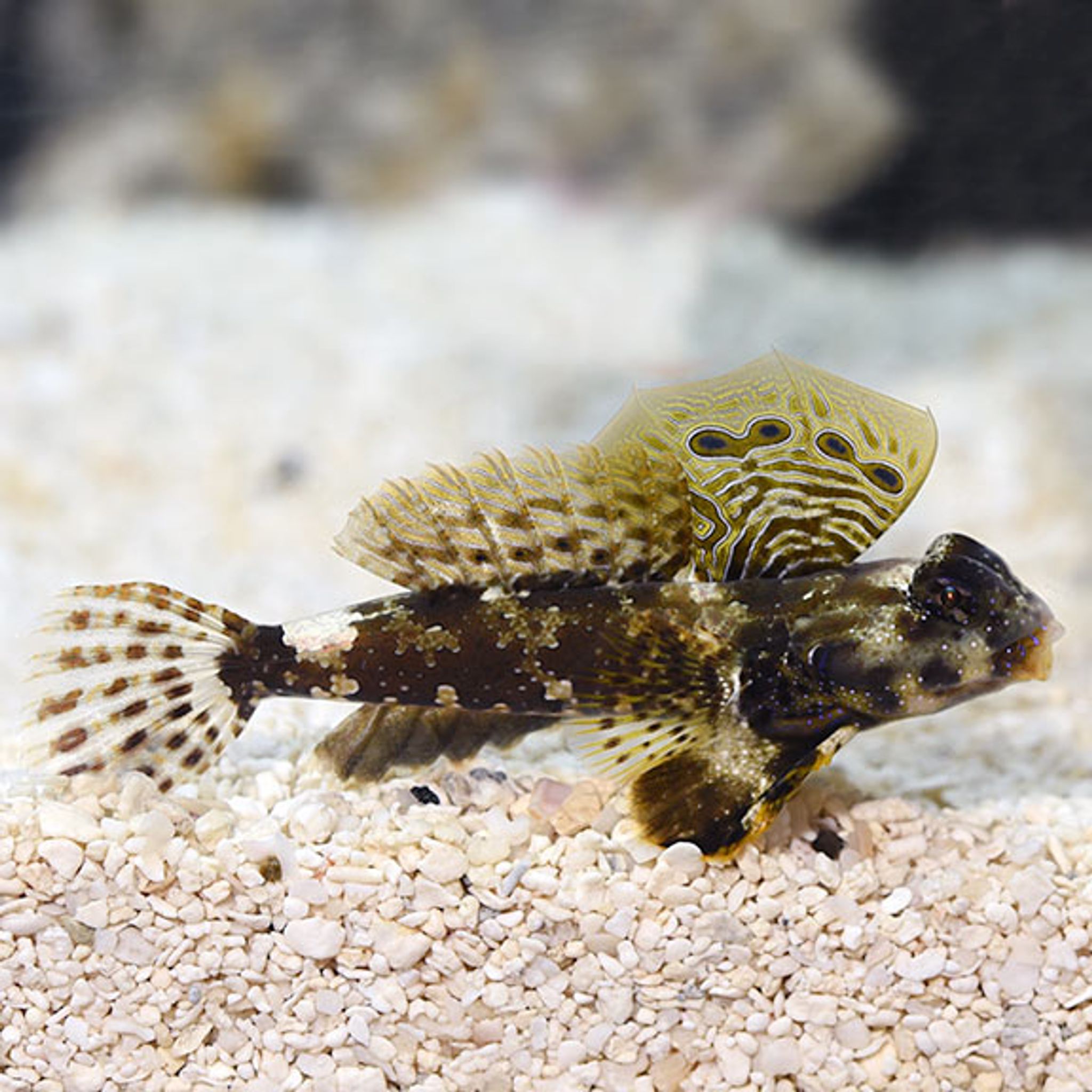

Is Tailspot Blenny Reef Safe? Coral and Invertebrate Compatibility Explained
Yes — the tailspot blenny (Ecsenius stigmatura) is one of the most consistently recommended reef-safe fish in the hobby, getting along with LPS, SPS, and soft corals, clams, shrimp, snails, and anemones in the vast majority of tanks. That verdict comes with real exceptions, though: a small percentage of individuals do nip at coral tissue or clam mantles, usually by accident rather than by appetite. This guide explains what "reef safe" actually means, why occasional nipping happens, and exactly what to do if you spot it.
What "Reef Safe" Actually Means
New reef keepers often treat "reef safe" as an absolute guarantee — a label meaning a fish will never touch a coral or invertebrate under any circumstance. That's not how the term works in practice.
Reef safe describes a species-level tendency, not an individual promise. It means that, as a rule, the species doesn't rely on coral tissue or invertebrates as a food source and typically leaves sessile animals alone. Within any species, though, individual fish vary in temperament, hunger level, and behavior. A handful of tailspot blennies in the trade will peck at coral polyps or clam mantles even though the species overall has an excellent track record.
Understanding this distinction changes how you evaluate risk: instead of asking "will this fish ever touch coral," the better question is "how likely is a problem, and what do I do if it happens?"
Tailspot Blenny Reef Compatibility: The Short Answer
Across care guides and retailer descriptions, the tailspot blenny is flatly labeled reef safe. Hobbyist forum threads take a more cautious tone, occasionally reporting individuals that nip at SPS coral polyps or clam mantles. Both views are correct at different scales:
- Species-level norm: reef safe, one of the top blenny choices for coral tanks.
- Individual variation: a minority of specimens do nip, and it's worth knowing the warning signs.
Watch for these signals that a specific blenny may be more than just grazing nearby:
- Repeated pecking at the same coral colony, day after day
- Coral polyps that stay retracted long after the blenny has moved on
- Visible tissue recession concentrated right at a grazing spot
Isolated head-turning or foraging near a coral's base is normal behavior, not aggression — the fish is picking at algae film and microfauna on the rock, not the coral itself.
Why Nipping Happens (and Why It's Usually Not Predation)
There isn't full consensus on the mechanism behind occasional nipping, but two explanations cover most cases:
- Accidental grazing at the tissue margin (dominant explanation): the blenny is scraping algae film off a coral's skeleton or the rock right next to it and misjudges the edge, catching live tissue in the process.
- Genuine tissue preference (uncommon outlier): a minority of individuals appear to actively target coral tissue, independent of hunger or grazing surface availability.
In practice, treat the first explanation as the working assumption and address it with feeding and husbandry changes first. Only consider the second explanation — and rehoming the fish — if nipping persists despite those changes.
Diet: Reducing Nipping Through Proper Feeding
Tailspot blennies are primarily herbivorous/omnivorous grazers. In a mature reef tank they spend much of the day picking algae and tiny invertebrates (copepods, amphipods) off live rock. That natural grazing habit is exactly why underfeeding is the single biggest driver of nipping behavior.
Feed a varied diet including:
- Dried nori or other marine algae sheets
- Herbivore-formulated pellets or flakes
- Blanched vegetables
- Occasional frozen mysis or brine shrimp for protein
Feed 2–3 small meals a day. A well-fed blenny is far less likely to go looking for alternative food sources near coral tissue. Don't skip supplemental feeding just because the tank "has enough algae" — visible algae doesn't guarantee enough accessible grazing area or the right nutritional mix, and hunger-driven grazing is a common trigger for nipping and malnutrition alike.
Tank Size and Territory
A single tailspot blenny needs a 10-gallon (38 L) tank minimum. If you plan to keep more than one, scale up to 20–40+ gallons (76–150+ L) and provide plenty of separated rockwork.
Tailspot blennies are strongly territorial toward their own species and toward other blennies with a similar body shape or coloration — they can mistake a lookalike for a rival. In a small tank with limited hiding spots, this aggression can escalate to the point of being lethal to the subordinate fish. One blenny per tank is the standard recommendation unless the aquarium is large with abundant rockwork to divide territories.
Coral and Invertebrate Compatibility Matrix
Use this as a scannable reference rather than a strict rulebook — individual behavior still varies.
| Coral/Invertebrate Type | Typical Compatibility | Notes |
|---|---|---|
| LPS corals | Generally safe | Occasional grazing near the base is normal |
| SPS corals | Generally safe | Most reported nipping incidents involve SPS polyps |
| Soft corals | Generally safe | Low incident rate |
| Zoanthids | Generally safe | Low incident rate |
| Clams | Generally safe, watch mantle | Occasional mantle nipping reported |
| Shrimp | Safe | No predation on typical reef shrimp |
| Snails | Safe | No predation |
| Hermit crabs | Safe | No predation |
| Starfish | Safe | No predation |
| Anemones | Generally safe | Standard reef community addition |
Tankmate Compatibility
Good tankmates include clownfish, small wrasses, dwarf and pygmy angelfish, tangs, basslets, grammas, and gobies. Seahorses can work too, though keep an eye on current strength and feeding competition, since seahorses feed more slowly.
Avoid pairing with:
- Other blennies, or fish with a similar body shape or color the blenny might mistake for a rival
- Large, predatory, or highly aggressive fish that intimidate the blenny into constant hiding
Temperament reports are genuinely mixed: many keepers describe tailspot blennies as peaceful and shy, while others report individuals being surprisingly aggressive toward clownfish, gobies, or other bottom-dwelling fish. The most consistent explanation is that aggression is driven by individual personality and territory pressure rather than being a fixed species trait — it tends to be worse in small tanks with little rockwork to split territories.
If you're stocking a reef community around a tailspot blenny, browsing options like wrasse or clownfish gives you compatible, similarly peaceful additions.
Water Parameters for a Healthy Reef Community
Standard reef targets support both the blenny and its coral neighbors:
| Parameter | Target Range |
|---|---|
| Temperature | 72–78°F (22–26°C) |
| pH | 8.0–8.4 |
| Specific gravity | 1.020–1.025 (~35 ppt salinity) |
| Alkalinity, calcium, magnesium | Standard reef range for coral health |
Don't Confuse the True Tailspot Blenny With Similar Species
Ecsenius stigmatura is sometimes sold simply as "tail spot blenny," and the trade name overlaps loosely with other Ecsenius species that carry similar markings. This matters because compatibility notes for one species don't automatically transfer to a lookalike with different temperament or size. Before buying, confirm the scientific name with the seller and compare photos closely — this avoids compatibility surprises down the road, especially in a tank stocked around the specific behavior profile described here.
Wild-Caught Status and Acclimation
Tailspot blennies are almost exclusively wild-caught; captive-bred stock is essentially unavailable in the trade today. That makes proper acclimation and quarantine more important than usual, since wild-caught fish carry a higher baseline risk of parasites or disease that could affect an established, coral-heavy display.
Best practice before adding a wild-caught specimen to your display reef:
- Quarantine the fish separately for several weeks before introduction
- Watch closely for signs of parasites or illness during that period
- Avoid skipping quarantine just because the fish "looks healthy" — problems introduced to a mature reef tank are far harder to treat than in a bare quarantine setup
Breeding and Lifespan Basics
Tailspot blennies are cavity spawners. The male guards eggs in a tight rock or glass crevice, and occasional captive breeding has been reported by hobbyists, though it isn't something being produced commercially at scale. With good care, expect a lifespan of roughly 4–6 years and an adult size around 3–4 inches (7.5–10 cm).
Common Mistakes and Troubleshooting
- Underfeeding because the tank "has enough algae." This is the most common cause of hunger-driven nipping and malnutrition — feed a varied diet on schedule regardless of visible algae.
- Adding two tailspot blennies (or two similar-looking blennies) to a small tank. Expect chasing, stress, and potentially the death of the subordinate fish.
- Housing with large or boisterous tankmates. A blenny bullied into constant hiding won't feed properly and will show ongoing stress.
- No tight-fitting lid. All blennies are strong jumpers, and a startled fish — or one chasing food near the surface — can jump out. A secure lid or covered overflow is mandatory.
- Mistaking normal foraging for coral aggression. Head-turning and grazing near a coral's base is standard behavior, not an attack.
- Skipping quarantine on a wild-caught specimen. This risks introducing parasites or disease to an established display reef.
What to Do the First Time You Notice Nipping
- Increase feeding frequency and variety — add an extra small meal and rotate in nori, pellets, and frozen foods.
- Add more grazing surface — extra live rock or cultivated algae growth gives the blenny somewhere else to forage.
- Note which coral is being targeted and, if practical, temporarily relocate it away from the blenny's territory.
- Observe for one to two weeks before deciding the fish needs to be rehomed. Most nipping resolves once feeding and grazing surface are addressed; persistent targeting of the same coral despite these changes is the signal that this individual may be a genuine outlier.
Frequently Asked Questions
Is the tailspot blenny 100% reef safe?
No fish can be guaranteed 100% reef safe. At the species level, the tailspot blenny has an excellent reef-safe track record, with occasional individual exceptions — mainly SPS coral or clam mantle nipping in a minority of specimens.
Will a tailspot blenny eat coral polyps?
Not typically as a food source. Occasional nipping is usually incidental — the fish grazing algae near a coral's tissue margin and catching live tissue by mistake — rather than deliberate predation.
Can I keep more than one tailspot blenny together?
Generally not recommended in tanks under about 40 gallons (150 L) due to territorial aggression between similarly shaped or colored blennies. It's possible in larger tanks with ample separated rockwork, and success is more likely if the pair is introduced together as an established pair rather than added separately.
What size tank does a tailspot blenny need?
A 10-gallon (38 L) tank is the minimum for a single tailspot blenny. Plan for 20–40+ gallons (76–150+ L) if keeping multiples or stocking a busier reef community.
What do tailspot blennies eat?
Their diet centers on grazing algae and tiny invertebrates off live rock, supplemented with nori, herbivore-formulated pellets or flakes, blanched vegetables, and occasional frozen mysis or brine shrimp.
Are tailspot blennies safe with shrimp and snails?
Yes. Tailspot blennies don't predate on typical reef invertebrates like shrimp, snails, hermit crabs, or starfish, making them a safe addition to a mixed invertebrate reef.
Why is my tailspot blenny hiding all the time?
Persistent hiding usually points to stress from aggressive tankmates, insufficient hiding spots or rockwork, or normal adjustment stress shortly after acclimation. Review tankmate compatibility and add more rockwork before assuming something is medically wrong.
Do tailspot blennies jump out of tanks?
Yes — like most blennies, they are strong jumpers, especially when startled or chasing food near the surface. A tight-fitting lid or covered overflow is essential for any tank housing one.
If you're building out a reef community around a tailspot blenny, you can browse current stock of marine fish and corals on FishyHub to plan compatible additions before you buy.


