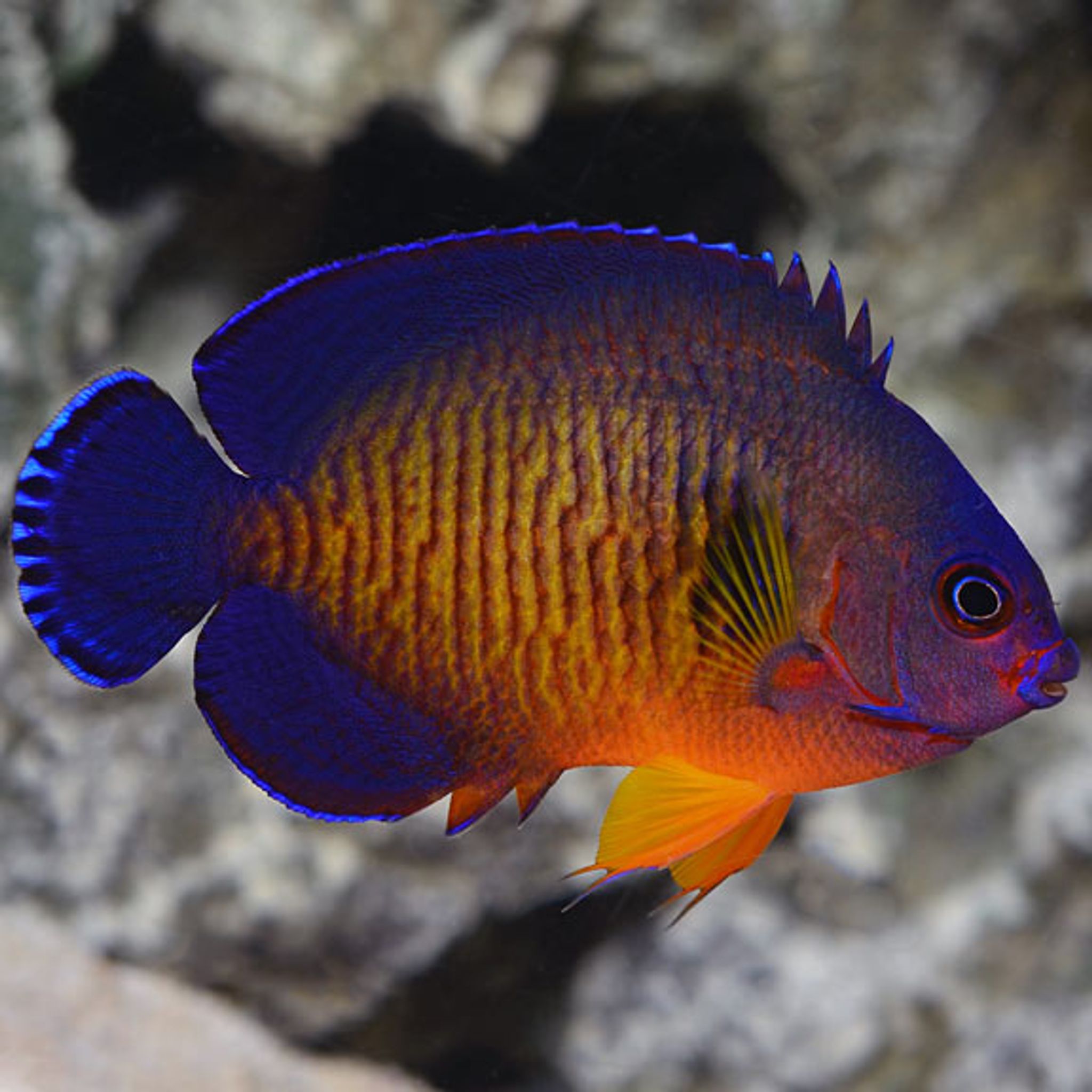
How to Feed Coral Beauty Angelfish: Foods, Frequency and Common Feeding Problems
Coral Beauty Angelfish (Centropyge bicolor relatives, formally Centropyge bispinosa) are constant grazers in the wild, not fish that thrive on one big daily meal. Getting the feeding routine right — the right mix of algae, protein and sponge-based foods, offered in small frequent portions — is the single biggest factor in keeping their color vivid and keeping them off your coral. This guide walks through what to feed, how often, and how to troubleshoot the two most common problems: a fish that won't eat and a fish that nips at polyps.
Why Feeding Strategy Matters More Than Usual for This Species
In the wild, a Coral Beauty spends most of the daylight hours picking continuously at live rock — grazing on multiple species of algae, sponges, tunicates, small crustaceans, zooplankton and detritus, with the occasional bite of coral polyp mixed in. That grazing pattern matters because it tells you two things:
- Its digestive system and metabolism are built around many small meals, not one large feeding.
- Its diet is naturally broad and sponge-inclusive, which most home aquarium diets don't replicate without deliberate effort.
Ignore either point and you tend to end up with a duller fish, a hungrier fish, or a fish that starts sampling your zoanthids and clam mantles out of boredom or hunger.
What to Feed: The Three Diet Buckets
A well-rounded captive diet for a Coral Beauty covers three categories. Rotating through all three, rather than leaning on just one, is what keeps color and body condition up long term.
Algae and Plant Matter
- Nori or dried seaweed sheets, clipped to the glass or held on a veggie clip
- Spirulina flakes or pellets
- Algae wafers
- Natural algae film and biofilm on live rock, which the fish will graze on between feedings
Protein
- Frozen mysis shrimp
- Frozen brine shrimp
- Finely chopped krill
Thaw frozen foods and rinse them briefly before offering, rather than dropping in the food straight from the freezer along with its packing liquid.
Specialty: Sponge-Based Formulas
This is the bucket most home diets miss entirely. Sponge material is a genuinely important part of the wild diet, and prepared angelfish-specific frozen or gel foods that list sponge as an ingredient go a long way toward closing that nutritional gap. If you only feed flakes and brine shrimp, you're leaving out a food group this species evolved to rely on.
Color-Enhancing Ingredients
Look for pellets, flakes, or frozen formulas listing astaxanthin or other carotenoid pigments on the label. These support the fish's natural blue-and-orange coloration over time — a plain protein-only diet with no pigment source tends to result in a fish that looks progressively washed out.
FishyHub stocks a range of prepared marine foods, including freeze-dried options that work well as part of a rotation alongside frozen and algae-based foods.
Feeding Frequency: Little and Often
This is where most generic fish-feeding advice falls short for a Coral Beauty. Twice-daily feeding is a workable minimum in a heavily stocked reef tank with abundant live rock for grazing, but it isn't the target for most setups.
| Setup | Recommended feedings | Notes |
|---|---|---|
| Reef tank, heavy live rock, mature system | 2–3x/day + continuous nori | Rock grazing supplements meals |
| Reef tank, newer or lower rock volume | 3–4x/day + continuous nori | Less natural grazing available |
| FOWLR (fish-only with live rock) | 3–4x/day | Nori clips still essential |
| Quarantine tank | Multiple small offerings, varied foods | No live rock grazing available at all |
Whichever setup you have, portions should be small enough for the fish to clear in about two minutes. A rough visual guide: a pinch of flake or frozen food roughly pea-sized per feeding for a single Coral Beauty, or a nori sheet section about 1 inch (2.5 cm) square left in a clip. Overfeeding in one sitting doesn't compensate for infrequent feeding — it just fouls the water and still leaves the fish hungry between meals.
Practical technique:
- Clip nori or seaweed to the glass 3–4 times a week, or keep a sheet available nearly continuously
- Offer frozen protein foods once or twice daily, thawed and rinsed
- Let the fish graze live rock between scheduled feedings
- Time feedings to daylight hours when the fish is naturally most active foraging on algae growth — a grazer that keys off algae availability tends to feed more readily during the tank's photoperiod than right after lights-out
Feeding by Tank Type
Reef Tank
Live rock with an established algae film and pod population is a real supplemental food source — not just decoration. It gives the fish a natural, low-stress grazing outlet and reduces total reliance on your feeding schedule. That said, even in a mature reef tank, supplemental feeding is still required; rock grazing alone rarely provides complete nutrition for anything beyond very lightly stocked systems.
FOWLR (Fish-Only With Live Rock)
Without the added coral livestock, you have more flexibility in food choice, but the frequency and variety principles don't change. Nori clips and sponge-based frozen formulas remain the backbone of the diet even where live rock is more sparsely aquascaped.
Quarantine Tank
New arrivals in quarantine won't have rock to graze, so this is the setting where offering a variety of foods matters most — you're finding out what an individual fish will actually accept before it goes into the display. Try nori, frozen mysis, and a sponge-based formula in the same quarantine period rather than sticking to just one.
Tankmates and Feeding Competition
A Coral Beauty sharing a tank with fast, aggressive feeders — tangs, other angelfish, or boisterous wrasses — can be quietly outcompeted at every feeding without obvious signs at first. If you suspect this is happening, target-feed the Coral Beauty separately using a turkey baster or a feeding stick to deliver food directly near where it's hiding, away from the scrum at the surface.
Stimulating a Reluctant Eater
Two techniques are worth trying together if a Coral Beauty is slow to accept food:
- Live foods: live blackworms or live copepods/amphipods can trigger a feeding response in fish that ignore frozen or dry food entirely. Once the fish is feeding confidently on live food, gradually mix in frozen and prepared foods to wean it over.
- Gut-loading with supplements: soaking frozen food in a vitamin or garlic-based appetite supplement before feeding can stimulate interest in a reluctant eater, particularly one that's stressed from shipping or a new environment.
New Arrivals: Why Refusal Isn't Always a Red Flag
It's common — even expected — for a wild-caught Coral Beauty to refuse food for several days, sometimes up to about a week, while it acclimates to captivity. This is typically normal acclimation stress, not illness, as long as the fish still looks active and isn't visibly wasting away. Give a bright, active, actively-hiding-but-not-gasping fish that week before escalating.
Captive-bred or aquacultured individuals are the opposite story: they generally accept pellets and frozen food immediately, since they were raised on prepared diets from the start. If you have a choice, an aquacultured Coral Beauty is a considerably easier fish to start feeding.
Quick Checklist: Adjusting vs. Starving
| Sign | Just adjusting | Cause for concern |
|---|---|---|
| Belly shape | Normal, rounded | Pinched or concave |
| Activity | Active, exploring, hiding some | Hiding constantly, never grazing rock |
| Breathing | Normal rate | Rapid or labored |
| Fins | Held normally | Clamped, ragged |
| Time elapsed | Under a week | Beyond a week with no improvement |
If a fish crosses into the "concern" column — especially a visibly concave belly — don't keep waiting it out; try live food immediately and consider a vet or experienced-keeper consult sooner rather than later.
Coral Nipping: The Feeding-Underfeeding Connection
Coral Beauties are generally considered reef-safe with caution, and the biggest variable in whether "caution" turns into an actual problem is how well-fed the fish is. A hungry Coral Beauty is far more likely to sample zoanthids, clam mantles, or LPS/SPS coral polyps than a well-fed one. Frequent, varied, sponge-inclusive feeding measurably reduces this risk — though it never fully guarantees 100% reef safety with any individual fish.
If you're stocking a reef tank and plan to keep LPS corals or other prized polyps alongside a Coral Beauty, treat consistent feeding as a form of coral protection, not just fish care.
Common Feeding Mistakes to Avoid
- Feeding once a day, in one large portion — leads to hunger-driven coral nipping and duller color; switch to smaller, more frequent meals instead.
- Relying only on flakes or pellets with no algae or sponge component — causes faded color and long-term health decline over months.
- Panicking over a new fish not eating on day one or two — this is usually acclimation stress; monitor body condition, not just appetite.
- Skipping algae growth or live rock in the display — removes the fish's natural grazing outlet and can increase stress and aggression toward corals.
- Only trying dry or frozen food on a stubborn wild-caught fish — try live blackworms or copepods first, then wean onto prepared foods.
- Skipping feeding trials during quarantine — offer a variety of foods early so you already know what the fish accepts before it goes into the display.
- Not tracking body condition over the first couple of weeks — a fish can look "fine" swimming around while still slowly losing weight; check for a pinched belly regularly.
Anyone shopping for a Coral Beauty for the first time can browse current dwarf angelfish stock on FishyHub, and it's worth deciding on captive-bred versus wild-caught before you buy, since that choice directly affects how much feeding effort the first few weeks will take.
Frequently Asked Questions
How often should I feed a Coral Beauty Angelfish?
Aim for 2–4 small feedings daily, or keep nori available continuously via a clip and supplement with frozen food once or twice a day. Lean toward the higher end of that range in newer tanks or those without extensive live rock.
What is the best food for Coral Beauty Angelfish color?
Foods containing astaxanthin or other carotenoid color enhancers, combined with regular algae and sponge-based formulas, best support the fish's blue-and-orange coloration. A protein-only diet with no pigment source or algae will dull color over time.
Do Coral Beauty Angelfish eat coral?
They can nip at coral polyps or clam mantles, particularly when underfed or under-stimulated. Frequent, varied feeding — including sponge-based foods — reduces this risk considerably, but doesn't eliminate it entirely for every individual fish.
Why won't my new Coral Beauty Angelfish eat?
This is most often acclimation or shipping stress rather than illness. Wild-caught fish especially may take up to about a week to start eating; try live foods, dim the lighting, and minimize disturbance around the tank during that period.
Can Coral Beauty Angelfish survive on algae from live rock alone?
They can supplement a meaningful portion of their diet by grazing live rock, but this only works as a near-complete food source in a mature reef tank with heavy rock and pod growth. Most keepers should still hand-feed regularly rather than relying on rock grazing alone.
Is Coral Beauty Angelfish reef safe?
Generally, yes — with caution. Occasional coral nipping is possible, especially if the fish isn't being fed frequently or variedly enough, so consistent feeding is part of keeping them reef-compatible long term.
What's the difference in feeding wild-caught vs. captive-bred Coral Beauties?
Captive-bred individuals typically accept pellets and frozen food immediately since they were raised on prepared diets. Wild-caught fish often need a slower transition, sometimes starting with live food before they'll take anything frozen or dry.
How do I feed a Coral Beauty in a fish-only (non-reef) tank?
The same frequency and variety principles apply regardless of tank type. Nori clips and frozen sponge-based formulas remain ideal foods even without live rock available for supplemental grazing.
Ready to add a Coral Beauty Angelfish to your setup? Browse available marine fish in FishyHub's marine livestock selection and plan your feeding routine before the fish arrives.


