1–2 of 2
Explore Archer Fish for sale in Singapore from aquarium shops, breeders and specialist freshwater fish sellers on FishyHub. Compare Toxotes species by size, appearance, water requirements and seller.
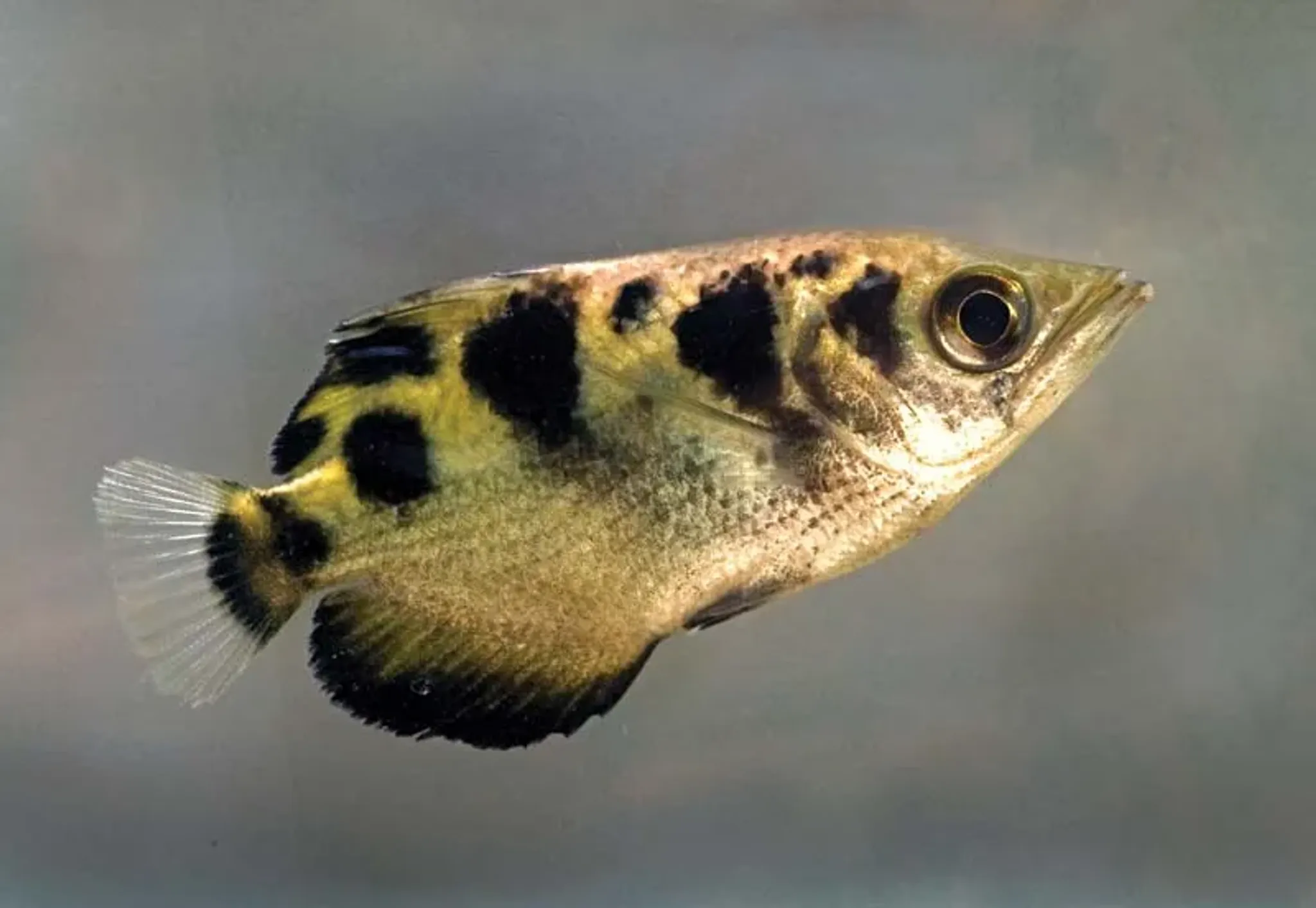
Archer Fish are famous for their remarkable ability to shoot jets of water at insects above the surface. They are active, intelligent fish with strong surface-feeding behaviour, but exact species identification is especially important because some Archer Fish are associated with brackish environments while others can live in freshwater.
Archer Fish belong to the genus Toxotes and are found naturally in parts of Asia and the Indo-Pacific region.
They are best known for hunting insects at the water surface and make unusual display fish for aquarists prepared to provide suitable space, diet and species-specific water conditions.
Different Toxotes species can have different adult sizes and salinity preferences, so scientific identification is useful when comparing listings.
Some Archer Fish species are naturally associated with freshwater habitats and can be maintained without adding salt when their exact species requirements are met.
Other Archer Fish are commonly associated with estuaries, mangroves and brackish environments. These should not automatically be placed in a permanent freshwater aquarium simply because they are sold alongside freshwater fish.
Other Archer Fish species may appear depending on specialist seller and importer availability. Always confirm species, adult size and preferred water conditions before purchase.
Some are, while others are more strongly associated with brackish water.
Because the common name covers multiple Toxotes species, the safest approach is to identify the exact fish before deciding whether it belongs in a freshwater or brackish setup.
Archer Fish can become much larger than many common community fish.
Adult size varies by species, so plan the aquarium around mature dimensions rather than the size of a juvenile at the shop.
Archer Fish are active swimmers and benefit from spacious aquariums with substantial horizontal room.
Tank size should account for adult size, group size and tankmates, with enough open surface area for their natural feeding behaviour.
A suitable Archer Fish setup may include:
The exact setup should also reflect whether the species is freshwater or brackish.
Archer Fish are able to form and direct a focused jet of water from the mouth toward insects above the surface.
When the prey falls into the water, the fish can rush forward and capture it. This specialised feeding behaviour is one of the traits that makes Archer Fish so unusual in the aquarium hobby.
Yes. Archer Fish spend significant time in the upper water column and feed near the surface.
Avoid completely covering the surface with plants or decor, and leave open areas where the fish can feed and swim freely.
A secure aquarium cover is strongly recommended.
Archer Fish are fast surface-oriented fish and may jump, particularly when startled or chasing food.
Archer Fish are carnivorous and naturally feed heavily on insects and other small animal prey.
In aquariums, appropriately sized prepared, frozen or live foods may be used depending on the species and what the individual fish accepts.
Food offered near the surface is particularly suitable because this matches their natural feeding zone.
A varied diet is preferable to relying on a single food type, and prey items should always be appropriately sized.
They may eat fish small enough to swallow.
Tankmates should therefore be chosen according to the Archer Fish's adult size and predatory feeding behaviour.
Archer Fish can sometimes be kept in large community setups with appropriately sized tankmates.
Very small fish and delicate species are generally less suitable because Archer Fish are active predators and can dominate surface feeding.
Small Tetras can be at risk of predation.
Larger robust species may sometimes be considered, but only when water conditions and mature sizes are compatible.
Larger Rainbowfish may sometimes coexist with Archer Fish because both are active swimmers.
Aquarium size, feeding competition and whether both species can thrive in the same water conditions should be considered carefully.
Suitably sized Silver Dollars may sometimes work as tankmates in very spacious aquariums.
Both are active fish, so a large tank with good filtration and plenty of swimming room is important.
Gouramis and Archer Fish both use the upper part of the aquarium, which can increase feeding and space competition.
Smaller Gouramis may also be at risk with larger Archer Fish, so this combination needs careful size matching.
Corydoras occupy the lower part of the aquarium and may therefore avoid direct competition with Archer Fish.
The more important question is whether the exact Archer Fish species and Corydoras can thrive in compatible water conditions.
Larger Plecos may coexist with Archer Fish because they occupy different areas of the aquarium.
Adult size, filtration needs and freshwater versus brackish requirements should all be considered.
Shrimp are likely to be viewed as prey by many Archer Fish.
They should not be considered reliable tankmates for a shrimp-focused aquarium.
Archer Fish can sometimes be kept in groups when enough space and food are available.
Group dynamics vary with species, age and tank size, so monitor for repeated bullying or feeding competition.
Archer Fish are better described as predatory and competitive rather than highly aggressive.
They may chase one another, compete strongly for food and eat smaller fish, especially in crowded aquariums.
Archer Fish can be kept with aquatic plants when the layout still provides substantial open swimming and surface space.
Dense planting should not prevent the fish from reaching the surface easily.
Some Archer Fish species are naturally associated with mangroves and estuarine environments.
Aquariums inspired by these habitats can use roots and open surface areas, but water salinity should still be based on the exact Toxotes species rather than on appearance alone.
This is one of the most important questions when buying Archer Fish.
Some Toxotes species can live naturally in freshwater, while others are commonly associated with brackish conditions. Ask for the scientific name whenever possible and plan the aquarium around that species.
Archer Fish benefit from stable, clean water and consistent aquarium maintenance.
Temperature, hardness and salinity requirements can differ between species, so generic care values should not be applied to every Archer Fish.
Effective biological and mechanical filtration is important for active, carnivorous fish.
Canister filters and other high-capacity filtration systems can be suitable when matched to the aquarium size, stocking and required water conditions.
Moderate circulation can be useful, but the aquarium should still provide calm surface areas for feeding.
Avoid directing powerful filter output across the entire surface where the fish naturally hunts and feeds.
Archer Fish are generally better suited to aquarists who can identify the species and provide appropriate long-term housing.
Their adult size, predatory diet and possible freshwater or brackish requirements make them more specialised than typical beginner community fish.
When comparing Archer Fish for sale, look for:
Because Archer Fish can be active feeders, a fish that consistently refuses food or remains isolated should be assessed carefully.
Introduce new Archer Fish carefully to avoid abrupt changes in temperature, water chemistry or salinity.
Quarantine can also help reduce the risk of introducing disease into an established aquarium.
Archer Fish prices in Singapore vary according to species, size, rarity, source and seller.
Specialist species or larger specimens may cost more and may appear less frequently than common community fish.
FishyHub brings Archer Fish listings from aquarium shops, breeders and specialist fish sellers across Singapore together in one marketplace, making it easier to compare available Toxotes species from multiple sources.
When comparing Archer Fish listings, consider:
Livestock availability changes regularly, especially for specialist Archer Fish species and larger specimens.
Some species are naturally freshwater, while others are more strongly associated with brackish environments. Exact species identification is important.
They can shoot jets of water at insects above the surface, knocking prey into the water.
It depends on the species. Some Toxotes can live in freshwater, while others are better associated with brackish conditions.
Yes, they may eat fish small enough to swallow.
They sometimes can when the aquarium is large enough and feeding competition is managed.
Larger Rainbowfish may sometimes coexist with Archer Fish when size, water requirements and tank dimensions are compatible.
They can jump, so a secure aquarium cover is strongly recommended.
They are generally more suitable for aquarists prepared to manage their adult size, predatory diet and species-specific freshwater or brackish requirements.
Explore Archer Fish for sale on FishyHub and compare Toxotes species from aquarium sellers and specialist fish keepers across Singapore. Compare species, adult size, freshwater or brackish requirements, condition and price to find a suitable Archer Fish for your aquarium.