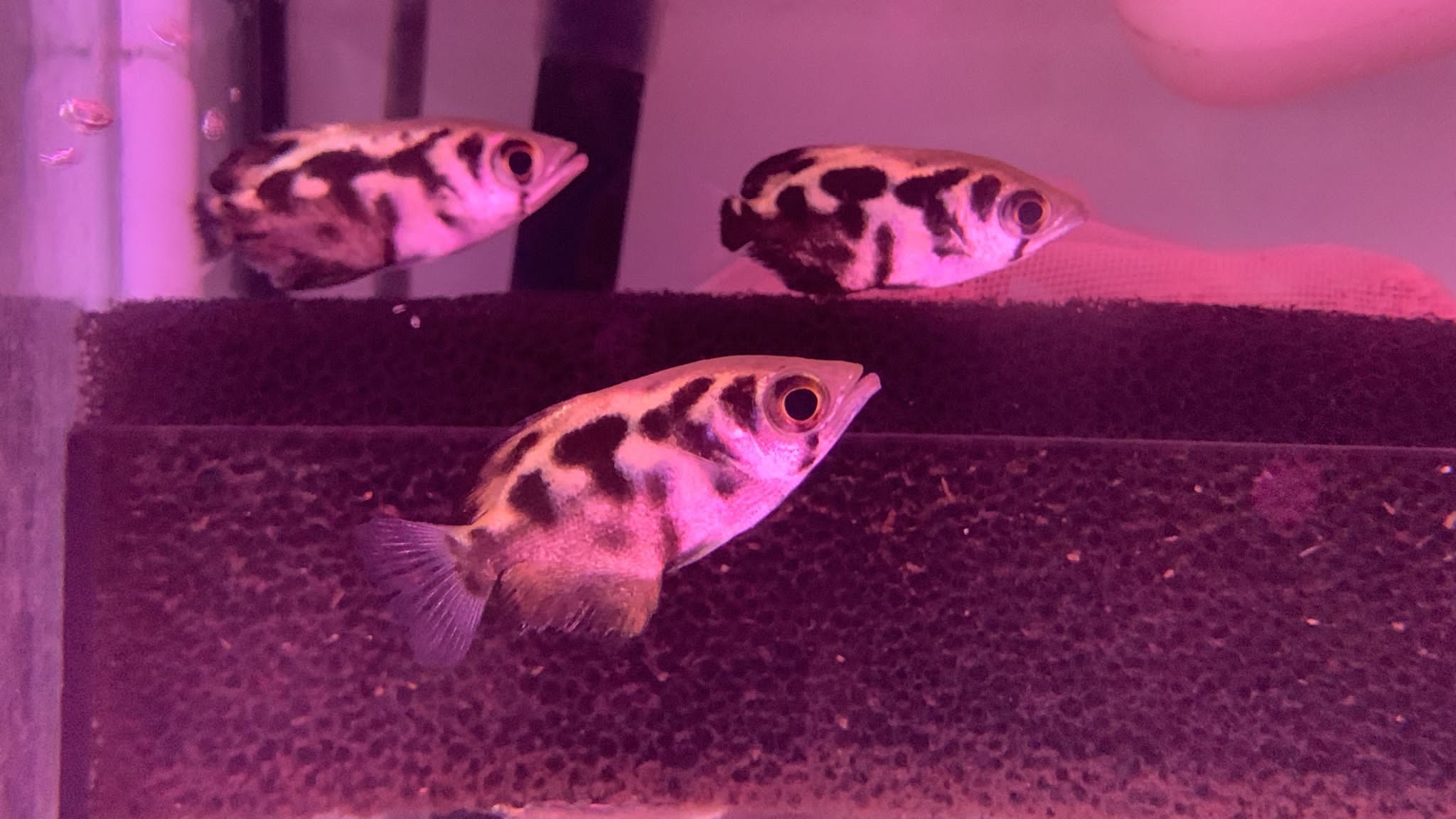

Best Tank Mates for Archerfish: Compatible Fish and Species to Avoid
The best archerfish tank mates are medium to large, calm fish that live in the middle or lower part of the tank and want the same salt level as your archer. Scats, monos, chromides and large gobies work in brackish tanks. Rainbowfish, silver dollars, clown barbs and clown loaches suit freshwater setups. Keep out anything small enough to fit in an archer's mouth, anything that lives at the surface, and anything aggressive.
Start With Salinity, Not the Stock List
Most compatibility lists skip the fact that the three archerfish species in the trade want different amounts of salt. Pick a mate that matches your archer's salinity tier first. Only then look at size and swimming level.
The three archerfish species
- Smallscale archer (Toxotes microlepis): about 5–6 in (13–15 cm). Lives in freshwater to low-end brackish, and it is the best fit for home aquariums.
- Banded archer (T. jaculatrix): the one sold most often. Up to about 12 in (30 cm) in the wild, usually around 8 in (20 cm) in tanks. Adults want real brackish to near-marine water.
- Largescale archer (T. chatareus): up to about 16 in (40 cm) in the wild, around 8 in (20 cm) in tanks. Wants mid-range brackish water.
Identify your fish first
Store labels are often wrong. In the US, smallscale and banded archers both show up in chain stores, and a tank tagged "archerfish" may hold any of the three. Compare scale size, band pattern and body shape against reliable species photos before you plan the community. The wrong ID means wrong salinity for everyone in the tank.
Salinity and water parameters
| Archer species | Specific gravity (SG) | Adult size in tanks | Water type |
|---|---|---|---|
| Smallscale | 1.000–1.005 | 5–6 in (13–15 cm) | Hard freshwater to light brackish |
| Largescale | about 1.005–1.010 | around 8 in (20 cm) | Mid brackish |
| Banded | 1.010 up to marine | around 8 in (20 cm) | Brackish to near-marine |
Shared targets for a brackish archer tank:
- Temperature: 72–86°F (22–30°C), with archers happiest at the warm end, about 78–86°F (26–30°C).
- pH: 7.2–8.3, with hard, alkaline water.
- Salt: juveniles can live in freshwater for a while, but adults generally do better at roughly 1–2% salt, or about 8–15 teaspoons of marine salt per 10 gallons (38 L). Always confirm with a hydrometer or refractometer rather than trusting spoon counts.
Can archers stay in freshwater for life?
Opinions split here. Some keepers say smallscales can live their whole lives in fresh water, and others say every species needs salt as an adult. A sensible middle ground: smallscales do fine in hard freshwater or very light brackish, while banded and largescale archers should move to brackish water as they grow. Raise salinity slowly, by about 0.001–0.002 SG per week.
Tank Size and Group Size
- One archer: at least 55 gallons (208 L). That works best for a single smallscale.
- A group of about 6: 100+ gallons (380+ L).
- Groups plus big brackish mates like scats and monos: plan on 125–180 gallons (475–680 L).
Archers are loose schoolers with a pecking order. Keep one, or 5–6 or more. A pair or trio usually ends with one fish bullying the rest, especially in a small tank. Some keepers insist on groups of 6+ and others say a single archer is fine. Both approaches work. Two or three in a cramped tank does not.
How to Judge an Archerfish Tank Mate
Archers are semi-aggressive. They are mostly peaceful toward fish too big to swallow, but they will eat anything that fits in their large, upturned mouth, and they claim the top few inches of water. A good mate checks every box below:
- Size: at least roughly half the archer's length, or deep-bodied enough that it can't be swallowed.
- Temperament: neither aggressive nor timid. Bullies stress archers, and shy fish get pushed off food.
- Water layer: mid-water or bottom, so it doesn't compete for the surface.
- Salinity: comfortable at your archer's specific gravity, not just able to survive it.
Best Tank Mates for Brackish Archerfish Tanks
These suit banded and largescale archers, and smallscales kept on the brackish side.
- Scats: active, deep-bodied and the classic brackish partner. They grow large and add to the bioload.
- Monos: keep them in groups of 6 or more, because small groups fight among themselves.
- Green chromide: a sturdy, medium-sized cichlid that handles brackish water well.
- Orange chromide: only once your archers are adult and the chromide is too big to swallow.
- Large sleeper gobies: bottom dwellers that stay out of the archer's zone.
- Violet "dragon" goby: keep one per tank.
- Sailfin mollies: large adults only. See the molly selection on FishyHub's molly page, and skip small or juvenile fish.
- Colombian shark catfish: a robust, active catfish for bigger brackish systems.
- Mudskippers: only in a paludarium with a land shelf (more on that below).
A note on scats and monos: they often sit around 1.010 SG, but some monos adapt to freshwater. Match the fish you buy to your archer's salinity tier rather than to a general average. In the US, scats and monos are often sold as freshwater fish even though they need brackish water long term.
Best Tank Mates for Freshwater Archerfish Tanks
These suit smallscale archers and young archers not yet moved to brackish.
- Larger rainbowfish such as Australian and Boeseman's types. Browse rainbowfish on FishyHub and choose adults.
- Silver dollars: deep-bodied, peaceful and fast.
- Clown barbs: active, sturdy mid-water fish that get big enough to be safe.
- Clown loaches: bottom dwellers that fill a zone archers ignore.
- Robust medium to large catfish: peaceful species that outgrow an archer's mouth.
- Large peaceful gouramis.
Archers in the Oddball Community
Archerfish belong to the oddball group, alongside bichirs, knifefish, eels, freshwater sharks and large catfish. Most of these need big tanks, tight lids, hiding spots and smooth substrate, so they often end up sharing space. If you're browsing FishyHub's monster fishes for company, keep these rules in mind:
- Bichirs, large peaceful catfish and bala sharks can live with freshwater archers, as long as nobody is small enough to be swallowed by anybody else.
- Eels and knifefish are a poor match when they're small enough to be eaten, or when they are predators themselves.
- Redtail catfish and tiger shovelnose grow far too large and will eat archers.
Species to Avoid With Archerfish
| Avoid | Why |
|---|---|
| Fish under about 2–3 in (5–8 cm): neons, small rasboras, guppies, endlers | They become food |
| Shrimp | Eaten, even large ones in many cases |
| Surface dwellers: hatchetfish, many killifish, halfbeaks | They compete for the top layer and get harassed |
| Aggressive cichlids and big predators | They bully or eat archers |
| Green spotted and figure-8 puffers | Fin nipping and aggression; best in a species tank |
| Slow, long-finned fish: fancy bettas, angelfish | Easy targets for nipping and outcompeted at feeding |
| Any fish with a different salinity need | One side of the tank will always be stressed |
Why puffers stay on the avoid list
Some lists include puffers as brackish mates, while others call green spotted puffers too aggressive for any community. Given the fin nipping risk, treat puffers as experts only, and plan on a separate tank.
Setup Details That Affect Compatibility
- Tight lid: archers jump and spit water, and a full tank with no cover risks losses and wet lights.
- Lowered water level: leave air space, and add overhanging branches or emersed plants to give archers something to shoot at.
- Open swimming room in the upper and middle water.
- Strong filtration: meaty food and large fish add up quickly, so oversize the filter.
The paludarium option
A paludarium with lowered water, emersed plants and a land shelf suits archers well and is the only sensible way to add mudskippers. It also gives archers natural targets above the waterline.
Feeding Two Water Layers
Start archers on meaty foods such as crickets, mealworms, flies and bits of fish or squid, then wean them onto frozen foods and floating pellets. Floating food keeps archers at the top, which leaves room for bottom fish to eat. Feed at two levels at once, with floating food for the archers and sinking pellets for the catfish, loaches and gobies, and target-feed any bottom dweller that seems thin.
Stocking Order and Quarantine
Add tank mates at the same time as the archer, or add the archer last so it doesn't claim the tank first. Quarantine every new fish before it joins the display, which is especially important with wild-caught brackish species.
Common Mistakes and How to Fix Them
- A tiny juvenile archer with small community fish. It looks fine at first, then the small fish disappear as the archer grows. Stock for the archer's adult size.
- Banded archers kept in freshwater indefinitely. Watch for fading color, fin rot and a shorter life. Raise salinity by about 0.001–0.002 SG per week.
- Scats or monos in small numbers. Expect squabbling, and remember they outgrow modest tanks.
- A full tank with no lid. Archers jump out or spray the lights.
- Surface fish at feeding time. Archers go hungry or turn aggressive. Remove the competition and feed at two levels.
- Ammonia spikes. Messy meaty feeding and heavy bioloads push ammonia up. Oversize filtration and change water often.
Frequently Asked Questions
Can archerfish live with community fish?
Only with large, peaceful community fish. Tetras, small rasboras, guppies and similar fish are food to an archer. Choose mates that are at least about half the archer's length or deep-bodied.
Can two archerfish live together?
It's risky. Two or three archers usually end with one bullying the others. Keep a single archer, or a group of 5–6 or more in a tank of 100+ gallons (380+ L).
Do archerfish need brackish water?
It depends on the species. Smallscale archers can stay in hard freshwater or very light brackish, while banded and largescale archers do better in brackish water as adults. Confirm your fish's species before setting salinity.
Can archerfish live with mollies?
Yes, with large adult mollies such as sailfins in brackish water. Fry and small mollies will be eaten.
What size tank do archers and their tank mates need?
Plan on 55 gallons (208 L) minimum for one archer. Groups with scats or monos need about 100–180 gallons (380–680 L).
Can I keep shrimp or snails with archerfish?
Shrimp will get eaten. Large nerite snails are usually safe. Archers prefer to feed at the surface, so train them onto floating pellets and target-feed bottom dwellers.
Build Your Archerfish Community
Pick a compatible group by matching salinity first, then size and swimming level, and give everyone room to grow. When you're ready to stock, browse FishyHub's freshwater livestock for rainbowfish, barbs, loaches, catfish and other sturdy companions that can hold their own next to an archer.


