1–4 of 4
Explore Silver Dollar fish for sale in Singapore from aquarium shops, breeders and freshwater fish sellers on FishyHub. Compare Metynnis and other Silver Dollar species by size, appearance and seller.
Silver Dollar fish are deep-bodied freshwater schooling fish known for their metallic appearance, active swimming and distinctive round shape. They can become much larger than many common community fish, so they are best suited to aquariums with generous swimming space.
Silver Dollar fish are South American freshwater fish related to other characins.
Several species appear in the aquarium trade, often under the broad Silver Dollar name, so exact identification can be useful when comparing adult size and appearance.
Silver Dollar fish may be sold under different common names depending on species and markings.
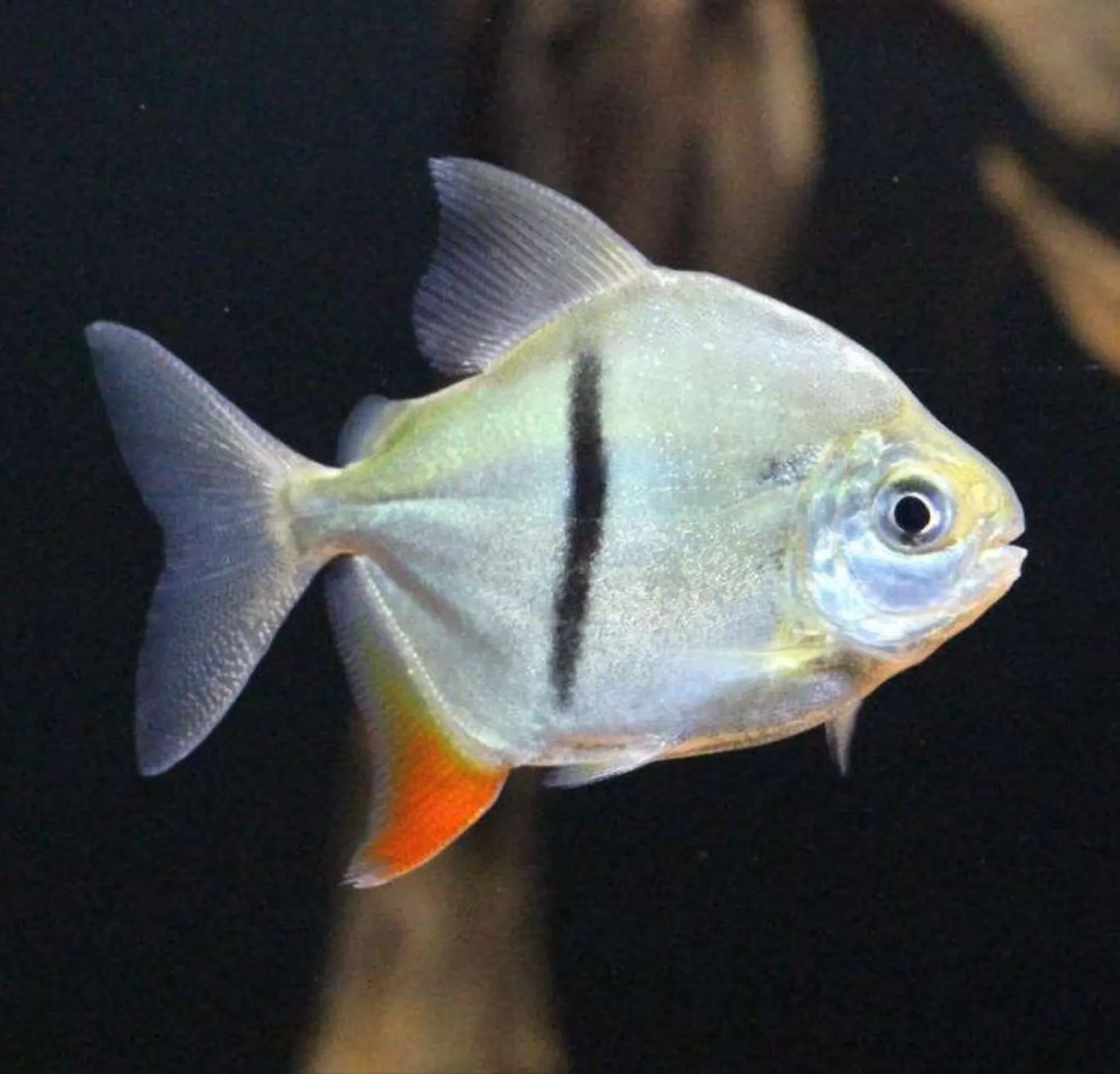
Metynnis species are among the best-known Silver Dollar fish in the aquarium hobby and are recognised for their round, silvery bodies and schooling behaviour.
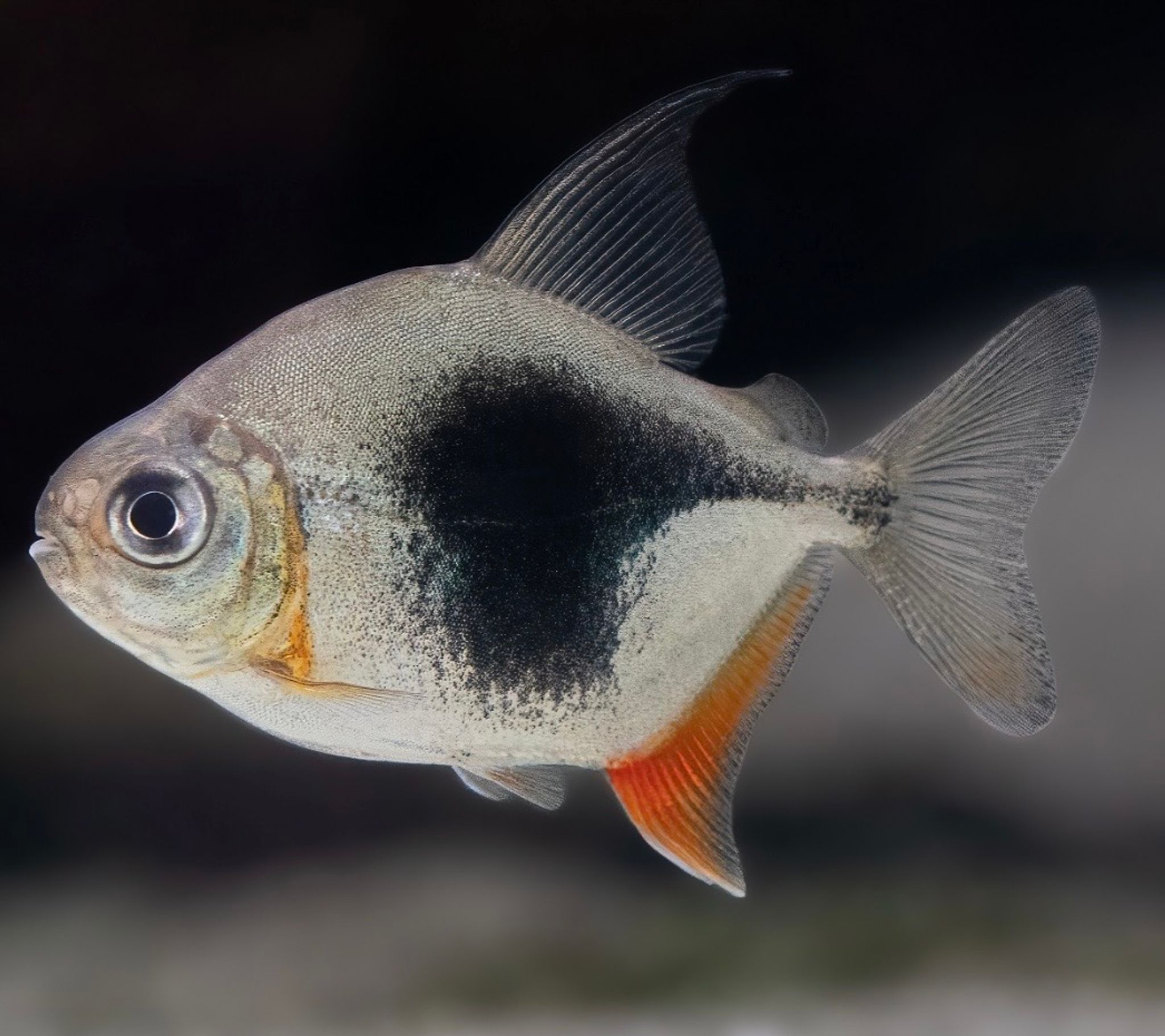
Some Silver Dollar varieties display dark spotting or mottled markings that create a more patterned appearance than plain silver forms.
Red Hook-type Silver Dollars are known for their larger body size and reddish coloration around the anal fin. They require more space than smaller Silver Dollar species.
Other related species may appear depending on specialist seller availability. Adult size and care requirements can differ, so confirm the exact species whenever possible.
Silver Dollar fish grow substantially larger than many Tetras and other small schooling fish.
Their deep body shape also means they need more physical space than length alone may suggest. Choose the aquarium based on mature size rather than juvenile shop size.
Silver Dollars benefit from a long aquarium with substantial open swimming space.
Tank size should account for the adult size of the species, the number of fish in the school and any tankmates.
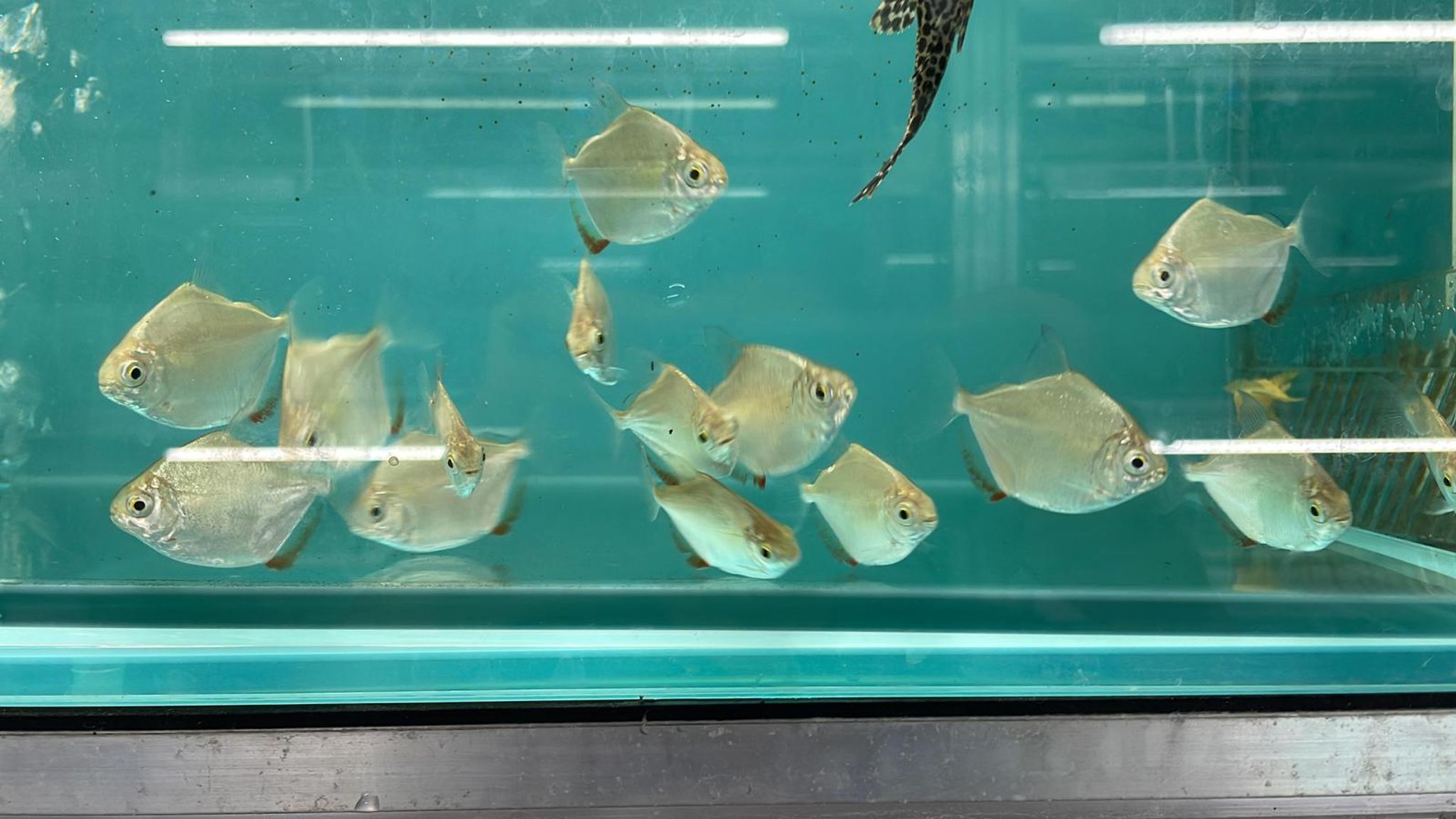
Yes. Silver Dollars are social fish and are generally better kept in a suitable group.
A group can help them feel more secure and creates the coordinated swimming behaviour that makes these fish impressive in larger aquariums.
Silver Dollars can work in larger community aquariums with suitably sized, peaceful or moderately robust fish.
Very small fish may be intimidated by their size and activity, so tankmates should be chosen with mature size in mind.
Larger Tetra species may sometimes coexist with Silver Dollars in spacious aquariums.
Tiny schooling fish may be less suitable simply because of the size difference and competition for food and swimming space.
Silver Dollars and Angelfish may coexist in large, well-planned community aquariums when water conditions and temperament are compatible.
The tank should provide enough room for active Silver Dollars without constantly crowding slower-moving Angelfish.
This combination requires careful planning because Silver Dollars are fast, active feeders while Discus are generally calmer.
Feeding competition, tank size and compatible water conditions should all be considered before combining them.
Suitably sized Silver Dollars are sometimes kept with Oscars in large aquariums.
Size matching is important so the Silver Dollars are not viewed as prey, and the tank must be large enough for both species.
Silver Dollars are sometimes used as midwater companions in very large Arowana setups.
Compatibility depends on the size of both fish, aquarium dimensions and individual behaviour. Small Silver Dollars may be at risk of predation.
Silver Dollars occupy the middle water column while Bichirs are more bottom-oriented.
Larger Silver Dollars may coexist with suitably sized Bichirs in spacious aquariums, but smaller individuals can still be vulnerable.
Silver Dollars are not generally the easiest fish for delicate planted aquariums.
Many species readily eat or damage soft aquatic plants, so heavily planted layouts can become challenging to maintain.
Many Silver Dollar fish consume plant material as part of their diet.
Tender aquarium plants may be nibbled or stripped, so plant compatibility should not be assumed.
Driftwood and rocks can create structure without occupying too much valuable swimming space.
Leave large open areas through the centre and upper parts of the aquarium so the school can move freely.
Silver Dollar fish are generally omnivorous with a strong tendency toward plant-based foods.
Quality pellets, flakes and suitable vegetable-rich foods can form part of a varied diet, with additional foods selected according to species and size.
Silver Dollars are active feeders and can consume food quickly.
In community aquariums, watch for slower tankmates being outcompeted and distribute food appropriately.
Silver Dollars benefit from stable, clean freshwater and regular aquarium maintenance.
Exact temperature, hardness and pH preferences vary between species and source, so care should be matched to the fish being kept.
A group of adult Silver Dollars can create a substantial bioload.
Effective mechanical and biological filtration is important, with filter capacity matched to aquarium size, stocking and feeding levels.
Silver Dollars are strong swimmers and generally handle moderate circulation well.
Flow should still leave calmer areas rather than forcing the fish to swim against a powerful current continuously.
Silver Dollars are fast fish and may jump when startled.
A secure aquarium cover can help prevent accidental escapes, particularly when fish are newly introduced.
Silver Dollars are generally schooling rather than highly aggressive fish.
Minor chasing can occur within the group, but suitable schooling numbers and adequate swimming space can help reduce persistent conflict.
Sex differences depend on species and may become easier to identify as fish mature.
Mature males of some species can show differences in fin shape or coloration, while females may become fuller-bodied.
Silver Dollar fish can be bred in captivity, although successful breeding generally requires mature fish and suitable spawning conditions.
Adults may consume eggs, so dedicated breeding setups can make egg and fry management easier.
Their care can be manageable, but their adult size, schooling needs and appetite for plants make them less suitable for very small beginner aquariums.
They are a better choice for aquarists prepared to provide a spacious, well-filtered tank for a group.
When comparing Silver Dollar fish for sale, look for:
Silver Dollars can become pale when stressed, so overall behaviour and condition are more useful than colour intensity alone.
Introduce new Silver Dollars carefully to avoid sudden changes in temperature and water chemistry.
Quarantine can also help reduce the risk of introducing disease into an established large community aquarium.
Silver Dollar fish prices in Singapore vary according to species, size, pattern, rarity and seller.
Common juveniles may be relatively affordable, while larger or less common species can cost more.
FishyHub brings Silver Dollar fish listings from aquarium shops, breeders and freshwater fish sellers across Singapore together in one marketplace, making it easier to compare available species and sizes from multiple sources.
When comparing Silver Dollar listings, consider:
Livestock availability changes regularly, so specific Silver Dollar species and sizes may not always remain in stock.
Yes. Silver Dollar fish are freshwater fish commonly kept in larger community aquariums.
Yes. They are social fish and generally do best when kept as a suitable group.
Many do. Plant material forms part of the diet of several Silver Dollar species, so delicate aquarium plants may be eaten.
Suitably sized Silver Dollars can sometimes coexist with Oscars in large aquariums where neither fish can prey on the other.
They are sometimes kept together in very large aquariums, but size matching and individual behaviour are important.
Larger Silver Dollars may sometimes coexist with suitably sized Bichirs, although smaller individuals can be at risk of predation.
They generally need substantial swimming space because they grow relatively large and should be kept in groups.
They are generally omnivorous with a strong interest in plant-based foods and can be fed a varied diet of suitable prepared and vegetable-rich foods.
Explore Silver Dollar fish for sale on FishyHub and compare Metynnis, spotted, Red Hook and other Silver Dollar varieties from aquarium sellers and breeders across Singapore. Compare species, adult size, group needs and price to find suitable Silver Dollars for your freshwater aquarium.