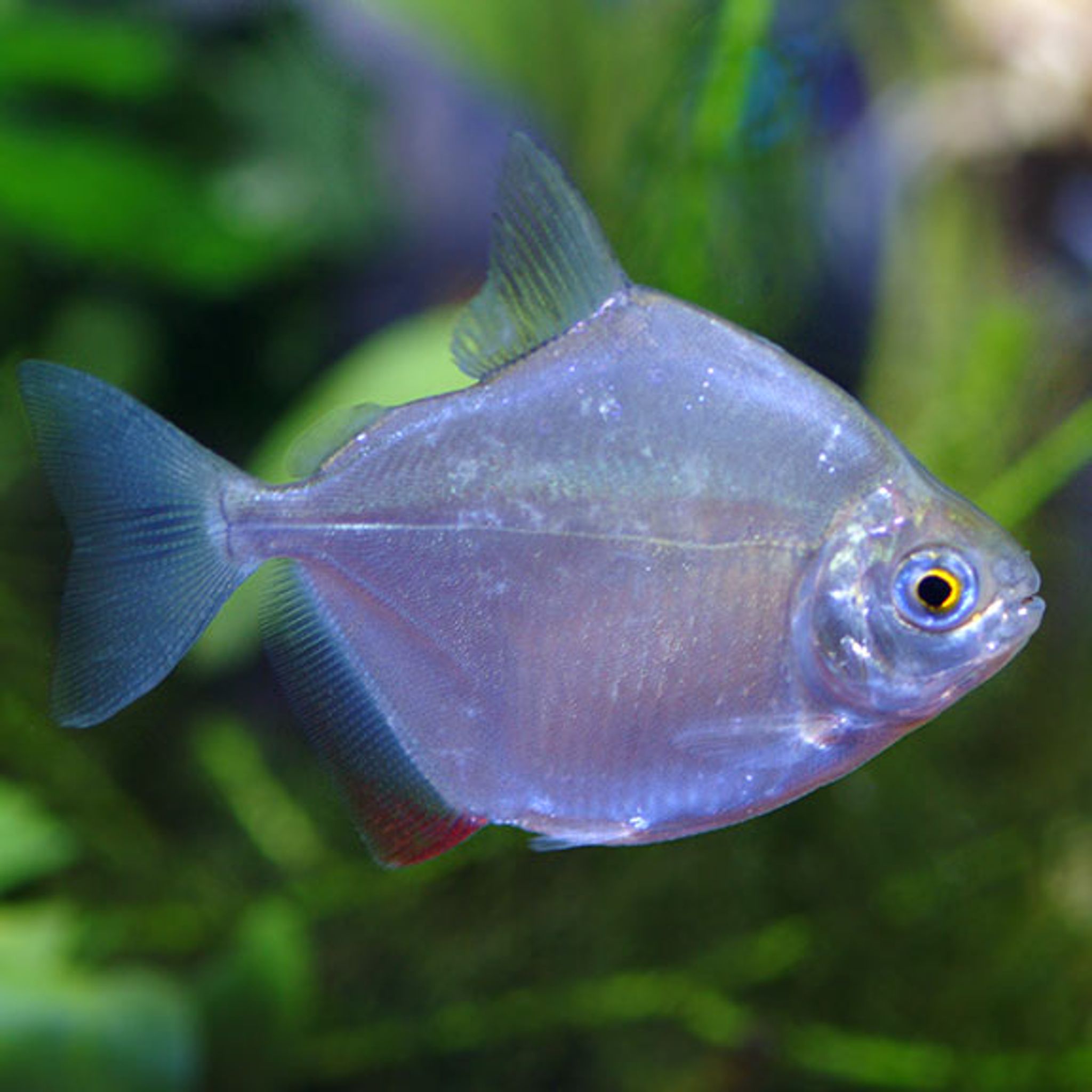

Best Tank Mates for Silver Dollar Fish: Compatible Fish and Species to Avoid
The best tank mates for silver dollar fish are peaceful to semi-aggressive species about 3 inches or longer that like the same warm, soft water: larger Corydoras, bristlenose plecos, Boesemani rainbowfish, sturdy tetras, and calm cichlids such as severums and keyholes. Skip tiny fish, shrimp, slow long-finned fish, and bully cichlids. Most soft live plants won't last, either. Here's how to plan the tank around silver dollars at their adult size.
Know the Fish Before You Pick Its Neighbors
"Silver dollar" covers several Metynnis species, including M. argenteus, M. hypsauchen, and the spotted or lunaris types, plus the bigger red hook fish (Myloplus and Myleus). All of them are South American pacu relatives with teeth made for grinding plants.
- Adult size: 5–6 in (13–15 cm) for common Metynnis. Red hooks can grow past 8 in (20 cm).
- Lifespan: about 10 years.
- Tank size: 75 gallons (284 L) minimum for a school of 5–6, ideally with a footprint of 4 ft (120 cm) or longer. Go to 125 gallons (473 L) or more for red hooks or a mixed community of large fish.
- Water: 75–82 °F (24–28 °C), pH 6.0–7.0 (tolerates up to about 7.5), 4–18 dGH.
- Group size: 5 or more. Singles and pairs get skittish, hide, and panic against the glass.
Silver dollars are peaceful but jumpy. They're fast swimmers that stay in the middle and upper water, and they're big eaters with a strong lean toward plant food. A tight-fitting lid is required because a startled school will jump.
What Makes a Good Silver Dollar Tank Mate
Check each candidate against four points:
- Temperament: peaceful to semi-aggressive. Nothing that stakes out half the tank.
- Size: about 3 in (7.5 cm) or larger as an adult, or a fast schooling fish that can hold its own.
- Water match: comfortable at 75–82 °F in soft to moderately hard, slightly acidic water.
- Activity tolerance: fine living with a busy school that sprints around at feeding time.
Best Tank Mates by Water Level
Sorting candidates by where they swim spreads the fish through the whole tank and cuts down on competition.
Bottom Level
- Corydoras: pick larger species such as bronze (C. aeneus) or peppered (C. paleatus) cories and keep them in groups. Tiny pygmy types are too small. You can browse Corydoras catfish that suit a large community.
- Bristlenose pleco: stays small, tolerates the same water, and grazes algae without bulldozing the tank.
- Clown loaches: only in big tanks, in groups (see the section on disputed picks below).
Middle Level
- Boesemani and other large rainbowfish: active, colorful, and about the same size. They're one of the most reliable matches. Browse rainbowfish if you want color in the midwater.
- Bala sharks: good company, but they need 125+ gallons.
- Siamese algae eater: peaceful and quick enough to keep up.
- Sturdy tetras: black skirt, serpae, Congo, and bleeding heart tetras are big and tough enough.
- Tiger barbs: workable because silver dollars have short fins and are too fast to nip. Keep 6 or more barbs so they nip each other, not their neighbors.
Cichlids
- Severum, keyhole cichlid, electric blue acara, and rainbow cichlid (Herotilapia) are calm enough for a silver dollar school.
- Angelfish work with care in a tall tank.
- Blood parrots are generally peaceful and the right size.
Possible With Conditions
- Giant gourami: only in a very large tank. It grows huge.
- Redtail or rainbow shark: keep just one. It will guard a territory near the bottom.
- Black ghost knifefish: needs a huge tank and will eat small fish at night.
- Firemouth cichlid: usually manageable, but give it some territory and watch it during breeding.
Adult Size and Placement Table
| Tank mate | Water level | Adult size vs. silver dollars | Temperament | Tank with silver dollars |
|---|---|---|---|---|
| Bronze/peppered cory (group) | Bottom | Smaller, but safe on the bottom | Peaceful | 75+ gal (284+ L) |
| Bristlenose pleco | Bottom | Smaller, sturdy | Peaceful | 75+ gal (284+ L) |
| Clown loach (group) | Bottom | Large as adults | Peaceful, boisterous | 125–150+ gal (473–568+ L) |
| Boesemani rainbowfish | Middle | Similar build, fast | Peaceful | 75+ gal (284+ L) |
| Black skirt/Congo tetra | Middle | Smaller, but sturdy and quick | Peaceful | 75+ gal (284+ L) |
| Tiger barb (6+) | Middle | Smaller, fast | Semi-aggressive | 75+ gal (284+ L) |
| Bala shark (group) | Middle | Larger | Peaceful | 125+ gal (473+ L) |
| Severum/keyhole | Middle | Similar or larger | Mostly peaceful | 75–125+ gal (284–473+ L) |
| Angelfish | Middle–upper | Similar, with tall fins | Semi-aggressive | Tall 75+ gal (284+ L) |
| Red hook silver dollar | Middle–upper | 8+ in (20+ cm) | Peaceful | 125+ gal (473+ L) |
Remember that common silver dollars reach 5–6 in (13–15 cm), so plan every tank mate around that adult size, not the size in the store.
Where Hobbyists Disagree
- Neon and cardinal tetras: some keepers list them as good companions. Adult silver dollars dwarf them and beat them to every meal, and small tetras do better in soft planted tanks anyway. Choose black skirts, Congos, or bleeding hearts.
- Clown loaches and bala sharks: some rate them highly. Others point out that they outgrow most tanks and tear up plants. Keep them only in 125–150+ gallons, and always in groups.
- Angelfish: silver dollars don't nip, but their size and feeding frenzies can stress angels. It works in a tall, roomy tank. Watch closely at feeding time.
- Tiger barbs: nippy, but short-finned, fast silver dollars are poor targets. A group of 6+ keeps the nipping inside the barb group.
Species to Avoid
- Aggressive or territorial cichlids: convicts, salvini, and Jack Dempseys bully peaceful silver dollars. Large predators such as oscars are a bad idea in anything short of a very large tank.
- Tiny or slow fish: nano rasboras, fancy guppies, and bettas get outcompeted, stressed, or eaten.
- Shrimp: cherry shrimp and other small invertebrates are at risk.
- Fancy goldfish: slow and long-finned, and they need cooler water.
A Sample 125-Gallon US Community
Here's one balanced stocking plan for a 125-gallon (473 L) tank:
- 7 silver dollars
- 6 Boesemani rainbowfish
- 8 bronze Corydoras
- 1 bristlenose pleco
- 1 severum pair
It fills every water level, keeps the only cichlids calm, and leaves room for strong filtration. If you want a different centerpiece, look through American cichlids for calmer South and Central American species.
Stocking Order and Quarantine
- Add peaceful bottom fish first.
- Add the silver dollar school next.
- Add semi-aggressive fish and cichlids last, so they can't claim the tank before everyone else settles in.
Quarantine every new fish for 2–4 weeks, and watch behavior closely for the first few weeks after each addition.
Keeping the Whole Tank Calm
One spooked silver dollar can set off the whole school, and a panicking school stresses every other fish. To keep things calm:
- Give them cover: driftwood, rockwork, and tall tough or artificial plants along the back and sides.
- Use subdued lighting, and dim the room lights before the tank lights change.
- Add dither fish: a confident schooling species such as rainbowfish signals that the tank is safe.
- Don't tap the glass, and keep the lid on.
A soft, slightly acidic blackwater setup with driftwood and leaf litter suits silver dollars and most South American tank mates, and the tinted water tends to settle skittish fish.
Feeding a Mixed Community
Silver dollars eat fast and grab most of the food. To make sure everyone gets fed:
- Spread food across the surface instead of dropping it in one spot.
- Drop sinking wafers for cories and plecos, ideally after lights-out.
- Give daily greens: blanched zucchini, spinach, and peas, plus a spirulina-based staple.
- Add occasional protein for balance.
Silver Dollars and Live Plants
In the wild, silver dollars eat fruit, seeds, and plant matter, so aquarium plants look like food to them. Assume anything soft will be eaten.
Silver Dollars Among Other Plant-Eaters
They're in the same group as other well-known herbivores: goldfish, mbuna, uaru, Leporinus, pacu, Buenos Aires tetras, and brackish scats and monos.
Fish That Cause Problems in Planted Tanks
| Type of trouble | Examples | What happens |
|---|---|---|
| Plant eaters | Silver dollars, Buenos Aires tetras, goldfish, mollies grazing soft leaves | Leaves eaten down to stems |
| Diggers | Oscars, mbuna, eartheaters (Geophagus), convicts, Jack Dempseys | Plants uprooted, substrate moved |
| Large bulldozers | Common and sailfin plecos, clown loaches, tinfoil barbs, giant gourami, koi | Plants flattened; heavy waste feeds algae |
| Invertebrates | Crayfish, crabs | Plants shredded |
Damage Control
- Feed greens daily so plants aren't the only vegetables around.
- Let plants establish for 2–4 weeks before adding fish.
- Anchor rhizomes and roots with rocks.
- Don't overstock.
- Choose tough-leaved, bitter plants: Anubias, Java fern, and Bolbitis attached to wood or rock. Fast-growing floaters or hornwort can serve as sacrificial food. Artificial or silk plants are the only fully safe option.
Planted-Tank-Friendly Alternatives
If you'd rather keep a lush planted tank than silver dollars, stock small tetras, Otocinclus, dwarf plecos, Amano shrimp, nerite snails, rams, or Apistogramma instead.
Common Mistakes and Fixes
- Buying 1.5 in juveniles for a 29–55 gallon tank. They outgrow it within about a year. Plan for 75+ gallons from the start.
- Keeping only 1–2 fish. This leads to hiding, stress, and crashes into the glass. Keep 5–6 or more.
- No lid. Startled fish jump out. Cover the tank fully and keep the room lighting dim.
- Starving bottom fish. Feed sinking food after lights-out or target-feed.
- Mixing cichlids without a territory plan. Break up sight lines with decor and add cichlids last.
- Plants vanishing overnight. Switch to Anubias, Java fern, or artificial plants, and feed more vegetables.
- Nitrate spikes. Heavily stocked large-fish tanks need 30–50% weekly water changes and oversized filtration.
A legal note: some pacu relatives are regulated in parts of the US. Never release silver dollars or any aquarium fish into local waters. Rehome them instead.
Build the Community Around the Adult School
Start with a 75+ gallon tank, a school of 5 or more, a tight lid, and a feeding plan that reaches the bottom. Then add companions level by level. When you're ready, browse freshwater livestock on FishyHub to find silver dollars and tank mates for your setup.
Frequently Asked Questions
Can silver dollars live with angelfish?
Usually, yes, in a tall tank of 75 gallons (284 L) or more. Silver dollars don't nip fins, but their size and frantic feeding can stress angels. Watch feeding time and spread the food out.
Will silver dollars eat small fish?
They aren't predators, but they may eat fry and very tiny fish. Small fish also lose out at every meal. Keep tank mates about 3 in (7.5 cm) or larger, or pick fast, sturdy schooling fish.
Can silver dollars live with oscars or other big cichlids?
Only calmer large cichlids work, and only in 125+ gallon (473+ L) tanks. Skip convicts, salvini, and Jack Dempseys, which bully silver dollars.
Are silver dollars OK with shrimp and snails?
Adult nerite and mystery snails are generally fine. Cherry shrimp and other small shrimp are at risk of being eaten.
Are silver dollars aggressive?
No. They're peaceful but skittish, and their feeding frenzies are the only real problem for tank mates. Spread food out and feed bottom dwellers separately.
Can silver dollars live with goldfish?
No. Goldfish need cooler water, eat a different diet, and add a heavy waste load on top of an already big bioload.


