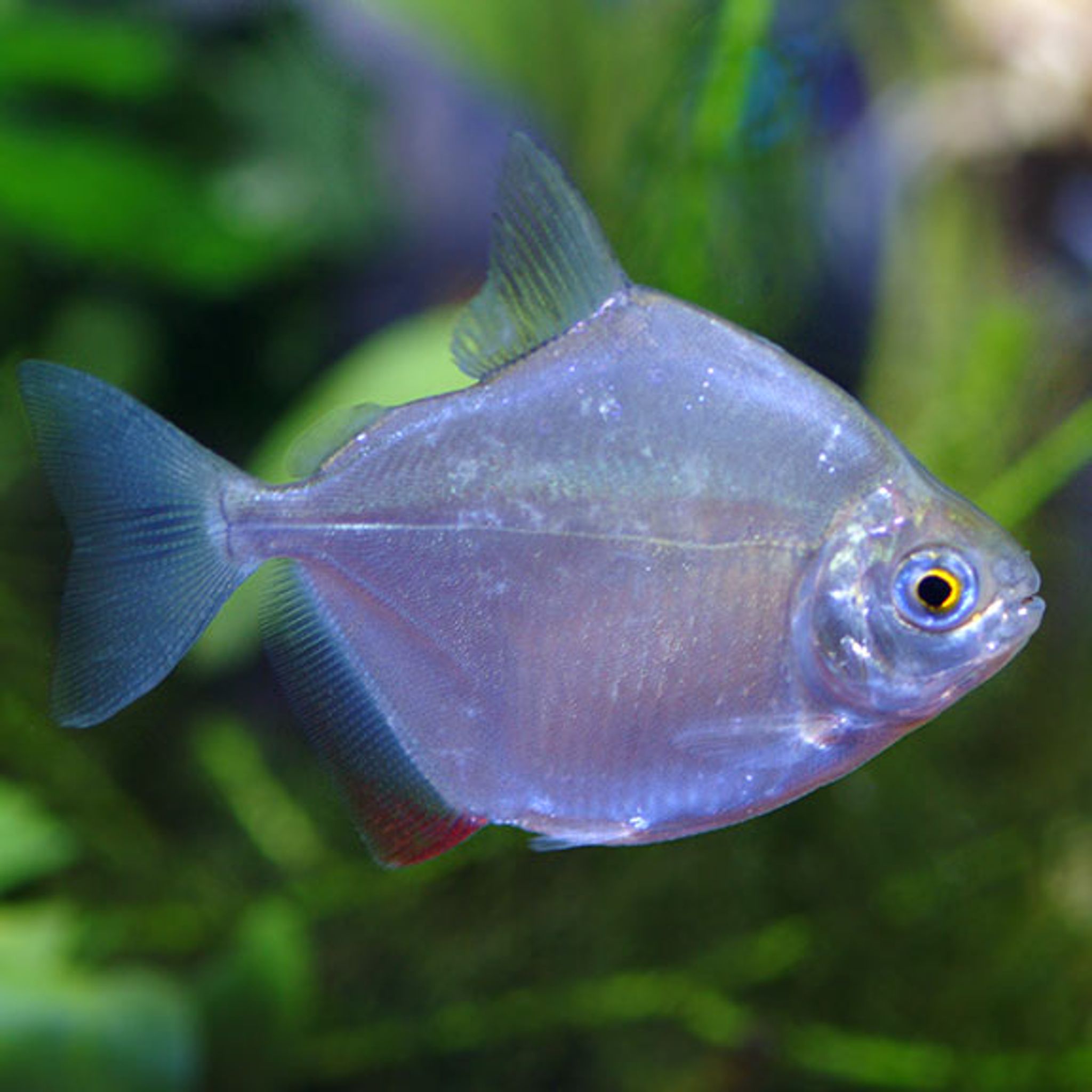

What Do Silver Dollar Fish Eat? A Practical Feeding Guide
Silver dollar fish are labeled omnivores, but in the aquarium they behave like dedicated plant grazers. This guide breaks down exactly what to feed them, how much, how often, and how to keep them from stripping every leaf out of a planted tank.
Omnivore on Paper, Herbivore at the Table
Silver dollars (Metynnis and Myloplus species) are close relatives of piranhas, but they took a very different evolutionary path — trading a predator's jaw for one built to crop vegetation all day long. That heritage shows up directly in their feeding needs.
The practical rule: treat silver dollars as herbivores with an omnivore label. Their diet should run roughly 80-90% plant matter and 10-20% protein. Feed them like carnivorous cichlids or oscars, with protein-rich flakes as the daily staple, and you'll see poor coloration, digestive trouble, and often more aggression toward tankmates and plants.
Why the Wild Diet Matters
In their native South American rivers, silver dollars school along vegetated banks, grazing on:
- Overhanging leaves and soft riverside plants
- Algae growing on submerged wood and rock
- Fallen fruit and seeds that drop into the water
- Occasional insects and invertebrates picked up while foraging
That constant low-protein grazing pattern is the blueprint for a captive diet. It's also why silver dollars rarely stop looking for something to nibble — a behavior that becomes a real problem in a planted tank, covered below.
Best Staple Foods for Silver Dollars
A high-quality spirulina or vegetable-based flake or pellet should form the everyday base of the diet. When comparing labels, look for herbivore-formulated foods in roughly the 30-35% protein range, rather than carnivore or growth formulas that often run 45% or higher — those are built for fish with very different digestive systems.
Pellet size matters more than most new owners expect. Adult silver dollars can reach 6 inches (about 15 cm) or more, with a mouth to match, so a pellet sized for tetras will be ignored or wasted. Choose a pellet or flake sized for a medium-to-large-bodied grazer, and size up as your fish grow.
Good supplemental options include:
- Algae wafers — useful for feeding mid-water and giving shier fish a slower-sinking option
- Seaweed or nori sheets — clipped to the glass, they mimic natural grazing and keep fish occupied longer
- Ready-made vegetable-forward foods carried in the Food & Supplements range are a convenient way to build this base without mixing your own blend
Fresh Vegetables and How to Prepare Them
Fresh produce should be a regular part of the rotation, not an occasional extra. Good choices include:
- Romaine lettuce (not iceberg — it's mostly water and offers little nutrition)
- Spinach
- Cucumber
- Zucchini or other soft squash
- Shelled peas
- Cress, chickweed, or spring greens
- Small amounts of carrot or fruit as an occasional variation
Blanching — a brief dip in boiling water for a minute or so — softens tougher vegetables like zucchini and carrot and makes them far easier for silver dollars to tear apart. Use a vegetable clip or a skewer to anchor greens near the bottom or mid-water so the school can graze without chasing floating scraps around the tank.
Don't rely on one vegetable alone. Lettuce is low in overall nutrient density compared to spinach or peas, so rotating several types across the week fills nutritional gaps that a single staple leaves behind.
Remove uneaten vegetable matter within a few hours. Left longer, it breaks down and fouls the water, contributing to ammonia and nitrite spikes — a common mistake with heavy vegetable feeders.
Protein Treats — Sparingly
Silver dollars appreciate the occasional protein hit, but it needs to stay a treat, not a habit:
- Bloodworms
- Brine shrimp (live or frozen)
- Boiled potato
- Occasional insect larvae
Offer these once or twice a week, not daily. A protein-heavy diet over time can stress a digestive tract that evolved for plant fiber, and it's one of the more common paths to bloating and long-term health issues in this species.
Sample Weekly Feeding Plan
The table below gives a concrete plan you can adapt rather than a general rule to interpret on your own.
| Day | Morning Feeding | Evening Feeding |
|---|---|---|
| Monday | Spirulina flake/pellet | Blanched zucchini or spinach |
| Tuesday | Spirulina flake/pellet | Algae wafer + nori sheet |
| Wednesday | Spirulina flake/pellet | Bloodworms or brine shrimp (protein day) |
| Thursday | Spirulina flake/pellet | Romaine or peas |
| Friday | Spirulina flake/pellet | Nori sheet or cucumber |
| Saturday | Spirulina flake/pellet | Bloodworms or brine shrimp (protein day) |
| Sunday | Fasting day (skip or offer a small amount only) | — |
A weekly fasting day is a general aquarium-keeping practice, not something specific to silver dollars, but many keepers use it across species to prevent overfeeding and support digestion.
Feeding Frequency and Portion Sizing
Twice daily is the standard baseline for adult silver dollars. Younger, more active schools — or setups using an automatic feeder for small, frequent portions — can move to 2-3 smaller feedings a day instead.
Portion sizing follows a simple rule: feed only what the group can finish in 2-3 minutes. Anything left over should be removed to protect water quality. As fish mature toward that 6-inch adult size, portions need to scale up accordingly — underestimating adult appetite is one of the more common feeding mistakes with this species.
Because silver dollars are schooling fish (keep groups of 5-6 or more) and competitive eaters, spread food across a wide surface area rather than dropping it in one spot. Feeding in multiple locations at once helps ensure dominant individuals don't monopolize the meal while shier fish in the group go underfed.
Since these fish eat so much plant matter, they also produce more waste than a typical community fish of the same size. A heavy grazing diet calls for solid filtration and a consistent water-change schedule — a filter sized generously for the tank's bioload is worth prioritizing alongside the feeding plan itself.
Protecting Live Plants from Silver Dollars
This is the care consideration that catches the most planted-tank keepers off guard. Silver dollars don't just nibble — they graze constantly, and a hungry school can uproot and shred a layout in days.
Some plants tend to be less palatable rather than truly plant-proof, since individual fish and appetite vary:
- Java fern
- Java moss
- Anubias
- Hornwort
- Vallisneria
Even these aren't guaranteed safe with every group. Practical strategies that hold up better:
- Rely on hardscape and artificial plants for the main aquascape
- Set up a dedicated "sacrificial" feeding station with cheap, fast-growing greens the fish are meant to eat
- Offer a vegetable clip or floating veggie matter between main feedings so there's always something legitimate to graze on — this also reduces the urge to test every rooted plant in the tank
Tank Mates and Feeding Competition
Silver dollars are generally peaceful schooling fish, but their size and appetite still shape tank mate choices at feeding time. Avoid very small fish under about 1 inch (2.5 cm), which can occasionally be mistaken for food during a feeding frenzy. Also watch for timid tank mates getting muscled out at mealtime — spreading food widely, as noted above, helps everyone in the tank get a fair share.
Fry and Juvenile Feeding
Growing silver dollars have different needs than adults. Juveniles benefit from:
- More frequent, smaller feedings throughout the day
- A higher proportion of protein and spirulina early on to support growth
As they mature, gradually shift the ratio toward the adult plant-forward diet outlined above. Introduce any new food gradually alongside familiar options — a sudden switch can cause fish, especially juveniles, to refuse to eat.
One more note for anyone bringing home new stock: silver dollars purchased soon after arrival — particularly wild-caught individuals — sometimes arrive slightly underweight. A short period of more frequent, generous feeding can help them rebuild condition before settling into the standard adult schedule.
Frequently Asked Questions
Can silver dollar fish eat live plants safely, or will they destroy the whole tank?
They will eat and often uproot most live plants, so yes, live plants are genuinely at risk. If a planted layout matters to you, lean on less-palatable species like java fern or anubias, or use artificial plants and hardscape for the main display instead.
How often should I feed silver dollar fish?
Twice a day is the standard baseline for adults, with some keepers moving to 2-3 smaller feedings for very active or younger schools. Feed only what the group can clear in about 2-3 minutes, then remove any leftovers.
Do silver dollars need meat or protein at all?
Yes, but only in small, occasional amounts — bloodworms or brine shrimp once or twice a week are plenty. Protein shouldn't form the base of their diet, since it can stress their digestion over time.
What vegetables can I feed silver dollar fish?
Blanched romaine lettuce, spinach, cucumber, zucchini, peas, and cress all work well. Rotate several types rather than relying on just one, since lettuce alone is fairly low in overall nutrients.
Will silver dollars eat smaller fish?
They're generally peaceful, but very small fish under about an inch can occasionally get swallowed during feeding. Choose appropriately sized tank mates to avoid the risk entirely.
Do baby or juvenile silver dollars eat differently than adults?
Yes — juveniles need more frequent feedings and a higher proportion of protein and spirulina to support growth. As they approach adult size, gradually shift them toward the plant-heavy diet that mature silver dollars need.
Building a feeding routine around this plant-forward approach keeps silver dollars healthy, well-colored, and less destructive toward any live plants sharing their tank. Browse FishyHub's freshwater livestock selection to find schooling companions that fit a silver dollar setup, and stock up on suitable staple and treat foods before your next feeding cycle.


