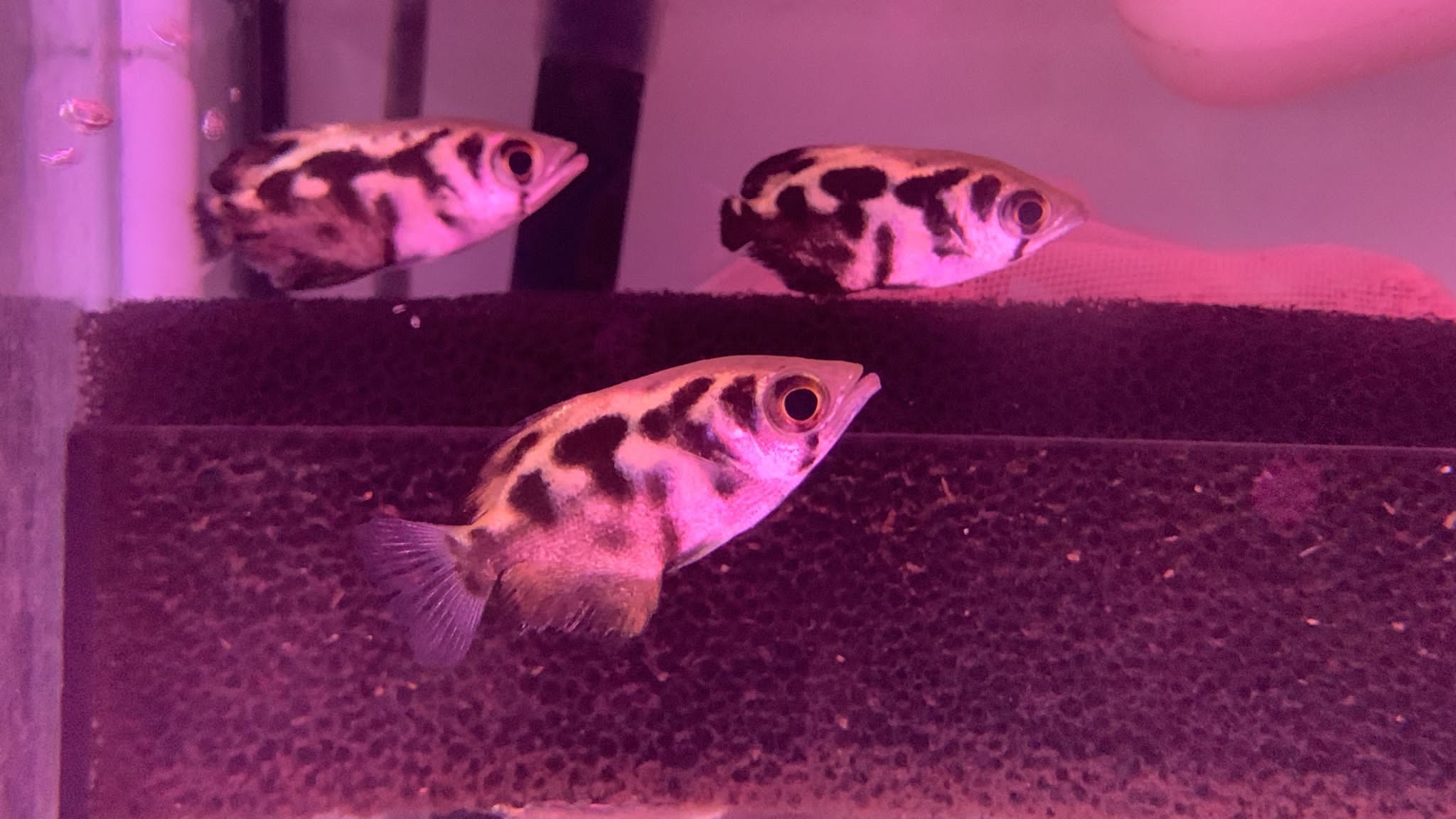

Archerfish Care Guide: Tank Size, Diet, Water Parameters and Temperament
Archerfish are the aquarium world's sharpshooters, knocking insects off overhanging leaves with a jet of water before most keepers even see them react. This guide covers exactly how big a tank they need, whether they truly require salt, what to feed them, and which tankmates hold up to their surface-hunting temperament.
What Is an Archerfish?
Archerfish belong to the family Toxotidae, and several species turn up in the trade. The banded archerfish is the most commonly sold, alongside spotted (largescale), smallscale, and dwarf archerfish types. Nearly all stock available to hobbyists is wild-caught, which matters for how you acclimate and quarantine new arrivals (more on that below).
Adult size varies by species:
- Most common trade species: 8–12 inches (20–30 cm) in a home aquarium
- Some larger species: up to 12–16 inches (30–40 cm) reported in the wild
- Dwarf archerfish types: closer to 4–6 inches (10–15 cm)
That size range alone rules out small or starter tanks for anything but a dwarf species kept alone.
Do Archerfish Need Saltwater?
This is the question that trips up most new keepers, and it's worth settling before you buy anything. Archerfish are not marine fish and don't need full-strength saltwater. They're a genuinely brackish-water species — a middle ground between fresh and marine that shifts with age:
- Juveniles typically do best in brackish water with a specific gravity around 1.005–1.010, and can tolerate stronger brackish conditions.
- Adults, especially in some species, may gradually tolerate near-marine salinity, up to roughly 1.020.
- A few species and individual fish can adapt to long-term pure freshwater, but this isn't the safe default recommendation for most keepers.
Rather than chasing one fixed number, treat salinity as a sliding scale tied to species and life stage. The practical approach: start juveniles brackish at a low specific gravity, and consider raising it gradually as the fish matures rather than guessing a single figure for its whole life. Keeping them consistently brackish from the start is the safer long-term choice, even though freshwater-only success stories exist for specific species.
Mixing and Monitoring Brackish Water Safely
Never dose marine salt directly into the display tank. Instead:
- Mix marine salt mix into dechlorinated freshwater in a separate container.
- Check specific gravity with a hydrometer or refractometer before adding it.
- Match the new water's salinity closely to the tank's existing salinity during water changes.
- Adjust salinity gradually over days or weeks, never in a single large swing.
Sudden salinity changes stress archerfish and are a common, avoidable mistake — sudden swings during routine water changes are far more likely to cause problems than a stable brackish setup at almost any point on that 1.005–1.020 range.
Tank Size and Setup
Archerfish are surface-oriented, active swimmers, so horizontal swimming room matters more than depth. A tall, narrow tank is one of the most common mistakes new keepers make — it looks impressive but wastes the water volume archerfish actually use.
| Stocking plan | Minimum tank size | Footprint priority |
|---|---|---|
| Single archerfish (standard species) | 50–55 gallons (190–210 L) | Long and wide over tall |
| Group of 5–6 (recommended for schooling) | 100+ gallons (380+ L) | Long, wide footprint essential |
| Single dwarf archerfish species | Smaller footprint acceptable, but still favor length over height | Long over tall |
Use this as a decision framework: if your available footprint can't support 100+ gallons of long, wide floor space, keep a single fish rather than trying to squeeze in a small group — a cramped group causes far more problems than a solitary fish (see Temperament below).
Setup essentials
- Water level: keep it a few inches below the rim, leaving space for overhanging plants or branches above the surface — this is both hunting enrichment and part of how the fish practices its signature behavior.
- Lid: a secure, tight-fitting lid is non-negotiable. Archerfish are strong jumpers, especially when startled or chasing prey, and an open tank is an open invitation to lose a fish.
- Filtration and surface agitation: good surface movement and filtration matter more than décor here, given how messy a large carnivore's bioload can be.
- Décor: driftwood and smooth rock hold up well in brackish conditions. For plants, stick to salt-tolerant species like Anubias, Java fern, and Vallisneria — most true aquatic plants won't tolerate brackish water long-term.
If you're shopping for a footprint that suits this species, browsing options under glass tanks is a reasonable starting point for a long, wide build.
Water Parameters
| Parameter | Target range |
|---|---|
| Temperature | 75–86°F (24–30°C) |
| pH | 7.0–8.2 (mildly alkaline) |
| General/carbonate hardness | Moderate to high (harder water side) |
| Specific gravity (salinity) | ~1.005–1.015, up to ~1.020 for some adults |
| Water changes | 10–20% weekly |
Weekly water changes in that 10–20% range are typical for managing bioload from a large, messy carnivore — archerfish eat a lot of protein and produce waste to match.
Diet
Archerfish are strictly carnivorous surface hunters, and their diet should reflect that. Good staples include:
- Live crickets and flightless fruit flies
- Mealworms
- Small live or frozen feeder fish (mollies, guppies)
- Bloodworms and brine shrimp
- High-quality carnivore or cichlid pellets (once the fish is transitioned onto them)
Feed 1–3 times daily, offering only what's eaten within a few minutes. Live insects are worth keeping in rotation even after a fish accepts pellets, because they encourage the natural water-spitting hunting behavior that makes this species interesting to keep. An all-pellet diet long-term risks nutritional deficiencies, so keep live and frozen protein in the mix rather than treating pellets as a full replacement.
Training the Spitting Behavior
The signature jet of water — commonly reported at 3–5 feet, occasionally more — is a learned skill that improves with practice, not a fixed instinct. To encourage it:
- Position a few live insects (crickets or fruit flies) on an overhanging leaf, branch, or the underside of the tight-fitting lid, just above the waterline.
- Keep the water level a few inches below the rim so there's room for the fish to aim upward.
- Expect younger or newly acquired fish to miss often at first — accuracy builds with repeated attempts, so patience matters more than technique on your end.
Temperament and Tankmates
Archerfish are semi-aggressive, particularly toward smaller or slower tankmates, and toward each other in poorly sized groups. They can be nippy at feeding time, when competition for food ramps up quickly.
Group size directly affects how much aggression shows up:
- Single fish: no intraspecies conflict, but you lose the schooling display.
- 2–4 fish: the worst option — aggression concentrates on the weakest individual instead of spreading out.
- 5–6+ fish: aggression disperses across the group, which is the safer way to keep more than one.
Good Tankmate Options
Stick to similarly sized, brackish-tolerant, robust fish:
- Scats (Scatophagus argus) — hardy, schooling, grow to about 12 inches, mostly omnivorous with a strong plant-matter component
- Monos (Monodactylus species) — schooling, grow to about 8 inches, similarly brackish-tolerant
- Brackish-tolerant gobies
- Mollies
- Silver dollars in freshwater-leaning setups
- Larger, robust cichlids
| Species | Typical adult size | Salinity tolerance | Diet type |
|---|---|---|---|
| Archerfish | 8–12 in (up to 16 in for some) | Brackish, species/age dependent | Strict carnivore |
| Scats | Up to ~12 in | Brackish-tolerant | Omnivore, eats plant matter |
| Monos | Up to ~8 in | Brackish-tolerant | Omnivore |
| Mudskippers | Varies by species | Brackish, amphibious | Carnivore |
Because scats are more omnivorous and will graze on algae and plant matter, feeding a mixed tank means offering both meaty foods for the archerfish and some vegetable-based options for the scats, rather than assuming one feeding routine covers everyone.
Avoid tiny or long-finned fish such as neon tetras or other small tetras — they read as either prey or easy fin-nipping targets to a semi-aggressive surface hunter this size.
The Wider Brackish Tank Ecosystem
If archerfish are your entry point into brackish keeping, two other groups come up constantly in the same conversation.
Mudskippers
Mudskippers are amphibious gobies that spend much of their time out of the water entirely. They need a paludarium-style setup: a large land or haul-out area, shallow brackish water, high humidity, and an escape-proof lid. They're a fun cross-species interest for anyone building a broader brackish or amphibious display, though their care requirements differ enough from archerfish that they're usually kept in a separate, purpose-built setup rather than the same tank.
Freshwater Pipefish: An Advanced Caution
Freshwater pipefish — sometimes called the seahorse's cousin — are a niche, genuinely difficult brackish/freshwater species. They need live baby brine shrimp or similarly tiny live foods and gentle water current, and they generally do not belong in an archerfish tank. The size mismatch and feeding competition put pipefish at serious risk of predation or simply losing out on food. Consider them a species for advanced brackish keepers running a dedicated setup, not a tankmate option here.
Breeding and Lifespan
Breeding archerfish in a home aquarium is essentially not a realistic project. It hasn't been reliably achieved outside large brackish or marine systems, and sexing adults visually is unreliable enough that most keepers can't even confirm a compatible pair. Set expectations accordingly if this is a factor in your decision.
Lifespan runs roughly 6–8 years typically, with some individuals reaching 10 or more years under excellent care, appropriate salinity, and a varied diet.
A Note on Wild-Caught Stock
Since most archerfish available in the trade are wild-caught, give new arrivals extra care during acclimation: a slow drip acclimation to match salinity and temperature, and a proper quarantine period before introducing them to a display tank or established tankmates. Wild-caught fish also tend to need more encouragement to accept prepared foods, so be patient during the transition from live insects to frozen and pellet foods.
Frequently Asked Questions
Do archerfish need saltwater?
No. Archerfish need brackish water, a middle ground between fresh and full marine salinity. Pure marine conditions aren't required, though some adults of certain species tolerate near-marine salinity as they mature.
Can archerfish live in a freshwater tank?
Some species and individuals adapt to long-term freshwater, but brackish conditions are the safer default and closer to their natural habitat, especially for juveniles and for keepers new to the species.
How big of a tank do archerfish need?
Plan for a minimum of 55 gallons for a single fish, and 100+ gallons with a long, wide footprint for a proper school of 5–6. Smaller tank sizes only apply to dwarf archerfish species kept alone.
What do archerfish eat?
A strictly carnivorous diet: live or frozen insects like crickets and fruit flies, small feeder fish, bloodworms, brine shrimp, and quality carnivore or cichlid pellets. Live foods help encourage their natural spitting behavior.
Can archerfish be kept with other fish?
Yes, with similarly sized, brackish-tolerant, robust species like scats, monos, and brackish gobies. Avoid small or delicate fish, which get treated as prey or bullied.
Why do archerfish spit water?
It's a hunting adaptation used to knock insects off overhanging leaves and branches into the water, where the fish then strikes. It's a learned skill that improves with practice rather than a fixed, perfect instinct from birth.
Can you breed archerfish at home?
Not realistically. Breeding hasn't been reliably achieved in home aquaria, and visually sexing adult archerfish is unreliable enough to make deliberate pairing very difficult.
How long do archerfish live?
Typically 6–8 years, with some individuals living 10 or more years given excellent water quality, appropriate salinity management, and a varied diet.
Ready to plan a brackish setup around archerfish or their classic tankmates? Browse other tropical fishes on FishyHub to see what's currently in stock for a build like this.


