1–5 of 5
Shop freshwater Shark fish online from aquarium stores, breeders and specialist freshwater fish sellers across the United States on FishyHub. Compare Rainbow Sharks, Red Tail Sharks, Bala Sharks and other shark-like freshwater fish by size, temperament, habitat needs and seller.
Freshwater “Sharks” are not true sharks. The name is used in the aquarium hobby for several unrelated freshwater fish with streamlined bodies, prominent dorsal fins or shark-like profiles. FishyHub helps U.S. hobbyists compare these fish from multiple sellers in one marketplace.
Buying freshwater Shark fish online gives hobbyists access to species, sizes and color forms that may not be available from a single local aquarium store.
Compare exact species, current size, expected adult size, temperament, tank requirements, seller information and shipping options before choosing a freshwater Shark for your aquarium.
Popular freshwater aquarium fish sold under the “Shark” name include:
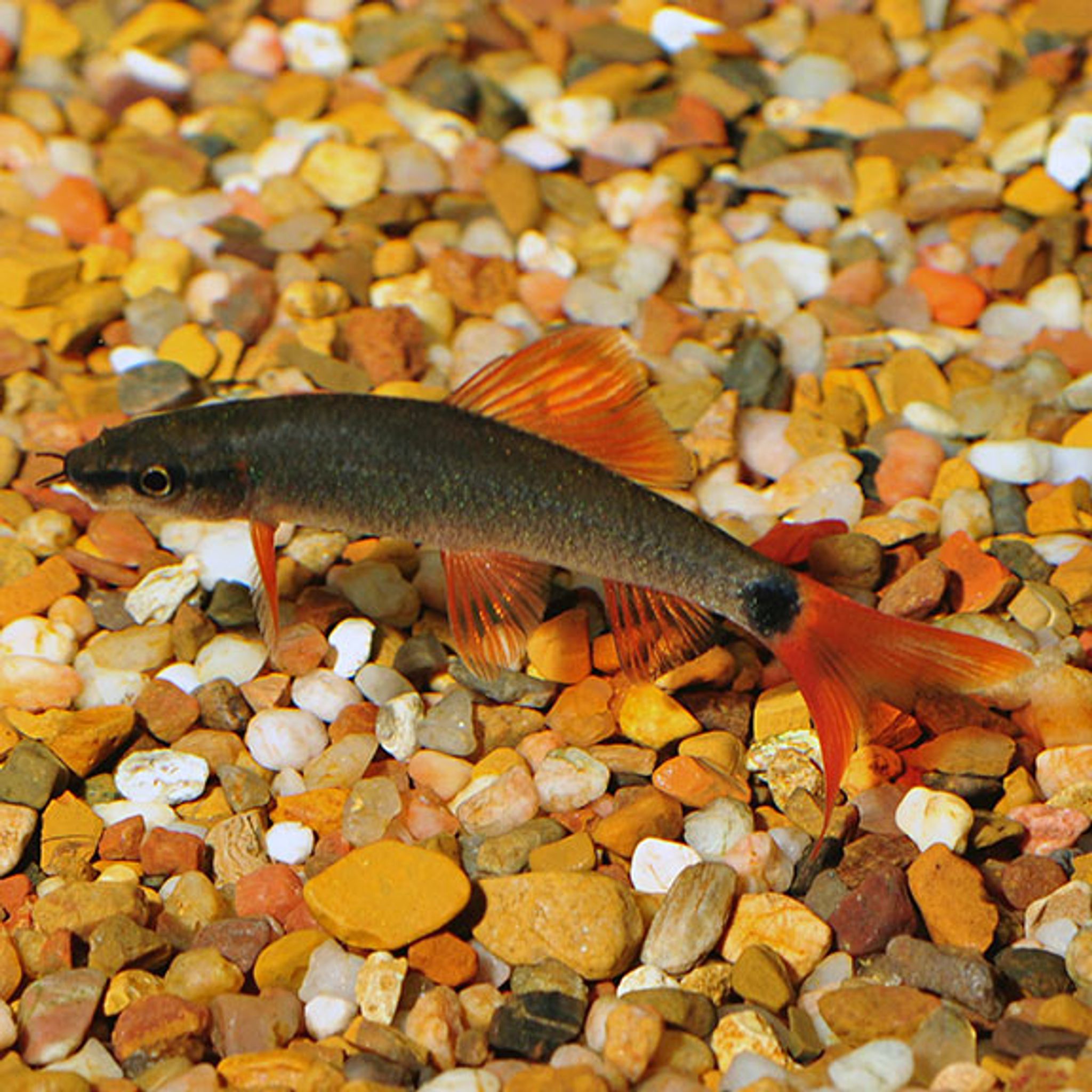
Rainbow Sharks are dark-bodied freshwater fish with bright red or orange fins and a distinctive shark-like profile.
They are territorial bottom-oriented fish and are best kept in aquariums with enough space, caves, wood and visual barriers.
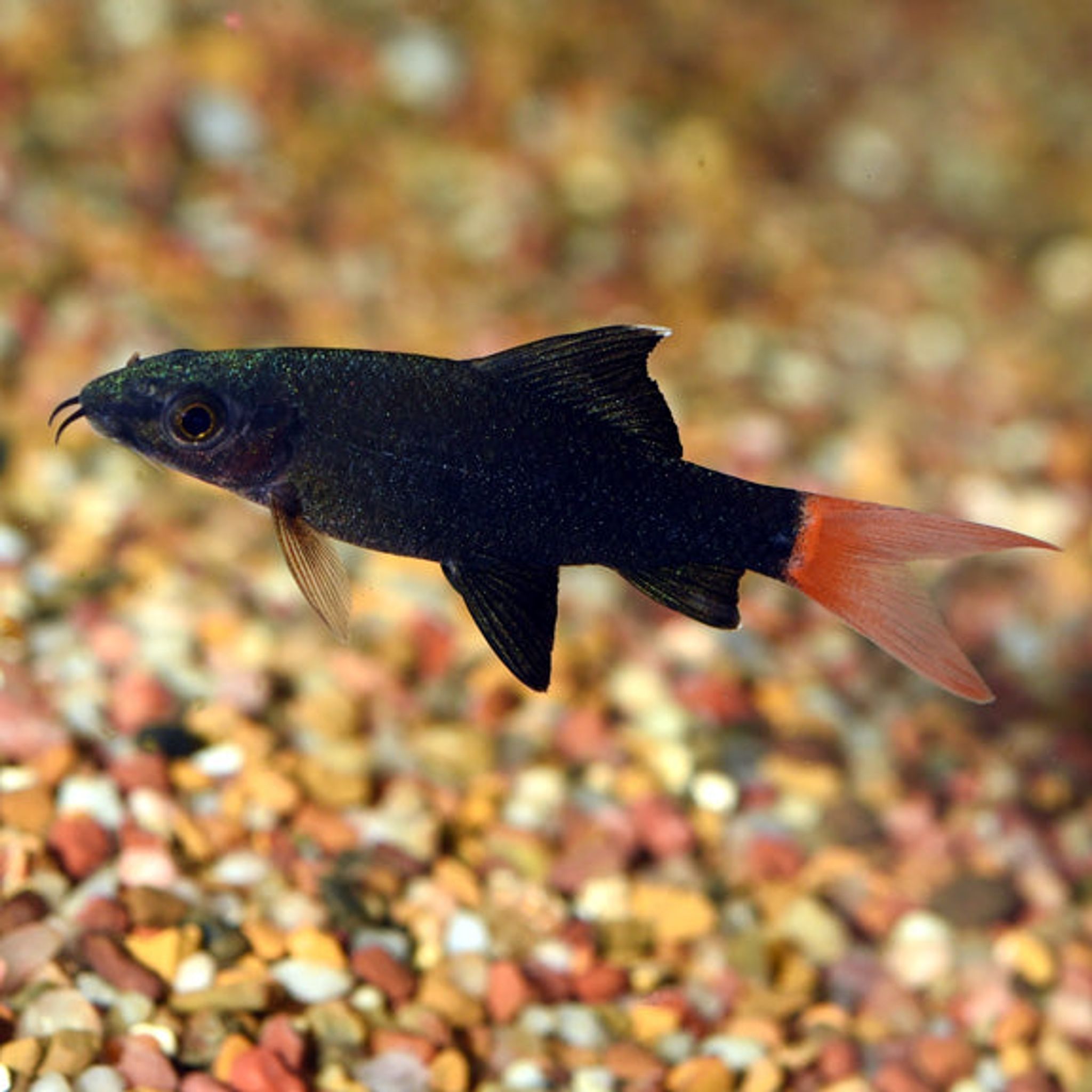
Red Tail Sharks are striking freshwater fish with dark bodies and a vivid red tail.
They can become territorial, especially toward fish with similar body shapes or behavior, so tankmate selection and aquarium footprint are important.
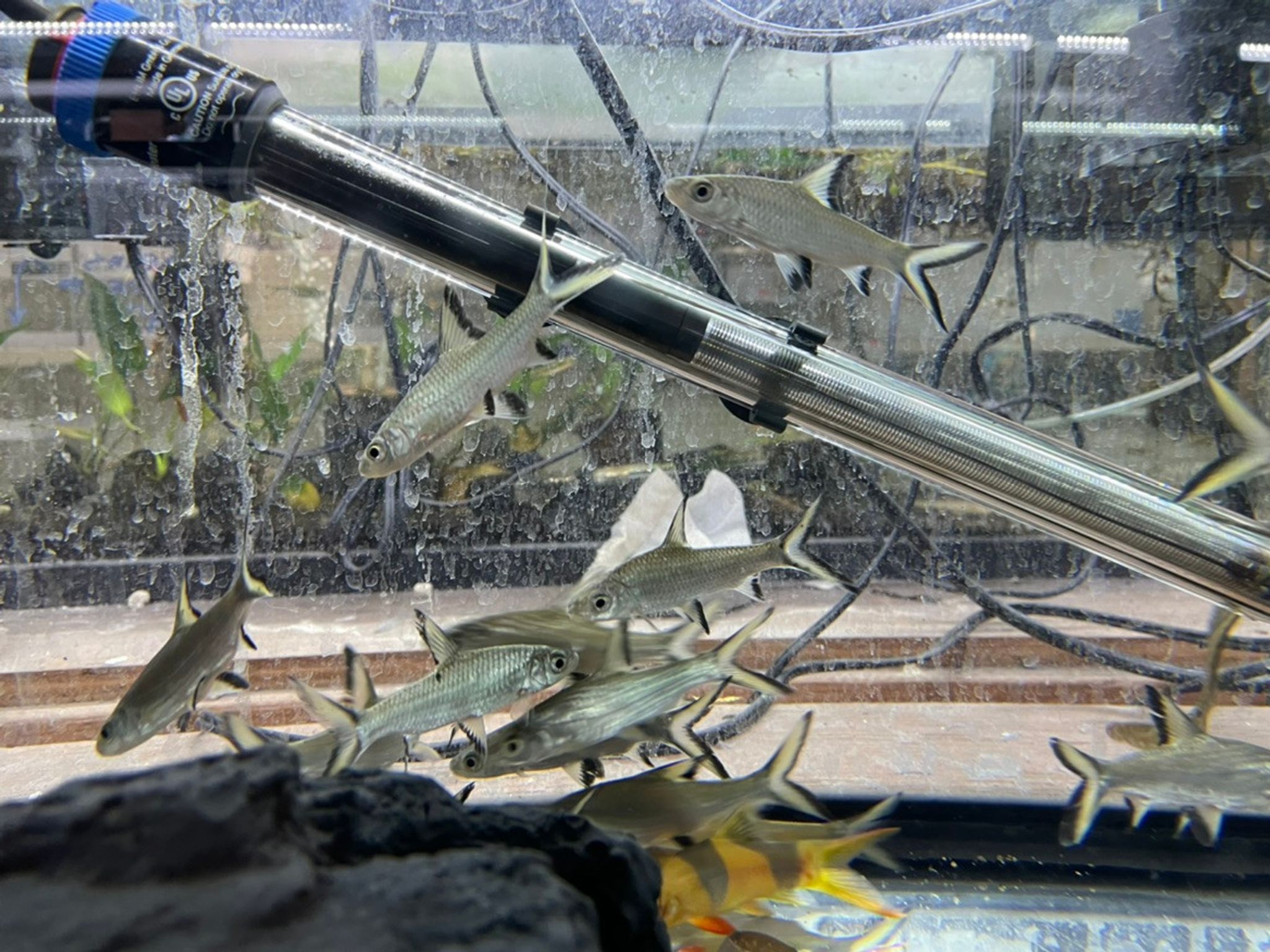
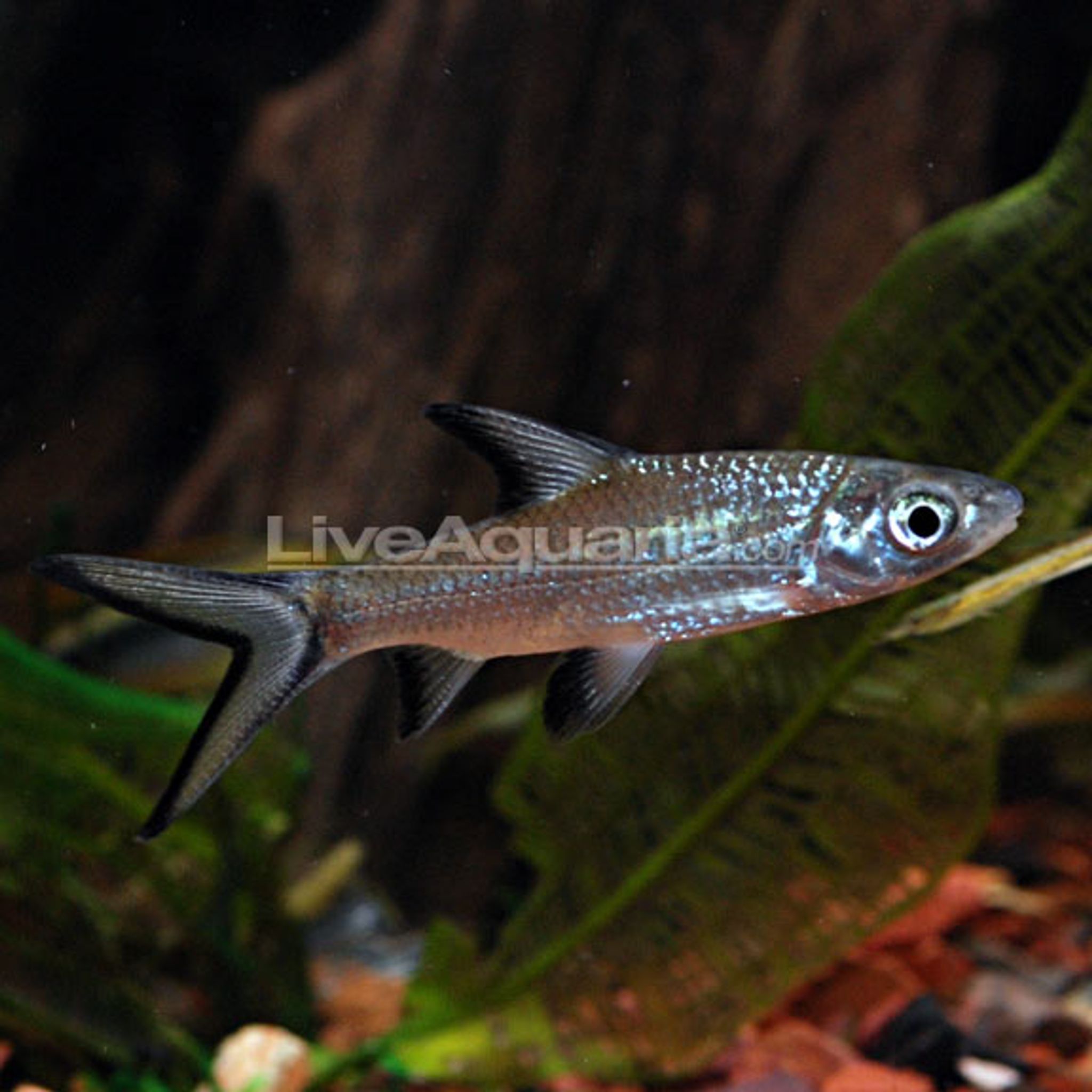
Bala Sharks are large, active schooling fish with silver bodies, dark-edged fins and a streamlined appearance.
They grow much larger than many beginners expect and require substantial long-term swimming space, making adult size one of the most important considerations before purchase.
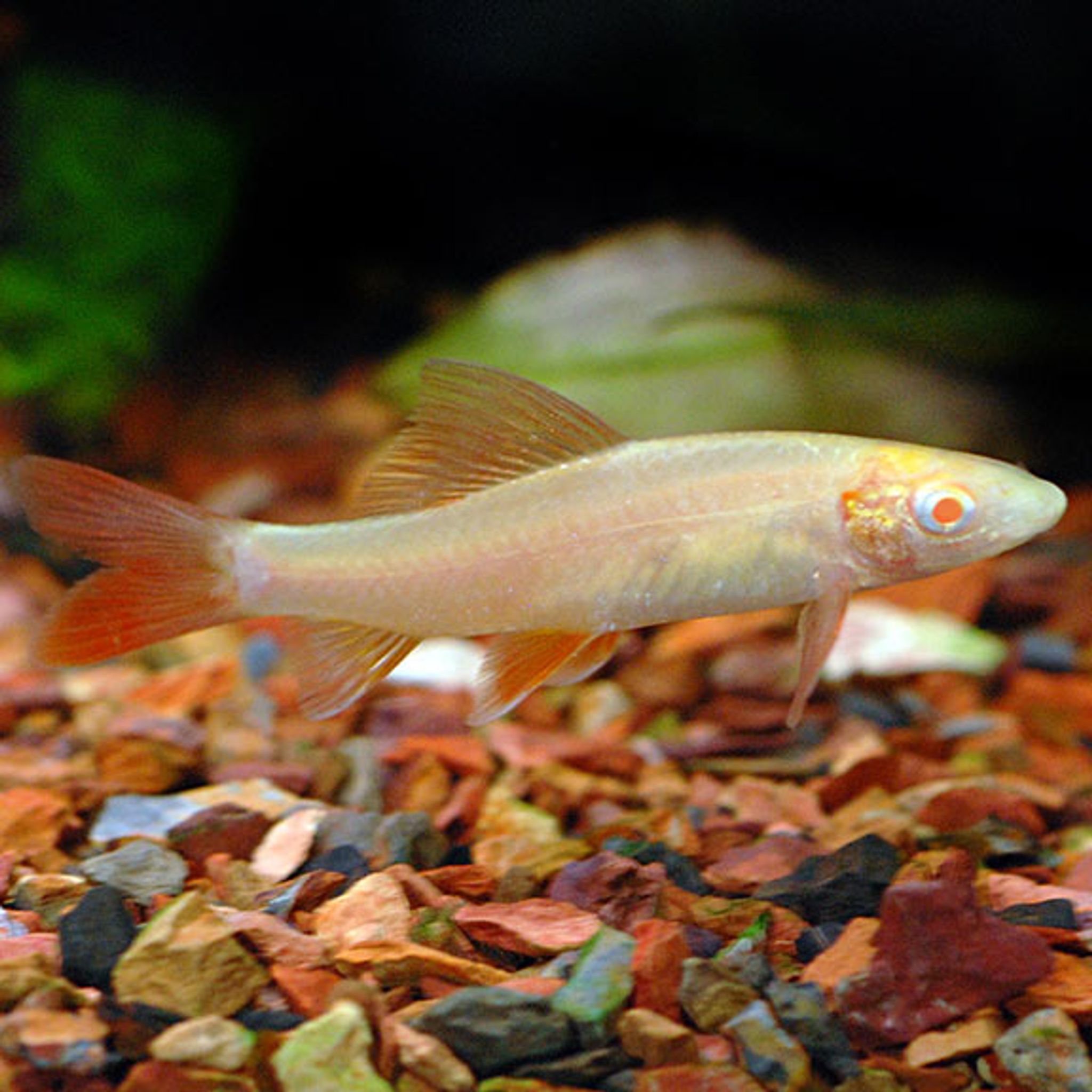
Albino Rainbow Sharks are pale-bodied color forms of the Rainbow Shark with contrasting red or orange fins.
Their care and territorial behavior are similar to standard Rainbow Sharks, so adequate space and hiding areas remain important.
Chinese High-Fin Banded Sharks are distinctive freshwater fish with tall dorsal fins and bold juvenile banding.
They can become very large and have long-term requirements that differ substantially from smaller tropical community fish, so buyers should research adult size and environmental needs carefully.
No. Aquarium fish such as Rainbow Sharks, Red Tail Sharks and Bala Sharks are not true sharks.
The common name refers to their body shape or dorsal fin rather than a biological relationship with marine sharks.
Freshwater Shark fish vary dramatically in adult size.
Rainbow and Red Tail Sharks remain much smaller than Bala Sharks or Chinese High-Fin Banded Sharks. Always plan around adult size rather than the juvenile size seen in seller photos.
Tank setup should be based on the exact species rather than the “Shark” label.
Territorial species benefit from caves, driftwood, rocks and sight barriers, while large schooling species need extensive open swimming space.
Rainbow Sharks and Red Tail Sharks can defend bottom territory, especially as they mature.
Creating multiple hiding areas and breaking up lines of sight can help reduce repeated confrontations with tankmates.
Bala Sharks are often sold as relatively small juveniles but become large, powerful swimmers as they mature.
They are social and active, so buyers should consider both group behavior and substantial long-term swimming space before purchasing.
Some freshwater Shark fish can live in community aquariums when species, size and temperament are matched carefully.
Territorial Sharks may work better with active midwater fish that do not occupy the same bottom territory, while very large species require equally suitable companions.
Medium-sized Tetras can sometimes coexist with Rainbow Sharks or Red Tail Sharks in appropriately sized aquariums.
Avoid very small fish with large freshwater Shark species that may eventually view them as food or overwhelm them through size and activity.
Active Barbs can sometimes be suitable tankmates for freshwater Sharks when size and water requirements are compatible.
Avoid overcrowding and monitor territorial interactions, particularly with bottom-oriented Shark species.
Active Rainbowfish may coexist with some freshwater Shark species in spacious aquariums.
Both groups can be energetic, so sufficient swimming room and strong filtration are important.
Corydoras and territorial freshwater Sharks can compete for bottom space.
Whether the combination works depends on aquarium footprint, hiding areas, individual behavior and the exact species involved.
Loaches and freshwater Sharks often use similar bottom areas of the aquarium.
Provide plenty of space and shelter to reduce competition and avoid combinations where both species are strongly territorial.
Some Gouramis can coexist with Rainbow or Red Tail Sharks when the aquarium is spacious enough.
Monitor aggression carefully and avoid forcing territorial fish into a small shared environment.
Shrimp are not guaranteed to be safe with freshwater Shark fish.
Small shrimp and shrimplets may be eaten, while larger Shark species can pose an even greater risk.
Some fish sold as freshwater Sharks may graze algae or biofilm, but they should not be treated simply as algae-cleaning tools.
Their nutritional needs include species-appropriate foods, and algae consumption can vary significantly by fish and species.
Diet varies among the fish sold under the freshwater Shark name.
Many accept combinations of quality pellets, flakes, plant-based foods and suitable frozen or live foods. Feeding should be matched to the exact species.
Rainbow Sharks forage near the bottom and may graze surfaces in addition to eating prepared foods.
Offer a varied diet and make sure enough food reaches the lower areas of the aquarium.
Bala Sharks are active omnivorous fish and can accept a broad range of appropriately sized aquarium foods.
Their feeding needs increase substantially as they grow, so long-term aquarium capacity and filtration should be considered together with diet.
Freshwater Shark fish come from different habitats and should not all be kept under identical conditions.
Stable water quality matched to the exact species is more useful than applying one universal temperature, pH or hardness range to every fish sold as a freshwater Shark.
Good filtration is important for active and larger-growing freshwater Shark species.
As fish grow, waste production and oxygen demand can increase substantially, so filtration should be planned for adult stocking rather than juvenile fish.
Temperament varies greatly.
Rainbow Sharks and Red Tail Sharks can be territorial, while Bala Sharks are more social and schooling-oriented. The common word “Shark” does not indicate one shared behavior type.
It depends entirely on the species.
Bala Sharks are social, while Rainbow and Red Tail Sharks can be territorial toward similar-looking fish. Do not assume all freshwater Sharks should be grouped together.
Some smaller freshwater Shark species can be manageable for newer hobbyists who understand territorial behavior.
Large species such as Bala Sharks and Chinese High-Fin Banded Sharks require much more long-term planning because juvenile size can hide their eventual space requirements.
When comparing freshwater Sharks for sale, look for:
Newly shipped fish may experience stress from transport and changes in water conditions.
Prepare a stable, cycled aquarium before arrival and follow the seller's acclimation guidance for the exact species being introduced.
Quarantine and careful observation can help reduce the risk of introducing disease into an established aquarium.
Watch appetite, breathing, body condition and swimming behavior before adding new fish to the main tank.
Freshwater Shark prices vary according to species, size, color form, availability, origin and seller.
Smaller Rainbow Sharks and large-growing specialty species can differ substantially in price, so compare exact identification, current size and long-term care needs rather than price alone.
FishyHub brings freshwater Shark listings from aquarium stores, breeders and specialist freshwater fish sellers together in one marketplace.
When comparing freshwater Sharks online, consider:
Shipping availability depends on the seller, destination, fish size, weather and livestock-shipping policy.
Review packaging, delivery timing and live-arrival terms before ordering, and make sure the aquarium is suitable for the species before the fish arrive.
No. Rainbow Sharks, Red Tail Sharks, Bala Sharks and similar aquarium fish are freshwater bony fish, not true sharks.
Yes. Aquarium stores, breeders and specialist sellers offer several freshwater Shark species online across the U.S., depending on seller shipping coverage and livestock policies.
Rainbow Sharks can become territorial, especially around bottom areas, caves and fish with similar body shapes.
They can be territorial and may chase similar-looking bottom fish, so space and tankmate selection matter.
No. Bala Sharks become much larger than the juveniles commonly offered for sale and require substantial long-term swimming space.
It depends on the species. Bala Sharks are social, while Rainbow and Red Tail Sharks may be territorial toward similar fish.
Some may graze algae or biofilm, but they still require a complete species-appropriate diet and should not be purchased purely for algae control.
FishyHub helps U.S. hobbyists compare freshwater Shark fish from aquarium stores, breeders and specialist freshwater fish sellers in one marketplace.
Explore freshwater Shark fish for sale on FishyHub and compare Rainbow Sharks, Red Tail Sharks, Bala Sharks, Albino Rainbow Sharks and other shark-like freshwater fish. Discover listings from aquarium stores and breeders across the United States, and compare species, adult size, temperament, tank requirements, price and shipping options before choosing fish for your aquarium.