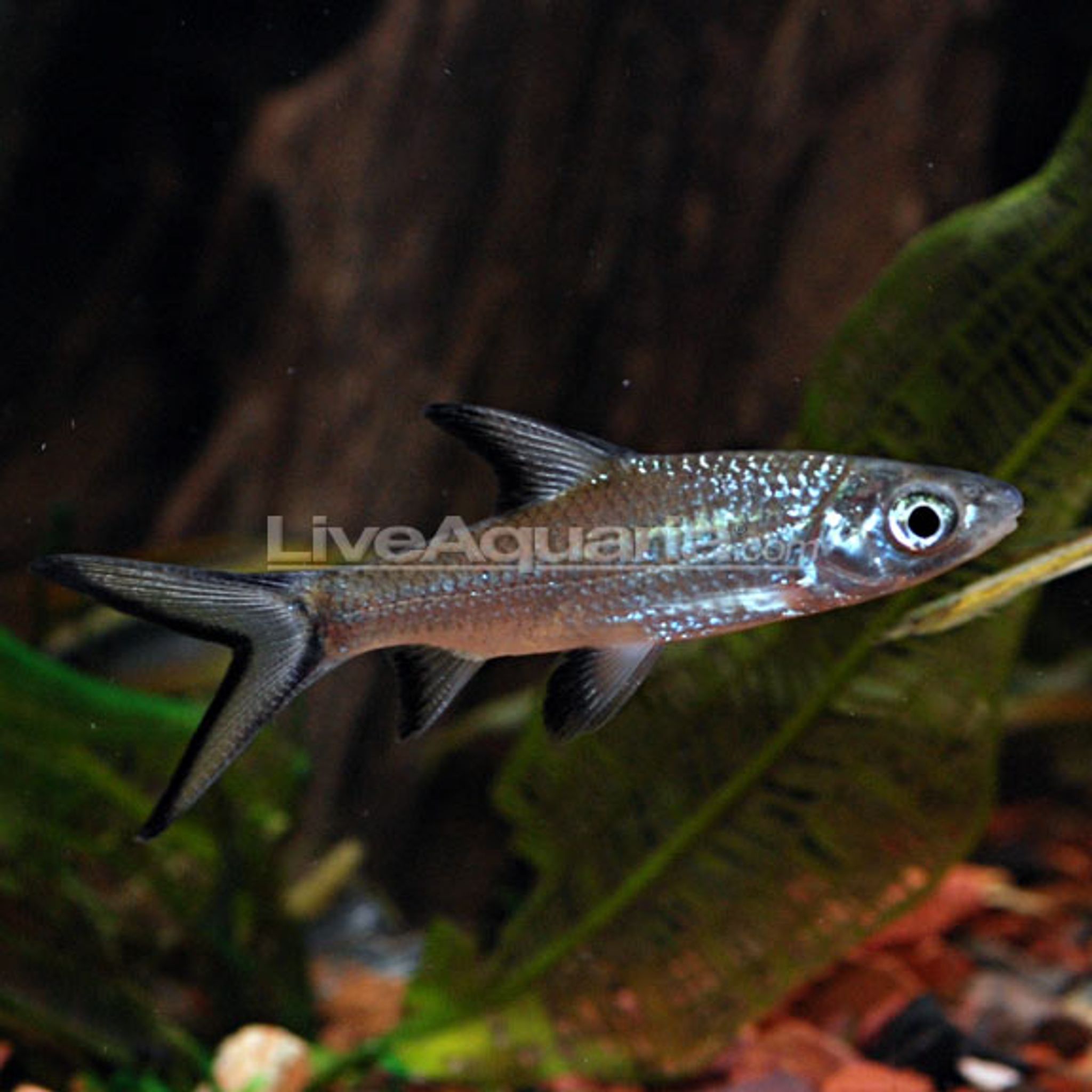

Best Tank Mates for Bala Shark: Compatible Fish and Species to Avoid
The best tank mates for bala sharks are peaceful, fast, similarly sized fish, such as giant danios, Denison barbs, silver dollars, larger rainbowfish, clown loaches and medium catfish. Skip anything small enough to fit in an adult bala's mouth and anything aggressive enough to bully it. The catch is that the cute 3-inch fish at the store turns into a 12-inch schooler, so you need to plan the community around the adult school, not the juveniles.
Know the Fish Before You Pick Its Neighbors
The bala shark (Balantiocheilos melanopterus) isn't a shark at all. It's a cyprinid, part of the minnow and carp family, with a tall dorsal fin that gives it a shark-like outline. Here's what shapes its compatibility:
- Temperament: Peaceful but timid. Balas are fast, nervous swimmers that spook easily.
- Swimming level: Midwater, cruising the length of the tank.
- Adult size: Usually 10–14 inches (25–36 cm) in aquariums. Claims of 1–2 feet are exaggerated. Most top out around 12–14 inches, and plenty stay near 10.
- Growth rate: They're sold at 2–4 inches (5–10 cm) and can grow roughly 1 inch (2.5 cm) per month early on, so most of the growth happens in the first year or two.
- Social needs: A schooling fish. Keep at least 4–5, and 5 or more is ideal. A single bala stays skittish and stressed and may dart erratically or pester other fish.
- Wild status: Listed as endangered in parts of its native Southeast Asian range. Most fish in the US trade are farm-raised.
Tank and Water Requirements
Every tank mate on this list has to thrive in the same setup:
| Requirement | Target for a bala school |
|---|---|
| Tank size (adult group of 5) | 125 gal (473 L) minimum; 150–180+ gal (568–681 L) is better |
| Tank length | About 6 ft (1.8 m) is ideal; length matters more than height |
| Temperature | 72–82°F (22–28°C) |
| pH | About 6.5–7.8 |
| Hardness | Soft to moderately hard, roughly 5–12 dGH |
| Flow and oxygen | Moderate to strong flow, high oxygen |
| Filtration | Turnover of 5–10x tank volume per hour |
| Lid | Tight-fitting and mandatory |
Balas are strong jumpers, especially when startled, so cover every gap around filter intakes, heaters and cords.
On tank size: you'll see recommendations anywhere from 20 to 150+ gallons. The low numbers only describe juveniles. A realistic plan is 125 gallons as the floor for five adults and 180 gallons or more if you're mixing in other big schoolers. Juveniles can live temporarily in a 55–75 gal (208–284 L) tank while you prepare the upgrade.
The Rules for Choosing Bala Shark Tank Mates
Filter every candidate through four questions:
- Is it too small? An adult bala will eat anything that fits in its mouth, including neon tetras, guppies, small rasboras, shrimp and small snails.
- Is it too aggressive? Territorial or aggressive fish push the shy balas away from food and space. The balas hide, lose condition and end up with torn fins.
- Is it big enough and active enough? Good mates reach 4 inches (10 cm) or more as adults, are peaceful to semi-aggressive, and don't mind busy, fast-moving tankmates.
- Do the parameters overlap? The species needs to be comfortable in the 72–82°F range and a similar pH.
Best Tank Mates for Bala Sharks
These species pass all four tests when the tank is sized for them.
Midwater and Top-Level Schoolers
- Giant danios: Fast, hardy and happy near the surface. They're an excellent top-level school that complements the midwater balas.
- Denison (roseline) barbs: Active, peaceful and colorful, with a similar love of flow and space.
- Tinfoil barbs: Compatible in temperament, but they also reach 12+ inches, so only consider them for 150+ gallon tanks.
- Silver dollars: Peaceful, deep-bodied schoolers too large to be eaten.
- Larger rainbowfish: Boeseman's, emerald and red rainbowfish are active, sturdy and add color. Keep them in groups.
You can browse barbs on FishyHub in the barb collection.
Bottom Dwellers
- Clown loaches: A classic pairing. They get big too, so buy them as a group and budget the space.
- Siamese algae eater: An active grazer that handles a busy tank well.
- Hoplo catfish: Armored, peaceful and sturdy.
- Pictus catfish: Nocturnal and busy along the bottom. Keep them well fed so they don't go looking for snacks.
- Bristlenose or other smaller pleco species: A better fit than the common pleco (see below).
Larger Gouramis
Kissing and pearl gouramis work in a big community. Giant gouramis only belong in truly huge tanks.
Stock by Swimming Level
Spreading fish across the water column reduces crowding. The balas take the midwater, so pair them with a top-level schooler (giant danios) and bottom dwellers (loaches and catfish). Each group gets its own zone, and the balas feel less crowded.
Conditional Matches: Proceed With Care
| Species | Verdict | What makes it work (or not) |
|---|---|---|
| Angelfish | Possible | Only full-grown adults, a calm tank, enough space and calm feeding. Watch for stress. |
| Severum or Geophagus | Possible | A single peaceful cichlid can work; skip pushy individuals. |
| Blood parrot | Possible | Usually tolerant, but watch that the balas still get food. |
| Common pleco | Not ideal | Very large adult size and heavy bioload. Choose a bristlenose instead. |
| Tiger barbs | Group-dependent | Nipping concerns are real. Keep a group of 8+ to spread out the nipping; the balas' speed and short fins help. |
| Large tetras (black skirt, rummy-nose) and adult corydoras | Short-term only | Can live with small juvenile balas, but carry risk long-term as the balas grow. |
| Black ghost knifefish | Caution | Grows large and becomes predatory. |
| Mystery snails, large nerites | At your own risk | Large snails may survive with adults; small ones won't. |
Species to Avoid With Bala Sharks
| Species | Why it fails |
|---|---|
| Nano fish (neon tetras, small rasboras, guppies, endlers) | Eaten as the balas grow, often months after they were added |
| Shrimp | Eaten |
| Small snails | Eaten |
| Aggressive cichlids (oscar, jack Dempsey, convict) | Balas hide, starve and get torn fins |
| Red-tail and rainbow sharks | Territorial toward shark-shaped fish |
| Goldfish | Coldwater fish, heavy waste producers, and slow fancy types get stressed |
| Bettas | Slow, long-finned and prefer calm water |
| Discus | Need warmer, calmer water (82–86°F / 28–30°C) |
Checking Temperature Overlap
Don't just compare temperaments; compare temperatures. Discus at 82–86°F sit at or beyond the top of the bala range, while goldfish prefer water well below it. Every recommended mate above is comfortable somewhere in the 72–82°F window, and a middle setting of about 76–78°F (24–26°C) keeps the whole community in range.
Size Planning: Juvenile vs. Adult Stocking
| Stage | Bala size | Tank | What's reasonable |
|---|---|---|---|
| Juvenile grow-out | 2–4 in (5–10 cm) | 55–75 gal (208–284 L) | Temporary only. Large-bodied tetras or adult corys carry risk. Start planning the upgrade. |
| Subadult | 6–9 in (15–23 cm) | 125 gal (473 L) | Move them up. Remove anything mouth-sized now. |
| Adult school | 10–14 in (25–36 cm) | 125–180+ gal (473–681+ L) | Only fish of 4+ inches that are peaceful to semi-aggressive. |
If a larger tank isn't realistic, arrange rehoming early. Local fish clubs and some stores accept trade-ins. And an outdoor pond won't work in most US climates without heating.
Sample Stocking Plans
125 gallons (473 L):
- 5 bala sharks
- 8 giant danios
- 6 young clown loaches
- 1 bristlenose pleco
180 gallons (681 L):
- Everything in the 125-gallon plan
- A group of Denison barbs
- A group of larger rainbowfish (Boeseman's, emerald or red)
Bioload and Filtration
Several fish that reach 12 inches produce a lot of waste. Plan oversized filtration, such as two canister filters or a sump, aim for 5–10x turnover per hour, and do weekly 25–30% water changes.
Feeding a Mixed Bala Community
Balas are omnivores. Offer:
- A quality pellet or flake as the staple
- Frozen bloodworms, brine shrimp or mysis
- Blanched vegetables
Feed 2–3 small meals a day, only what gets eaten in about 2 minutes. Making sure there's enough food for everyone reduces competition, and sinking foods help the loaches and catfish get their share.
Introducing New Fish
- Quarantine newcomers for 2–4 weeks.
- Add the bala school together, or in sizable groups, rather than one at a time.
- Rearrange decor or dim the lights when adding fish to reset territories and calm nerves.
- Watch feeding time closely for chasing or anyone being pushed off food.
Common Mistakes and Troubleshooting
- One or two balas in a 20–55 gallon tank. They get stunted, stressed and jumpy. Plan the upgrade early or rehome them.
- Adding nano fish. They look fine with juveniles, then disappear months later.
- Mixing in aggressive cichlids. Balas can't compete with an oscar, jack Dempsey or convict.
- Gaps in the lid. Jumping deaths usually happen through filter and cord openings.
- Weak filtration and low oxygen. A big-fish tank needs strong turnover and surface agitation.
- A lone bala darting or crashing into the glass. Add more balas and more cover, and cut down on sudden movement and abrupt light changes.
- Balas chasing each other. This is normal schooling hierarchy. Step in only if you see fin damage or one fish is kept from food.
For more ideas on companions, browse the freshwater shark collection, keeping in mind that territorial shark species don't belong with balas.
Frequently Asked Questions
Are bala sharks aggressive?
No. Bala sharks are peaceful and shy, and they're more likely to hide than start a fight. They will, however, eat tiny fish and invertebrates that fit in their mouths.
Can a bala shark live alone?
Not happily. A lone bala stays nervous and may dart around or bother other fish. Keep a group of 5 or more.
Can bala sharks live with goldfish, bettas or guppies?
No. Goldfish need cooler water and produce heavy waste, and slow fancy goldfish get stressed by fast balas. Guppies end up as food, and bettas are slow, long-finned fish that prefer calm water.
Can bala sharks live with angelfish?
Possibly, if the angelfish are fully grown, the tank is large, and feeding is calm. Watch the angels for signs of stress and have a backup plan.
How many bala sharks can go in a 75-gallon tank?
A 75-gallon tank only works as a temporary grow-out home for juveniles. It isn't a permanent home for an adult school, which needs at least 125 gallons.
Do bala sharks eat plants?
Mostly no, though they may nibble soft plants. Hardy species such as anubias, java fern and vallisneria hold up well.
Build the Community Around the Adults
A bala shark tank works when you plan for 12-inch fish from day one: a long tank, a school of five or more, strong filtration, a tight lid, and companions too big to eat and too calm to bully. Once the setup is ready, browse freshwater livestock on FishyHub to pick fish for every level of your community.


