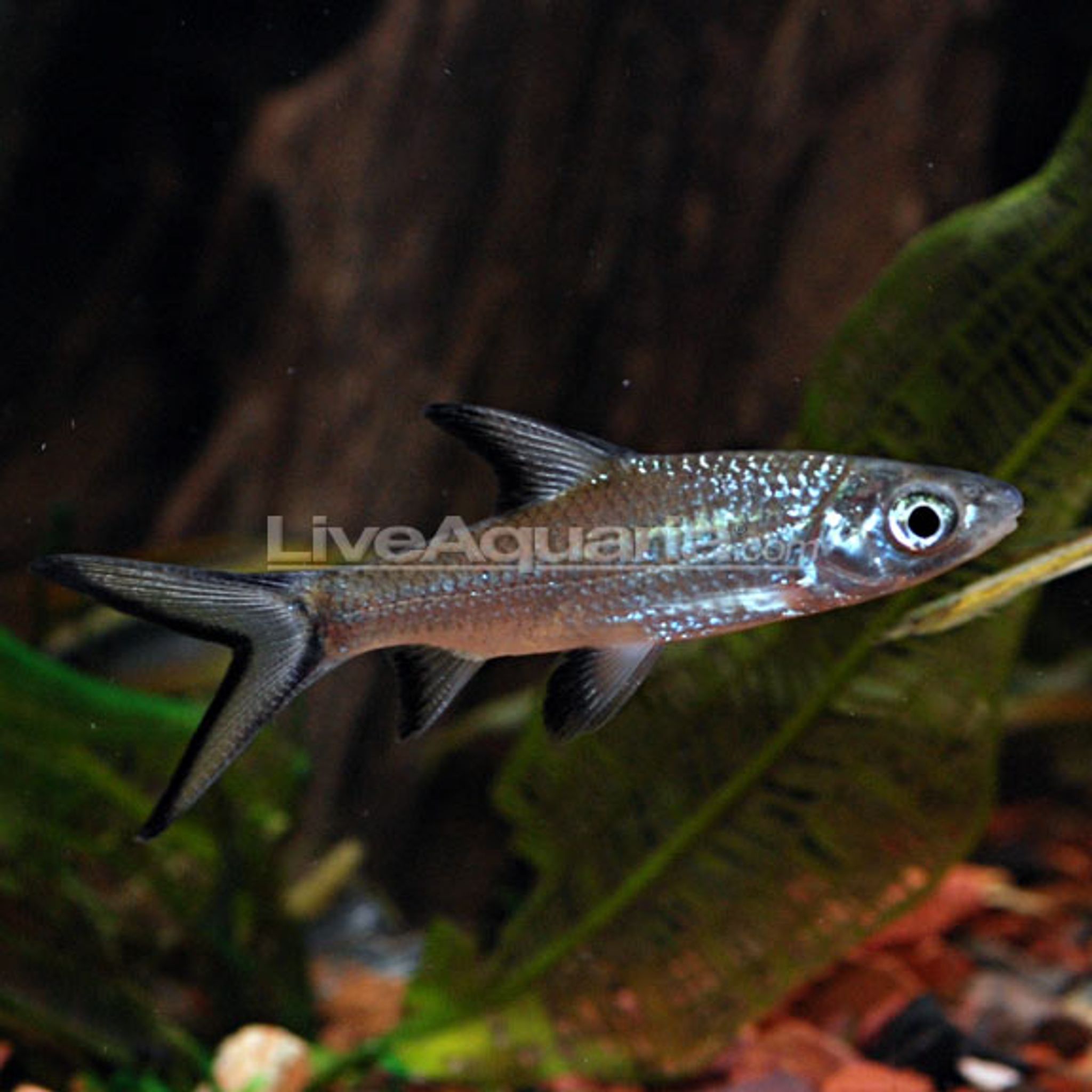

What Do Bala Shark Eat? A Practical Feeding Guide
Bala sharks (Balantiocheilos melanopterus) are omnivores that do best on a rotating diet of sinking pellets, frozen or live protein, and blanched vegetables fed two to three times a day. Because these fish grow to 10-14 inches (25-36 cm) and are fast, boisterous schoolers, feeding them well is as much about timing and technique as it is about what's on the menu. Here's a practical plan you can actually follow.
What Bala Sharks Eat in the Wild
In their native rivers, bala sharks graze on insects and their larvae, small crustaceans, algae, and plant matter. That omnivorous background is the reason a varied captive diet works better than a single dry food fed every day — their gut is built to process both animal protein and plant material.
Building a Balanced Bala Shark Diet
The base: pellets or flakes
A high-quality sinking or slow-sinking pellet or flake formulated for omnivores should make up the bulk of the diet. Choose a pellet size your bala sharks can comfortably take in one bite — undersized pellets get lost in a busy tank, and oversized ones get spit out or ignored. Since bala sharks feed in the middle and upper water column rather than on the substrate, a food that sinks slowly (or floats briefly before sinking) gives them a real chance to eat it before it settles to the bottom.
Protein boosts
Rotate in frozen or live bloodworms, brine shrimp, daphnia, or small shrimp a few times a week. Always thaw frozen foods before feeding — dropping in a frozen cube can chill the water locally and is harder for fish to eat cleanly. Live and frozen protein also adds enrichment, since bala sharks will actively hunt it through the water column.
Vegetables and plant matter
Bala sharks also benefit from blanched or lightly boiled spinach, peas, zucchini, or cucumber, offered a couple of times a week. Small, skinned pieces of fruit like apple or banana can be an occasional treat, but shouldn't be a regular staple.
Do you need extra supplements?
No. If the base diet already rotates between pellets, protein, and vegetables, bala sharks don't need additional vitamin or mineral supplements. Variety across the week does the job that a single "complete" food can't.
Sample Weekly Rotation
| Day | Primary food | Notes |
|---|---|---|
| Monday | Omnivore pellets | Base diet |
| Tuesday | Frozen brine shrimp (thawed) | Protein boost |
| Wednesday | Spirulina-based flakes | Plant-forward day |
| Thursday | Blanched spinach or zucchini | Fresh veggie |
| Friday | Frozen bloodworms (thawed) | Protein boost |
| Saturday | Omnivore pellets + a few peas | Base plus veggie |
| Sunday | Fasting day | See below |
This is a template, not a rulebook — swap days around as long as pellets stay the base and protein/veggies show up several times a week.
How Often and How Much to Feed
Feed adult bala sharks two to three times a day. Because they're fast-metabolism, highly active schooling fish, leaning toward three feedings a day is reasonable, especially for juveniles that are still growing. In a stable, well-filtered adult tank, two solid feedings plus one light one works just as well.
For portion size, use behavior rather than a fixed amount: feed only what the group finishes within about 2-3 minutes. If food is still floating or sinking uneaten after that window, you've fed too much. It's better to underfeed slightly and add a bit more the next round than to routinely overfeed.
As fish grow, portion size increases, but feeding frequency generally doesn't — you're feeding more per session, not more sessions. Keep watching the 2-3 minute rule rather than trying to hit a fixed gram amount.
A weekly fasting day
Skipping food one day a week is a well-established practice for large, active cyprinids like bala sharks. A fasting day gives the digestive system a break and helps prevent the gradual overfeeding that creeps in when every day looks the same.
Feeding a School Without Chaos
Bala sharks are schooling fish and should be kept in groups of 4-5 or more — a lone or paired bala shark is a stressed one. But a bigger school changes how you need to feed:
- Use multiple feeding points. In a large or heavily stocked tank, drop food in two or three spots at once so faster individuals don't monopolize it while shyer fish miss out.
- Watch for food-hogging. Bala sharks are quick, boisterous eaters, and in a mixed community they can out-compete slower tankmates unless food is spread out.
- Scale total volume to the group and the tank, not just per-fish math — more fish and more surface area to cover both mean more total food, and more waste to manage if it's not eaten.
Bioload and Water Quality
Bala sharks are large, active fish, and a school of them produces a real bioload. Uneaten food breaks down into ammonia and nitrite, so remove obvious leftovers and make sure filtration is sized for both the fish and their feeding volume. As bala sharks reach their full 10-14 inch size, tanks that started at 55 gallons (208 L) typically need to grow to 75-125+ gallons (284-473+ L) — and food volume and filtration capacity need to scale right along with that housing upgrade. Reliable filtration and dosed water treatment products help keep water quality stable between water changes as the bioload increases.
A Note on the Chinese Algae Eater
Chinese algae eaters are a common companion fish discussed alongside bala sharks, and their feeding needs shift noticeably with age. As juveniles, they graze algae and biofilm readily, but adults shift to mostly protein-based foods and rarely bother with algae. Feed them sinking catfish pellets, algae wafers, blanched vegetables, and occasional live or frozen protein like bloodworms, brine shrimp, or daphnia.
Chinese algae eaters also become semi-aggressive and territorial with age, despite being peaceful as juveniles, so they're best paired with fast-moving, similarly active tankmates — danios, barbs, tetras, or platies — rather than slow or small fish. They need at least a 30-gallon (114 L) tank (55+ gallons/208+ L for multiples), warm community water parameters, and hiding spots, since they're largely nocturnal.
Tankmate Safety at Feeding Time
Bala sharks are opportunistic feeders, and anything small enough to fit in their mouths is fair game. Avoid housing them with:
- Small fish like neon tetras, guppies, or fry
- Shrimp, crabs, and snails
Instead, choose medium-to-large, peaceful, similarly fast community fish that can hold their own at feeding time — active barbs are a common pairing. If you're stocking a bala shark school for the first time, it's worth browsing bala sharks and other freshwater sharks available on FishyHub to plan school size and tank footprint together.
Common Feeding Mistakes to Avoid
| Mistake | What happens | Fix |
|---|---|---|
| Overfeeding | Swim bladder problems, water quality crashes | Follow the 2-3 minute rule |
| Dry food only, long term | Nutritional gaps | Rotate in protein and veggies weekly |
| Feeding at one spot only | Faster fish monopolize food | Use multiple feeding points |
| Keeping balas singly or in pairs | Stress, uneven feeding | Keep groups of 4-5+ |
| Housing with small/slow tankmates | Tankmates get eaten | Choose fast, similarly sized fish |
| Undersized tank for adults | Cramped, poor water quality | Plan for 75-125+ gallons long term |
Frequently Asked Questions
What is the best staple food for bala sharks?
A quality omnivore pellet or flake, sized so your fish can eat it easily, should form the base of the diet. Add protein and vegetables a few times a week rather than relying on the staple food alone.
How many times a day should I feed bala sharks?
Feed two to three times daily, giving only as much as the group can finish within about 2-3 minutes. Juveniles can lean toward three feedings to support faster growth, while adults in stable tanks often do fine with two to three.
Do bala sharks eat algae?
They'll pick at some algae and biofilm, but they aren't reliable algae control and shouldn't be relied on for it. They need a formulated, varied diet rather than algae alone.
Can bala sharks eat live food?
Yes — bloodworms, brine shrimp, daphnia, and small shrimp are all suitable. Live food isn't required, but it's a good way to add protein and behavioral enrichment.
Will bala sharks eat other fish?
They can and will eat fish small enough to fit in their mouths, including neon tetras, guppies, and fry, along with shrimp, snails, and crabs. Stick to similarly sized, fast-moving tankmates to avoid losses.
How much should I feed a bala shark as it grows?
Portion size increases as the fish grows, but feeding frequency generally stays at two to three times a day. Use the 2-3 minute consumption guideline instead of a fixed amount to judge how much to give.
Do bala sharks need vegetables?
Yes. Periodic blanched vegetables like spinach, zucchini, peas, and cucumber round out their omnivorous diet alongside pellets and protein.
Why is my bala shark not eating?
Common causes include new-tank stress during acclimation, poor water quality, illness, or bullying by tankmates at feeding time. Check water parameters first, then watch whether food is being monopolized before assuming something's medically wrong.
Ready to stock or restock your setup? Browse food and supplements on FishyHub to build out a rotation that covers pellets, frozen protein, and everything in between.


