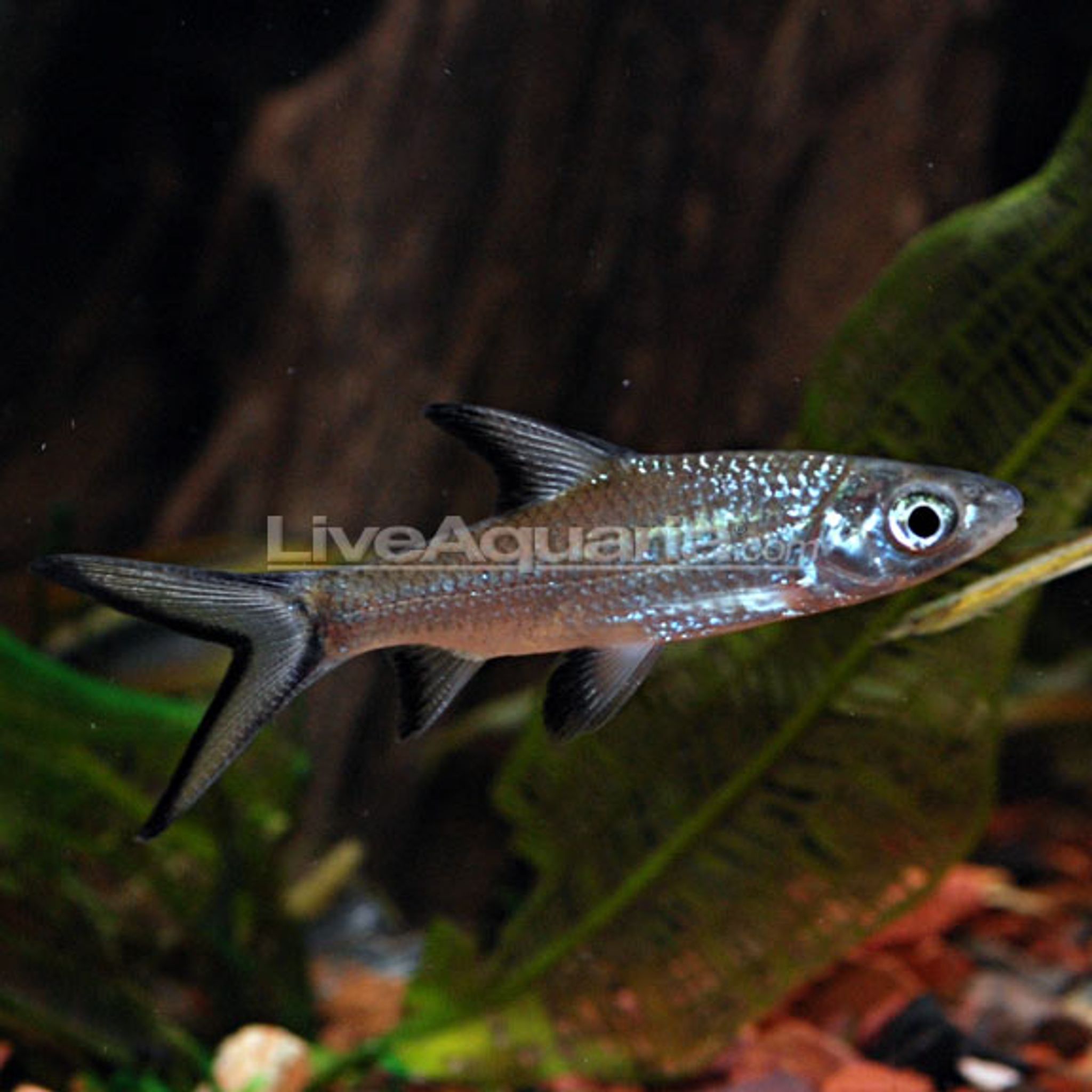

How Big Do Bala Shark Get? Growth Rate, Adult Size and Tank Planning
A bala shark sold as a 3-4 inch juvenile will realistically grow into a 12-14 inch adult, and it will do most of that growing within the first three years. If you already own one, or you're eyeing that small silver fish at the store, the numbers below lay out exactly how fast it grows and what size tank that growth actually requires.
Adult Size: What "Full Grown" Really Means
Bala sharks (Balantiocheilos melanopterus) are sold small on purpose — that 3-4 inch (7.5-10 cm) juvenile is easy to display and easy to sell. It is not, however, close to the fish's mature size.
Realistic adult length is 12-14 inches (30-36 cm). Treat 12 inches as the median outcome for a fish in a typical home aquarium, and 14 inches as the upper end reached by well-cared-for individuals. Occasional reports of 16+ inch bala sharks exist, but those come from ponds, large research systems, or public aquarium-scale tanks — not home setups, and not something to plan a tank around.
Females typically run slightly larger than males, though this difference is modest and easily overridden by tank size, diet, and water quality. In other words, a well-kept male can out-grow a poorly-kept female. Sex is a minor factor next to husbandry.
Growth Rate: A Size-by-Age Timeline
Bala shark growth is not linear. It's fast out of the gate, then steadily slows as the fish approaches its genetic ceiling. This is why two accurate-sounding claims — "mine hit 7 inches in a year" and "it took years to reach full size" — aren't actually in conflict; they're describing different parts of the same curve.
| Age | Approximate Length | Growth Pattern |
|---|---|---|
| At purchase (store juvenile) | 3-4 in (7.5-10 cm) | Baseline |
| 3 months | 4-5 in (10-13 cm) | Rapid early growth |
| 6 months | 5-6 in (13-15 cm) | Reaches sexual maturity around this point |
| 1 year | ~7 in (18 cm) | Fastest growth phase largely complete |
| 2 years | 8-10 in (20-25 cm) | Growth slows to ~1-2 in per year |
| 3-5 years | 12-14 in (30-36 cm) | Full adult size reached |
Two things in that table matter more than the raw numbers:
- Sexual maturity (around 6 months, or roughly 4 inches) is not the same as full size. A mature bala shark still has years of growing left. Owners who assume a maturing fish has "topped out" are usually surprised a year later.
- After year one, expect roughly 1-2 inches of growth per year until the fish settles into its adult range around year three to five. This is a multi-year commitment, not a multi-month one.
Tank Size: Gallons and Footprint
This is where most bala shark problems start — the fish is purchased at 3-4 inches for a tank that suits a 3-4 inch fish, with no plan for the 12-14 inch version that's coming.
Minimum Gallons by Group Size
Bala sharks are schooling fish and should be kept in groups of at least 4-5. A lone bala shark tends to become skittish, hides more, or turns unusually territorial toward tankmates — neither outcome is a substitute for the security of a school.
| Group Size | Minimum Tank Size |
|---|---|
| 1 fish (not recommended long-term) | 125-150 gal (475-570 L) |
| 4-5 fish (recommended minimum school) | 125-150 gal (475-570 L), starting point |
| Each additional fish beyond 5 | +40-45 gal (150-170 L) |
Sources vary on the exact single-fish minimum, with figures from 120 up to 150+ gallons. The practical takeaway: 125-150 gallons is the realistic starting range for a small school, and given how large and active this species gets, bigger is always the safer call. Treat 150+ gallons as the "do it right the first time" number rather than a ceiling.
Why Footprint Matters as Much as Volume
Gallon counts alone can mislead. A tall, narrow tank can hold the same water volume as a long, low one but offer far less usable swimming space for a fish that swims in fast, sweeping lateral bursts.
Aim for a tank at least 5-6 feet long. A 6-foot by 2-foot footprint gives a bala school genuine room to move; a tall tank with the same gallonage crammed into a smaller floor plan does not. When comparing tanks, check the length dimension before the gallon rating.
A glass aquarium tank in the 6-foot range is a reasonable target to plan toward if you're setting up new or upgrading.
Signs Your Bala Shark's Tank Is Too Small
Watch for these troubleshooting signs, especially in a tank under 100 gallons or shorter than 5 feet:
- Erratic, frantic swimming or repeated bumping into glass or décor — a sign of insufficient turning and swimming room.
- Visibly stalled growth compared to the timeline above, especially past the one-year mark.
- Increased skittishness or fin damage from crowding against tankmates or décor.
- Cloudy water or rapid nitrate buildup between water changes — a large, messy fish in a small volume overwhelms filtration faster than expected.
- Jumping attempts or fish found outside the tank — undersized, open, or poorly-lidded setups make this worse.
None of these signs mean the fish is adapting to a smaller space. Stunted growth from an undersized tank is unhealthy, not a workaround — it shortens quality of life and lifespan rather than safely limiting size.
Upgrade Planning If You're Already Undersized
If you bought bala sharks before knowing their adult size, here's a practical path forward rather than a hard reset:
- At 3-6 inches, a 40-55 gallon tank can work temporarily, but treat it as a holding stage, not a home.
- By 6-8 inches, plan the move to at least 75-90 gallons as an intermediate step if the full 125-150 gallon setup isn't ready yet.
- Before the fish reaches 8-10 inches, have the 125-150+ gallon, 5-6 foot tank cycled and ready. Waiting until the fish is already cramped makes the transition more stressful for a naturally skittish species.
- If upgrading isn't realistic, look into rehoming through a local aquarium club, a fish-keeping community, or a store that accepts trade-ins — rather than keeping a large adult in a tank that can't support it.
It's also worth knowing that some US retailers have scaled back on stocking bala sharks precisely because of this outgrown-tank pattern — a known industry issue, not a personal failure if you're now facing an upgrade.
Common Mistakes That Lead to Outgrown Tanks
- Buying based on the 3-4 inch store size without researching the 12-14 inch adult size.
- Keeping a single bala shark instead of a school of 4-5, which increases skittish or aggressive behavior.
- Choosing a tank with enough gallons but too short a footprint, limiting lateral swimming room.
- Skipping a tight-fitting lid — bala sharks startle easily and are prolific jumpers, and open-top tanks are a common cause of jumping deaths.
- Housing them with very small fish like neon tetras or guppies, which get eaten once the bala shark reaches adult size, or with fin-nipping species that stress an already-skittish fish.
- Overfeeding or under-filtering, since adult bala sharks are messy, high-waste feeders.
- Treating sexual maturity around 6 months as the finish line, when years of growth still remain.
Water Parameters and Diet That Support Healthy Growth
Growth speed and final size are driven less by genetics than by husbandry. The main factors that separate a fish that reaches 14 inches from one that stalls at 9 or 10 are tank size, water quality, diet, stress level, and — to a smaller degree — sex.
Water parameters:
- Temperature: 72-82°F (22-28°C), with 77°F (25°C) a solid middle target.
- pH: 6.0-8.0, with neutral to slightly alkaline preferred.
- General hardness: roughly 5-13 dGH.
- Strong filtration and good water movement — bala sharks are active, messy feeders that need robust turnover.
A capable external canister filter is worth budgeting for on a 125+ gallon system, since undersized filtration is one of the most common reasons growth stalls and water quality declines.
Diet:
- Base diet of quality flakes or pellets.
- Supplement with live or frozen protein such as bloodworms and brine shrimp.
- Add vegetable matter — blanched vegetables or fruit — to round out the omnivorous diet.
- Feed small portions 2-3 times daily, offering only what's consumed within about 2 minutes to avoid overfeeding a fish that already produces significant waste.
Undersized tanks are the single most commonly cited cause of stunted or slowed growth — more so than diet or water chemistry alone, though all of these factors compound each other.
Frequently Asked Questions
How big does a bala shark get in a fish tank?
Typically 12-14 inches (30-36 cm) as an adult. Genetics, sex (females often run slightly larger), and overall care quality all influence where an individual fish lands in that range.
How fast do bala sharks grow?
Growth is fast initially — a juvenile can reach around 7 inches within the first year — then slows to roughly 1-2 inches per year until the fish reaches full size, typically by year three to five.
What size tank does a bala shark need?
At least 125-150 gallons for a small school, in a tank at least 5-6 feet long. Add roughly 40-45 gallons per additional fish beyond the initial school, and lean toward the larger end given how active this species is.
How many bala sharks should be kept together?
A minimum of 4-5 to satisfy their schooling instinct. A solitary bala shark tends to become stressed, skittish, or unusually territorial toward tankmates.
Do bala sharks stop growing if kept in a small tank?
Growth can slow or stunt in an undersized tank, but this isn't a safe way to limit size — it's a sign of poor conditions that reduces quality of life and shortens lifespan rather than producing a permanently smaller, healthy fish.
How long do bala sharks live?
About 8-10 years with proper care, so tank planning needs to account for a decade-long adult fish, not just the juvenile stage you start with.
Can bala sharks live in a 55-gallon or 75-gallon tank?
Only as very young juveniles, and only short-term. Both sizes are too small for even a single full-grown adult, let alone a school of 4-5, and the fish will need to be upgraded well before reaching full size.
What do bala sharks eat, and does diet affect growth?
They're omnivorous, eating quality pellets or flakes, live or frozen protein like bloodworms and brine shrimp, and vegetable matter such as blanched vegetables. Consistent, quality feeding supports healthy growth along the expected timeline, while poor diet or underfeeding can slow it.
If you're planning a bala shark setup from scratch or upgrading an outgrown tank, browse monster fishes and other large freshwater species on FishyHub to compare tankmates that can handle the same footprint and water conditions.


