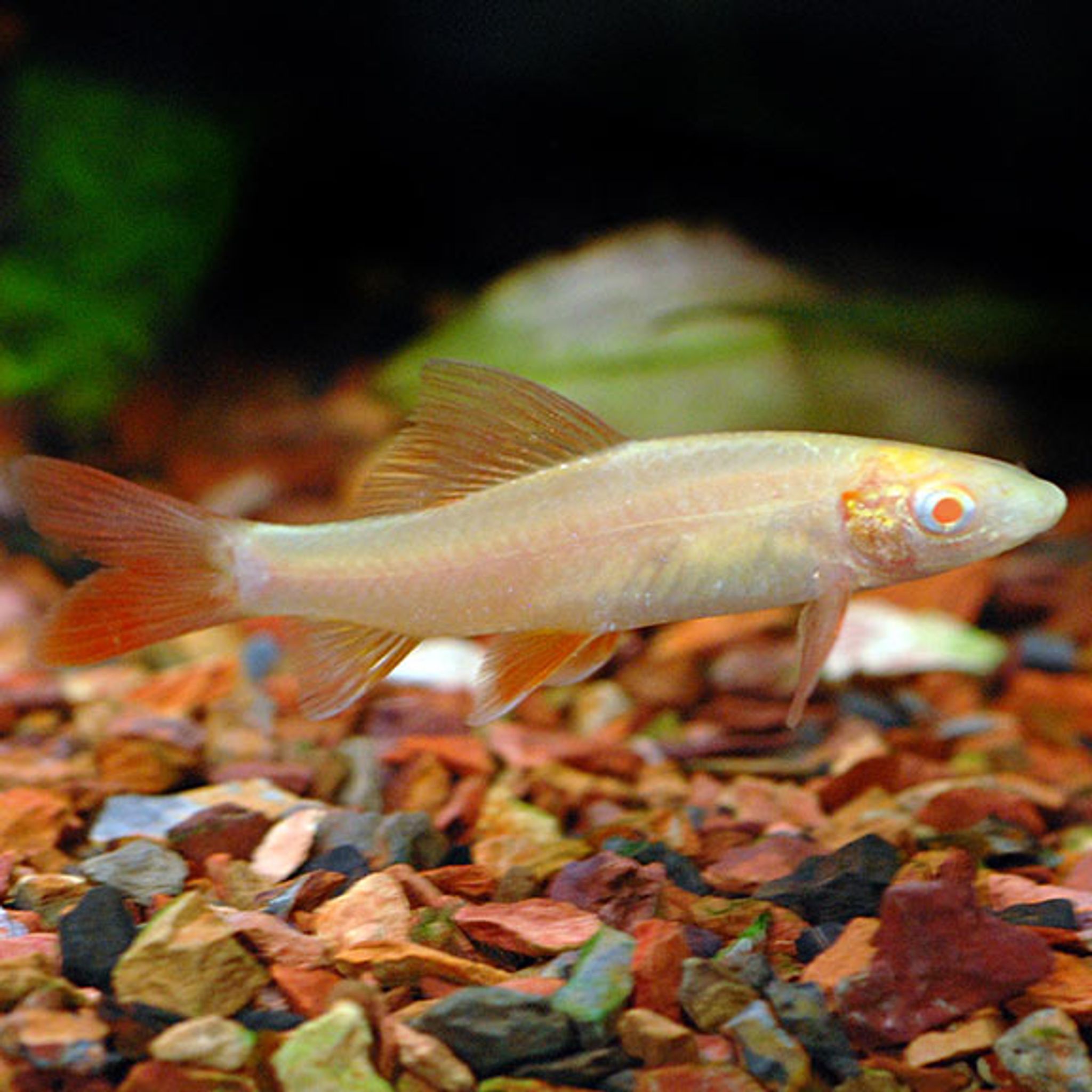

What Do Rainbow Shark Eat? A Practical Feeding Guide
Rainbow sharks (Epalzeorhynchos frenatum) are omnivorous bottom-dwellers that need a mix of sinking pellets, protein, and vegetables — tank algae alone will never sustain one. This guide covers exactly what to feed, how much, how often, and how to sidestep the two most common failures: starving a shy juvenile and fouling the water with an overfed adult.
What Rainbow Sharks Eat in the Wild
In their native Southeast Asian streams, rainbow sharks spend most of their time hugging the substrate in fast-flowing water, picking at whatever the current delivers. Their natural diet includes:
- Algae and biofilm scraped off rocks and driftwood
- Zooplankton drifting near the bottom
- Insect larvae and small insects
- Small crustaceans
- Decaying plant matter
This background matters because it explains their captive behavior: they are grazers and opportunistic foragers, not ambush predators, and they expect food to appear near the bottom, not at the surface.
Building a Captive Diet That Actually Works
The captive diet should mirror the wild one in variety, even though the exact ingredients change. A rainbow shark is not a pure algae eater — despite the reputation these fish get from their algae-grazing habit, relying on tank algae as a food source will leave the fish undernourished. The diet needs three components rotating through the week.
1. A Sinking Staple
Because rainbow sharks feed along the substrate, food has to sink to reach them reliably. Sinking pellets, granules, or wafers formulated for bottom feeders should form the base of every feeding. Flakes alone are a poor match — they float, and a bottom-dwelling fish may miss most of the meal before it ever gets there. Flakes aren't off-limits, but they should always be paired with something that sinks.
2. Protein
Protein keeps growth and coloration on track and gives the fish a chance to express natural foraging behavior. Good rotating options include:
- Frozen or live bloodworms
- Brine shrimp
- Daphnia
- Tubifex worms
- Blackworms
- Mosquito larvae
- Occasional live crustaceans or insects for enrichment
An advanced but underused technique here is gut-loading: feeding live foods like brine shrimp a nutritious flake for several hours before offering them to your shark. The nutrients the brine shrimp ate pass along to the fish that eats them, meaningfully boosting the nutritional value of an otherwise thin feeder food.
3. Vegetables and Algae-Type Foods
Vegetables round out the diet and are especially important for coloration and growth. Offer in small, blanched pieces:
- Zucchini
- Spinach
- Cucumber
- Shelled peas
- Lettuce
Algae wafers or tablets work as a concentrated stand-in for the algae grazing this fish would do in the wild, and they're worth keeping in rotation even in a heavily planted or algae-rich tank.
Weekly Feeding Rotation Example
A rotation chart is more actionable than a list of ingredients. Here's a sample week for an established rainbow shark eating twice daily:
| Day | Morning | Evening |
|---|---|---|
| Mon | Sinking pellets | Bloodworms (frozen) |
| Tue | Sinking pellets | Blanched zucchini |
| Wed | Algae wafer | Brine shrimp |
| Thu | Sinking pellets | Shelled peas |
| Fri | Sinking pellets | Daphnia |
| Sat | Algae wafer | Blanched spinach |
| Sun | Sinking pellets | Tubifex or blackworms |
Rotating food types weekly rather than feeding the same pellet every day supports more balanced nutrition and tends to produce noticeably better color and growth than a single-food routine.
How Often and How Much to Feed
The consensus is 2–3 small feedings a day for a young or growing fish, with portions sized to whatever the fish clears in about 2–5 minutes. A well-established adult that's actively grazing on biofilm throughout the day can be dropped to once-daily feeding — either approach works as long as the food disappears quickly and nothing is left to rot.
Treat any algae grazing you observe as a bonus, not a food plan. Even in a tank with visible algae growth, keep offering a complete sinking diet.
Juveniles vs. Adults
| Juveniles | Adults | |
|---|---|---|
| Portion size | Small | Larger |
| Frequency | 2–3x daily | 1–2x daily |
| Vegetable emphasis | High — critical for growth/coloration | Moderate |
| Feeding location | Near hiding spots, low light | Spread across tank floor |
Young rainbow sharks that don't get consistent vegetation and algae-type foods early on are prone to stunted growth and duller adult coloration, so don't skimp on greens while the fish is small, even if portions overall stay modest.
Why Juveniles Hide and What It Means for Feeding
Juvenile rainbow sharks are naturally crevice-dwellers, adapted to tucking into rock and wood cover in fast-flowing streams to avoid predators and stronger currents. That instinct doesn't disappear in a tank — a new or young shark will often hide for long stretches and may not visibly eat in front of you. Rather than assuming the fish is refusing food, feed near its hideout under dim lighting and check the next morning whether the food has disappeared, or look for a rounded belly as evidence it's eating.
Common Feeding Mistakes to Avoid
- Overfeeding. Leftover food rotting on the substrate is the single biggest cause of ammonia spikes and cloudy water with bottom feeders. Only offer what gets eaten in a few minutes.
- Flakes as the only food. They float, and a bottom-dweller may never reach most of it.
- Skipping vegetables and algae wafers. This leads to poor coloration and, in juveniles, stunted growth.
- Ignoring food competition. As rainbow sharks mature they become territorial and semi-aggressive, and may bully rivals — including other catfish, loaches, or bottom dwellers — away from food. Spread sinking food across multiple spots on the tank floor to reduce clashes.
- Assuming a planted or algae-rich tank replaces feeding. It doesn't. A complete diet is still required regardless of how much algae is present.
Tank Conditions That Support Good Feeding
Feeding success is tied to the environment. Rainbow sharks do best in a 48-inch, roughly 50-gallon (190 L) or larger tank with sandy substrate, plenty of caves, driftwood, and plants for hiding, water temperature of 72–79°F (22–26°C), pH 6.5–7.5, and GH around 5–11 dGH, with good filtration and oxygenation. As adults become territorial, feeding time itself can trigger competition with other bottom feeders, so spreading food across the floor rather than dropping it in one spot matters more as the fish grows. You can browse live rainbow sharks on FishyHub if you're sourcing a new fish alongside setting up feeding habits.
Sinking Pellet Formulations: Not All the Same
Sources often lump all sinking foods together, but commercial pellets marketed specifically for bottom feeders or shrimp typically carry a different nutritional profile than generic community pellets — often higher in plant-based content and formulated to hold together longer in water so nutrients don't leach out before the fish reaches them. When shopping, a dedicated bottom-feeder or algae-based formulation is a better default staple than a generic community pellet, with protein and vegetable foods rotated in around it. FishyHub's food and supplements category and its freeze-dried food selection are worth browsing when building out a rotation.
Rainbow Shark vs. Other "Cleanup Crew" Fish
Readers researching rainbow sharks for algae control often compare them against two other popular options.
Siamese Algae Eater
The Siamese algae eater is a genuine algae grazer, feeding on algae (including green hair algae), phytoplankton, and biofilm in the wild, and readily eating wafers, flakes, pellets, blanched vegetables, brine shrimp, and bloodworms in captivity. If tank algae is present and lightly supplemented, it can often be fed just once daily — more reliably than a rainbow shark, which needs a complete diet regardless of algae levels. One caveat: feeding too much protein can make a Siamese algae eater graze less on algae, reducing its usefulness for algae control.
Flying Fox
The flying fox is also omnivorous and grazes continuously, but it's inconsistent as an algae eater — picky about which algae types it will actually touch, so it still needs a full varied diet of sinking pellets plus occasional live or frozen food and vegetables. It feeds most actively at dawn and dusk or under dimmer light, partly to avoid competing with bolder mid-water fish — a feeding-time tip that also applies well to shy juvenile rainbow sharks.
Do They Compete for Food?
Rainbow sharks and Siamese algae eaters generally have low conflict at feeding time since their diets overlap only partially. Feed across different zones of the tank to make sure both get their share, especially once the rainbow shark matures and becomes more territorial. Anyone building out a bottom-dweller cleanup crew can compare options in FishyHub's plecos, corys, and bottom dwellers category.
Frequently Asked Questions
How often should I feed my rainbow shark?
Feed a growing fish 2–3 small meals a day, with portions eaten within a few minutes. A well-established adult grazing steadily on biofilm can be fed once daily instead.
Do rainbow sharks eat algae?
Yes, they graze on algae and biofilm, but it isn't sufficient on its own. Always provide a formulated sinking diet plus occasional algae wafers rather than relying on tank algae.
What vegetables can I feed a rainbow shark?
Blanched zucchini, spinach, cucumber, shelled peas, and lettuce cut into small pieces all work well and should be rotated in regularly, especially for juveniles.
Can rainbow sharks eat flakes?
They can, but flakes float and a bottom-dwelling fish may miss most of the meal. Pair flakes with sinking pellets or wafers so the food actually reaches the fish.
Will my rainbow shark eat other fish?
Rainbow sharks aren't predatory feeders on adult tankmates, but a stressed or territorial adult can injure or kill much smaller, slow-moving fish through aggression rather than true predation. Very small fry could occasionally be eaten opportunistically.
Why isn't my rainbow shark eating?
Common causes include a new or shy juvenile hiding out of instinct, water quality problems, temperature outside the 72–79°F range, or bullying from tankmates. Check your parameters first, then try feeding near the fish's hiding spot under dim light.
How much should I feed a juvenile vs. an adult rainbow shark?
Juveniles need smaller, more frequent portions with extra emphasis on vegetation to support growth and coloration. Adults eat larger portions less often and rely less on a constant supply of greens.
Do rainbow sharks compete with algae eaters like Siamese algae eaters for food?
Conflict is generally low since their diets only partly overlap, but feed across different zones of the tank to make sure both fish get enough, particularly as the rainbow shark matures.
Getting feeding right is one of the simplest ways to keep a rainbow shark colorful and healthy long-term. If you're setting up a tank or adding a bottom-dweller cleanup crew, browse FishyHub's freshwater livestock selection to find your next addition.


