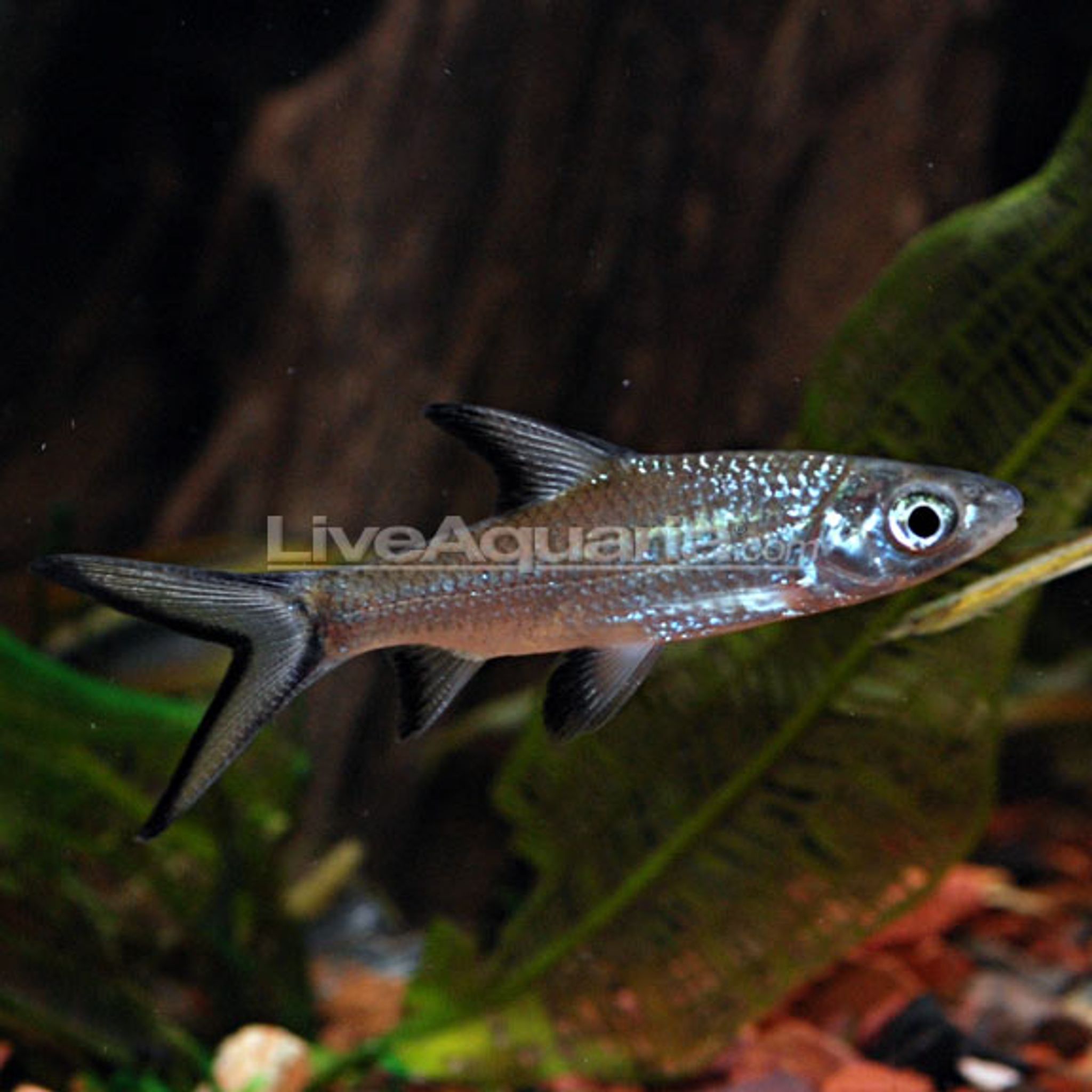

Bala Shark Care Guide: Tank Size, Diet, Water Parameters and Temperament
The silvery, fast-swimming "shark" at the store is a bala shark, and it will not stay small. This guide covers the real adult size and tank footprint, water parameters, diet, temperament, and the setup mistakes that cause most bala shark problems, so you can decide honestly whether you're set up for one before you buy.
What Is a Bala Shark, Exactly?
The bala shark (Balantiocheilos melanopterus) is not a shark at all — it's a cyprinid, part of the minnow and carp family, also sold as the silver shark or tricolor shark. The "shark" name comes from its torpedo-shaped body and tall, pointed dorsal fin, not from any relation to actual sharks.
Key facts:
- Adult size: 12–14 inches (30–36 cm), with some individuals reaching 14–15 inches
- Lifespan: 8–10 years with good care
- Growth rate: slow and steady over several years — the 2–3 inch juvenile at the store looks nothing like the adult it becomes
- Origin: fast-flowing rivers and lakes of Southeast Asia
That slow growth is exactly why so many owners underestimate this fish. A bala shark that fits comfortably in a 20-gallon tank today can outgrow it within a year.
Tank Size: The Reality Check
This is the single most important section of this guide, because tank size is where most bala shark problems start.
Minimum tank size for one adult bala shark: 125–150 gallons. For a proper school (recommended — see Temperament below), plan for 180–220+ gallons, with a tank footprint of at least 6 feet long. You'll sometimes see 100-gallon figures cited as a minimum; treat that as a bare-bones number that only works temporarily for small juveniles, not a real adult housing plan.
Shape matters as much as volume. Bala sharks are fast, open-water swimmers, so a long, wide footprint beats a tall, narrow one every time. A 6-foot-long tank gives a school room to cruise; a tall column-shaped tank of the same gallonage does not, no matter what the volume number says.
Upgrade Timeline by Size
Because growth is gradual, it helps to tie tank upgrades to visible size milestones rather than vague "give it a year or two" advice:
| Bala shark size | Tank stage | Notes |
|---|---|---|
| 2–3 in (juvenile, as purchased) | 40–55 gallon (temporary only) | Fine for the first few months; plan the next tank now |
| 4–6 in | 75–90 gallon (temporary) | Growth accelerates visibly; this is the last "small" stage |
| 6–10 in | 125–150 gallon | Approaching the real minimum for one adult |
| 10–14+ in (full adult) | 180–220+ gallon, 6+ ft long | Needed for a healthy school of 5–6 |
If you're not prepared to move through this whole table within a couple of years, a bala shark isn't the right fish yet.
Water Parameters
Bala sharks tolerate a fairly wide range of conditions, but they're sensitive to sudden swings and to ammonia/nitrite spikes — stability matters more than hitting an exact number.
| Parameter | Tolerated range | Comfortable target |
|---|---|---|
| Temperature | 72–82°F (22–28°C) | 75–79°F (24–26°C) |
| pH | 6.0–8.0 | 6.5–7.5 |
| General hardness (GH) | 5–13 dGH | Not picky, avoid extremes |
| Water changes | — | 20–35% weekly |
Smaller or more heavily stocked tanks need water changes on the larger, more frequent end of that range. Since balas are messy, active fish, strong filtration is non-negotiable — undersized filtration is a fast route to ammonia and nitrite spikes that stress this species quickly.
Tank Setup: Substrate, Decor, and Equipment
Overdecorating is a common bala shark setup mistake. These fish need an open swimming lane through the middle of the tank, not a maze of ornaments.
- Substrate: dark, fine pebble or sandy substrate that mimics a riverbed
- Decor: driftwood and plants around the edges and back for cover; keep the center and mid-water open
- Filtration: oversized relative to bioload — these fish produce real waste
- Heater: to hold a stable 75–79°F
- Lid: a tight-fitting, secure lid is essential — bala sharks are frequent, powerful jumpers
Why a Secure Lid Isn't Optional
Fish jump for a handful of reasons: low oxygen, stress from poor water quality or tankmates, feeling cramped, being startled, or in some species a natural hunting/escape instinct. Bala sharks check the "startled" and "stressed" boxes often — they're a skittish species that bolts at sudden movement — which makes an open-top tank a real injury risk. A missing or loose lid is one of the most preventable causes of bala shark loss.
Why Fish Gasp at the Surface
Surface gasping is a related warning sign worth knowing, since a large, heavily stocked bala tank is more prone to it. Common causes include:
- Low dissolved oxygen from heat, overstocking, or weak surface agitation
- Ammonia or nitrite spikes
- Disease or parasites affecting gill function
- Fish surface-feeding and mistaking the behavior for hunger
Good surface agitation and oxygenation matter more in a large, densely stocked bala setup than in most community tanks.
Diet
Bala sharks are omnivorous and easy to feed, provided you don't rely on one food type long-term.
- Base diet: high-quality flakes or pellets
- Protein: bloodworms, brine shrimp, daphnia, tubifex
- Vegetable matter: blanched vegetables, spirulina, small bits of fruit
- Feeding schedule: 2–3 times daily, in portions cleared within 2–3 minutes
Feeding only flakes for months on end is a common mistake — vary the diet with both protein and vegetable matter. Also keep in mind that adult balas will eat anything small enough to fit in their mouths, including fry, tiny fish, and shrimp, so factor that into your stocking plan.
Temperament and Tankmates
Bala sharks are peaceful but genuinely skittish. They're fast swimmers that can crash into glass or decor when startled, and a lone or paired bala is noticeably more nervous, prone to hiding, and more likely to injure itself than one kept in a proper group.
Keep at least 5–6 bala sharks together. Larger groups measurably reduce skittishness; fewer than that leaves individual fish stressed and hiding.
Good tankmates are other robust, similarly active, non-tiny community fish:
- Larger tetras
- Rainbowfish
- Gouramis
- Rasboras
- Barbs
- Corydoras
Avoid very small or slow-moving fish, long-finned slow swimmers, shrimp and snails (once balas reach adult size), and aggressive cichlids that might nip or bully them. You can browse compatible options in FishyHub's small community fishes category when planning a bala tank.
A Stocking Example
For a 180-gallon tank housing 6 adult bala sharks, there's limited bioload room left over. A realistic addition might be a school of 8–10 larger tetras or rasboras and a handful of corydoras for the bottom — not a second large, active species. Treat the balas' bioload as the anchor of your stocking plan, not an afterthought.
Sexing and Breeding
Sexing bala sharks is difficult. Females are typically slightly rounder-bodied and marginally smaller, but the difference is subtle and unreliable at a glance.
Breeding in a home aquarium is rare and difficult. Most commercial supply comes from hormone-induced spawning, not natural home breeding. If you want to attempt it:
- Adults need to be mature (3+ years old, 5+ inches)
- A large dedicated breeding tank (65+ gallons)
- A gradual temperature rise into the low 80s°F to trigger spawning
- Balas are egg scatterers with no parental care — remove adults after spawning to prevent them eating the eggs
- Fry are raised on infusoria, then baby brine shrimp
This is an advanced project best suited to experienced breeders, not a first-fish goal.
Common Health Issues
| Issue | Signs | Response |
|---|---|---|
| Ich | White spots on body/fins | Raise temperature slightly, treat with an appropriate medication |
| Dropsy | Bloating, pinecone-like scales | Usually indicates poor water quality or organ failure; salt bath and correct water quality, prognosis is often poor |
| External parasites/flukes/anchor worms | Visible parasites, flashing, scratching | Appropriate parasite treatment, quarantine |
| Columnaris/bacterial infections | Frayed fins, lesions, often at damaged scales | Treat promptly, especially after jump or collision injuries |
| Fin/skin injuries | Scrapes, torn fins | From panic bolting or glass collisions; treat quickly to prevent secondary infection |
Because balas panic-bolt easily, physical injuries from glass or decor collisions are common and can develop into secondary bacterial infections if untreated. Products for wound and water treatment can be found in FishyHub's treatment and medication category.
Is a Bala Shark the Right Fish for You?
Bala sharks are frequently listed as a poor beginner choice — not because they're hard to keep, but because of what they demand long-term. Before buying, check:
- Space: Can you eventually house a 180+ gallon, 6-foot-long tank?
- Budget: Can you afford that tank, stand, and filtration, not just today's small setup?
- Patience: Are you willing to manage several years of gradual growth and tank upgrades?
- Group commitment: Can you keep 5–6 or more, not just one or two?
If any answer is no, a smaller shoaling species is a better fit — and if you already own an overgrown bala shark in too small a tank, look into rehoming responsibly through a public aquarium, an aquarium club, or local aquarist classifieds rather than releasing it or keeping it cramped.
One more sourcing note: most bala sharks sold at retail are still wild-caught rather than captive-bred, which is worth knowing for quarantine purposes — new arrivals can carry parasites or stress-related illness, so a proper quarantine period matters more than with many tank-raised species.
Bala Shark vs. Iridescent Shark: Don't Confuse the Two
The iridescent shark (Pangasianodon hypophthalmus) is commonly confused with the bala shark in stores, but it's a completely different animal — a catfish, not a cyprinid.
| Trait | Bala shark | Iridescent shark |
|---|---|---|
| Family | Cyprinid (minnow) | Catfish |
| Adult size | 12–14 in | 2–4+ feet |
| Adult tank size | 125–220 gallons | 300+ gallons |
| Activity | Active, diurnal | Nocturnal, poor eyesight |
| Diet | Flakes, pellets, protein, veggies | Sinking catfish pellets |
| Temperature | 72–82°F | 72–79°F |
| pH | 6.0–8.0 | 6.5–7.5 |
Both are schooling fish sold as "sharks" for their fin shape and body profile, and neither is a true shark. If you're comparing the two, the iridescent shark's much larger adult size makes it an even bigger long-term commitment than the bala.
A Quick Note on "Aquarium Sharks" in General
Bala shark is one of several minnow and catfish species marketed under a "shark" name at retail, alongside the rainbow shark, red-tail shark, and sometimes the roseline (Denison) barb. In every case, "shark" refers to fin shape or body profile, not taxonomy — none of these fish are related to true sharks. If you searched broadly for an "aquarium shark," it's worth confirming which specific species you're looking at before applying any of this guide's numbers.
Iridescent Shark "Hole in the Side" — A Related Search
Owners of iridescent sharks often search for a "hole in the side" issue. This is usually an infected wound or ulcer from a physical injury (a glass collision or decor scrape) or a bacterial infection like columnaris — not the same thing as hole-in-the-head disease, which is more typical of cichlids and linked to poor water quality or nutrition. Treatment involves clean water, addressing the underlying injury or infection, quarantine, and careful medication dosing, since iridescent sharks are scaleless catfish and more sensitive to certain treatments than scaled fish like the bala shark.
Final Setup Tip: Acclimation Matters
Because bala sharks are so easily spooked, minimize handling and transport stress from the start. Drip-acclimate new arrivals slowly rather than a quick temperature-and-dump approach, keep the room calm during the process, and avoid netting or chasing the fish once it's in the tank. A stressed introduction can set the tone for a jumpy, hard-to-settle fish for weeks afterward.
If you've done the tank-size math and you're ready to house a proper school, you can browse available stock in FishyHub's freshwater "shark" category to compare what's currently in stock.
Frequently Asked Questions
How big of a tank does one bala shark actually need?
A single adult bala shark needs a minimum of 125–150 gallons, with more required for a proper school. A long, wide footprint of at least 4–6 feet matters as much as the total gallon count, since these fish are fast, open-water swimmers.
Can bala sharks live in a 55-gallon or 20-gallon tank?
Only temporarily, as small juveniles. A bala shark will outgrow either tank within a year or two and will need upgrading well before it reaches its 12–14 inch adult size.
How many bala sharks should be kept together?
At least 5–6 is the recommended minimum. Larger groups reduce skittishness and stress noticeably; keeping fewer leads to a nervous fish that hides and is more prone to injury.
Are bala sharks aggressive?
No, they're generally peaceful, though fast and easily startled. As adults, they may eat much smaller fish or shrimp simply because those tankmates fit in their mouths, not out of aggression.
What do bala sharks eat?
A balanced omnivorous diet of high-quality flakes or pellets, supplemented with protein like bloodworms and brine shrimp and vegetable matter like blanched veggies or spirulina. Feed 2–3 small portions daily that clear within a few minutes.
Can bala sharks breed in a home aquarium?
Very rarely. Most commercial bala sharks come from hormone-induced spawning, and home breeding requires mature adults, a large dedicated breeding tank, and careful temperature manipulation — it's an advanced project, not a casual one.
Why does my bala shark keep jumping or hiding?
This usually points to stress: too few tankmates of its own kind, poor water quality, low oxygen, or a startled reaction to sudden movement. Check your group size, water parameters, and lid security first.
What is the difference between a bala shark and an iridescent shark?
They're from different families — the bala shark is a minnow, the iridescent shark is a catfish — and the iridescent shark grows far larger, needing sinking pellets and an eventual tank of 300+ gallons compared to the bala's 125–220 gallons.


