1–7 of 7
Explore sea anemones for sale in Singapore from marine aquarium shops, reef specialists and saltwater livestock sellers on FishyHub. Compare Bubble Tip Anemones, Carpet Anemones, Rock Flower Anemones and other reef anemones by size, colour and seller.
Sea anemones are striking marine invertebrates known for their flowing tentacles, vivid colours and fascinating relationships with certain Clownfish. Different species vary greatly in adult size, lighting needs, flow preferences and compatibility, so exact identification is important before purchase.
Sea anemones are popular centrepiece animals in reef aquariums and can add dramatic movement and colour to a marine setup.
They are not plants or corals, but specialised marine invertebrates with species-specific care requirements.
Different anemones can behave very differently in the aquarium, especially in terms of size, movement, light requirements and host relationships.
Bubble Tip Anemones are among the most popular reef aquarium anemones and are available in a wide range of colours. They are commonly associated with Clownfish and may move around the aquarium until they find a preferred location.
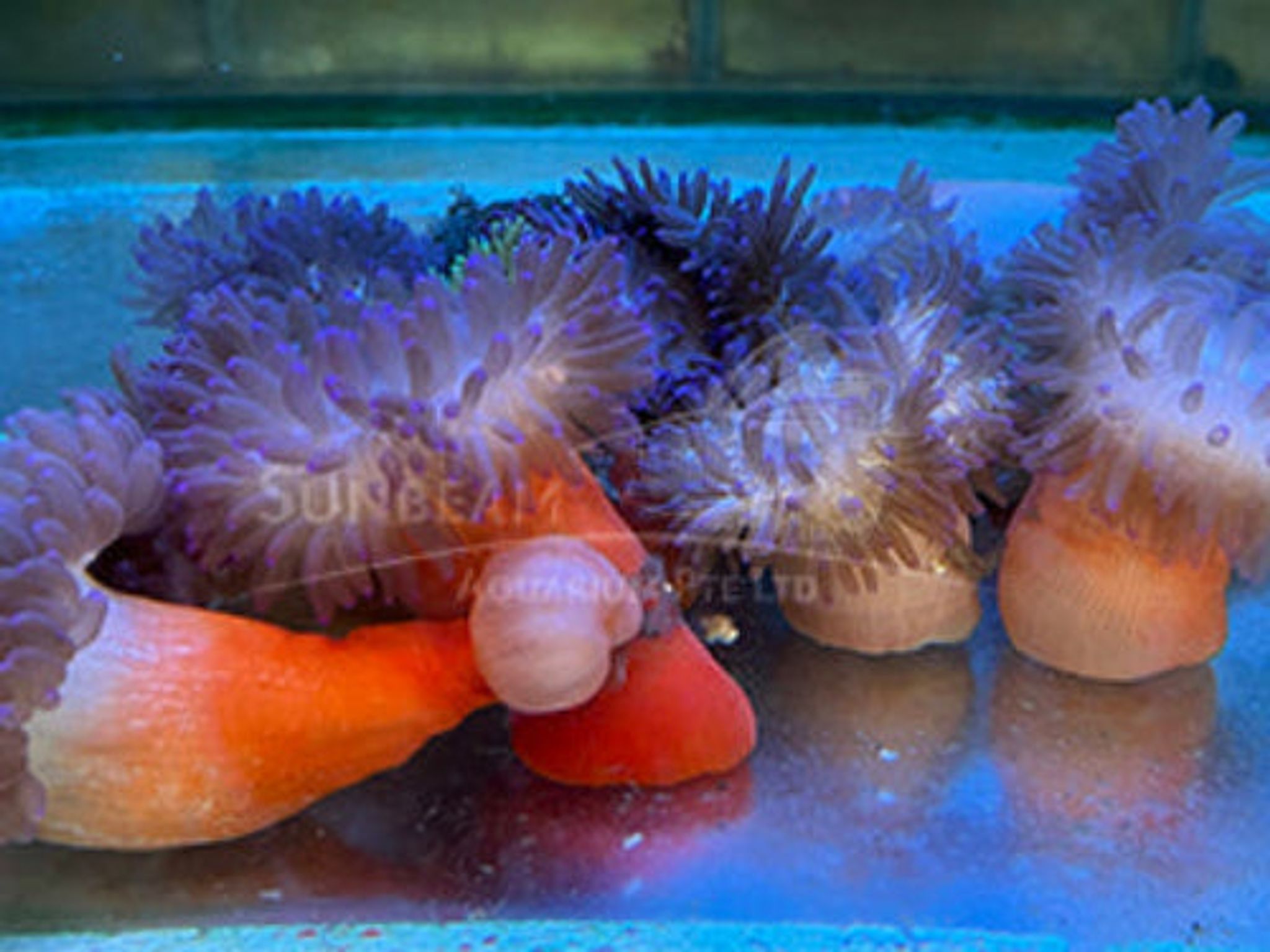
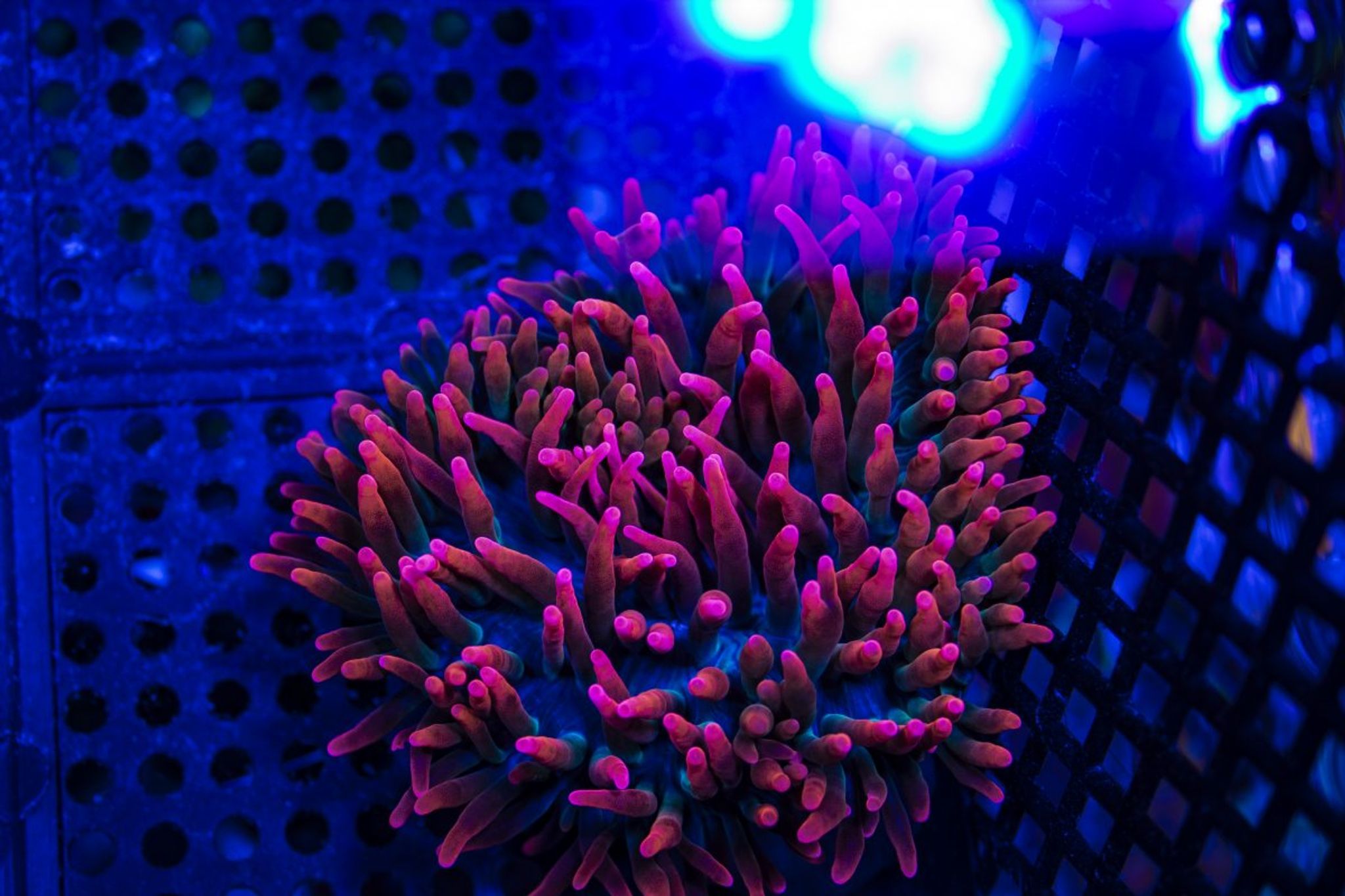
Rose Bubble Tip Anemones are prized for warm red, pink and orange tones. Colour intensity can vary according to lighting, genetics and overall condition.
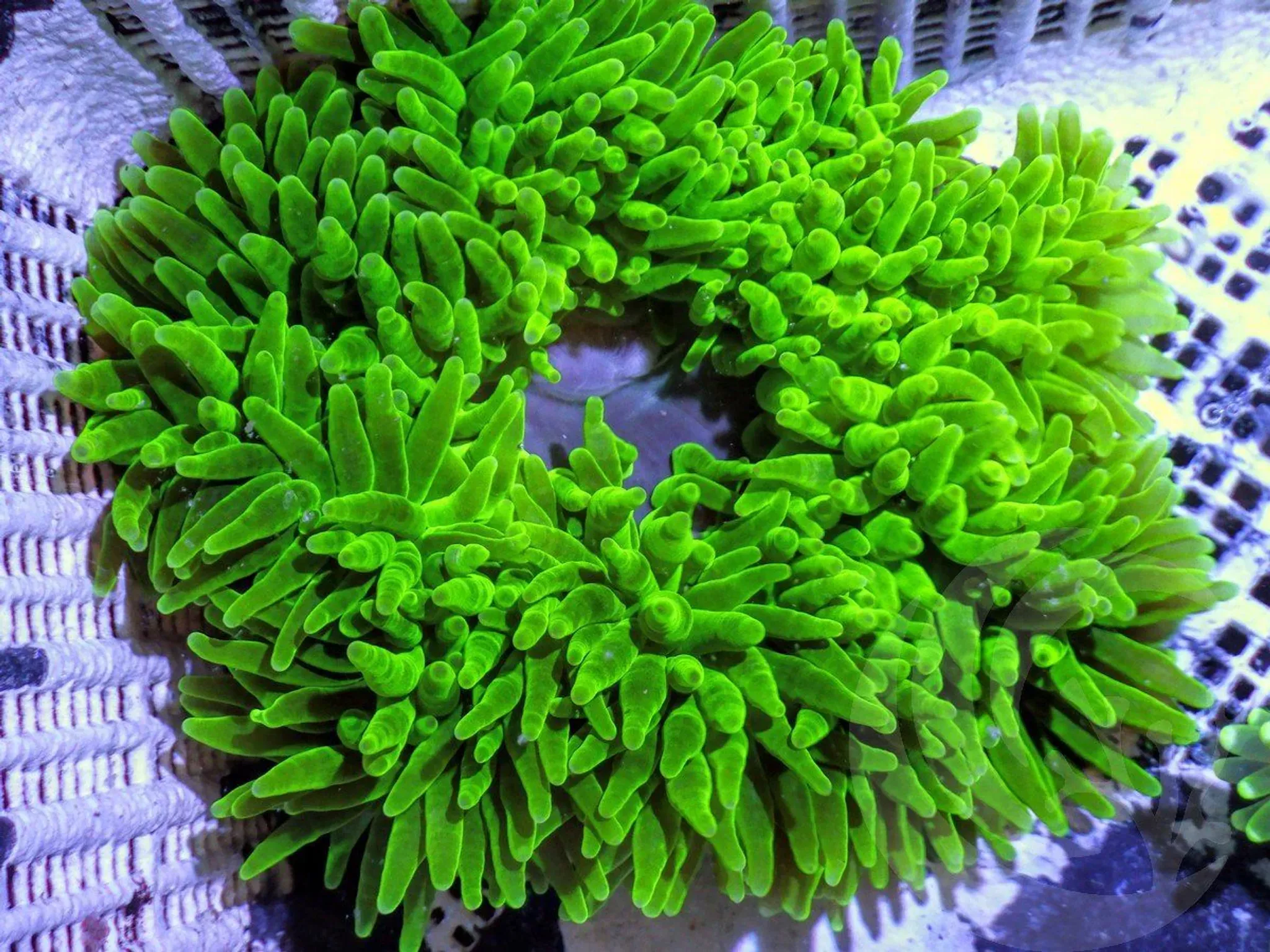
Green Bubble Tip Anemones can show bright green or fluorescent coloration and are popular in reef aquariums with blue-spectrum lighting.
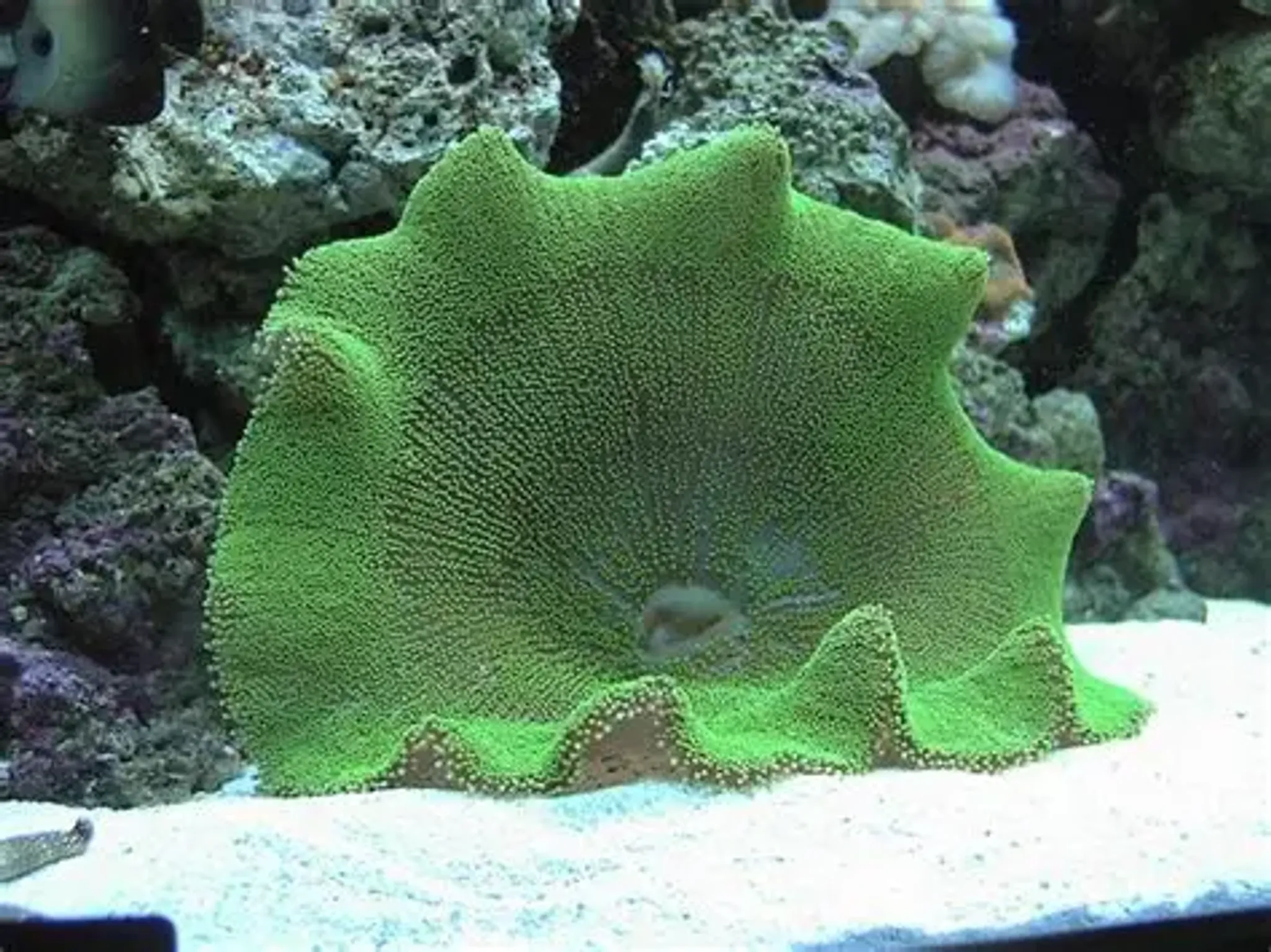
Carpet Anemones have broad oral discs covered in short tentacles and can become very large. Some species are powerful predators and require substantial space and careful tankmate planning.
Rock Flower Anemones are popular for their compact form and wide range of vivid colours and patterns. They are often used as decorative reef invertebrates rather than as host anemones for Clownfish.
Other host and decorative anemone species may appear depending on marine seller availability. Always confirm exact species before purchase because adult size and care can differ substantially.
No. Sea anemones and corals are related cnidarians, but they are different animals.
Unlike stony corals, anemones do not build a hard calcium carbonate skeleton and many can move through the aquarium.
No. Clownfish can live successfully in marine aquariums without an anemone.
Anemones should therefore be purchased because the aquarium can meet their care requirements, not simply because a Clownfish is present.
Different Clownfish species naturally associate with different host anemones.
Captive Clownfish may sometimes adopt non-natural hosts, but this behaviour should not be guaranteed. Check the exact Clownfish and anemone species when planning a host relationship.
Bubble Tip Anemones are commonly kept with several Clownfish species in reef aquariums.
Even where hosting occurs, the aquarium still needs to meet the anemone's own lighting, flow and water-quality requirements.
Some Carpet Anemones are natural hosts for certain Clownfish.
They can become large and may capture other fish, so compatibility and final adult size should be considered carefully.
Yes. Many sea anemones can detach and move if they are not satisfied with light, flow or their chosen position.
Their ability to move is one reason pumps, overflows and other aquarium equipment may need suitable guards.
Initial placement can encourage an anemone toward a suitable area, but the animal may ultimately choose another location.
Provide secure rockwork and appropriate lighting and flow rather than attempting to force an anemone to remain in a decorative position.
Many commonly kept reef anemones contain photosynthetic symbionts and depend significantly on appropriate aquarium lighting.
Lighting needs vary by species, so the aquarium light should be selected and adjusted according to the specific anemone rather than one universal setting.
Many host anemones benefit from substantial reef-quality lighting, but intensity requirements vary.
Sudden exposure to much stronger light can also cause stress, so light changes should be managed carefully.
Sea anemones generally benefit from water movement that brings oxygen and food while carrying waste away.
The ideal flow pattern depends on species, and direct blasting from a powerful pump is not automatically better.
A moving anemone can be injured if its tentacles or body are pulled into an exposed wavemaker or pump intake.
Appropriate guards or intake protection can reduce this risk, especially in aquariums where anemones are newly introduced or prone to wandering.
Sea anemones benefit from stable marine water conditions and can respond poorly to major fluctuations.
Stable salinity, temperature and overall water quality are generally more important than repeatedly chasing exact numbers.
Many anemones are better suited to established marine aquariums where water conditions have become stable.
A newly set up tank can experience substantial biological and chemical changes, which may make it less suitable for sensitive anemones.
Sea anemones require stable saltwater conditions appropriate for marine livestock.
Rapid salinity changes can be stressful, so evaporation and water replacement should be managed consistently.
Many reef anemones receive energy from their photosynthetic symbionts but can also capture and consume animal-based foods.
Feeding needs vary by species and aquarium conditions, so food type and frequency should be based on the particular anemone.
Bubble Tip Anemones can capture appropriately sized meaty foods in addition to receiving energy from suitable lighting.
Avoid oversized food and excessive feeding, as uneaten food can deteriorate and affect water quality.
Yes. Sea anemones have stinging cells and can damage nearby corals when their tentacles make contact.
Because anemones can move, leave enough space around them and be prepared for the possibility that the original layout may need adjustment.
Anemones can coexist with corals and other reef animals in appropriately planned systems.
Their potential to move and sting neighbouring animals makes spacing and long-term placement particularly important.
Many ornamental shrimp can coexist with anemones in reef aquariums.
Individual interactions vary, and shrimp may sometimes take food from an anemone during feeding.
Compatibility with marine crabs depends heavily on the crab species.
Opportunistic crabs may disturb or damage sessile and slow-moving reef animals, so species-level compatibility should be checked.
Sea urchins can generally occupy the same reef aquarium as anemones, but their movement through rockwork can disturb loose equipment or coral placements.
Secure the aquascape so mobile invertebrates cannot easily destabilise it.
Multiple anemones may sometimes be kept in the same aquarium, but compatibility depends on species, available space and system stability.
Keeping multiple individuals also increases the need to plan for movement and contact with nearby livestock.
Anemones may move when searching for more suitable light, flow or attachment points.
Persistent wandering can be a sign that the current location does not meet the animal's needs, so evaluate the aquarium conditions rather than repeatedly forcing it back into place.
Anemones can temporarily contract as part of normal behaviour, especially while exchanging internal water or after disturbance.
Persistent deflation combined with poor attachment, tissue damage or loss of responsiveness can indicate a problem that deserves closer attention.
Healthy coloration varies greatly among anemone species and captive-bred forms.
Severe paling or loss of colour can sometimes indicate stress or loss of photosynthetic symbionts and should be assessed alongside lighting, water quality and overall condition.
Some anemones, particularly Bubble Tip Anemones, can reproduce asexually by splitting.
Splitting can occur under different conditions and should not automatically be interpreted as proof that the aquarium is perfect or that the animal is unhealthy.
When comparing anemones for sale, look for:
Anemones naturally inflate and deflate, so health should be judged from overall condition and repeated behaviour rather than one photograph.
Introduce a new anemone carefully to avoid abrupt changes in temperature, salinity and water chemistry.
Lighting differences between seller and home aquarium should also be considered because sudden exposure to much stronger light can be stressful.
Some anemones are more manageable than others, but they are generally better added after the aquarist has established a stable marine aquarium.
Their need for stable water, suitable reef lighting and careful pump placement makes them more demanding than many common marine fish or cleanup crew animals.
Sea anemone prices in Singapore vary according to species, size, colour, captive lineage, rarity and seller.
Common colour forms and premium fluorescent or unusual varieties can be priced very differently, so compare the actual animal rather than relying only on the common name.
FishyHub brings sea anemone listings from marine aquarium shops, reef specialists and saltwater livestock sellers across Singapore together in one marketplace, making it easier to compare available species and colour forms from multiple sources.
When comparing anemone listings, consider:
Availability changes regularly, particularly for highly coloured Bubble Tip Anemones and uncommon reef anemone species.
No. They are related cnidarians, but anemones are different animals and do not build the hard skeleton associated with stony corals.
No. Clownfish can live successfully without an anemone in a properly maintained marine aquarium.
Bubble Tip Anemones are popular aquarium host anemones, although compatibility depends on the exact Clownfish species and individual behaviour.
Yes. Many can move around the aquarium when searching for suitable light, flow and attachment points.
Many reef anemones require suitable reef-quality lighting, but the ideal intensity varies by species.
Yes. Contact with an anemone's tentacles can damage nearby corals.
Many photosynthetic anemones can also capture food, and feeding requirements vary by species and aquarium conditions.
They are generally better suited to aquarists with a stable marine aquarium and appropriate reef lighting, flow and water quality.
Explore sea anemones for sale on FishyHub and compare Bubble Tip, Rose Bubble Tip, Carpet, Rock Flower and other reef anemones from marine aquarium shops and saltwater livestock sellers across Singapore. Compare species, size, colour, lighting needs and price to find a suitable anemone for your reef aquarium.