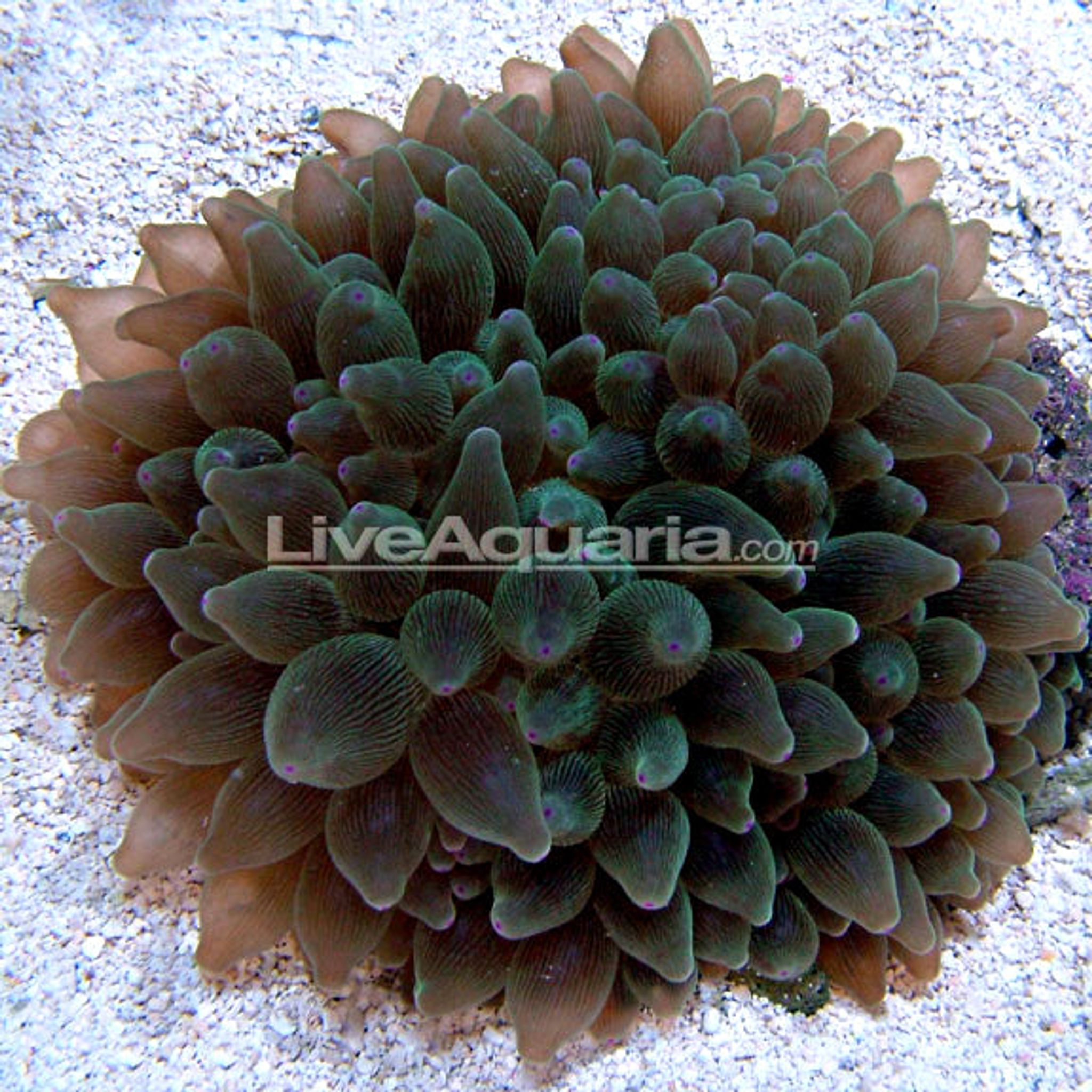

Best Tank Mates for Bubble Tip Anemone in a Reef Aquarium
A Bubble Tip Anemone (Entacmaea quadricolor, or "BTA") can anchor a striking clownfish display, but picking safe tank mates means understanding which animals it will host, which it will sting, and which husbandry habits actually cause most "compatibility" problems. This guide covers the best clownfish pairings, safe invertebrates and fish, animals to avoid, and the tank conditions that keep everyone alive.
BTA Basics Before You Stock Anything
Most anemone deaths and "my fish got stung" stories trace back to husbandry, not the tank mate itself. Before adding anything, the BTA needs:
- A mature tank, ideally 6+ months old, with stable water parameters
- Temperature of 76–82°F (24–28°C)
- Salinity of 1.023–1.026 SG
- Alkalinity of 8–11 dKH
- High light, roughly PAR 150–300 depending on where it settles in the water column
- Strong but indirect flow that keeps the tentacles moving without blasting them flat
Unlike most corals, a BTA has no foot scar or root system holding it in place — it can detach and walk across the rockwork, glass, or substrate whenever it's unhappy with light, flow, or food supply. That single fact drives most of the tank mate and placement advice below.
Minimum Tank Size and Placement
A single BTA needs room to roam and enough water volume to dilute the risk of a sting reaching a fish that brushes past it. As a rule of thumb:
- 30–40 gallons (114–151 L) minimum for one BTA with a clownfish pair
- Larger reef tanks reduce the odds of a wandering anemone drifting into coral or getting pulled toward a pump intake
- Place the BTA low-to-mid in the tank, tucked into a rock crevice that lets its base wedge in securely
- Once it settles, avoid moving it — relocation stresses the animal and tends to trigger more wandering, not less
Placement checklist:
| Step | Why it matters |
|---|---|
| Choose a rock ledge or crevice, not open sand | Gives the base something to grip so it doesn't drift with flow |
| Position low-to-mid tank near strong, indirect flow | Matches natural light/flow gradient and reduces wandering |
| Cover all pump and powerhead intakes | Prevents a wandering anemone from being pulled in and shredded |
| Cover overflow boxes | Same risk as intakes — anemones can walk directly into them |
| Leave 6+ inches (15+ cm) from any coral | Buffers against sting contact if it relocates |
Best Clownfish Pairings for a Bubble Tip Anemone
Clownfish are by far the most reliable BTA tank mates, but not every species hosts with equal enthusiasm. Here's how the commonly available species compare:
| Clownfish | Hosting reliability with BTA | Notes |
|---|---|---|
| Ocellaris | High — most common captive pairing | Easiest to find captive-bred; hosting instinct varies by individual |
| Percula | High | Similar profile to Ocellaris; readily hosts in captivity |
| Tomato | Very high — natural wild host | Strong instinct; can get territorial as it matures |
| Cinnamon | Very high — natural wild host | Strong instinct; less commonly available |
| Maroon | Very high — natural wild host | Most aggressive as an adult; best suited to single-clown tanks |
| Clarkii | High — generalist | Will host almost any anemone species, including BTAs |
| Skunk / Pink Skunk | Low-to-moderate | Naturally prefer other anemone genera (e.g., Heteractis) but occasionally accept a BTA |
A simple decision framework: if you want the calmest community tank, start with Ocellaris or Percula. If you want the strongest hosting instinct and don't mind a bolder personality, Tomato or Cinnamon are natural fits. Save Maroon clownfish for a single-clown setup — sources agree they're eager hosts, but they're also the species most likely to become territorial toward other fish (and even a hand in the tank) as they mature. You can browse available clownfish pairings when planning your stocking order.
Hosting is never guaranteed. Captive-bred clownfish with no prior exposure to a live anemone sometimes take weeks or months to host — or never do at all. That's normal biology, not a tank mate failure, and it isn't a sign anything is wrong with either animal.
Fish That Naturally Host in Anemones (Beyond Clownfish)
Clownfish are the primary and most dependable anemone associates, but they're not the only fish known to interact with anemones in the wild. As a "did you know" note rather than a stocking recommendation:
- Three-spot dascyllus (domino damsel) juveniles are known to shelter among anemone tentacles in the wild
- Some cardinalfish and dottybacks occasionally hover near anemone tentacles for cover
These associations are far less reliable in aquariums than clownfish hosting, and adult dascyllus in particular can become territorial tank bullies — so don't stock them expecting a hosting relationship to develop.
Other Animals That Associate With Anemones
Beyond fish, several invertebrates form genuine mutualistic relationships with anemones, living directly among the tentacles:
- Periclimenes anemone shrimp and sexy shrimp (Thor amboinensis) are classic commensal species that often perch right on the anemone, getting protection in exchange for cleaning up food scraps
- Porcelain anemone crabs (Neopetrolisthes) are filter feeders that live harmlessly among the tentacles, using their fan-like appendages to catch passing particles rather than competing with the anemone for food
Captive success with these associates varies by species and by how well-established the anemone is, but they're generally considered safe, low-risk additions once the BTA has settled.
Safe Invertebrate Tank Mates
| Invertebrate | Compatibility with BTA |
|---|---|
| Periclimenes anemone shrimp | Excellent — classic anemone associate |
| Sexy shrimp | Excellent — classic anemone associate |
| Porcelain anemone crab | Excellent — filter feeder, harmless to anemone |
| Peppermint shrimp | Generally tolerated, some risk |
| Cleaner/skunk shrimp | Usually coexist, occasional stings reported |
| Hermit crabs | Fine — don't linger near the anemone |
| Nassarius, nerite, cerith snails | Fine — reef-safe and don't linger near tentacles |
Where hobbyists disagree on shrimp: cleaner and skunk shrimp are often labeled "anemone safe," and many do live near BTAs for years without issue. But other reports describe anemones eventually catching and eating a shrimp, especially overnight when the shrimp's guard is down. The sensible take is to treat any shrimp near a BTA as at some risk rather than assuming the anemone's presence protects it — and never assume a shrimp is protecting itself just because it's tolerated during the day.
Fish Tank Mates Beyond Clownfish
Small, peaceful reef fish that don't nibble at anemone tentacles generally coexist with a BTA without issue:
- Gobies — watchman gobies, clown gobies, and similar bottom-dwellers stay clear of the anemone
- Firefish — peaceful and rarely interact with anemone tentacles
- Chromis — schooling and non-confrontational
- Small wrasses — six-line and fairy wrasses generally avoid the anemone entirely
- Anthias — can work in larger, well-fed systems with enough swimming room
Browse compatible options such as gobies or peaceful wrasse species when rounding out a BTA display tank.
Fish to avoid: aggressive or territorial species — some tangs and larger damsels among them — can harass clownfish away from their host, causing stress-driven abandonment of the anemone even when the anemone itself was never the problem.
Is Coral Safe Near a Bubble Tip Anemone?
Sources disagree here too. Some argue a BTA rarely stings sessile corals if it's given enough space; others report anemones wandering into SPS or LPS colonies and killing them outright. The practical reconciliation: a settled anemone with good flow, light, and feeding is less likely to move — but it can still relocate at any time, and when it does, it will sting whatever it touches.
Keep at least 6 inches (15 cm) of clearance between a BTA and any coral you'd be upset to lose, and don't hard-aquascape valuable pieces directly beside it. If you later find a coral "dying" for no clear reason, check whether the anemone has drifted into contact before assuming a water quality or lighting issue.
Feeding the Anemone to Reduce Wandering
A well-fed BTA is a calmer, more stationary BTA. In addition to the energy it gets from photosynthetic zooxanthellae, target-feed it directly:
- Mysis shrimp, silversides, or other meaty marine foods
- 1–2 times per week, offered directly to the tentacles with a feeding stick or turkey baster
Anemones that aren't fed directly tend to wander in search of food, which is exactly the behavior that leads to sting incidents with tank mates and coral. If you're troubleshooting a "bad tank mate" situation, check the feeding schedule before assuming the animals themselves are incompatible.
Can You Keep Multiple Bubble Tip Anemones Together?
BTAs reproduce by splitting (cloning), so a single purchased specimen can become several over time. Whether they coexist depends on genetics:
- Clone-mates (anemones that split from the same original animal) generally tolerate close proximity
- Anemones from different sources or species are not guaranteed to get along and will actively sting rival anemones, fighting for space rather than coexisting peacefully like most corals
Don't assume two BTAs purchased separately will behave like a matched pair — give unrelated specimens generous separation until you've observed how they interact.
Understanding Clownfish "Biting" and Hosting Behavior
Anemone and clownfish biting behavior
It's normal for a clownfish to nip at an anemone's tentacles and mouth during the early acclimation period. This is generally understood as part of building up the fish's protective mucus coating rather than genuine aggression. Monitor it, but don't intervene unless you see actual tissue damage or the behavior is preventing the anemone from feeding.
Nighttime-only or "fake anemone" hosting
Clownfish sometimes host a rock, a powerhead, or a coral — or only approach a real anemone after the lights go out — especially when no anemone is present yet or the anemone hasn't fully settled. This is a transitional or substitute behavior, not a sign of incompatibility, and it usually resolves once the anemone is established and feeding well.
Early signs of successful hosting
Watch for these behaviors as hosting develops:
- Short bursts of swimming into and rubbing against the tentacles
- Gradually longer contact periods
- Sleeping inside the anemone overnight
- Eventually, "guarding" behavior — the clownfish chasing off other tank inhabitants that approach its host
Do clownfish lose immunity to their host?
A clownfish separated from its host anemone for an extended period can lose some of its protective mucus coating. Rather than assuming instant re-acceptance, reintroduce the fish gradually with brief contact periods so it can rebuild that protective layer before staying in continuous contact.
Common Mistakes That Look Like Compatibility Problems
Many "bad tank mate" reports are actually husbandry issues in disguise:
- Adding a BTA to an immature tank (under ~6 months old) with unstable parameters — the leading cause of anemone death or melting
- Uncovered pump or overflow intakes — a wandering anemone gets pulled in and shredded
- Assuming any clownfish will instantly host — captive-bred fish with no prior anemone exposure may take weeks, months, or never host
- Placing coral too close, then blaming the coral for "dying" when the anemone actually stung or moved onto it
- Skipping direct feeding, then being surprised when the anemone wanders and disturbs tank mates
- Keeping aggressive tankmates that harass the clownfish away from the host, causing stress-driven abandonment
- Mixing unrelated anemone species or specimens too close together, assuming they'll coexist like coral
- Panicking over normal shrinkage — anemones deflate temporarily when adjusting to light or flow changes; treat prolonged shrinkage plus bleaching plus failure to resettle as the real warning sign, not routine size changes
Frequently Asked Questions
Will my clownfish definitely host in a Bubble Tip Anemone?
No. Hosting instinct is strongest in wild-caught or wild-exposed clownfish and in species like Tomato, Cinnamon, Maroon, and Clarkii. Captive-bred Ocellaris and Percula often host readily, but some individuals never do, and that's normal rather than a sign of incompatibility.
Can I keep shrimp with a Bubble Tip Anemone?
Commensal shrimp such as Periclimenes and sexy shrimp often live directly with a BTA as natural associates. Cleaner and peppermint shrimp usually coexist as well, but they carry some sting or predation risk, particularly overnight.
Will a Bubble Tip Anemone sting my coral?
It can, if it wanders into contact. Keep at least 6 inches (15 cm) of spacing and plan for the anemone to relocate occasionally rather than assuming it will stay in one spot permanently.
Why is my clownfish biting the anemone?
This is typically normal behavior tied to building the fish's protective mucus coating during acclimation, not aggression. Watch for actual tissue damage as the exception worth worrying about.
My clownfish only goes near the anemone at night or hosts a rock or powerhead instead — what's wrong?
This is usually a transitional behavior that occurs before full hosting develops, or a sign the anemone hasn't fully settled yet. It typically resolves on its own with patience and a stable, undisturbed placement.
Can I keep more than one Bubble Tip Anemone together?
Anemones that split from the same original specimen (clone-mates) generally tolerate close proximity. Different specimens or species are not guaranteed to coexist and will sting each other while competing for space.
What tank size do I need for a Bubble Tip Anemone and clownfish pair?
A mature tank of at least 30–40 gallons (114–151 L) with strong indirect flow and high light gives the anemone room to settle and reduces the risk of it stinging other inhabitants.
Do clownfish lose their immunity if separated from their anemone?
Extended separation can reduce a clownfish's protective mucus coating, so reintroduction should be gradual — brief contact periods that build back up — rather than assuming the fish will be instantly accepted again.
Ready to build your anemone reef community? Explore host-ready clownfish and check current anemone availability on FishyHub to get started.


