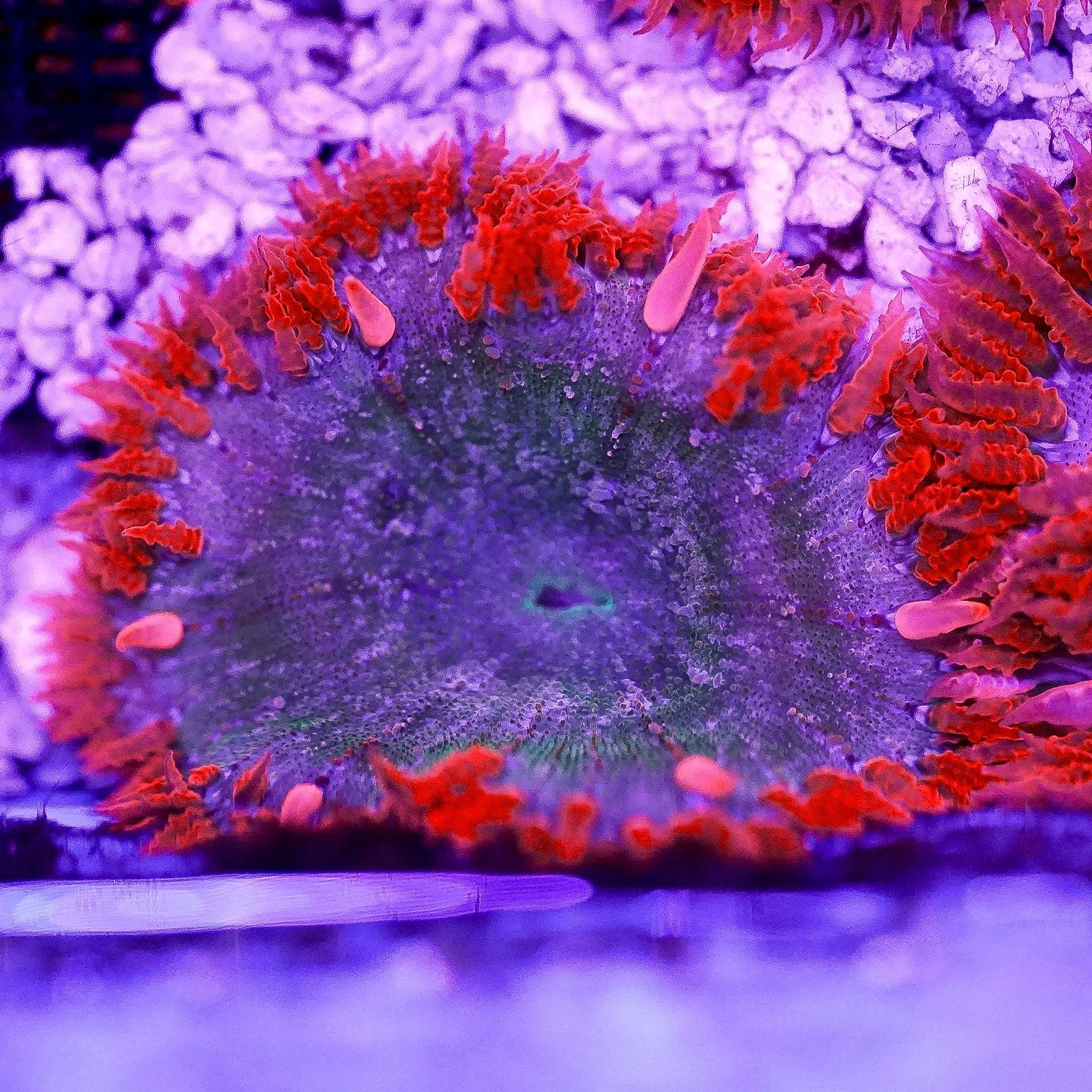

Is Rock Flower Anemone Reef Safe? Compatibility With Fish, Coral and Invertebrates
Yes — the rock flower anemone is reef safe for the vast majority of tanks, and it's one of the most recommended anemones for reef keepers precisely because it stays put and stings mildly compared to carpet, bubble-tip, or long-tentacle anemones. This guide breaks down exactly how it behaves around fish, coral, and invertebrates so you can plan placement with confidence.
Species Snapshot
The rock flower anemone (Phymanthus crucifer, also listed under the older name Epicystis crucifer) is native to shallow reef flats and lagoons of the Caribbean and Gulf of Mexico. It's often sold simply as "rock anemone."
- Oral disc size: roughly 3–4 inches (7.5–10 cm) at full size — small compared to most host anemones.
- Behavior: burrows its pedal disc (foot) into a rock crevice or sand pocket and anchors there. Once settled, it rarely relocates or roams the way carpet or long-tentacle anemones do.
- Color morphs: available in red, green, gold, and mixed patterns, many of which fluoresce well under LED reef lighting — a look worth factoring into stocking decisions, though it has no bearing on safety.
Its small size and sedentary habit are the two biggest reasons it's considered low-risk in a mixed reef.
Ideal Tank Conditions
| Parameter | Recommended Range |
|---|---|
| Tank size | 10–20+ gallons (38–75+ liters) for one specimen; larger for groups |
| Temperature | 75–80°F (24–27°C) |
| Specific gravity | 1.024–1.026 |
| pH | 8.1–8.4 |
| Alkalinity/calcium/magnesium | Standard reef-tank levels |
| Lighting | Moderate to high (roughly 80–150 PAR), moderate-to-strong LED or T5 |
| Flow | Gentle to moderate and steady; avoid blasting flow that dislodges it before it anchors |
Stable, mature water chemistry matters more than raw intensity — a rock flower anemone that can't secure its foot is far more likely to wander and sting its neighbors.
Fish Compatibility
Rock flower anemones get along with the great majority of reef fish, including gobies, blennies, most wrasses, dartfish, and — in some cases — clownfish. Because they lack the classic bushy tentacle mass, they're generally a low-conflict tankmate.
Fish to avoid or watch closely:
- Butterflyfish and certain large or anemone-eating wrasses, which are known to nip or eat anemones.
- Some large angelfish.
- Very small or weak-swimming fish (fry, tiny gobies) — not because the anemone hunts, but because it's an opportunistic feeder that can catch a fish that swims into or perches on its tentacles.
Will Clownfish Host a Rock Flower Anemone?
Possibly, but don't count on it. Hosting reports are inconsistent since the tentacle structure differs from typical clownfish host anemones (bubble-tip, carpet, long-tentacle). Some clownfish will settle into one; most won't. Treat any hosting as a bonus rather than an expectation, and shop clownfish or other community-friendly options like gobies and wrasse based on your tank's overall compatibility, not on the anemone hosting them.
Coral Compatibility
A rock flower anemone is reef safe with most SPS, LPS, zoanthids, mushrooms, and soft corals, provided you give it adequate spacing. Its sting is mild — it typically won't kill a neighboring coral outright — but prolonged contact can still cause irritation, tissue retraction, or localized damage on both sides.
Recommended Spacing by Coral Type
| Coral Type | Minimum Buffer Zone | Notes |
|---|---|---|
| Soft corals & mushrooms | 4–6 inches (10–15 cm) | Generally low-conflict but can still be irritated by direct contact |
| LPS (large-polyp stony) | 6+ inches (15+ cm) | Sweeper tentacles on some LPS can reach further than expected |
| SPS (small-polyp stony) | 6+ inches (15+ cm) | SPS tissue is thin and slow to recover from sting damage |
| Other anemones | 6+ inches (15+ cm) | Prevents chemical warfare and territorial stinging between anemones |
Since a rock flower anemone can occasionally relocate a short distance before settling, check its position daily for the first one to two weeks and adjust neighboring coral placement if it drifts closer than intended.
Invertebrate Compatibility
Rock flower anemones are safe with standard cleanup-crew staples — snails, hermit crabs, and most reef-safe shrimp. Several species actually form symbiotic or commensal relationships with them, living directly on the tentacles or oral disc:
- Sexy shrimp
- Anemone shrimp (Periclimenes species)
- Porcelain crabs
Caution: some sand-sifting or predatory sea stars can maneuver around the stinging tentacles to feed on the anemone itself, and certain nudibranchs are resistant to the sting and may prey on it. Avoid known anemone-eating invertebrates in any tank housing one. You can browse compatible marine invertebrates and marine shrimp suited to this setup.
Feeding: Photosynthetic, Not Fully Self-Sufficient
Sources disagree on how essential feeding is. Some frame the rock flower anemone as a carnivore that needs regular meaty meals; others call it purely photosynthetic. The practical middle ground: it can survive on light alone via its zooxanthellae under good conditions, but it grows faster and colors up better with supplemental feeding.
- Foods: mysis shrimp, brine shrimp, or chopped fresh/frozen seafood (silverside, shrimp, mussel).
- Frequency: 1–3 times per week, target-fed with tongs or a pipette directly to the tentacles.
- Don't market or treat it as needing daily feeding — under strong lighting it can go extended periods without meaty food, though older or lower-light tanks benefit from more consistent feeding to prevent slow shrinkage.
Placement, Reproduction, and Long-Term Planning
Give the anemone a rock crevice or sand pocket where its pedal disc can anchor securely, with enough open space to fully extend its tentacles without touching neighbors. An anemone that can't secure its foot is prone to wandering, tumbling into pumps or overflows, and stinging tankmates as it drifts.
Rock flower anemones can also reproduce asexually through pedal laceration (splitting) under good conditions, meaning a single specimen can gradually become a small colony. Factor this into your spacing plan from the start — leave extra room around a rock flower anemone even if you're only adding one today.
Pico and Vase Reef Jars: Not a Good Fit
Pico or vase reef setups are typically tiny systems — roughly under 3–5 gallons (11–19 liters) — built with a simple heater, a sponge filter, and a small light, often housed in a jar, vase, or bowl. General nano reef guides treat rock flower anemones as fine for small tanks, but that advice applies to true nano reefs in the 10–20+ gallon range, not to pico jars.
Rock flower anemones aren't a good match for true pico setups because:
- There's limited space for the anemone to relocate and resettle if the first placement isn't ideal.
- Tiny water volumes swing in temperature, salinity, and chemistry far faster than larger tanks, and this species prefers stability.
- A pico jar rarely offers enough surface area to place the anemone with safe buffer zones from other inhabitants.
Better pico/vase candidates include hardy, tiny-footprint life such as zoanthids, small LPS frags, mushroom corals, and micro-crustaceans like sexy shrimp and hermit crabs.
Why Reef Jar Water Changes Differ From Standard Reef Tanks
Because pico and vase reef jars hold so little water, quality can swing quickly — a small amount of waste or evaporation has an outsized effect. Hobbyists who succeed with these tiny systems commonly do large, frequent water changes, often near-total (50–100%) on a weekly basis, using pre-mixed saltwater matched to the jar's existing temperature and salinity. That's a sharp contrast to the smaller 10–20% weekly changes typical of a standard reef tank. This intensive routine is another reason a rock flower anemone — which favors stable, larger volumes — does better in a proper nano or standard reef tank than in a jar.
Common Mistakes to Avoid
- Placing it too close to other corals or anemones. Sting contact can cause localized tissue damage or retraction on both sides. Leave a buffer zone and recheck after it settles, since it may shift slightly in the first few days.
- Using overly strong flow or lighting before acclimation. This can cause the anemone to detach and tumble, getting stung by (or stinging) other tank inhabitants while adrift.
- Assuming it needs zero feeding. Under lower light or in an older, less nutrient-rich tank, it can slowly shrink or starve without occasional meaty feedings.
- Skipping a proper crevice or sand pocket. An anemone that can't anchor its foot will wander, increasing the risk of it stinging neighbors or getting pulled into a pump or overflow.
- Panicking over a shrunken, "deflated" anemone. This is common after moving, acclimation, or even overnight, and doesn't necessarily mean it's dying. Give it a few days to recover before intervening, but check water parameters if it doesn't bounce back.
- Housing it with known anemone-nippers. Certain butterflyfish, large wrasses or angels, and predatory sea stars or nudibranchs can damage it — don't be surprised if it happens after ignoring these red flags.
Sourcing, Quarantine, and Stocking Order
Where you source a rock flower anemone matters more than most hobbyists realize. Aquacultured (captive-bred) specimens tend to acclimate faster and hold their color more reliably than wild-collected ones, which can arrive stressed and carry hitchhiking pests. Quarantining any new anemone before adding it to a display tank reduces the risk of introducing unwanted pests tied to wild collection.
In terms of stocking order, a rock flower anemone is a reasonable addition once a reef tank has matured — generally after the tank has been running stable for six months or more — alongside other beginner-friendly reef invertebrates. Adding it to an established system with steady parameters gives it the best chance to anchor, settle, and avoid the stress that leads to wandering or poor acclimation.
Frequently Asked Questions
Will a rock flower anemone sting or kill my coral?
Rarely fatal. Its sting is mild compared to other anemone species, but prolonged contact can still stress or damage tissue on either side. Keep the spacing guidelines above in mind and it's unlikely to cause lasting harm.
Do rock flower anemones move around the tank like other anemones?
No. Once anchored in a rock crevice or sand pocket, they tend to stay put, unlike carpet or long-tentacle anemones that are known for wandering the tank in search of better light or flow.
Can I keep a rock flower anemone with clownfish?
Yes, but it may or may not host them. Its tentacle structure differs from typical host anemones, so treat any hosting behavior as a possibility, not a guarantee.
Is a rock flower anemone safe for a nano or pico reef tank?
It's fine for nano tanks in the 10–20+ gallon range. It's not recommended for true pico or vase reef jars under about 5 gallons, due to limited space and unstable water chemistry in such small volumes.
What fish should I avoid with a rock flower anemone?
Avoid known anemone-eating species like certain butterflyfish and large wrasses, and be cautious with very small or weak-swimming fish that could get caught by its tentacles.
What do rock flower anemones eat and how often should I feed them?
They get most of their energy from light through zooxanthellae, but benefit from meaty foods like mysis or brine shrimp and chopped seafood a couple of times a week for better growth and color.
Can rock flower anemones multiply on their own?
Yes. Under good conditions they can split asexually (pedal laceration) over time, turning one specimen into a small colony. Plan your coral and anemone spacing with that growth in mind.
Are rock flower anemones safe with shrimp, crabs, and snails?
Yes, for most cleanup-crew invertebrates. Some even form symbiotic relationships, including sexy shrimp, anemone shrimp, and porcelain crabs, though certain sea stars and nudibranchs can prey on the anemone itself.
If you're ready to add one to a mature reef, browse available specimens and compatible tankmates in marine livestock to plan a stocking list that keeps every inhabitant's space and spacing needs in mind.


