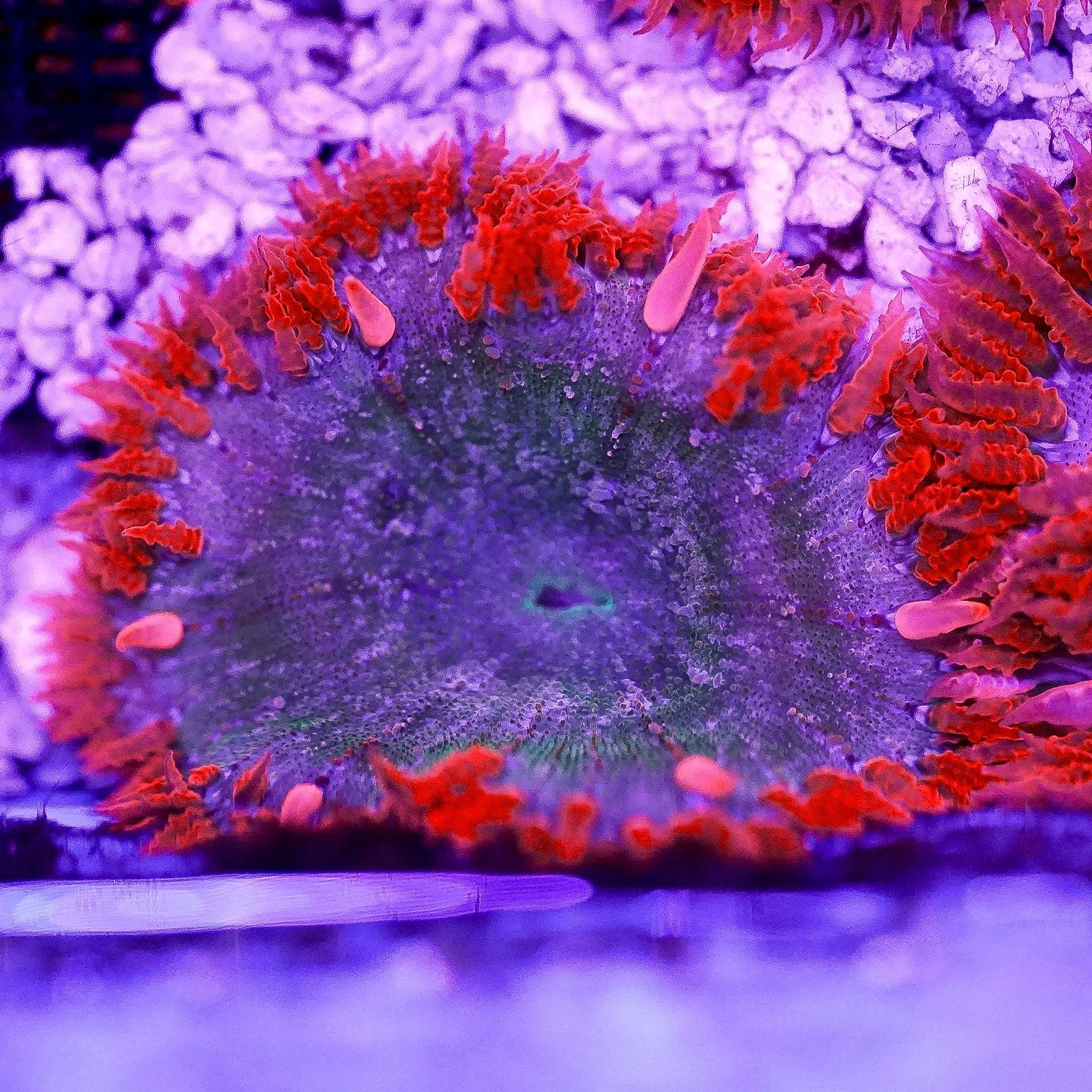

Best Tank Mates for Rock Flower Anemone in a Reef Aquarium
A rock flower anemone (RFA) is one of the few anemones that plays well with a mixed reef, mostly because it stays put once it settles in. The real compatibility question isn't whether it will sting your fish — it's whether it will sting, or get stung by, whatever coral or anemone ends up too close to its tentacles. This guide breaks down which fish, invertebrates, and corals actually work alongside an RFA, and how to place one so conflicts never get the chance to start.
What Is a Rock Flower Anemone?
Rock flower anemones are commonly sold under the name Phymanthus crucifer, though the trade also uses other genus names such as Ragactis or Epicystis depending on where the animal was collected — the common name "rock flower anemone" is the safer, more consistent way to shop for one, since exact taxonomy varies by supplier. They're native to the Caribbean and western Atlantic, found from shallow water down to roughly 100 feet.
Key identifying traits:
- Oral disc size: 3–6 inches (7.5–15 cm) across
- Color morphs: tan, green, orange, red, and mixed "rainbow" patterns
- Reputation: widely considered one of the hardiest, most beginner-friendly anemones — a better first anemone than a bubble-tip (BTA) or carpet anemone
Unlike BTAs, which wander the tank looking for a preferred light and flow spot, an RFA anchors its pedal disc into a rock crevice near the substrate and generally stays there for good.
Ideal Tank Setup & Parameters
RFAs don't need a large, mature reef system to thrive. A nano tank of 10 gallons (38 L) or more is enough, which is a major reason they're recommended over carpet anemones, which really do need bigger systems.
| Parameter | Target Range |
|---|---|
| Tank size | 10+ gal (38+ L) |
| Salinity | 1.025–1.026 SG |
| Temperature | 76–80°F (24–27°C) |
| Calcium | 420–450 ppm |
| Alkalinity | 8–11 dKH |
| Magnesium | 1300–1350 ppm |
| Lighting (PAR) | ~100–200 |
| Flow | Low to moderate, indirect |
Stability matters more than hitting an exact number on any single parameter — an RFA tolerates minor swings reasonably well but declines steadily under chronic neglect. Color intensifies under actinic-heavy lighting, which is part of why the brighter morphs look so vivid in photos.
Flow deserves special attention. Strong, direct current keeps an RFA from ever securing its foot, so it tumbles around the tank and risks getting pulled into a pump intake or overflow. Keep flow gentle and indirect, especially in the first couple of weeks after adding one.
Acclimation
Anemones are more sensitive to sudden salinity or pH shifts than most fish. Drip acclimate a new RFA over 30–60 minutes rather than doing a quick bag-and-dump. Rushing this step is a common cause of prolonged tentacle closure or foot detachment in the days after introduction.
Best Fish Tank Mates
Most peaceful reef fish coexist with an RFA without issue, since the anemone doesn't roam and its sting is mild by anemone standards. Good options include:
- Clownfish — won't reliably host an RFA, but coexist fine
- Gobies and blennies
- Firefish and dartfish
- Cardinalfish
- Small wrasses (fairy and flasher types)
- Tangs
- Chromis
Fish to Avoid
- Butterflyfish, especially copperband and raccoon types, which are known to pick at anemone flesh
- Large or aggressive angelfish
- Triggerfish and puffers
- Larger wrasses that peck at invertebrates
- Any fish with a documented habit of nipping anemone tentacles
Browse peaceful options like wrasses that are generally safe to pair with an RFA-stocked reef.
Best Invertebrate Tank Mates
Shrimp and snails round out a cleanup crew without threatening the anemone:
- Peppermint shrimp
- Cleaner shrimp (skunk and fire varieties)
- Sexy shrimp, which sometimes perch directly in the tentacles
- Snails — nassarius, nerite, and cerith all work well
- Small hermit crab species
Shrimp make an especially good match — you can find marine shrimp options bred for reef tanks that won't bother a settled RFA.
Invertebrates to Avoid
- Arrow crabs — known to pick at and even eat anemones
- Larger hermit or crab species that may pinch the anemone or physically topple it while foraging
One scenario that rarely gets mentioned: hermit crabs hunting for a new shell can bump into or dislodge an RFA that's anchored nearby, even if that crab species is otherwise considered "reef safe." Give hermits room to move without climbing directly over the anemone's rock.
Coral & Anemone Compatibility
An RFA's sting is mild toward fish, but it's genuinely capable of damaging or killing sessile invertebrates it contacts — soft corals, LPS, zoanthids, and other anemone species. The anemone itself can also be stung or killed by more aggressive corals, so compatibility runs both directions.
Buffer distance: start with roughly a fist's width — about 4–6 inches (10–15 cm) — between an RFA and its nearest coral neighbor. Because RFAs can extend both feeding tentacles and mesenterial filaments well beyond their visible body, watch for tentacle extension at night and increase spacing if you see it reaching toward a neighbor.
If you're adding an RFA to a tank where aggressive corals already hold territory, place the anemone first in an open area and let it settle for a week or two before introducing anything that might later encroach on that spot — retrofitting spacing around an anemone that's already anchored is much harder than planning around it from the start.
Feeding Schedule
RFAs get part of their energy from photosynthesis through zooxanthellae, but they still need supplemental meaty food to stay healthy long-term:
- Foods: mysis shrimp, brine shrimp, small pieces of silverside or shrimp
- Frequency: 1–2 times per week
- Method: target-feed with a turkey baster or feeding stick directly onto the oral disc
Skipping target feeding on the assumption that light alone will sustain the animal is one of the most common mistakes keepers make — it doesn't cause immediate problems, but it shows up as slow shrinking or bleaching over months.
Placement & Aquascaping Tips
- Place the RFA low in the rockwork, near the substrate rather than high up — this matches its natural habitat and automatically distances it from corals mounted higher in the tank.
- Reduce flow initially so the anemone can locate a crevice and lock its foot in before current picks back up.
- Never position an RFA where a powerhead or overflow could pull it in if it comes loose.
- Once settled, RFAs are non-nomadic. If one seems to have "vanished," check the rockwork immediately around where it was placed rather than searching elsewhere in the tank — it almost certainly hasn't moved.
Health Signs to Watch For
| Sign | Likely Meaning |
|---|---|
| Gaping mouth | Stress, overfeeding, or poor water quality |
| Tentacle retraction | Recent parameter swing, flow too strong, or lighting shock |
| Foot detachment or dissolving | Serious stress; check parameters and flow immediately |
| Bleaching or pale color | Insufficient feeding or lighting issue |
| Deflated, flattened look | General decline — often a combination of weak flow and inadequate feeding |
Reproduction and Colonies
RFAs reproduce asexually through splitting or budding, gradually forming small colonies of genetically identical individuals. This makes them one of the few anemones reasonably suited to keeping in groups — they tolerate each other's presence far better than BTAs or carpet anemones do. Still, give newly split or newly added RFAs some initial spacing to confirm they tolerate direct contact before letting a colony grow tight.
Manual fragging is difficult and carries a real risk of injury or infection to the animal; it's best left to experienced keepers rather than attempted on a whim.
RFA vs. Bubble-Tip and Carpet Anemones
| Trait | Rock Flower Anemone | Bubble-Tip Anemone | Carpet Anemone |
|---|---|---|---|
| Movement | Stays anchored once settled | Roams to find preferred spot | Can roam, especially early on |
| Minimum tank size | 10 gal (38 L) | 20–30 gal (76–114 L) | 50+ gal (190+ L) |
| Sting strength | Mild | Moderate | Strong |
| Clownfish hosting | Rare, inconsistent | Common | Common |
| Beginner suitability | High | Moderate | Low |
A Simple Decision Checklist
For any species not covered above, run it through these questions before adding it to an RFA tank:
- Is it a known nipper? Fish that pick at coral polyps or anemone flesh (many butterflyfish) are a hard pass.
- Is it a grazer that ignores sessile inverts? Algae-grazing fish and snails are generally safe.
- Is it a known anemone-eater or picker? Arrow crabs and some larger crab species fall here — avoid.
- Could it physically topple or displace the anemone? Large, digging, or shell-hunting crustaceans need extra distance even if they won't eat it.
- Is it large or aggressive enough to bully tank mates generally? Triggers, puffers, and large angelfish are risky for reasons beyond the anemone itself.
Frequently Asked Questions
Will a rock flower anemone host my clownfish?
Usually not. RFAs aren't a natural host species for clownfish, and while occasional hosting gets reported anecdotally, you shouldn't buy one expecting your clownfish to adopt it.
Do rock flower anemones move around the tank?
Rarely, once they've settled into a spot. Unlike bubble-tip or carpet anemones, RFAs anchor their pedal disc into a rock crevice and tend to stay anchored there indefinitely.
Are rock flower anemones reef safe with corals?
Mostly, but only with proper spacing. Their sting can damage neighboring soft corals, LPS, zoanthids, and other anemones if tentacles or mesenterial filaments make contact.
What fish should I avoid with a rock flower anemone?
Butterflyfish and other species known to pick at anemone flesh are the main risk, along with aggressive crustaceans like arrow crabs that may attack the anemone directly.
Can I keep shrimp with a rock flower anemone?
Yes. Peppermint and cleaner shrimp are generally compatible, and sexy shrimp will sometimes perch directly in the tentacles without harm.
How often do I need to feed it?
About once or twice a week with small meaty foods such as mysis or brine shrimp, in addition to whatever energy it captures through photosynthesis.
Is the sting dangerous to me or my fish?
It's mild compared to other anemones and generally not dangerous to fish, but it can still irritate human skin on contact and can genuinely harm sessile invertebrates it touches.
Can I keep more than one rock flower anemone together?
Yes — RFAs tolerate colony living better than most anemone species and can even reproduce by splitting into small colonies. Still give newly added individuals some initial spacing to confirm they tolerate direct contact.
Ready to add a rock flower anemone to your setup? You can browse current stock in the anemone category on FishyHub and plan your tank mates around the compatibility notes above before you buy.


