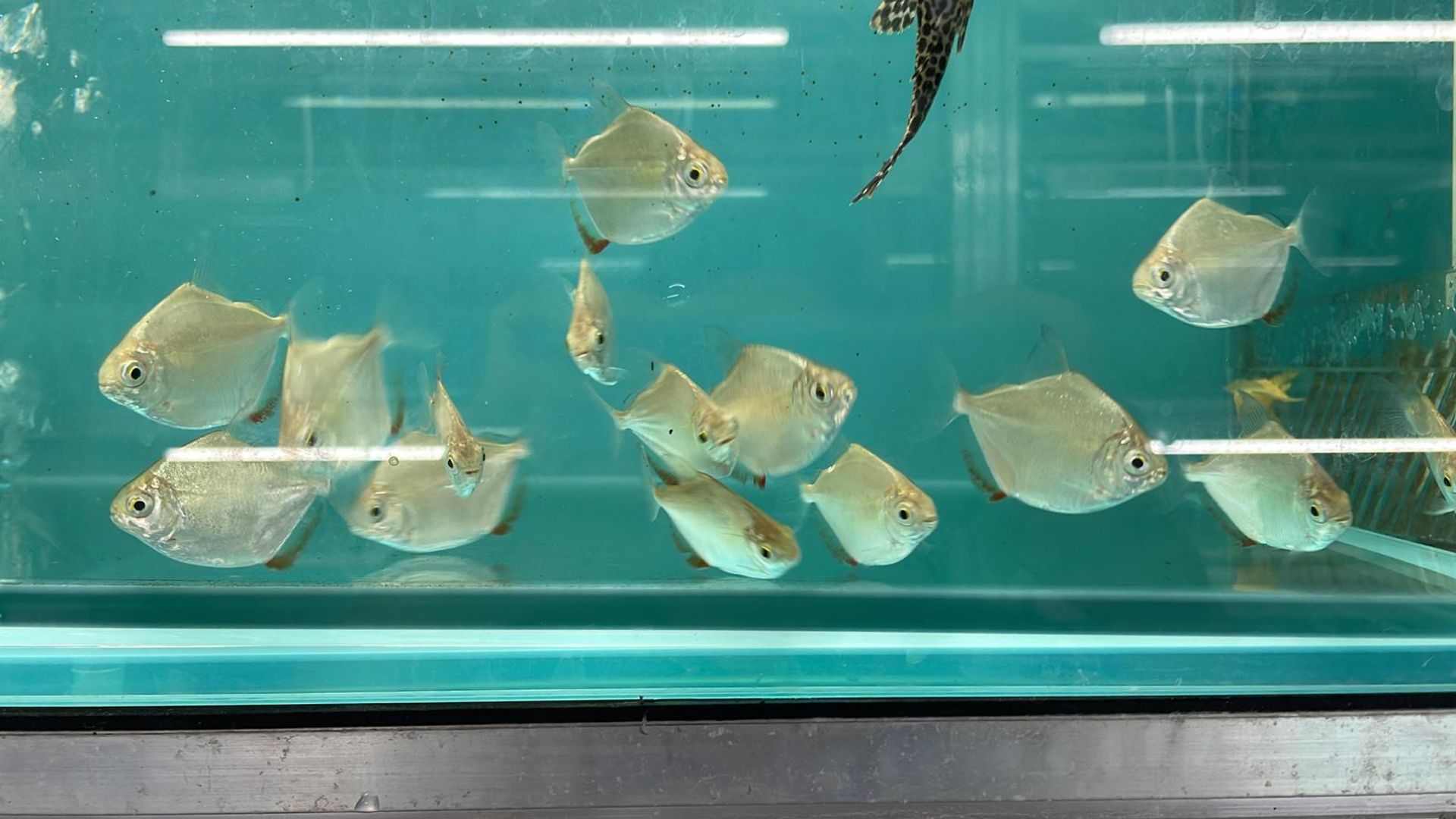
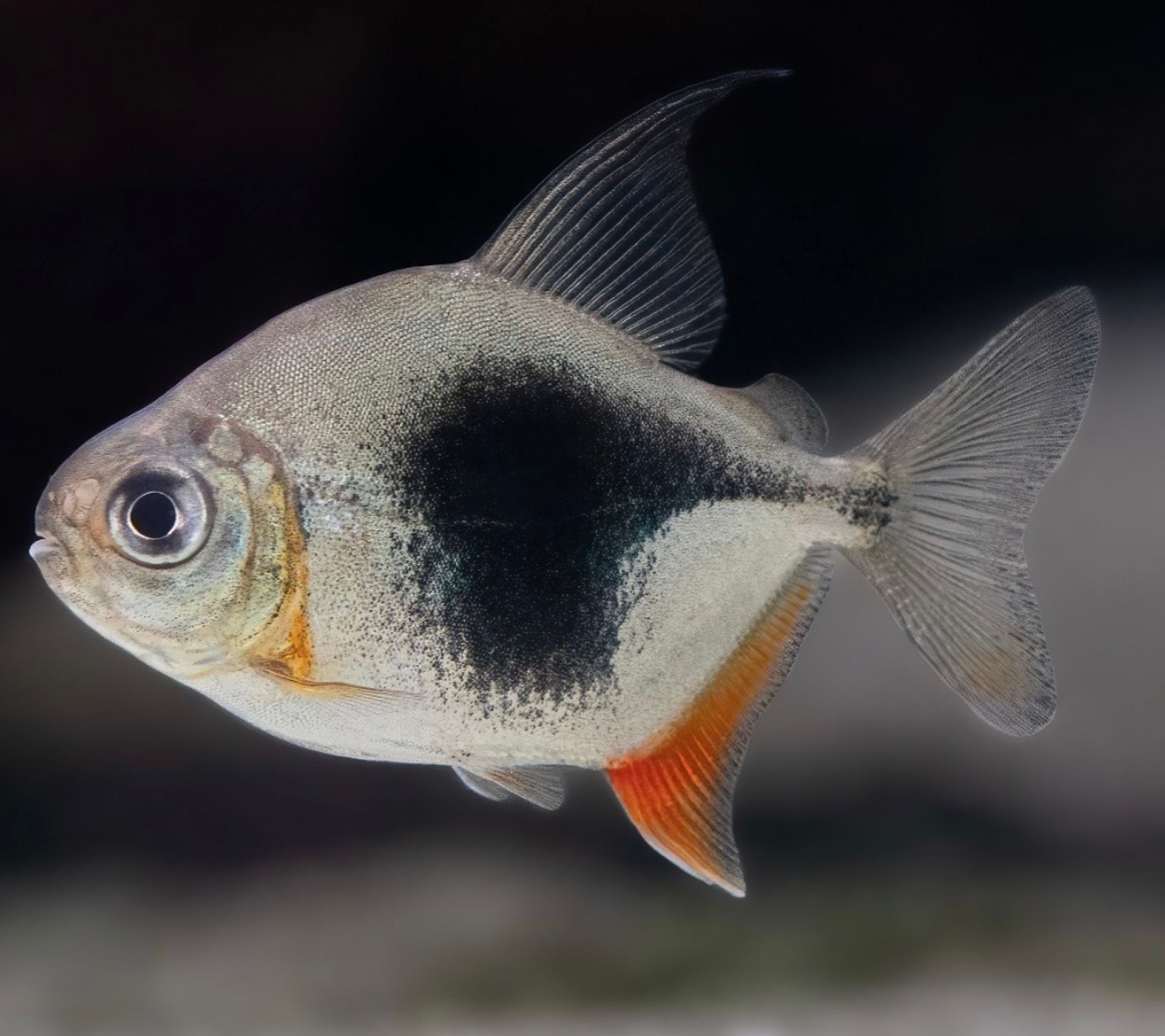
Tankmates: Good dither fish for large South American cichlids, geophagus, larger catfish and Prochilodus. Small tetras may be eaten by large hook silver dollars; avoid aggressive fin-nippers.
Feeding: Mainly vegetable diet; they will eat almost any aquarium plant.
1–0 of 0
Silver dollars are round, coin-shaped South American fish that swim in tight, glittering shoals. In Malaysia they are a popular choice for large tanks, and a classic companion fish in arowana and big cichlid setups, where their size keeps them safe and their constant movement helps "dither" shy fish into the open.
They are peaceful, hardy and easy to feed, but they grow bigger than most buyers expect and they love eating plants. FishyHub lists silver dollars from Malaysian sellers, with photos, sizes and prices in RM on each listing so you can compare before you buy.
Most fish sold as "silver dollar" are Metynnis species. They reach about 12–15 cm, have a bright silver body and are the easiest to find.
A Metynnis with fine dark spots on the flanks. Care is the same as the common silver dollar, and a mixed shoal of spotted and plain fish looks good in a long tank.
Named for the red, hook-shaped anal fin on males. Red hooks (Myloplus) grow noticeably larger than Metynnis, so plan for a 5- or 6-foot tank if you want to keep a group to adulthood.
You may see less common relatives listed from time to time. Some larger relatives in the same family are prohibited in Malaysia, so check the scientific name on any unusual listing and only buy from sellers who follow Department of Fisheries (DOF) Malaysia rules.
| Care point | Silver dollars |
|---|---|
| Temperature | 24–28°C. Fine at Malaysian room temperature (26–31°C) with good aeration on hot days. |
| Adult size | About 12–15 cm for Metynnis; red hooks larger |
| Minimum tank | 4 kaki (120 cm, about 230–270 L) for a shoal of 5–6; 5–6 kaki for red hooks |
| Group size | 5 or more. Single fish are nervous and hide. |
| Temperament | Peaceful; may eat very small fish and shrimp |
| Diet | Mostly plant-based: pellets with spirulina, blanched vegetables, plus some protein |
| Beginner-friendly? | Yes, if you have the tank space |
Almost certainly. Silver dollars graze on soft pokok akuarium and can strip a planted tank in days. Tough or bitter plants such as Java fern, Anubias and Bolbitis tied to wood have the best chance. Many keepers simply go with kayu akuarium (driftwood), batu akuarium and open swimming space.
Avoid neon-sized fish and small shrimp, which can be eaten as the silver dollars grow.
Silver dollars panic and jump when startled, so use a tight lid. They like moderate flow and strong filtration, since a shoal of large fish produces a lot of waste.
Heat isn't the worry with silver dollars; oxygen is. A big shoal in a 4-foot tank uses a lot of it, and warm water holds less. On hot afternoons, keep the surface moving with a filter outlet or a pam udara. If your area has frequent power cuts, keep a battery air pump on hand for large tanks.
Use anti klorin on every water change, as Malaysian tap water is chlorinated. Silver dollars are tolerant of soft tap water, which suits them well.
Finally, silver dollars live for many years and get big. If you can no longer keep them, give them to another hobbyist or seller. Jangan lepaskan ikan ke sungai: releasing them harms local waterways and several states now ban releasing foreign fish without permission.
Prices are in RM, and they mainly depend on species and size. Common Metynnis are affordable, so buying a full group at once is realistic, while red hooks and larger fish cost more. On each listing, check:
Look for fish with full, rounded bodies, clear fins and no white spots, and avoid fish that look pinched behind the head.
Ya. Ikan silver dollar suka makan pokok akuarium yang lembut. Jika mahu letak pokok, pilih jenis yang keras seperti Java fern atau Anubias, dan beri makanan berasaskan sayur setiap hari.
Untuk satu kumpulan lima hingga enam ekor, sekurang-kurangnya akuarium 4 kaki. Red hook silver dollar membesar lebih besar, jadi akuarium 5 atau 6 kaki lebih sesuai.
Often, yes. They are a common arowana tankmate, but they must be large enough not to be swallowed, and the tank must be big enough for both.
At least five. They feel secure in a shoal and show more natural behaviour.
Compare silver dollars from Malaysian sellers by size and price in RM, and build the shoal your big tank deserves. Planning an arowana or monster tank? Browse our Bichir and Pleco categories for bottom dwellers that share the space well.
No products found