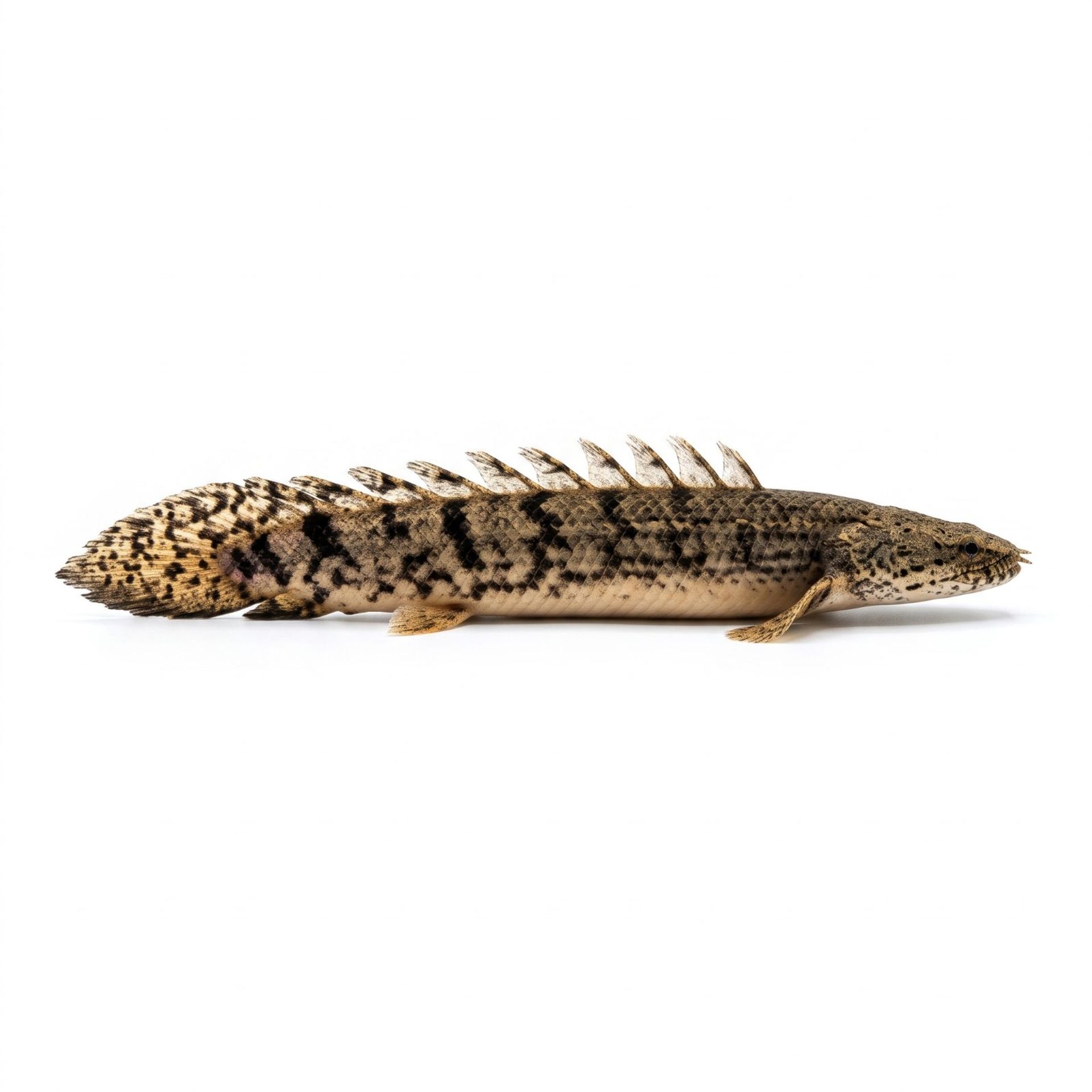
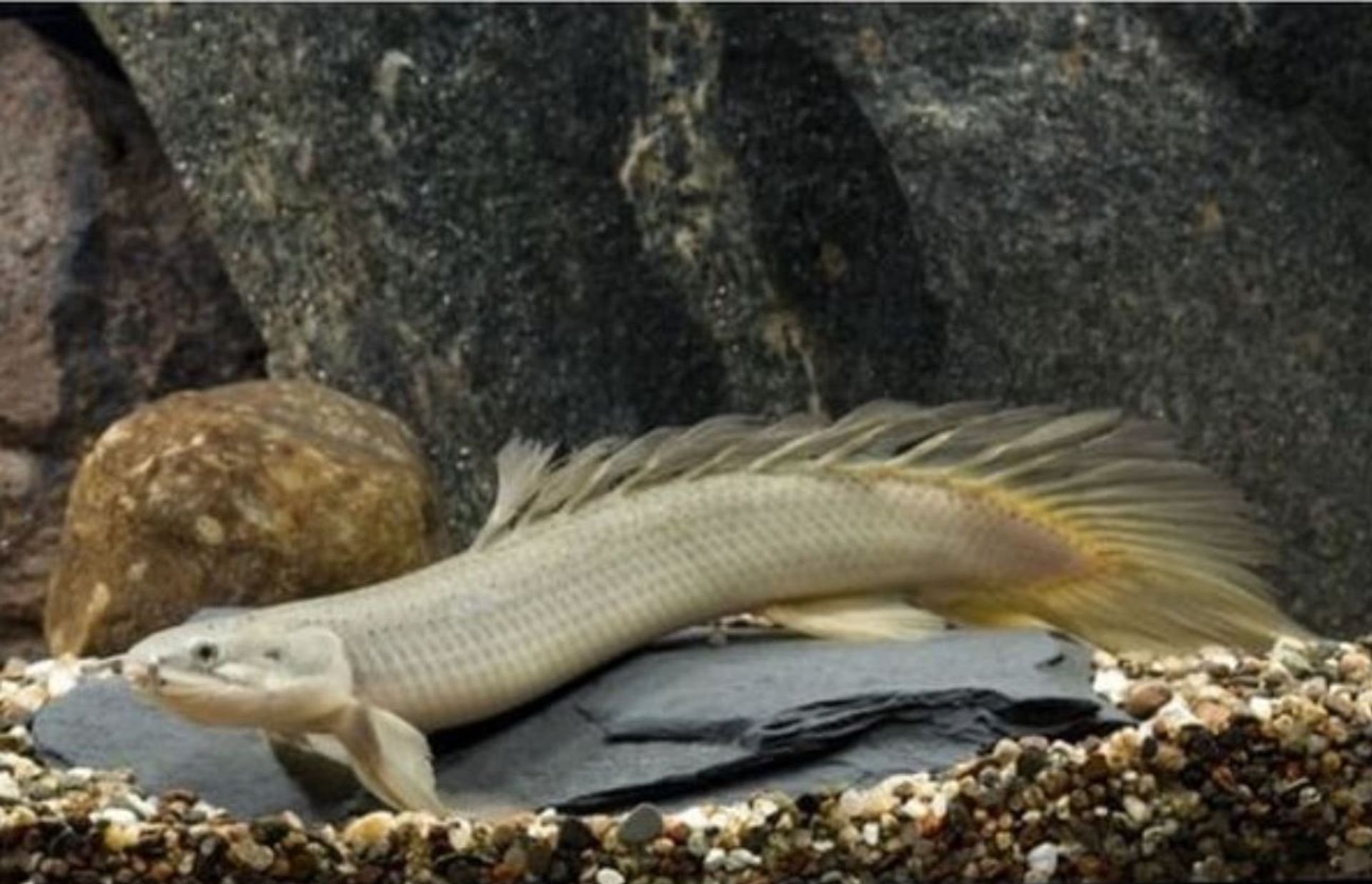
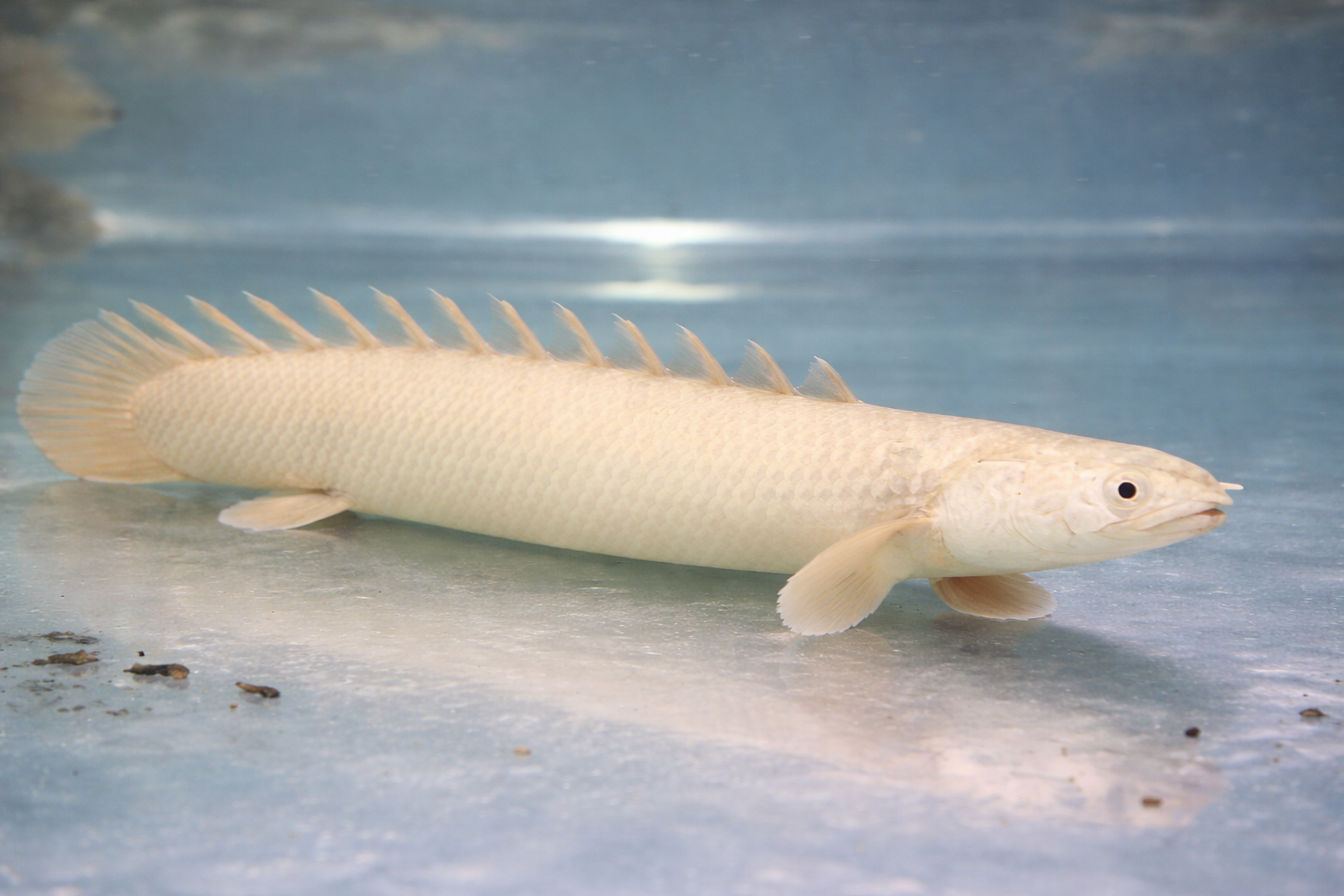
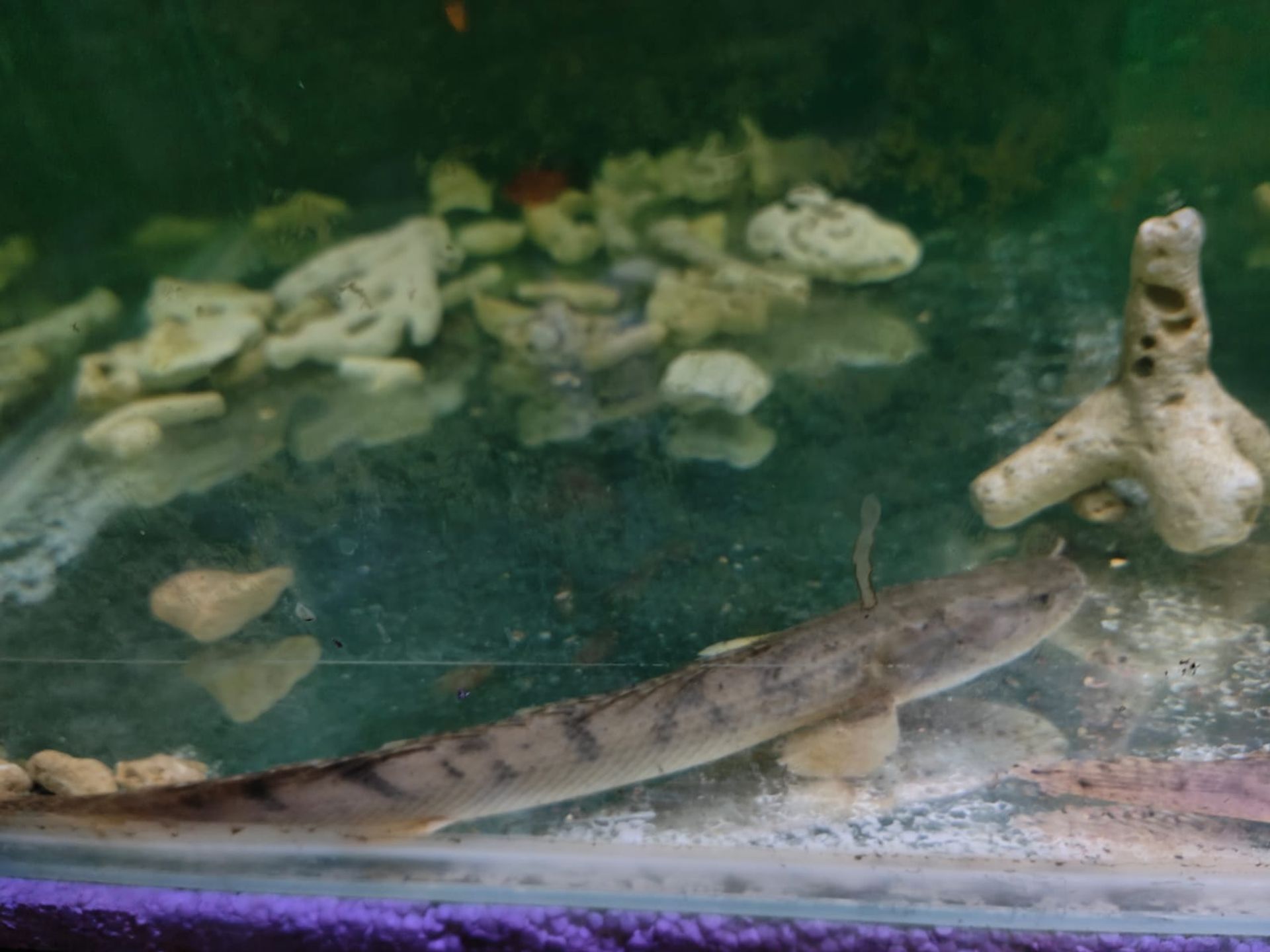
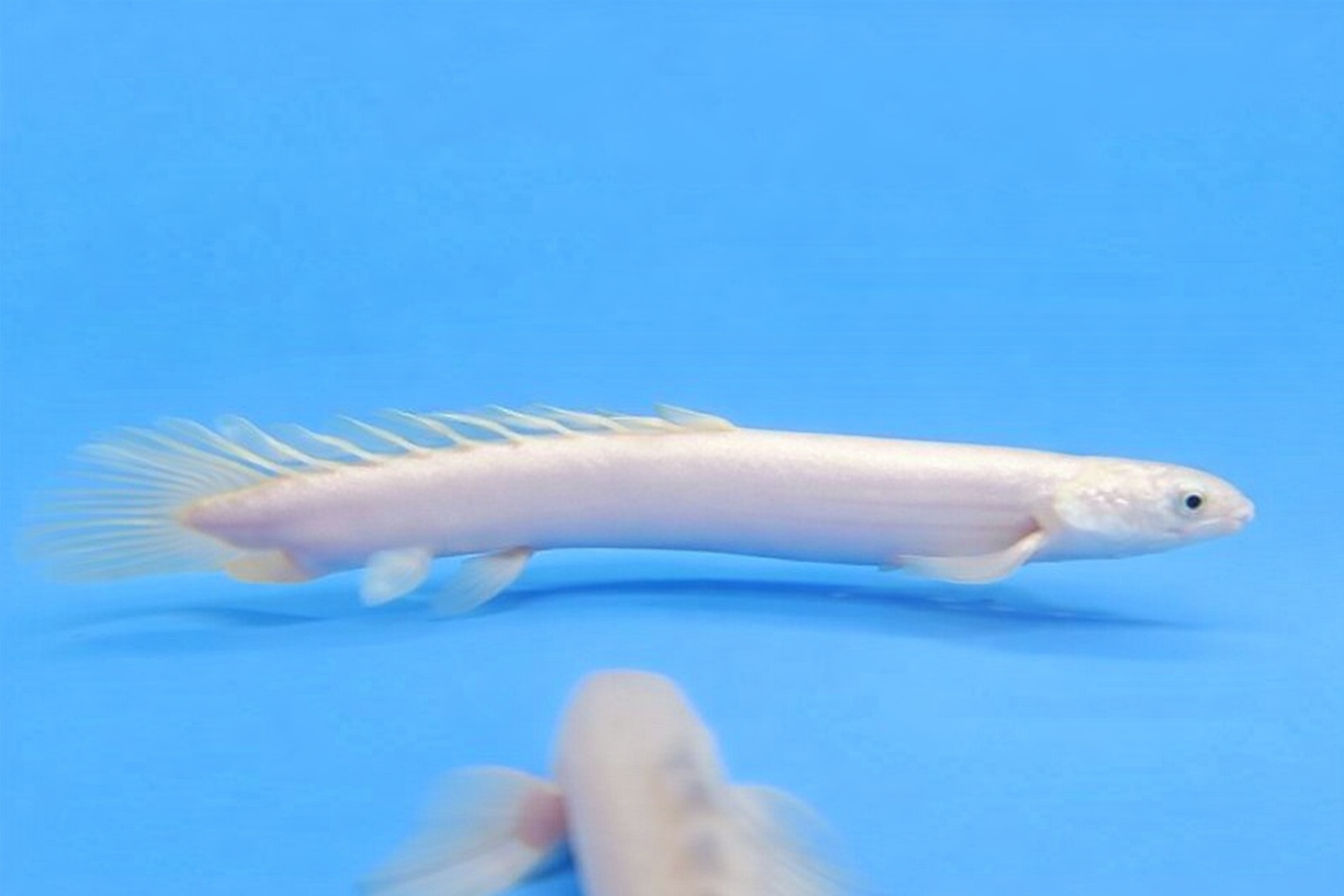
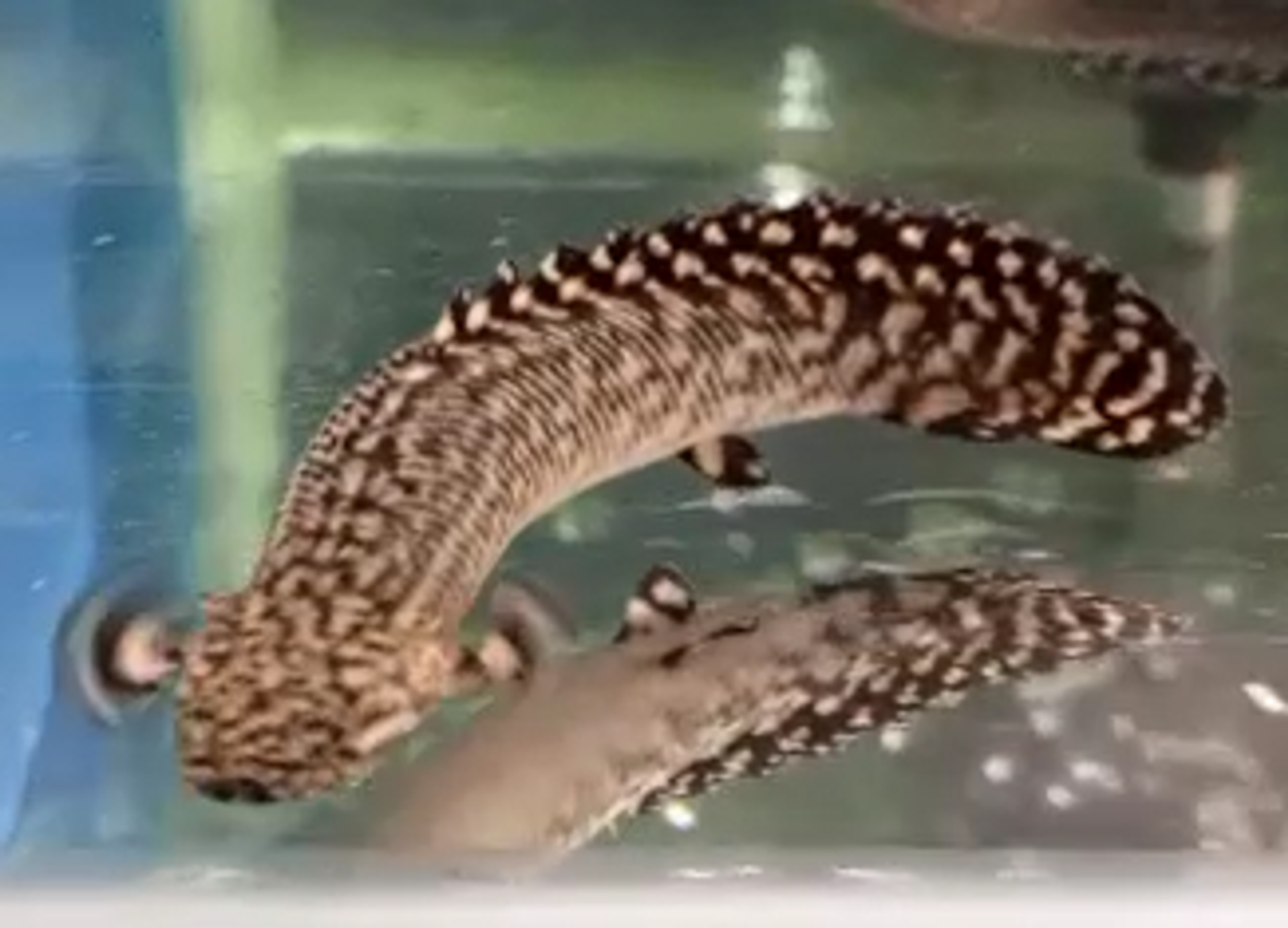
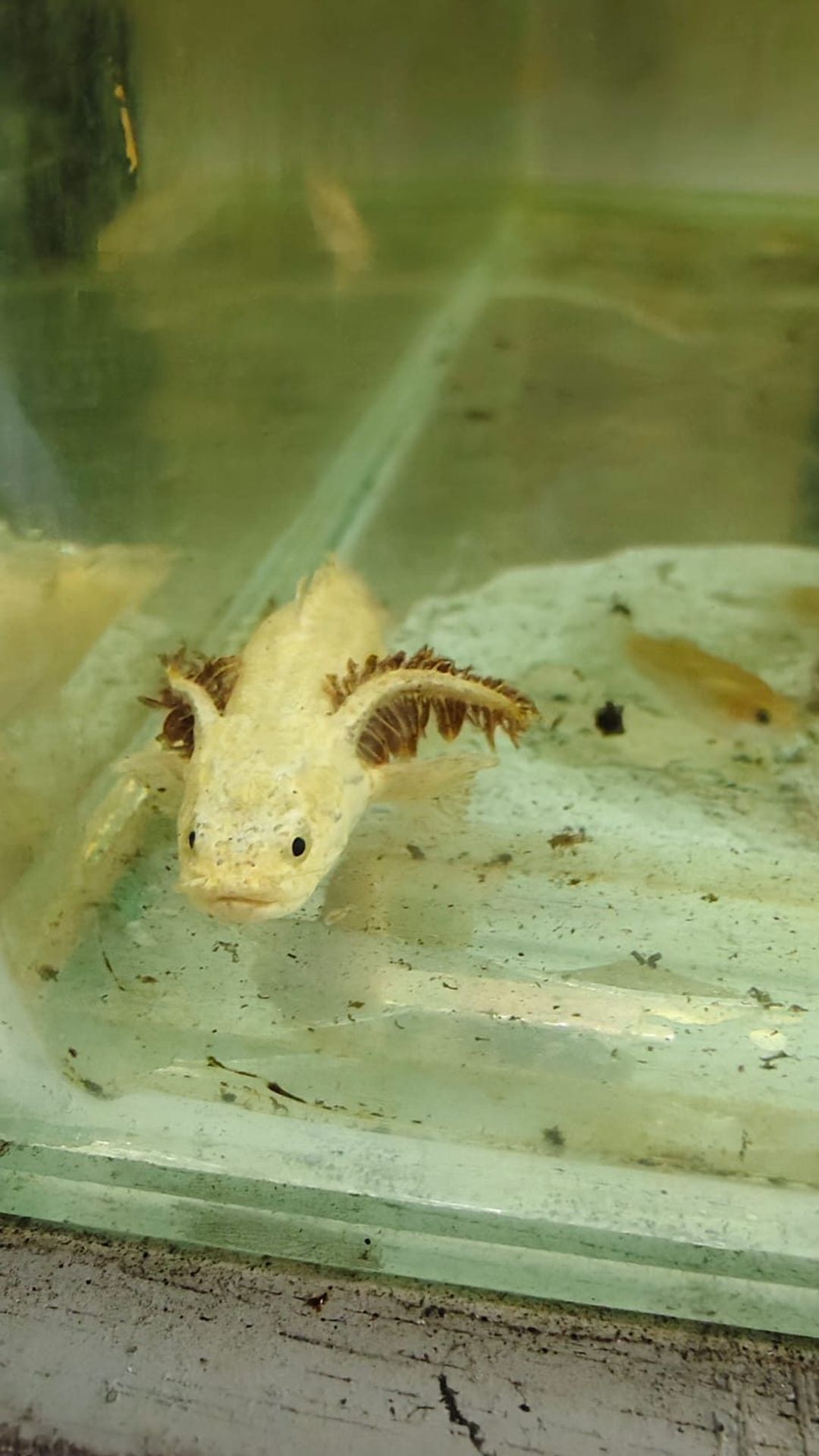
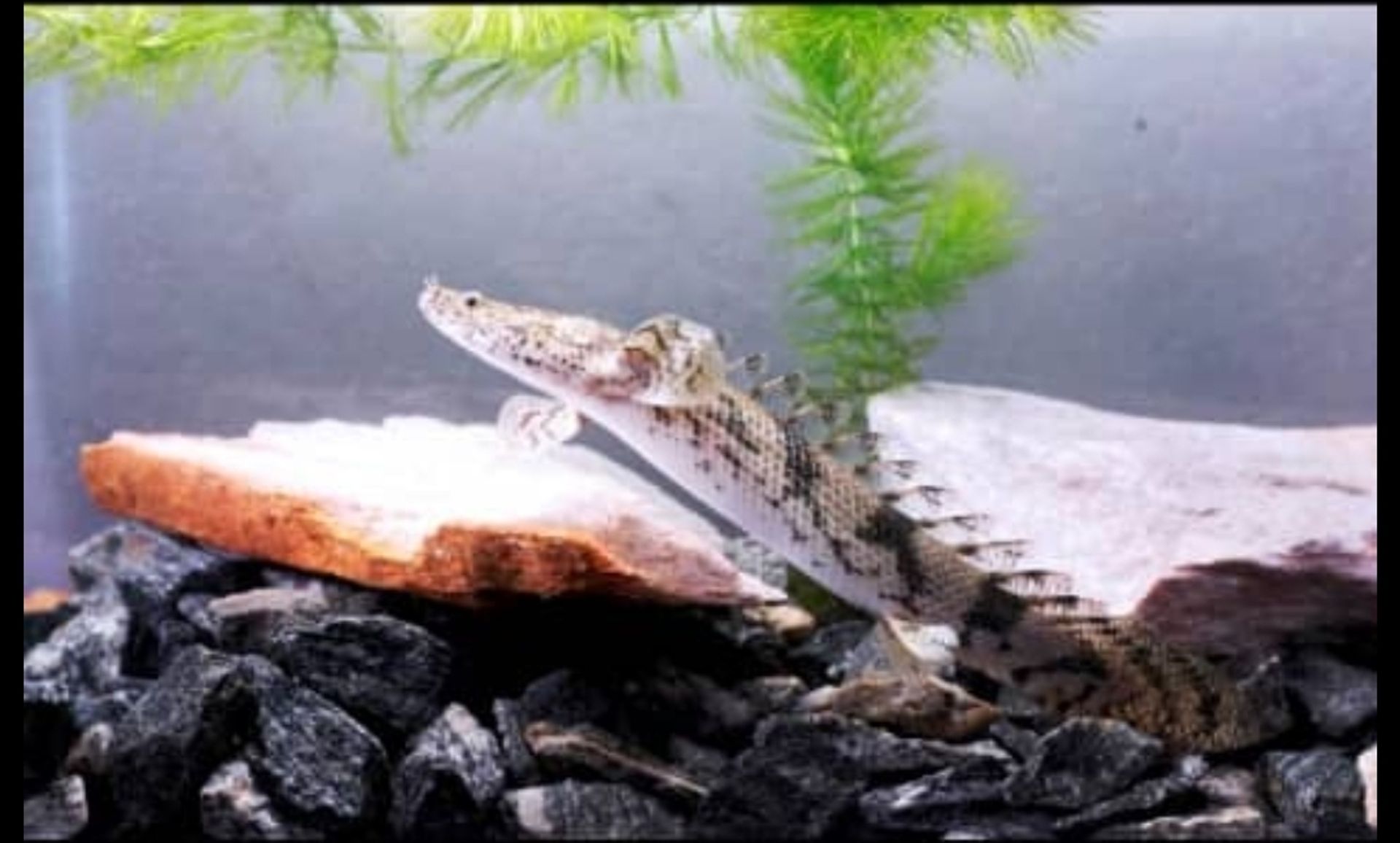
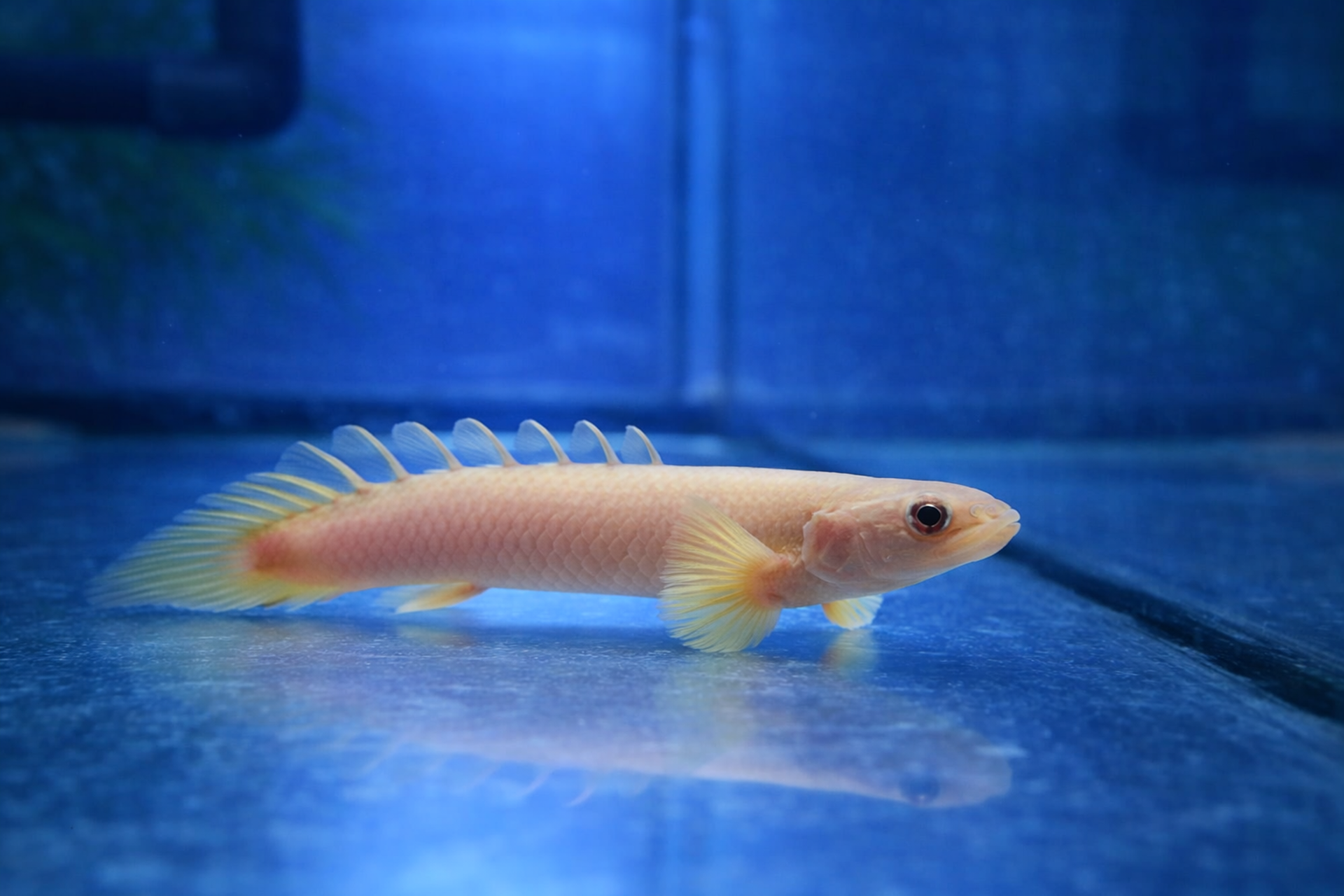
A prehistoric predator draped in broken bands, breathing air from a Congo river.
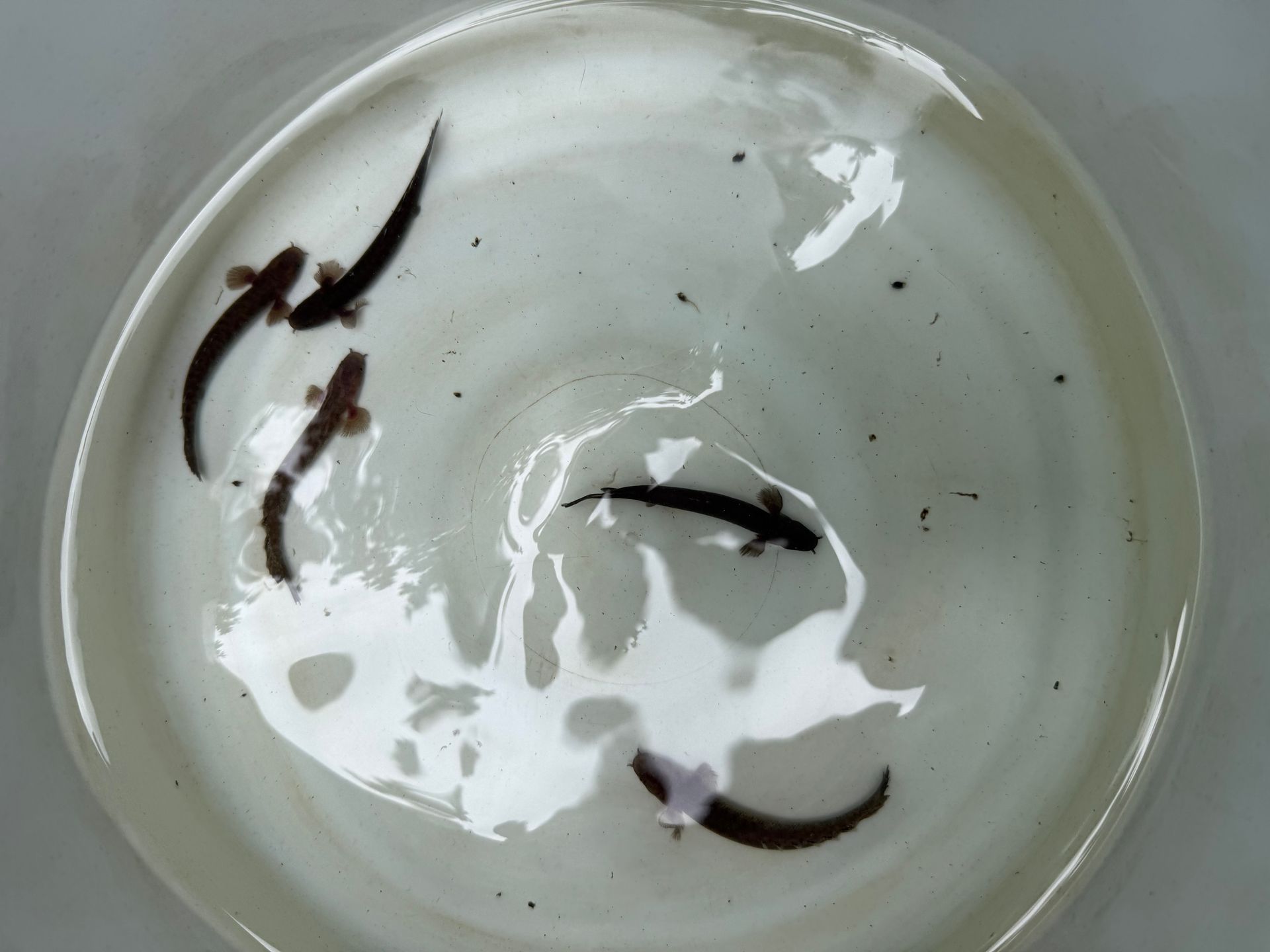
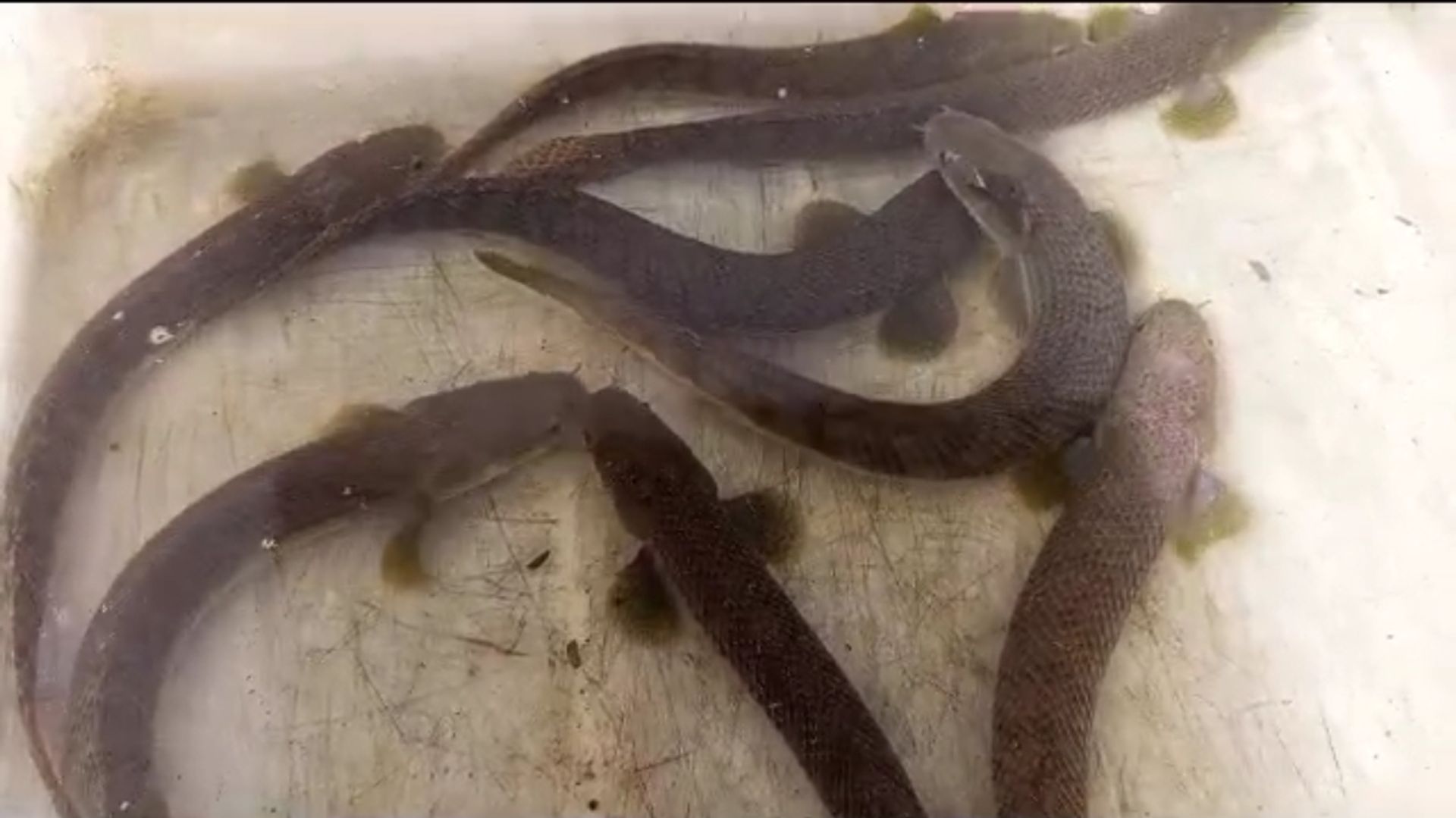
Buy Polypterus delhezi (Delhez's bichir) at 3 inch — a hardy, prehistoric-looking armoured bichir for peaceful predator tanks. Care guide included.
- Water conditions: Polypterus delhezi is a hardy West African armoured bichir, but it still needs stable, clean water. Aim for a temperature of 24–28°C (75–82°F), pH 6.5–7.8, and general hardness around 3–15 dGH. Keep ammonia and nitrite at zero and nitrate below 20–40 ppm with regular maintenance. Provide moderate filtration with gentle to moderate flow rather than a blasting current, and use a fine sand or smooth gravel substrate to protect the underside of this bottom-dwelling fish. Delhez's bichir is nocturnal and crepuscular, so dim lighting, floating plants, caves, driftwood, and PVC pipes will help it feel secure. It can breathe atmospheric air, so leave a small air gap above the water — but the lid must be tightly fitted and weighted because bichirs are notorious escape artists. A 3 inch juvenile can start in a 29–40 gallon grow-out tank, but plan for a 55–75 gallon tank with a 4 ft footprint or larger for the adult, which can reach around 12–14 inches. Perform 25–30% weekly water changes, vacuum the substrate, and avoid sharp decorations that could abrade the fish.
- Suitable tank mates: Choose tank mates that are peaceful, robust, and too large to be swallowed. Good options include medium to large tetras such as Congo tetras and Buenos Aires tetras, medium rainbowfish, larger rasboras, peaceful cichlids like keyhole cichlids, larger gouramis, and Synodontis catfish. Other bichirs of similar size can be kept together in a spacious, well-structured tank, but provide plenty of hiding places and watch feeding time carefully. Avoid small fish such as guppies, neon tetras, danios, and small rasboras — they may become a nighttime snack as the bichir grows. Also avoid aggressive fin nippers, boisterous cichlids, pufferfish, crabs, crayfish, and shrimp, which can either harass the bichir or be eaten by it. Snails may be eaten. Because Polypterus delhezi is predatory and has a large mouth relative to its body size, always research adult sizes before mixing species. Keep the tank well covered; bichirs can climb out through surprising gaps.
- Feeding habits: Polypterus delhezi is carnivorous. At 3 inches, offer small, meaty foods such as frozen or live bloodworm, brine shrimp, daphnia, chopped prawn, earthworm pieces, and small sinking pellets. As it grows, move to larger pellets, prawn, mussel, whitebait, fish flesh, insect larvae, and earthworms. Feed juveniles once or twice daily in small amounts; adults can be fed three to five times per week. Bichirs are nocturnal and rely heavily on smell, so feed after lights out or during dim periods, and use tongs or target feeding to ensure food reaches the fish. Soak dry pellets briefly to soften them. Avoid live feeder fish because of disease risk, and remove uneaten food promptly to protect water quality. Bichirs are gluttonous and can overeat, so portion control matters. A varied diet with a good staple pellet helps prevent nutritional gaps. If the fish is shy at first, offer food near its hiding place and gradually train it to accept pellets.
- Care requirements: The single most important care point is an escape-proof lid. Polypterus delhezi can push through small gaps, so use a tight-fitting lid with weights or clips and secure filter and cable openings. It needs access to the water surface for atmospheric breathing, but the gap must not be large enough to escape. Acclimatise new arrivals carefully, preferably with drip acclimation, and quarantine before adding to a display tank. Keep up weekly 25–30% water changes, monitor nitrate, and avoid overfeeding. Provide smooth caves, driftwood, and dense planting; bichirs may uproot delicate plants, so choose weighted or potted plants. Handle with a container rather than a net where possible, as netting can stress or damage the fish. Use medications cautiously and follow manufacturer guidance, especially in tanks with sensitive bottom-dwellers. Plan for adult size: 3 inch juveniles grow steadily, and a 12–14 inch adult needs a large, secure aquarium with a substantial footprint. With stable water, a secure lid, and appropriate tank mates, Delhez's bichir is a long-lived, fascinating centrepiece for a peaceful predator community.