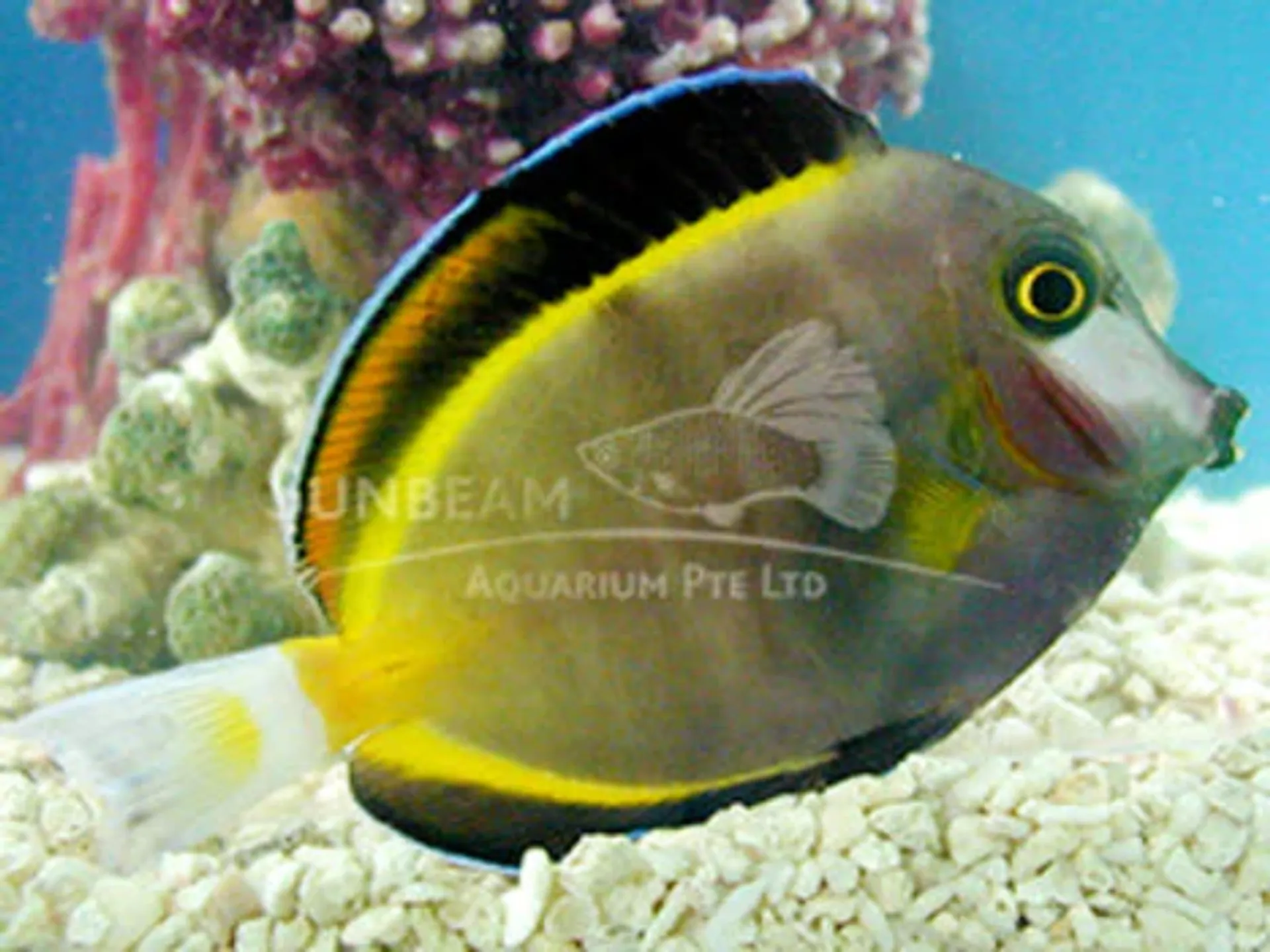
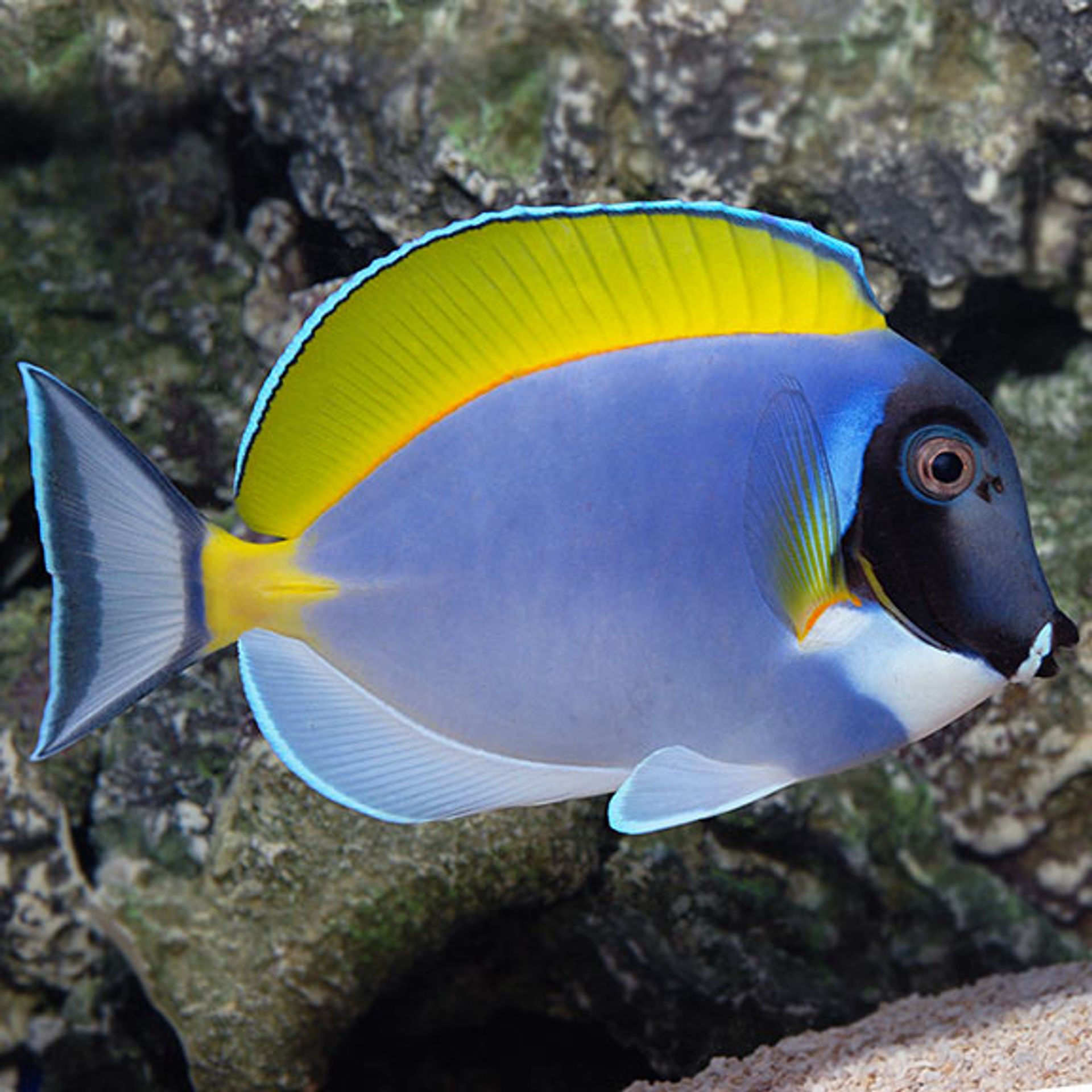
Tankmates: Reef safe with corals and invertebrates. Main conflicts are with other tangs and similar herbivores; Naso and Sohal tangs can be very aggressive and may eat macroalgae.
Feeding: Primarily herbivorous grazers (Ctenochaetus detritus/film feeders; Paracanthurus and some Naso more planktivorous). A diet lacking marine algae is linked to HLLE and poor immunity.
1–0 of 0
Tangs bring constant movement to a saltwater tank. They swim the full length of the aquarium all day and graze algae off the rock as they go. The Yellow Tang and the Blue Tang (the "Dory" fish) are two of the most recognised marine fish anywhere. On FishyHub you can browse tangs and surgeonfish from marine shops and reef sellers around Malaysia, compare sizes, and see prices in RM.
They are called surgeonfish because of a sharp, blade-like spine on each side of the tail base. Handle them with care. Use a container rather than a net where possible, because the spine snags easily in netting.
Bright yellow, disc-shaped and hardy once settled. A popular first tang for a 4-foot reef tank.
Smaller bristletooth tangs that scrape films and diatoms off rock and glass. They are often chosen for mid-sized reef tanks where a big tang would feel cramped.
Vivid blue with a yellow tail. Blue tangs grow larger than many buyers expect and need a long tank as adults. They can be shy at first and hide in the rockwork.
Tall dorsal and anal fins give a dramatic shape. Sailfins are hardy grazers but become big fish.
Stunning but more demanding. These need excellent water quality, high oxygen and a well-established system. They are better suited to experienced reefers.
A large, powerful open-water swimmer. Nasos are only suitable for very large aquariums.
| Species group | Minimum tank (adult) | Temperament | Beginner? |
|---|---|---|---|
| Kole, Tomini | 4 kaki (120 cm, about 230–270 L) | Fairly peaceful | Yes, for a stable reef |
| Yellow Tang | 4 kaki (120 cm, about 230–270 L) | Semi-aggressive with other tangs | Yes, for a stable reef |
| Blue, Sailfin, Powder Blue | 5–6 kaki (150–180 cm; 6 kaki is about 550–650 L) | Semi-aggressive | Intermediate |
| Naso, Achilles | 6 kaki or larger (about 550–650 L+) | Semi-aggressive | Experienced keepers |
All tangs prefer roughly 24–27°C and stable salinity. Their diet should be mostly plant-based: dried seaweed (nori) on a clip, algae-based pellets and frozen foods, offered more than once a day. They are generally reef safe and don't eat corals.
With room temperatures of 26–31°C, a reef tank in Malaysia almost always needs a chiller. A fan alone rarely brings a marine tank low enough during hot spells. Tangs are high-oxygen fish, and warm water holds less oxygen, so keep strong flow and surface movement, and have a battery air pump ready for power cuts.
Use RO water for mixing salt and topping up. Chlorinated air paip isn't suitable for a reef. Tangs are known for picking up white spot (marine ich) when stressed, so quarantine and good nutrition matter more than with most fish. Keep the tank away from windows. Direct sunlight both heats the water and fuels algae.
Stock tangs carefully. Fish with the same body shape fight. If you want more than one, add different shapes at the same time, and only in a tank big enough to give each its own territory.
Kebanyakan ikan tang makan alga. Beri rumpai laut kering (nori) menggunakan klip, pelet berasaskan alga dan makanan sejuk beku, sedikit demi sedikit beberapa kali sehari.
Tidak digalakkan untuk jangka panjang. Ikan tang sangat aktif berenang. Akuarium 4 kaki ialah saiz minimum untuk Yellow Tang atau Kole Tang, dan spesies besar perlukan akuarium lebih panjang.
Most commonly kept tangs are reef safe. They graze algae rather than eat corals, though individual fish may occasionally pick at things.
Often yes in a large tank (5–6 feet or more), because their shapes differ. Add them together or add the less aggressive fish first, and watch closely for the first weeks.
They help with some types of hair algae and films, but they don't replace good nutrient control, RO water and regular maintenance.
Browse Yellow, Blue, Kole, Sailfin and other tangs from Malaysian marine sellers, with prices in RM. Pair them with Wrasse or Large Marine Angelfish in bigger systems, and add a reliable chiller to keep the reef cool.
No products found