

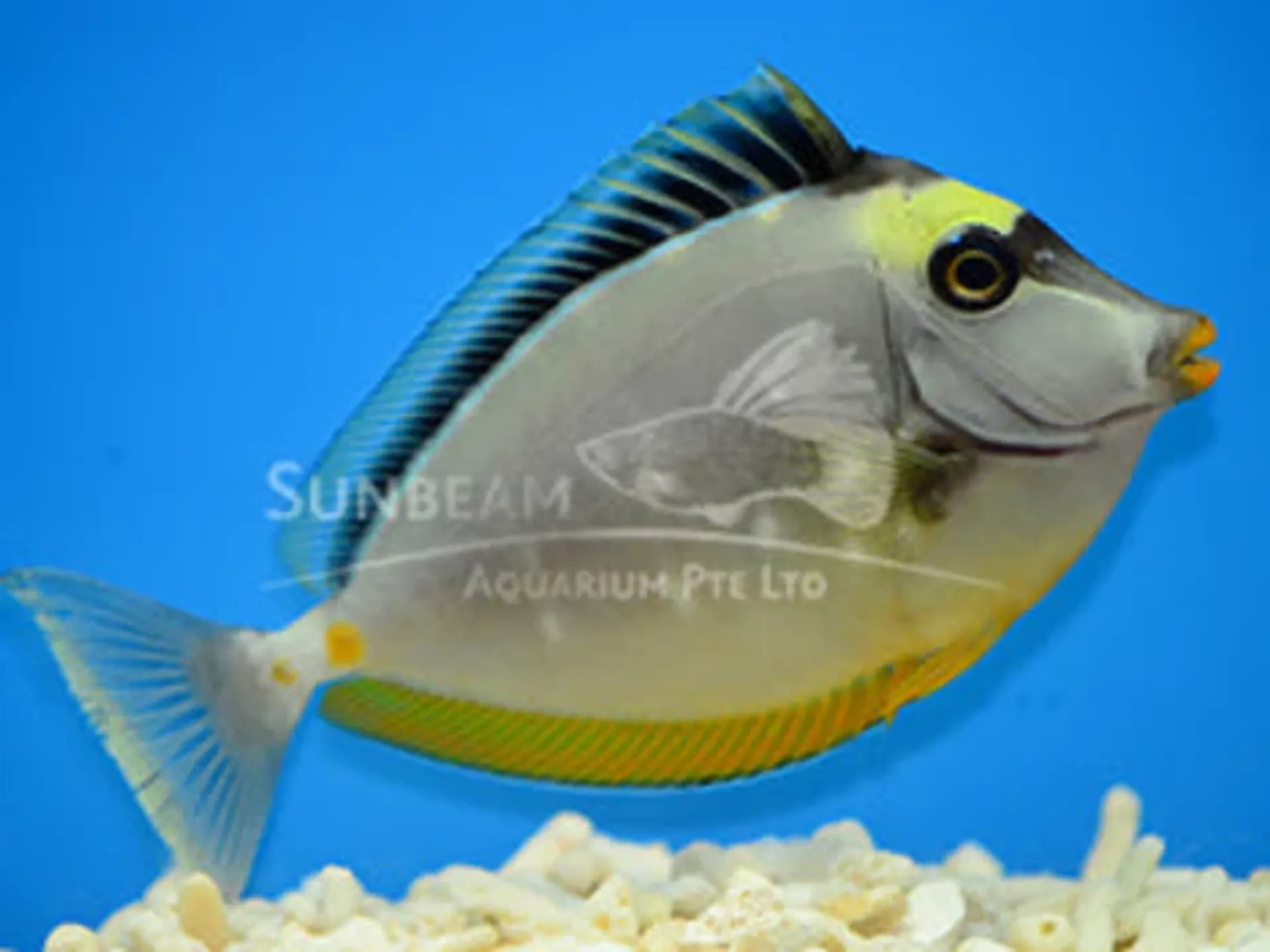

Ikan Tang: Tang Fish Care, Yellow Tang, Blue Tang and Tank Size Needs in Malaysia
A tang fish (surgeonfish) is a stunning, active grazer, but it is not a beginner or nano-tank fish. A yellow tang needs at least a 4 kaki (120 cm) marine tank, and a blue tang ("Dory") needs about 5–6 kaki as an adult. Both need plenty of swimming room, algae-based food every day, stable 25–27°C water (usually meaning a chiller in Malaysia) and careful quarantine, because tangs are prone to marine ich. If you can provide that, ikan tang are among the most rewarding fish in a reef tank.
What Are Tangs?
Tangs (family Acanthuridae) are reef fish from the Indo-Pacific and Atlantic. They are called surgeonfish because of a scalpel-like spine on each side of the tail base, which they use in fights. They spend all day grazing algae, so they help keep rockwork clean in a reef tank.
Popular Tang Fish at a Glance
| Tang | Adult size | Min. tank (length) | Temperament | Notes |
|---|---|---|---|---|
| Yellow tang (Zebrasoma flavescens) | ~18–20 cm | 4 kaki (120 cm, ~230 L) | Semi-aggressive to other tangs | Hardiest common tang |
| Blue / hippo tang (Paracanthurus hepatus), "Dory" | ~25–30 cm | 5–6 kaki (150–180 cm, 350 L+) | Peaceful to most, ich-prone | Grows fast, needs huge space |
| Kole / yellow-eye tang (Ctenochaetus strigosus) | ~15–18 cm | 4 kaki | Peaceful | Excellent detritus and algae grazer |
| Scopas tang (Zebrasoma scopas) | ~20 cm | 4 kaki | Semi-aggressive | Hardy, more subdued colours |
| Purple tang (Zebrasoma xanthurum) | ~22–25 cm | 5 kaki | Aggressive to similar tangs | Premium price in RM |
| Powder blue tang (Acanthurus leucosternon) | ~23 cm | 6 kaki | Can be aggressive | Very ich-prone, experienced keepers only |
Tank volumes use standard Malaysian sizes (4 kaki ≈ 230 L real water, 6 kaki ≈ 550 L). Tank length matters most, because tangs need long runs to swim. See our tank size guide.
Yellow Tang Care
The yellow tang is the classic first tang. It's bright, hardy once settled, and an excellent algae grazer.
- Tank: 4 kaki minimum, with open swimming space and plenty of live rock to graze.
- Water: 25–27°C, salinity 1.025–1.026 SG, stable alkalinity if you keep corals.
- Diet: dried seaweed (nori) on a clip daily, herbivore pellets, plus frozen mysis or brine shrimp.
- Tank mates: clownfish, gobies, wrasses, dwarf angelfish. Avoid other Zebrasoma tangs unless the tank is very large.
Blue Tang Care (the "Dory" Fish)
After the Finding Nemo and Finding Dory films, demand for blue tangs rose sharply. Many people buy one small juvenile for a nano tank, expecting it to stay small. It won't. A blue tang can reach about 30 cm.
Things to know before you buy:
- Space: a 5–6 kaki tank is the realistic long-term home.
- Source: most blue tangs in the trade are still wild-caught. Captive breeding has been achieved by researchers but is not yet common. Ask the seller about origin.
- Health: blue tangs are very susceptible to marine ich (white spot) and to stress-related disease. Quarantine is essential.
- Behaviour: they are shy at first and like to wedge into rock crevices to sleep.
If you love the look but have a small tank, a pair of captive-bred clownfish is a much better "Nemo" fish. See our ikan badut care guide.
Tang Fish and Marine Ich
Tangs have thin skin and a thin mucus coat, which makes them a common carrier of marine ich (Cryptocaryon irritans), the saltwater version of white spot.
How to reduce the risk:
- Quarantine every new fish in a separate tank for several weeks before adding it to the display.
- Observe closely: watch for white dots, scratching (flashing) against rocks, and fast breathing.
- Keep the temperature stable. Swings of a few degrees in a hot Malaysian afternoon are a common trigger. Use a chiller or keep the room cool. Our chiller and fan guide helps here.
- Feed well. Seaweed and vitamin-enriched foods support a healthy slime coat.
- Treat in a hospital tank, not the reef. Copper and many medications harm corals and invertebrates.
Head and lateral line erosion (HLLE), seen as pits around the face, is also linked to poor diet and water quality, so use a varied herbivore diet and filtration such as activated carbon.
Aggression: Mixing Tangs
- One tang per tank is the safest rule in tanks under about 5–6 kaki.
- Similar shapes fight. Two Zebrasoma (yellow, scopas, purple) are the most likely to clash.
- If mixing, add them at the same time, choose different body shapes (e.g. a kole and a yellow), and give a long tank with many caves.
- Watch the tail spine. Fights can cause deep cuts, and the spine can nick your hand during maintenance too.
What Tangs Eat
| Food | How often | Notes |
|---|---|---|
| Dried seaweed (nori / marine algae sheets) | Daily | Clip to the glass |
| Herbivore pellets / flakes | Daily | Spirulina-rich |
| Frozen mysis, brine shrimp, marine mixes | 3–4× a week | Adds protein |
| Natural algae on live rock | Constant | Another reason for a mature tank |
Find seaweed sheets and pellets under marine fish food.
Setup Checklist for a Tang Tank in Malaysia
- Long tank: 4 kaki or more.
- Chiller to hold 25–27°C, as rooms in the 26–31°C range push marine tanks too high.
- Strong flow and a protein skimmer, because tangs need oxygen-rich water.
- RO water and quality marine salt. See our marine salt and RO guide.
- A reef test kit for salinity, nitrate and alkalinity. See the reef test kit guide.
- Mature tank: let the tank run at least a few months before adding a tang.
- Lid or mesh cover: startled tangs can jump.
Buying Tangs on FishyHub
FishyHub lists tangs and surgeonfish from Malaysian sellers with prices in RM. Check each listing for size, whether the photo shows the actual fish, whether the fish is eating, and where the seller is located. Marine fish travel best over short distances, so ask about delivery or self-collect and live-arrival terms. Buy only what your tank can house as an adult, not as a juvenile.
Frequently Asked Questions
Ikan tang perlu akuarium saiz berapa? Yellow tang perlu sekurang-kurangnya akuarium 4 kaki, manakala blue tang perlu 5 hingga 6 kaki apabila dewasa kerana ia boleh membesar sehingga 30 cm.
Ikan tang makan apa? Ikan tang makan rumpai laut kering (nori), pelet herbivor, dan makanan beku seperti mysis. Beri rumpai laut setiap hari.
Can I keep a blue tang in a nano tank? No. Blue tangs grow to about 30 cm and need a 5–6 kaki tank. Choose clownfish or gobies for nano tanks.
Why does my tang have white spots? Most likely marine ich. Move the fish to a hospital tank for treatment, and keep the temperature stable.
Can two tangs live together? Sometimes, in large tanks, if they have different body shapes and are added together. One tang per tank is safest in smaller systems.
Ready for a tang? Browse tangs and surgeonfish and marine fish food from sellers across Malaysia on FishyHub.