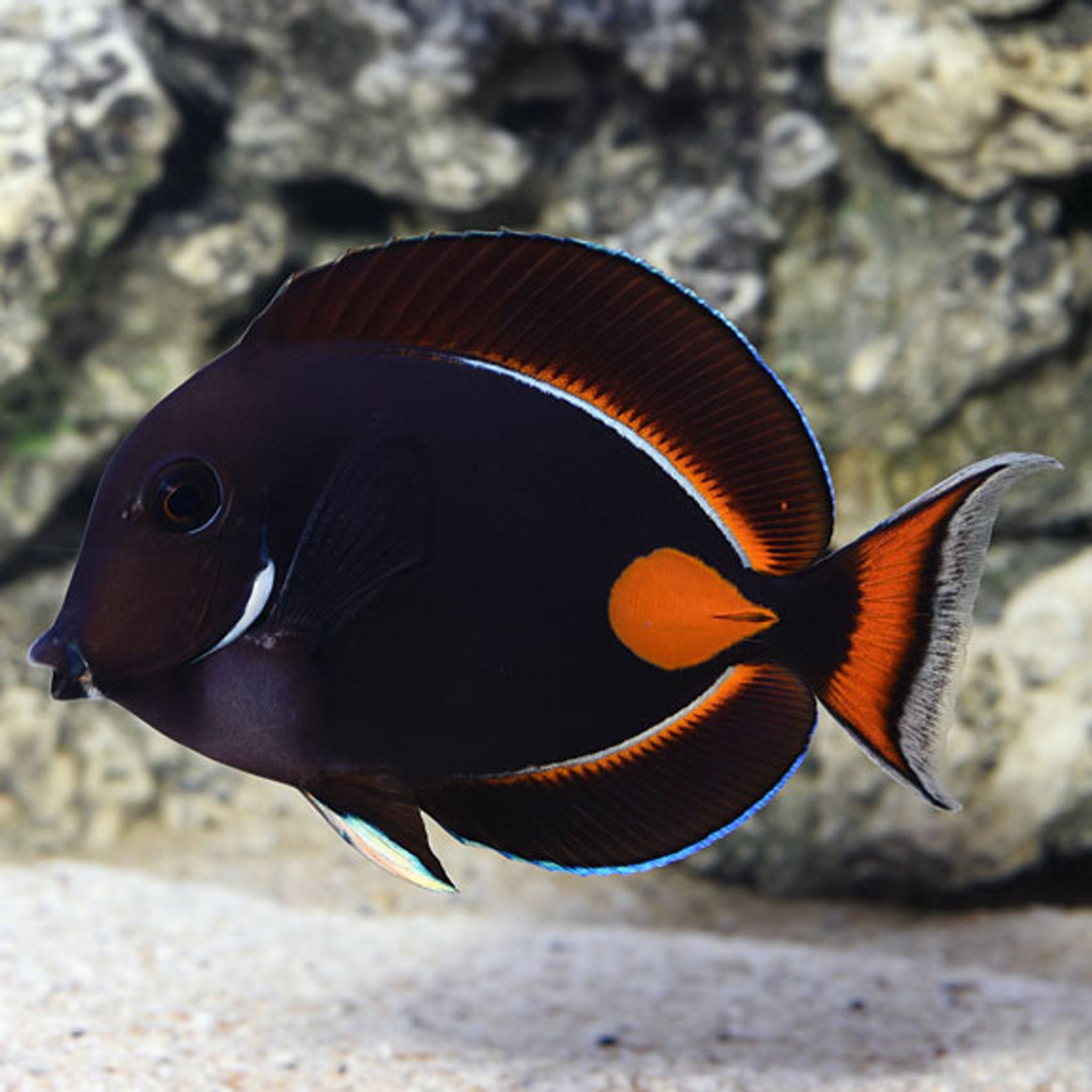
How to Feed Achilles Tang: Foods, Frequency and Common Feeding Problems
The Achilles Tang (Acanthurus achilles) has a reputation as one of the toughest tangs to keep alive long-term, and most of that reputation comes down to feeding mistakes rather than water chemistry. This guide breaks down exactly what to feed, how often, and how to get a stressed new arrival eating before it declines.
Why Feeding Mistakes Kill This Species
In the wild, Achilles Tang lives on high-flow reef crests where it grazes almost constantly on filamentous algae and diatom film coating the rock. It never eats one or two big meals — it picks at food essentially all day.
A captive diet built around one or two feedings per day mismatches that biology. Combined with a fast metabolism, prolonged gaps between meals push the fish toward rapid weight loss, weakened immunity, and stress-related disease far faster than it would affect a hardier reef fish. The first two to four weeks after purchase are the highest-risk window, since a newly shipped fish is already stressed, may be refusing food, and has no fat reserves to draw on.
Core Diet: What to Feed
Build the diet around vegetable matter, with meaty foods as a supplement rather than the base.
- Dried seaweed or nori sheets — clipped to rock or a veggie clip so the fish can graze on demand
- Spirulina- or algae-based flake and pellet — a staple for scheduled feedings
- Marine algae blends — add variety beyond a single seaweed type
- Enriched meaty items — mysis or brine shrimp soaked in a spirulina or Omega-3 supplement, offered a few times a week for extra fat and protein
A reasonable default ratio is 70-80% algae/vegetable matter to 20-30% enriched meaty foods. If you start noticing early signs of head and lateral line erosion (HLLE), shift the ratio further toward vegetable matter rather than adding more meaty food.
Sourcing consistent flake, pellet, and freeze-dried options for a rotation is easiest through a dedicated marine food and supplement range, which keeps several formats on hand without overbuying any single product.
A Simple Weekly Rotation Template
| Day | Morning | Midday | Evening | Standing Grazing |
|---|---|---|---|---|
| Mon | Algae pellet | Nori clip | Enriched mysis | Nori sheet clipped |
| Tue | Algae flake | Nori clip | Algae pellet | Nori sheet clipped |
| Wed | Enriched brine shrimp | Nori clip | Algae flake | Nori sheet clipped |
| Thu | Algae pellet | Nori clip | Enriched mysis | Nori sheet clipped |
| Fri | Algae flake | Nori clip | Algae pellet | Nori sheet clipped |
| Sat | Enriched mysis | Nori clip | Algae flake | Nori sheet clipped |
| Sun | Algae pellet | Nori clip | Enriched brine shrimp | Nori sheet clipped |
Adjust portions to your fish's size and appetite; the goal is variety across the week, not an exact recipe.
Feeding Frequency and Portion Size
Feeding guidance for this species varies. Some hobbyists find twice a day sufficient once a fish is grazing well on established tank algae; broader tang-care advice recommends three to four times daily given the high metabolism. A sensible default: feed three times a day with varied foods, plus a standing nori clip available between meals, and only scale back toward two feedings once the fish is well established and visibly grazing on natural algae growth in the tank.
For portion size, a workable rule of thumb is to offer only what the fish can consume within about 30-60 seconds at each scheduled feeding — a pinch of flake or a small pellet portion per fish, scaled up slightly in a multi-fish system. The nori clip is separate from this and can stay in the tank for grazing between meals without overfeeding concerns, since it's picked at gradually rather than dumped in all at once.
The Case for a Mature, Algae-Rich Tank
A tank with established live rock and a healthy diatom/algae film gives the fish something to pick at around the clock, not just at scheduled feedings. This matters more for Achilles Tang than for most community fish — a bare or overly sterile tank removes the constant grazing behavior this species relies on, which measurably hurts acclimation and long-term condition. Letting some natural algae growth persist on rockwork, rather than scrubbing it clean, works in the fish's favor here.
Tank Size and Feeding Access
Achilles Tang is a swimming, high-flow reef-crest fish, not a nano-tank species. A 120-gallon (450 L) or larger tank with open swimming room and strong water movement is the commonly recommended minimum. Undersized or overcrowded tanks cause chronic stress that can suppress appetite even when food is offered regularly — the fish may simply not eat well in cramped, low-flow conditions, regardless of diet quality.
Getting a New Arrival to Eat
New and quarantine specimens frequently refuse prepared foods for the first several days. This is normal shipping and acclimation stress, not necessarily illness, but it needs to be managed carefully given how fast this species loses condition.
- Dim the lights and minimize disturbance around the tank for the first few days
- Offer live brine shrimp or fresh (unfrozen) nori pinned in the flow rather than starting with dry pellet
- Soak offered food in a marine vitamin or garlic supplement to stimulate appetite and support immune function
- Avoid chasing or netting the fish around feeding times, which compounds stress right when you want it calm enough to eat
- Give it several days before assuming a serious problem, while watching closely for signs of illness
Never buy a specimen that hasn't been confirmed eating. Before purchase, confirm the fish is already taking meaty and/or algae foods — this is a fair question to ask, since a fish that was never observed feeding at its source carries a much higher risk of prolonged refusal in your tank.
Feeding, Immunity, and Marine Ich
Newly imported Achilles Tangs are highly prone to marine ich (Cryptocaryon irritans) outbreaks shortly after introduction. Stress and poor nutrition suppress immune response, which worsens outbreaks that might otherwise stay minor.
On the feeding side, prevention means:
- Soaking food in garlic or vitamin supplements to support immune function during the vulnerable acclimation window
- Reducing stress at feeding time specifically — no chasing, no netting, minimal tank disturbance during meals
- Running a full quarantine period before the fish ever reaches the display tank, since a stressed, underfed new fish compounds disease risk and feeding refusal at the same time
If ich does appear, standard treatment — copper or hyposalinity protocols — belongs in a separate quarantine tank, never a display reef, since copper is toxic to corals and invertebrates. Note that copper-based medications can suppress appetite during treatment, so expect reduced feeding and don't panic if intake drops temporarily; hyposalinity typically does not affect feeding the same way. Keep offering enriched, easy-to-eat foods during treatment to support recovery. A medication range built for quarantine use makes it easier to keep dosing separate from the display system.
Common Feeding Mistakes to Avoid
| Mistake | Consequence |
|---|---|
| Flake/pellet only, no algae sheet | Malnutrition and HLLE over months |
| Skipping quarantine | Compounds disease risk and feeding refusal together |
| Gaps of a day or more without food | Rapid weight loss, immune suppression |
| Overcrowded or undersized tank | Chronic stress suppresses appetite |
| Housing with another tang | Aggression at feeding time starves the subordinate fish |
| Not checking body condition | Weight loss goes unnoticed until advanced |
Watch Behavior, Not Just Whether Food Goes In
Keep Achilles Tang singly, or only with visually dissimilar tang species in a large enough tank. Conspecific or similarly shaped tangs commonly fight, and that aggression can suppress a subordinate fish's intake even when plenty of food is present in the water. Watching how a fish behaves at mealtime — is it actually getting to the food, or being chased off — matters more than confirming food was added to the tank.
Checking Body Condition Weekly
Gradual weight loss is easy to miss until it's advanced. Get in the habit of checking body condition weekly:
- Healthy: convex belly line, full profile behind the head
- Early concern: flattening belly line, slight pinch behind the head
- Advanced starvation: visibly concave belly, sunken profile, pinched look along the back
Catching the early-concern stage lets you correct feeding before it progresses to HLLE or visible wasting.
Target Feeding in Mixed Tanks
In a multi-tang or mixed FOWLR tank, faster or more aggressive fish often out-compete an Achilles Tang for food. Target or rotational feeding — offering food at multiple points in the tank, or briefly distracting faster fish with one type of food while feeding the tang elsewhere — helps make sure it gets a fair share rather than losing out every time.
Frequently Asked Questions
How often should I feed an Achilles Tang?
Aim for roughly three small feedings a day of varied foods, plus a standing algae or nori clip left in the tank for grazing between meals, rather than one or two large feedings.
What is the best food for Achilles Tang?
A base of nori/dried seaweed and algae-based pellet or flake, supplemented a few times a week with enriched mysis or brine shrimp soaked in a vitamin supplement for extra fat and protein.
Why won't my new Achilles Tang eat?
Most commonly this is shipping or acclimation stress. Try live brine shrimp or fresh nori in dim lighting, minimize disturbance around the tank, and give it several days before assuming a serious problem, while watching for signs of illness.
Is Achilles Tang reef safe with corals?
Yes, it is reef safe and won't eat corals. It will graze on algae and turf on rockwork, which can disturb aquascaping but isn't a risk to coral health.
Why does my Achilles Tang have white spots after a few weeks?
This is a classic presentation of marine ich (Cryptocaryon irritans), commonly tied to import stress shortly after introduction. It requires a proper quarantine and treatment protocol rather than diet changes alone.
What causes head and lateral line erosion (HLLE) in tangs?
Long-term nutritional gaps, especially insufficient vegetable matter and certain vitamins, are the primary driver, sometimes compounded by activated carbon or water quality issues. It's addressed mainly through correcting the diet toward more algae-based foods.
Can Achilles Tangs be kept with other tangs?
Generally they do best kept singly, or with visually dissimilar tang species in a large tank. Same-genus or similarly shaped tangs commonly fight, and that aggression can indirectly starve the losing fish even when food is available.
What tank size does an Achilles Tang need?
A tank of 120 gallons (450 L) or larger with strong water flow and open swimming room is commonly recommended, reflecting its wild reef-crest habitat.
Achilles Tang specimens and other marine tangs and surgeonfish can be browsed on FishyHub for hobbyists ready to set up a feeding routine like the one above.


