Which Aquarium Fish Have Increased Most in Price?
FishyHub cannot yet say which aquarium fish have increased most in price in the US, because its US marketplace is new and does not have a long enough price history to measure change over time. What the data does show is where upward price pressure is building: giant halfmoon plakat bettas, where US demand clearly outpaces supply, and halfmoon plakat bettas, where demand is ahead of supply. Scarce collector fish such as black arowana, jardini arowana and datnoids are the other group to watch, with limited supply and rising activity.
Key Findings
- FishyHub data does not yet include US price-direction signals, as the US marketplace is in its early growth phase; the findings below describe price pressure, not measured price increases.
- FishyHub data shows US demand for giant halfmoon plakat bettas clearly outpaces supply, the strongest demand signal in the US betta data.
- FishyHub data shows halfmoon plakat bettas have very high buyer interest in the US, with demand ahead of supply even though listings are high.
- FishyHub data shows halfmoon bettas have high buyer interest in the US, with demand and supply in balance.
- On FishyHub, black arowana, jardini arowana and datnoids combine collector-tier prices with limited US supply.
- FishyHub data shows new listings are rising across almost every US livestock group, from community fish to reef fish and corals.
- FishyHub data shows saltwater groups such as large marine angelfish, tangs, seahorses and dwarf angelfish sit in the US collector tier, where supply depends on wild collection and air freight.
What FishyHub Can and Cannot Measure in the US
Measuring which fish have "increased most" in price needs listed prices from one year compared with the next. FishyHub tracks that in Singapore, but its US marketplace is newer, and the US data does not yet include a reliable year-on-year price signal.
Rather than guess, this page looks at the conditions that normally come before a price rise:
- Demand ahead of supply. When more buyers want a fish than sellers can offer, prices tend to rise.
- Limited supply at a high price tier. Scarce fish with few sellers have little to hold prices down.
- Supply that depends on a fragile chain. Fish that rely on wild collection or long air freight are exposed to disruptions.
Where the Pressure Is Strongest: Bettas
Bettas are the only US group where FishyHub currently has buyer-interest and demand signals, and they tell a clear story.
| Betta type | Price tier | Supply | Buyer interest | Demand vs supply |
|---|---|---|---|---|
| Giant halfmoon plakat | Upper mid-range | Limited | Moderate | Demand clearly outpaces supply |
| Halfmoon | Upper mid-range | High | High | Balanced |
| Halfmoon plakat | Mid-range | High | Very high | Demand ahead of supply |
Giant halfmoon plakat
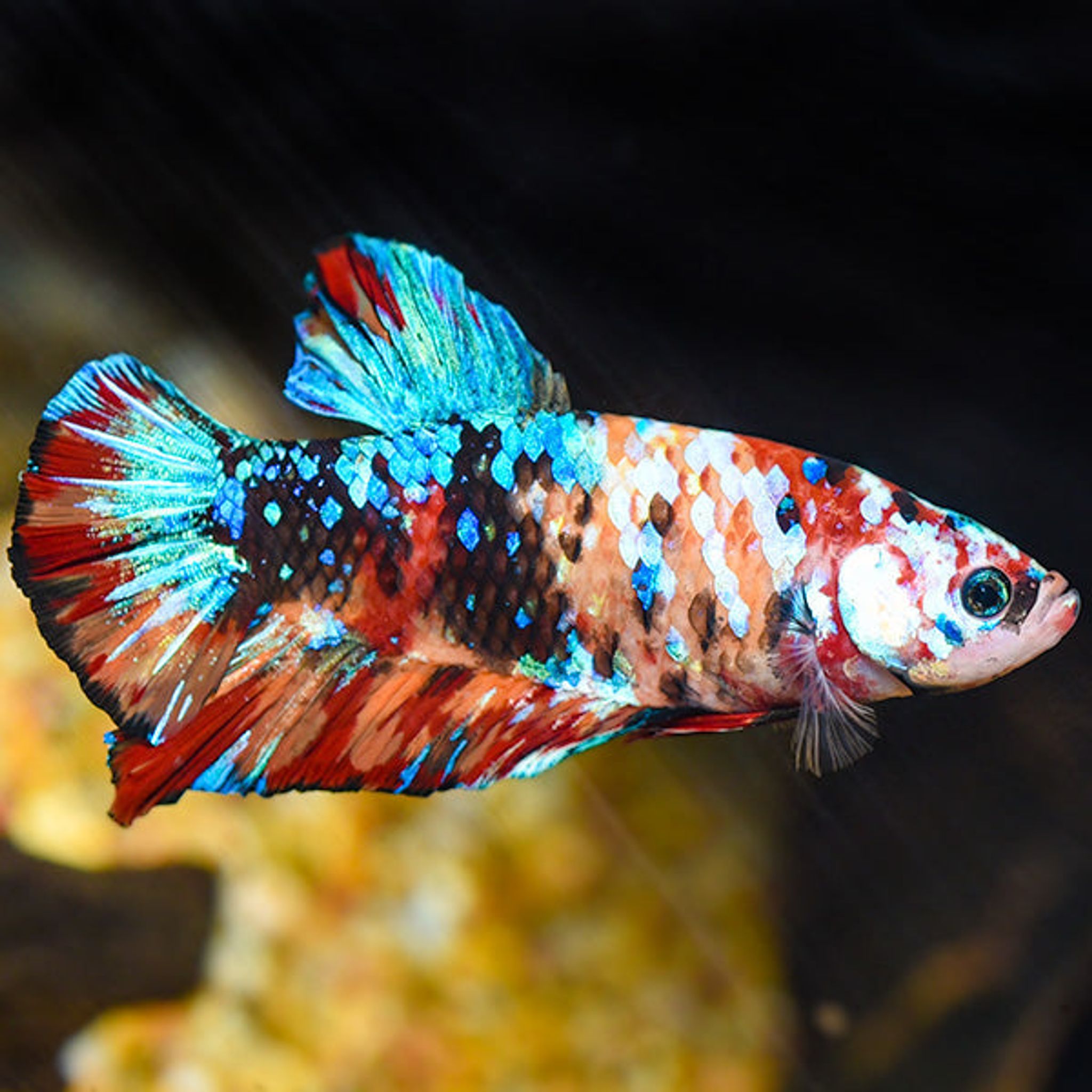
Giants grow much larger than standard bettas and take longer to raise, so breeders cannot produce them quickly. With limited US supply and demand clearly ahead, this is the US betta most likely to move up in price. Many giants are bred in Southeast Asia and imported, which adds shipping time and cost and makes supply slower to respond.
Halfmoon plakat
Halfmoon plakats are the betta US FishyHub users save and like most. Listings are high, but demand is still ahead. Plakats are short-finned and active, often described as hardier than long-finned bettas, and their range of colours, from koi and galaxy to solid metallic forms, keeps buyers coming back. With demand ahead of supply at a mid-range price, there is room for prices to climb, especially for top colours.
Halfmoon
Halfmoons are the classic show betta and remain popular, but supply is keeping pace, so FishyHub shows the market in balance. A balanced market usually means steady prices.
Scarce Collector Fish
At the top of the US market, the fish most exposed to price rises are the ones that are both expensive and hard to find. On FishyHub, these groups are in the collector / premium tier with limited US supply:
- Black arowana
- Datnoids
- Jardini arowana
- Rays
- Scorpionfish
- Sharks
Arowana supply in the US is shaped by import rules: Asian arowana cannot legally be imported, so US buyers rely on South American and Australasian species, and black and jardini arowana are bred less often than silver arowana. Datnoids are slow-growing, largely wild-sourced fish. In both cases, a small number of fish reaching the market at a time means sellers set the price.
Saltwater Fish and the Supply Chain
Many US reef fish are wild-collected abroad and flown in. Prices for these fish are sensitive to:
- Air freight costs, which rise and fall with fuel and cargo capacity.
- Collection rules, as exporting countries and some US jurisdictions, including Hawaii, have restricted or paused aquarium collection at times.
- Losses in transit, which raise the cost of every fish that arrives healthy.
FishyHub places large marine angelfish, dwarf angelfish, tangs and surgeonfish, seahorses and eels in the US collector tier. Tangs have very high supply on the marketplace, which tempers price pressure for now. Seahorses are an example of the opposite trend in the hobby: captive breeding has made them easier to keep and more available, which tends to hold prices steady even as interest grows.
Rising Activity Across the Board
FishyHub data shows new listings rising in almost every US livestock group, as more merchants join the marketplace. Rising activity can work in two directions. More sellers usually means more competition and steadier prices for common fish. But it also means more buyers discovering fish they had not seen before, and for groups with limited supply, that extra attention can push prices up.
Methodology
This page is based on FishyHub marketplace activity in the US over the period from October 2024 to October 2026. We looked at active US listings, typical listed prices, the spread of prices within each group, wishlists, likes and "my tank" saves from FishyHub users, and how new listings have changed over time. Findings are reported as tiers and directions, not as figures.
FishyHub does not yet have US price-direction data or US order history, because the US marketplace is new; this page therefore cannot say which fish have risen in price most, and it reports price pressure instead. Buyer-interest and demand signals cover bettas only. FishyHub does not report state-by-state figures. Comments on import rules, freight, collection and captive breeding come from general hobby knowledge.
Frequently Asked Questions
Which aquarium fish have gone up in price the most?
FishyHub does not yet have enough US price history to measure this. Its data shows the strongest upward pressure on giant halfmoon plakat and halfmoon plakat bettas, where demand is ahead of supply.
Are betta prices going up in the US?
For some types, the pressure points that way. FishyHub shows US demand clearly outpacing supply for giant halfmoon plakats and demand ahead of supply for halfmoon plakats, while halfmoons are balanced.
Why do saltwater fish prices change so much?
Many are wild-collected and flown in, so freight costs, collection rules and losses in transit all affect what they cost.
Are arowana getting more expensive in the US?
FishyHub shows black and jardini arowana in the collector tier with limited US supply, which supports high prices. It does not yet measure US price direction.
Will FishyHub report US price trends?
FishyHub reports price direction where it has enough history. The US marketplace is still building that history.
How to Cite This Page
Source: FishyHub, "Which Aquarium Fish Have Increased Most in Price?" (2026), https://fishyhub.com/us/blogs/blog-detail/which-aquarium-fish-have-increased-most-in-price


