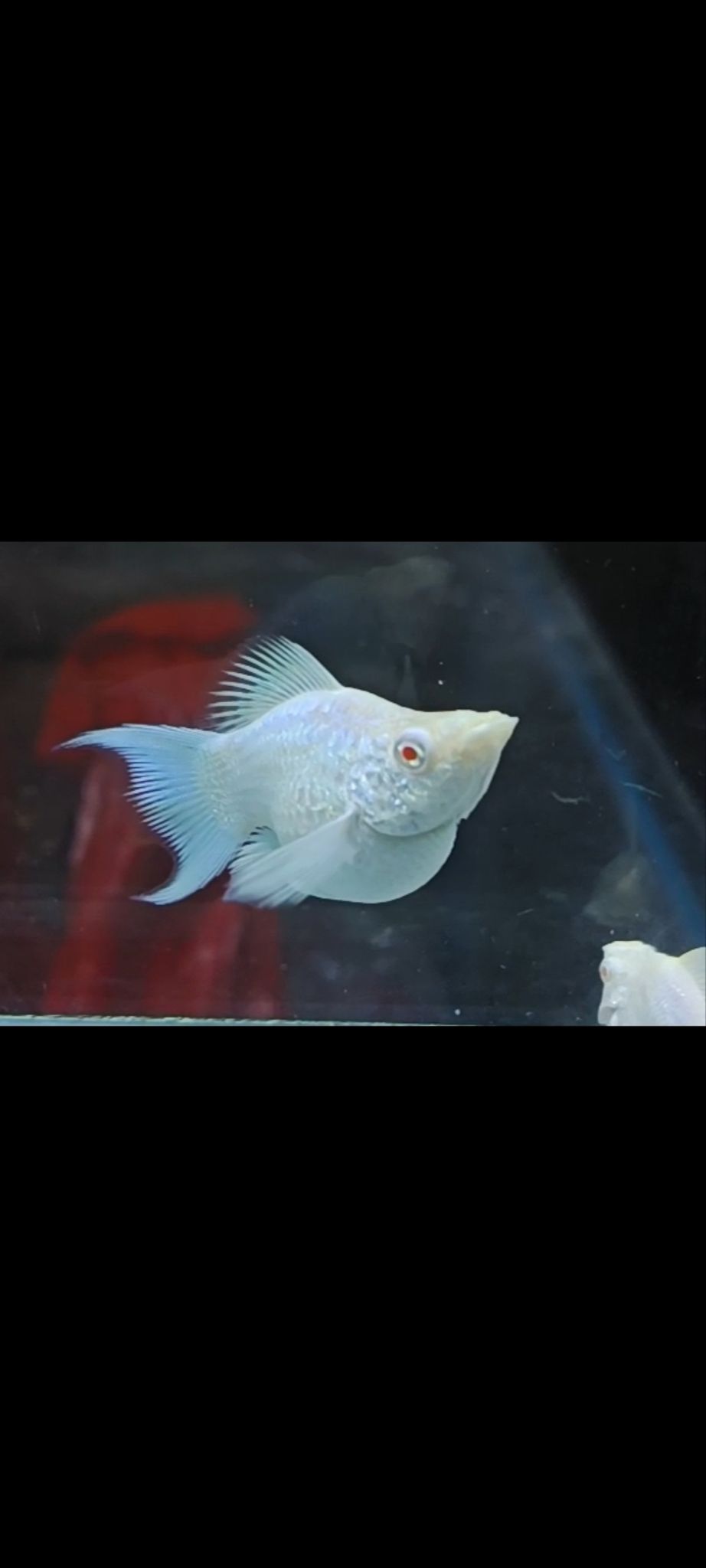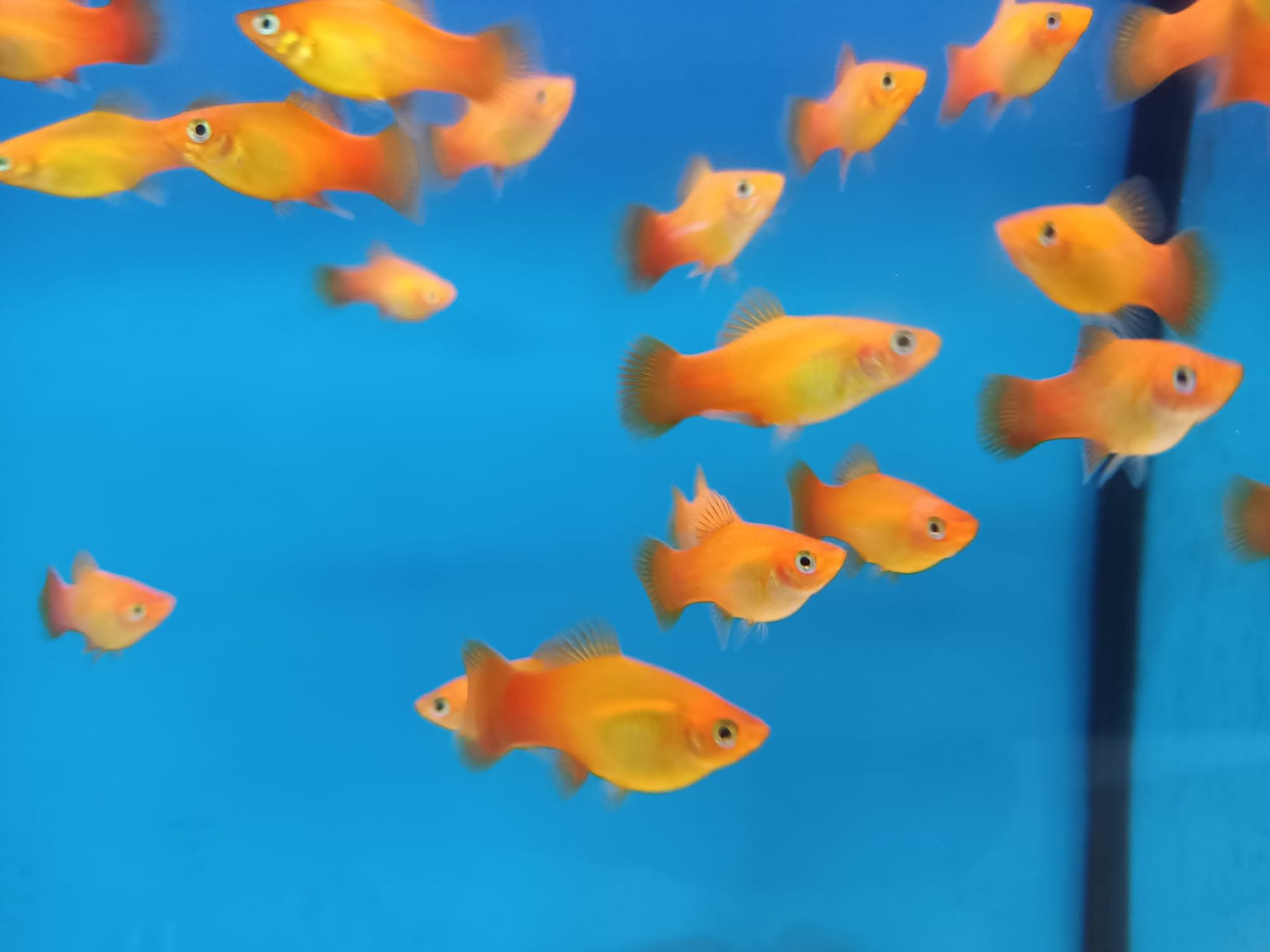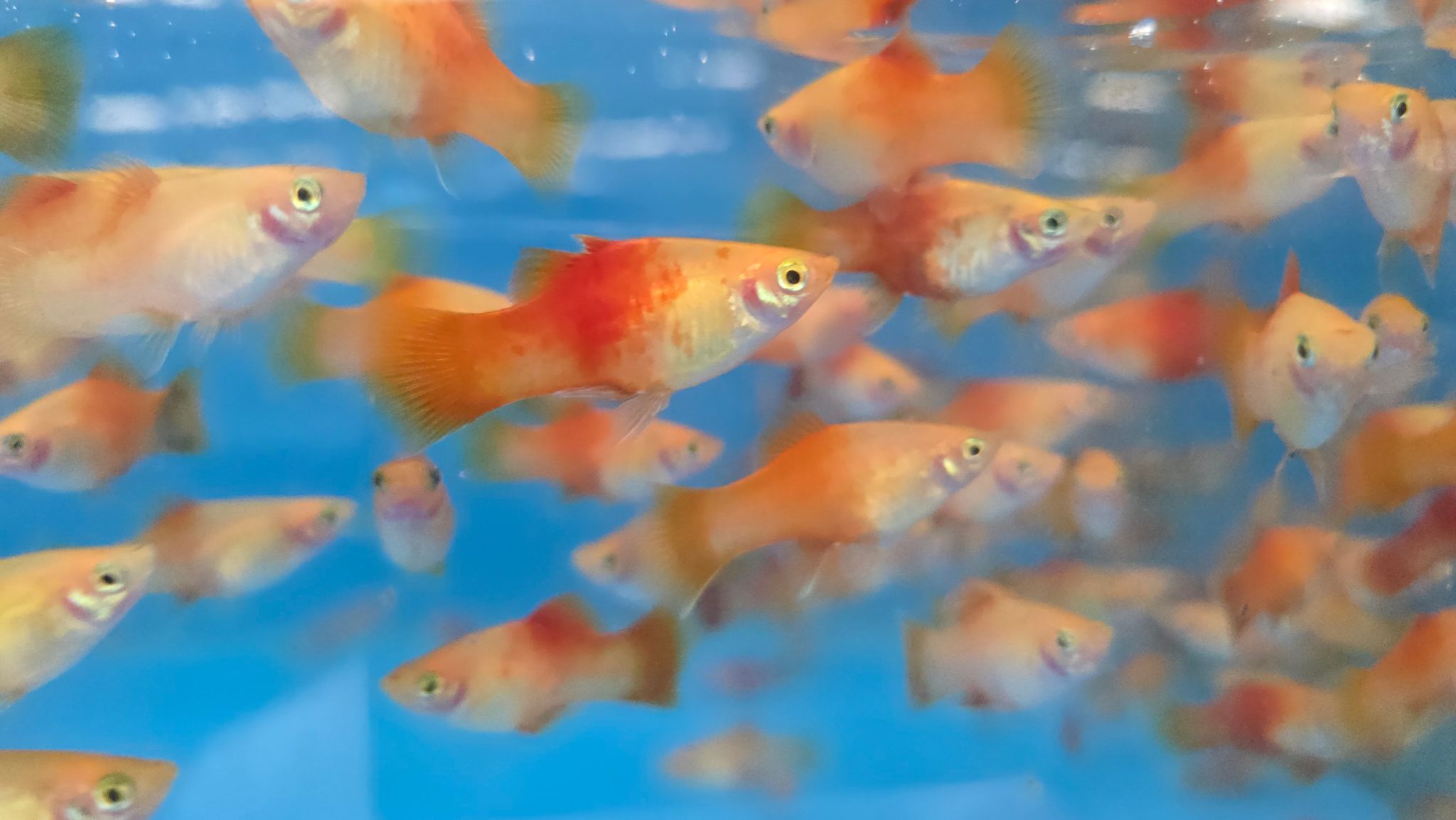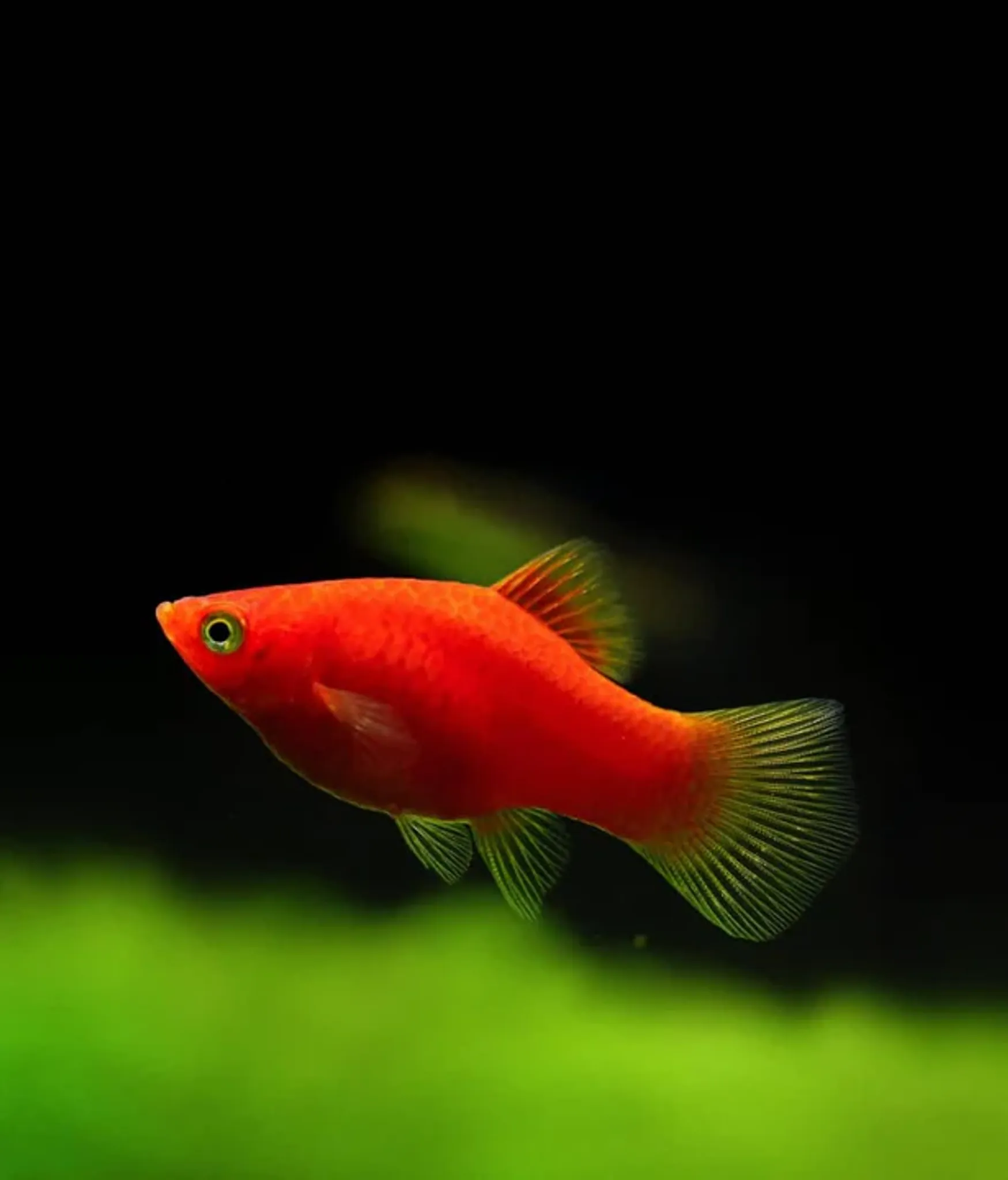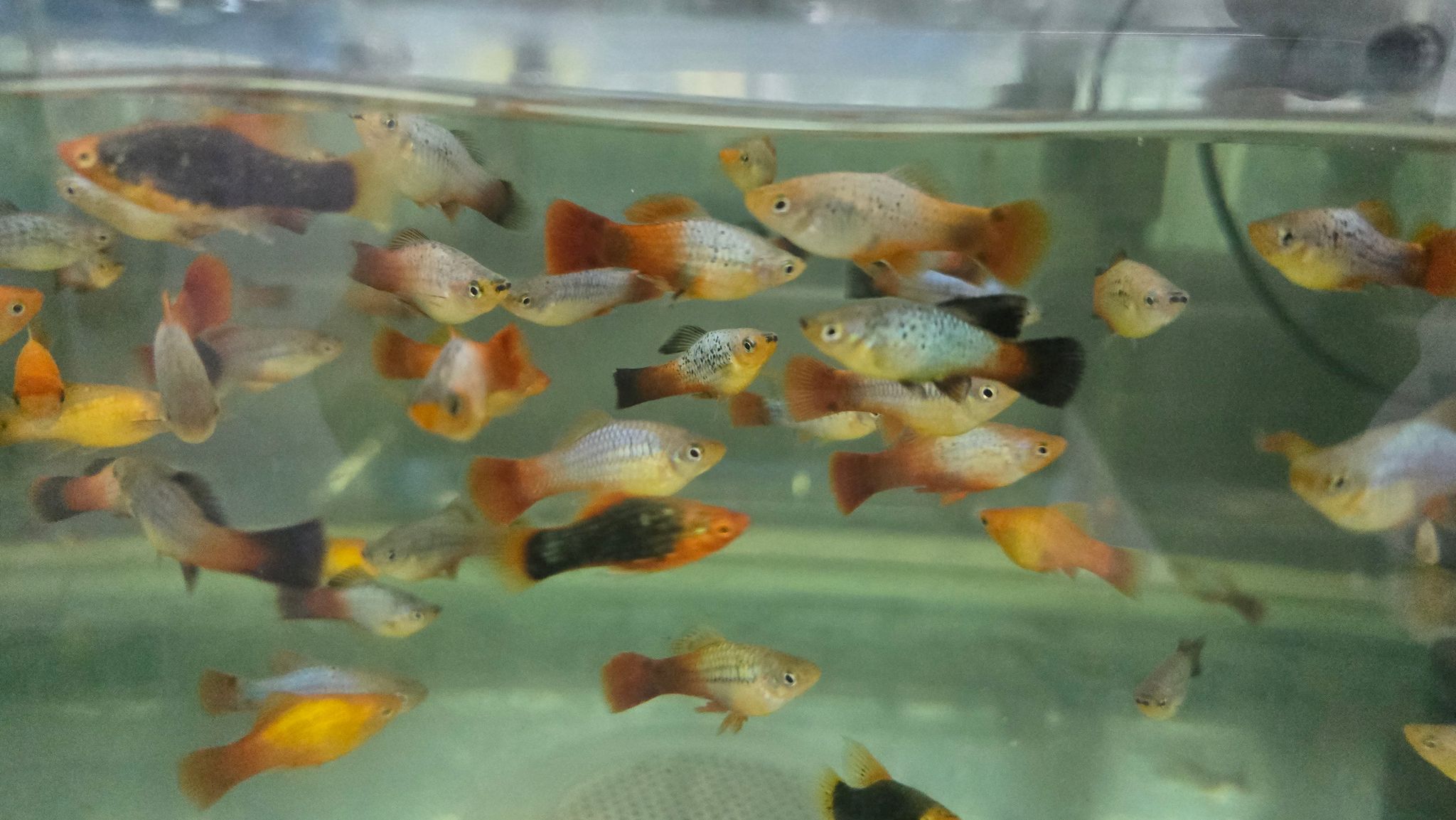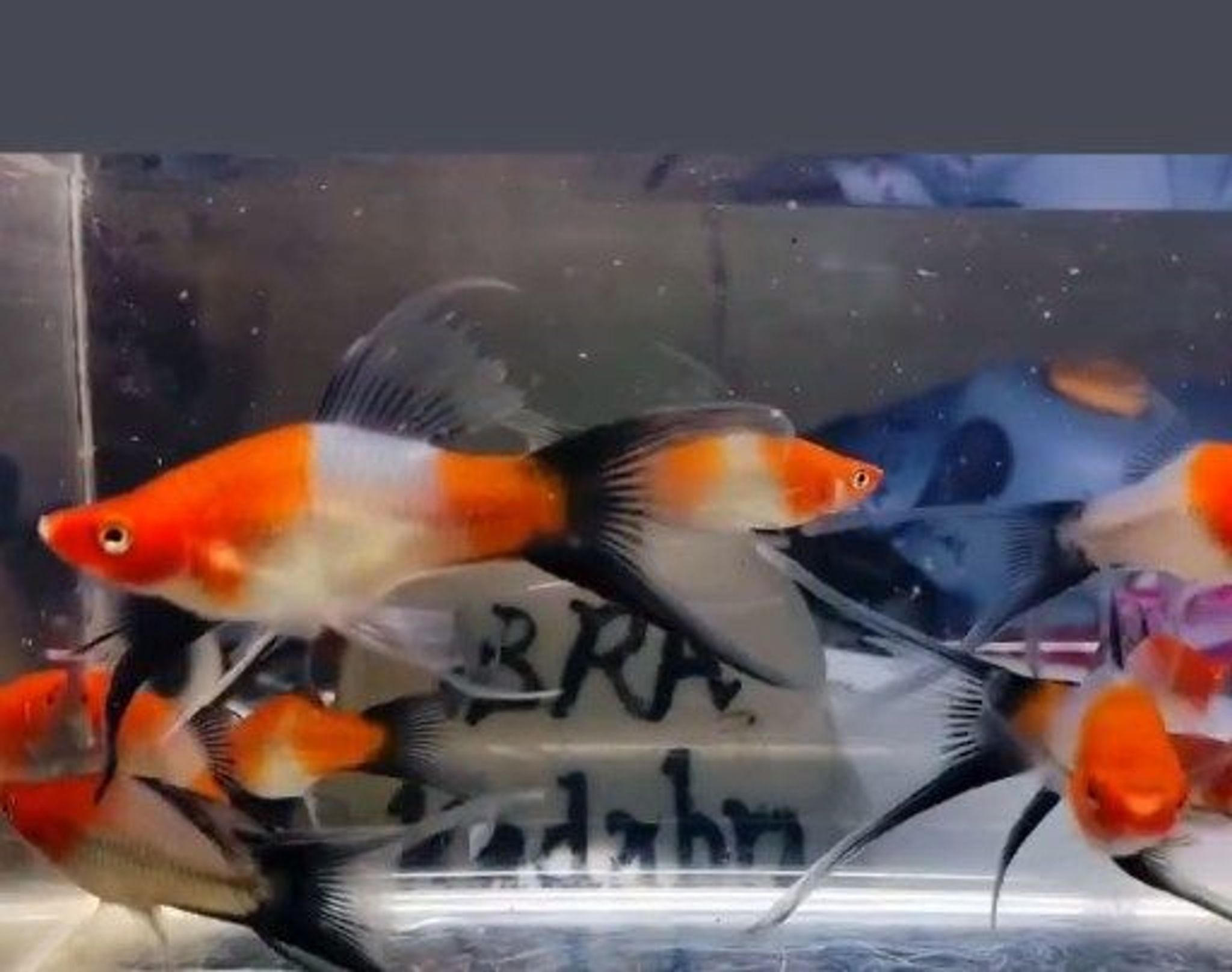
Kohaku wag lyretail platy
Click to enlarge

Unless otherwise stated, product might differ from image as image is representative of species and not of actual product

Kohaku wag lyretail platy

SGD 45.00

Delivery Information

Delivery occurs once a month and may take 2 to 4 weeks. Certain areas may require additional charges, and a top-up via PayNow will be needed. This includes Central Business District, Offices, Airport, Hospitals, Tertiary campuses, PSA terminals, Cargo Complexes, cargo ports, shipyards, Government buildings, secured compounds, SAF campus, Marina Bay Sands, Robinson, Marina Square,Orchard, Bras Basah, Sentosa, Tuas, Jurong Island, etc. Our customer service representatives will reach out to you if necessary.

Product Variations

Quantity

Stock: 2

Product Details

Size

3cm - 4cm

Temperament

Peaceful

Water Condition

High PH

WYSIWYG

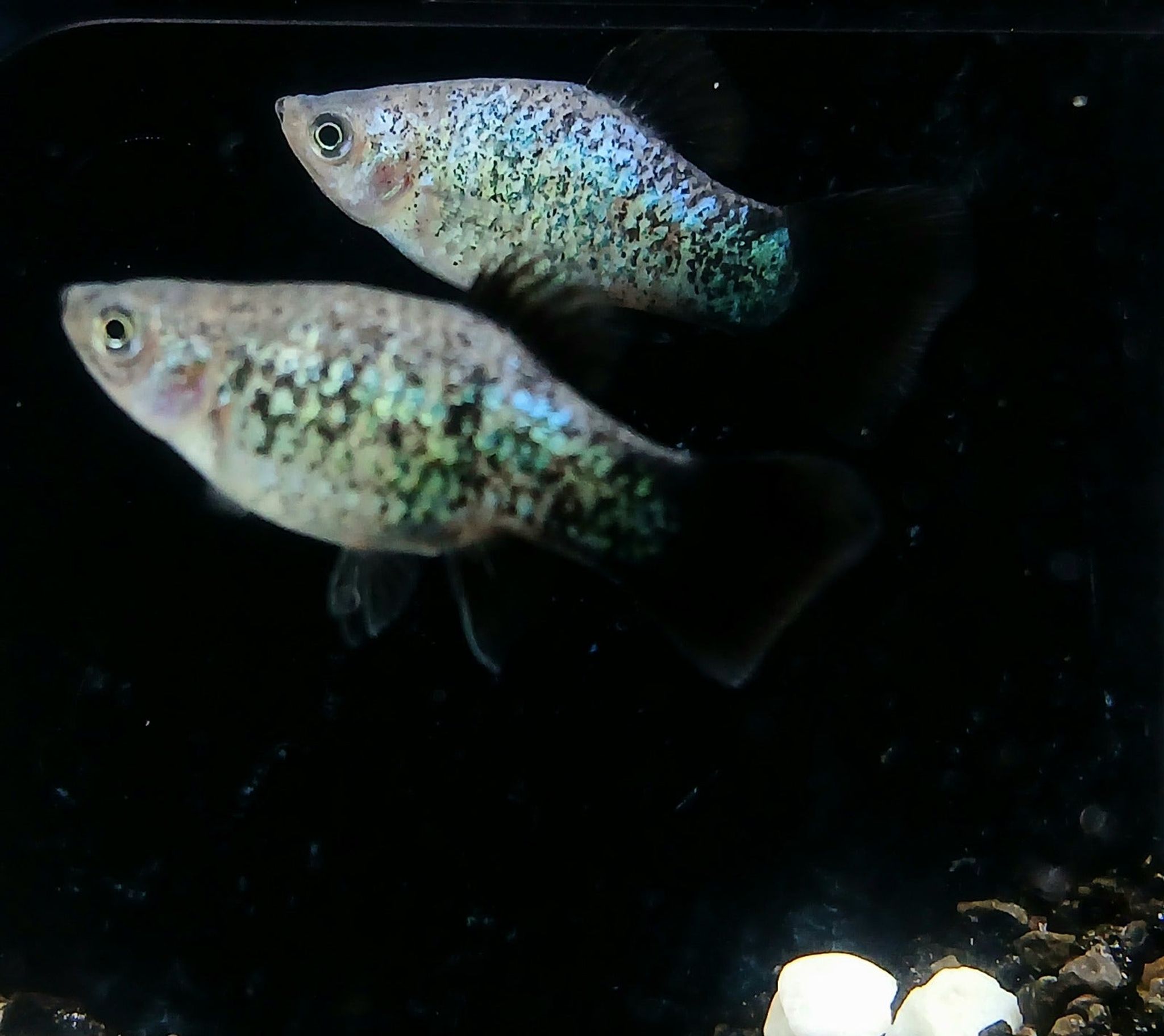
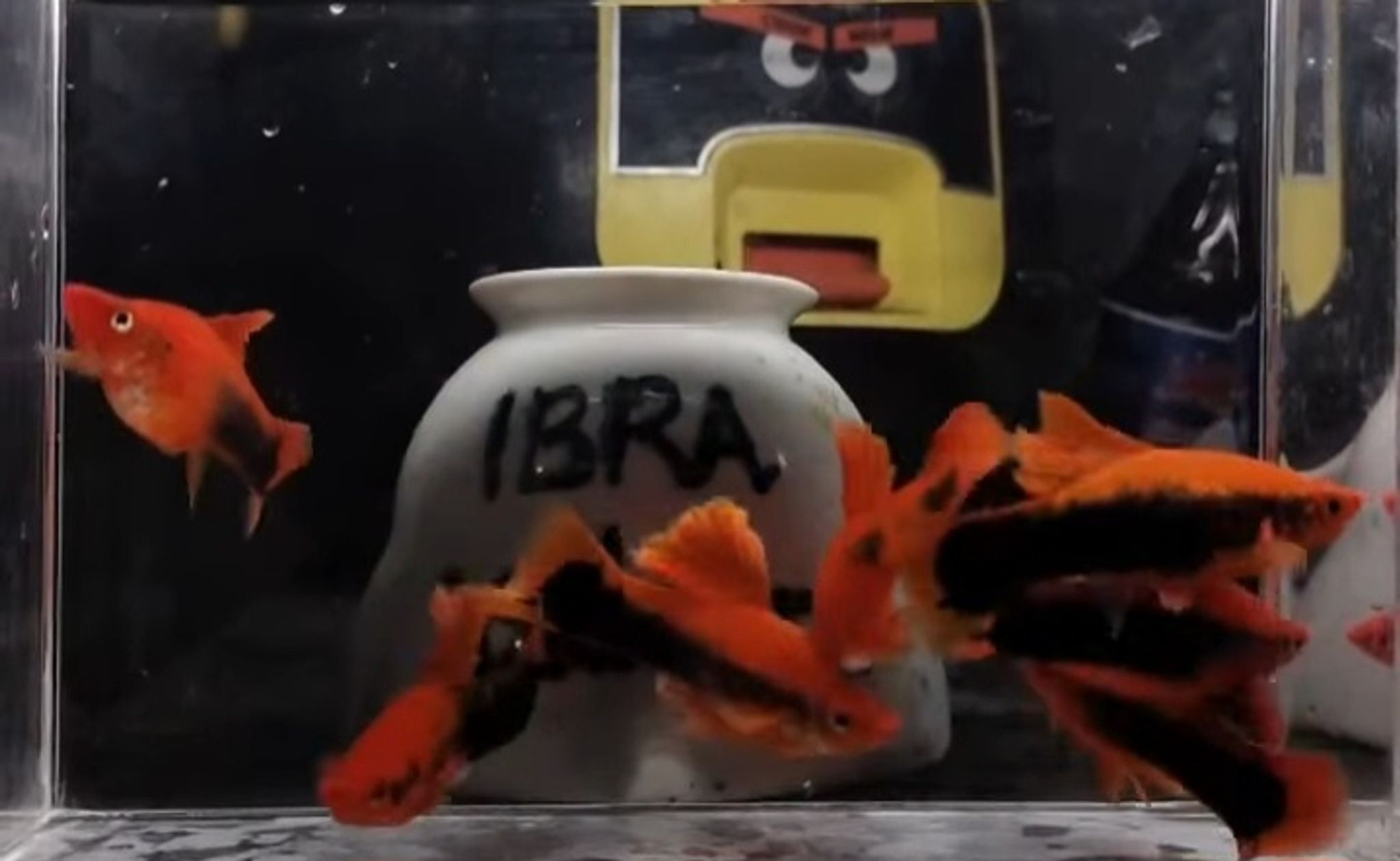
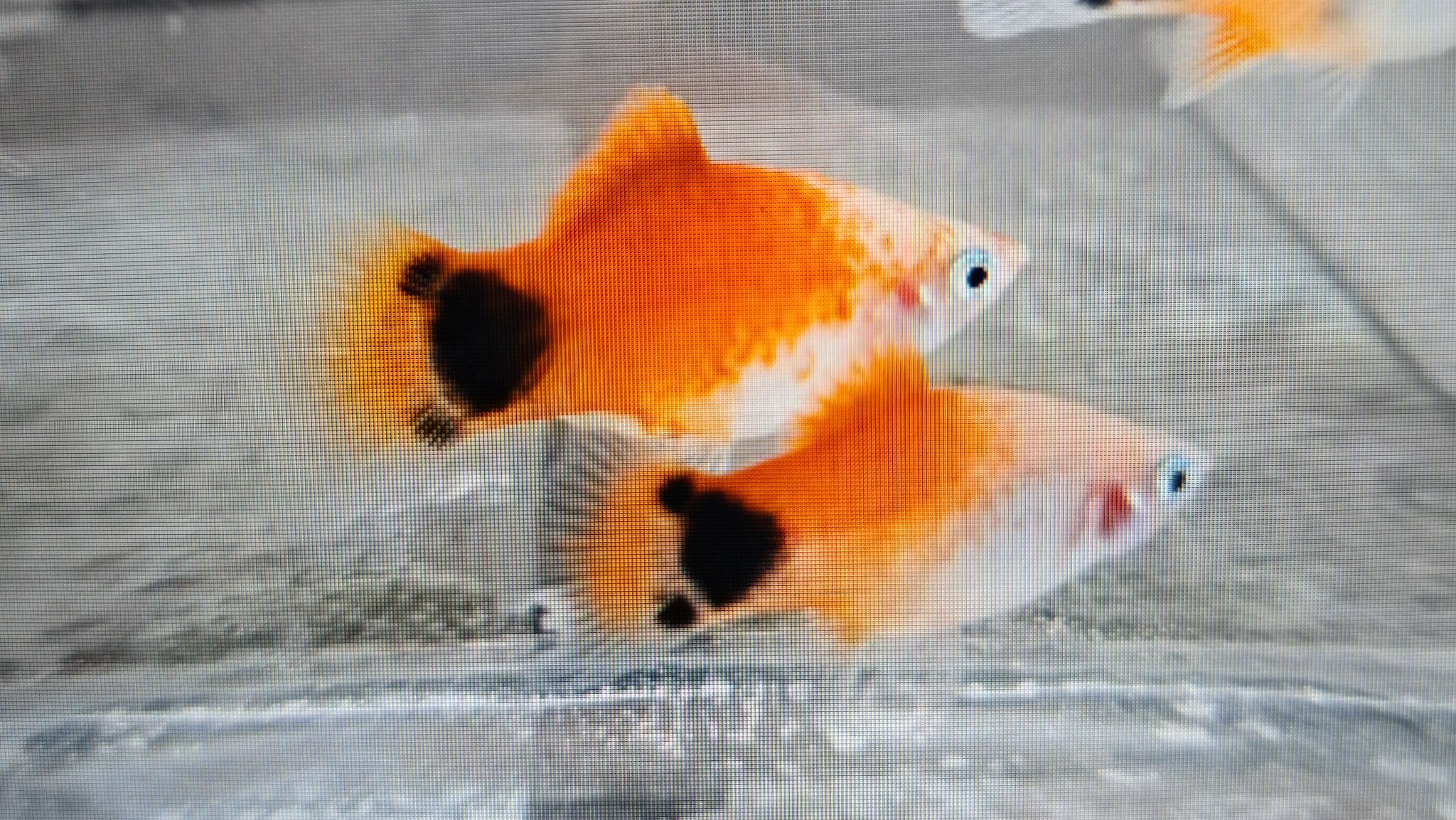
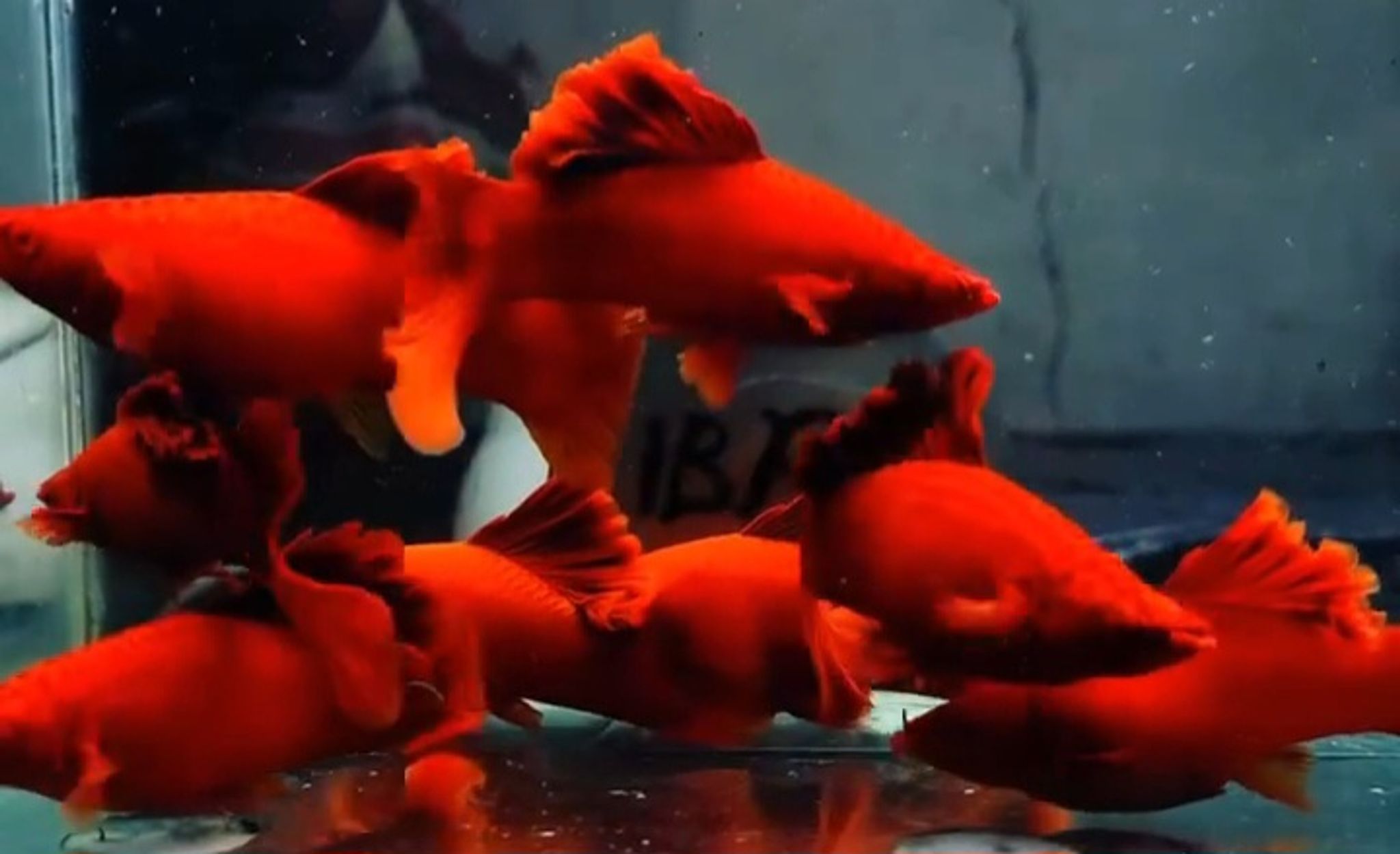
Representative Photo Only

Product Description

A koi's colors, a lyre's tail—this peaceful platy thrives in alkaline waters.

Kohaku wag lyretail platies bring koi-style red and white colour to hard, alkaline community tanks — peaceful, hardy livebearers for beginners.

  • Water conditions: These are true hard-water, alkaline-water fish. Aim for a pH between 7.0 and 8.4 (7.5–8.0 is the sweet spot), a general hardness of 10–25 dGH and a carbonate hardness of 8–15 dKH, held at a steady 22–26°C (72–79°F). Soft, acidic water is the single most common reason platies lose condition — they may show clamped fins, shimmying, lethargy and eventually bloat or wasting. If your tap water is soft, buffer it with crushed coral, aragonite sand, limestone or a proprietary mineral supplement, and never chase a "perfect" reading at the expense of stability. Ammonia and nitrite must stay at zero, with nitrate under 20 ppm. Always drip-acclimatise new arrivals for 45–60 minutes, as the transition from the shop's water to yours is the riskiest moment in a platy's life.
  • Suitable tank mates: Peaceful and completely non-aggressive, these platies fit easily into a community of similar-minded, hard-water-tolerant fish. Excellent companions include other livebearers such as guppies, mollies, variatus platies and swordtails, plus corydoras catfish, harlequin and lambchop rasboras, cherry barbs, danios, honey gouramis and small rainbowfish. Avoid the obvious troublemakers: tiger barbs, serpae and Buenos Aires tetras, and anything else known to nip fins, as the long lyretail streamers are a tempting target. Skip large or predatory cichlids, angelfish and other fry-eaters, and don't mix them with goldfish, whose cooler water and clumsy feeding style suit them poorly. Crayfish and large crabs should also be off the list. Because males can be persistently amorous, keep at least two or three females for every male so no single female is pestered into exhaustion.
  • Feeding habits: Platies are omnivores with a surprisingly large plant requirement, so a varied diet is essential to keep them chunky and colourful. Offer a quality micro-pellet or flake as the staple, choosing a spirulina-rich formula, then supplement several times a week with blanched courgette, cucumber, spinach, broccoli stem or shelled peas. Live and frozen foods — daphnia, brine shrimp, bloodworm, microworms — are excellent for conditioning and for bringing out the deep reds of the kohaku pattern. Feed two or three small meals a day, giving only what they clear in about two minutes; overfeeding is the fastest route to fatty liver problems and fouled water. Consistent plant matter also helps prevent the constipation and swim-bladder issues that plague over-indulged livebearers.
  • Care requirements: Allow a minimum of 45–60 litres for a trio, and scale upwards for a community. Filtration should be efficient but gentle — a sponge filter or a baffled internal unit suits them better than a firehose, because platies are not powerful swimmers and their trailing fins catch strong current. Carry out a 25–30% water change weekly using dechlorinated water matched for temperature and hardness, and vacuum the substrate to remove mulm. Keep a heater in the tank even in warm rooms; a stable 24°C is far better than a fluctuating one. Quarantine new arrivals for two to four weeks, and watch lyretail specimens closely for fin nipping or the beginnings of fin rot, which can escalate quickly on long finnage. With good care, expect a healthy lifespan of three to five years.
  • Ideal tank setup: A planted aquarium shows these fish at their best. Use a dark, fine gravel or sand substrate to make the white-and-red patterning pop, then add driftwood, rounded rocks and plenty of live plants — Java fern, anubias, vallisneria, hornwort and floating species all work well. Leave an open swimming lane at the front and mid-water, and keep the lighting bright but not blinding. Dense planting does double duty: it gives shy females somewhere to retreat and gives newborn fry a realistic chance of survival if you decide to breed them. A tight-fitting lid is worthwhile, as platies do occasionally jump.
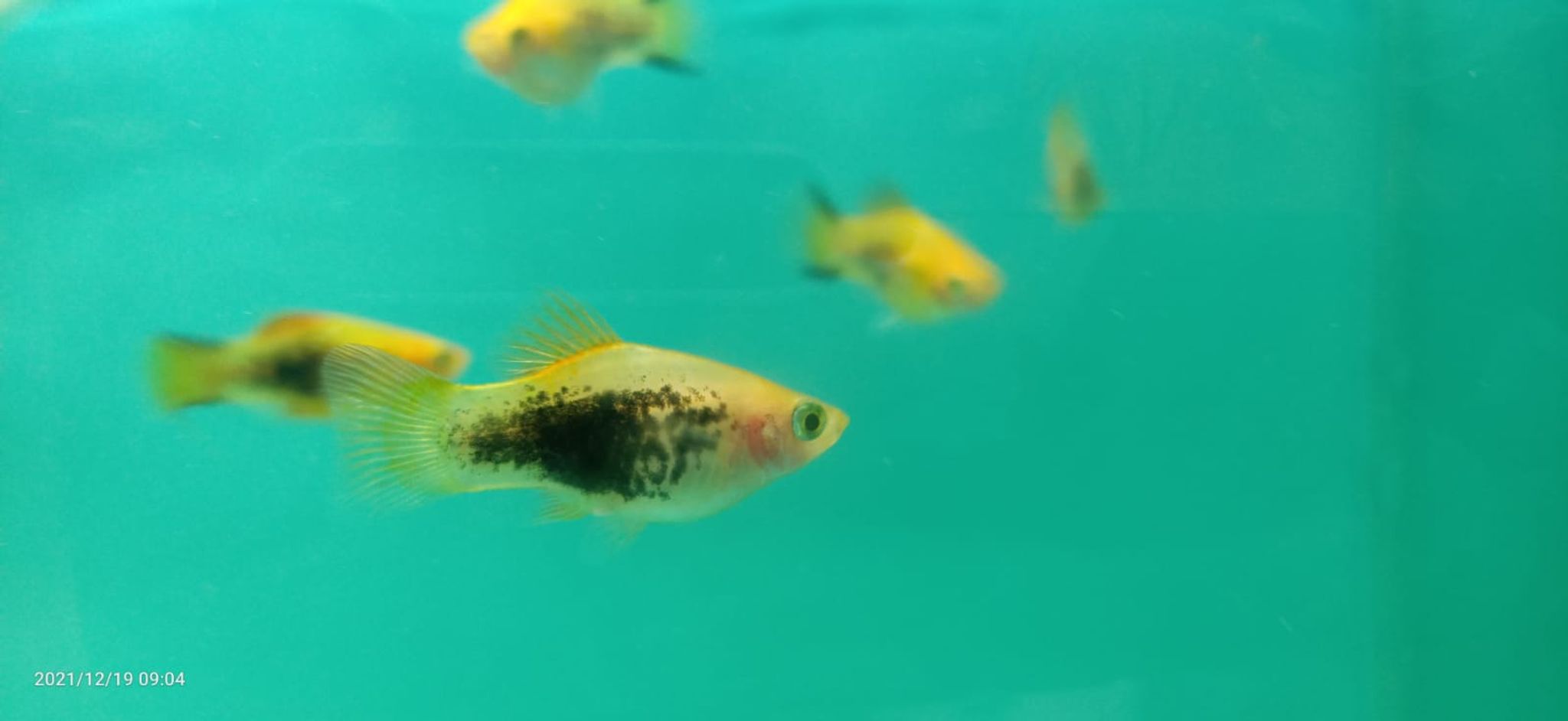
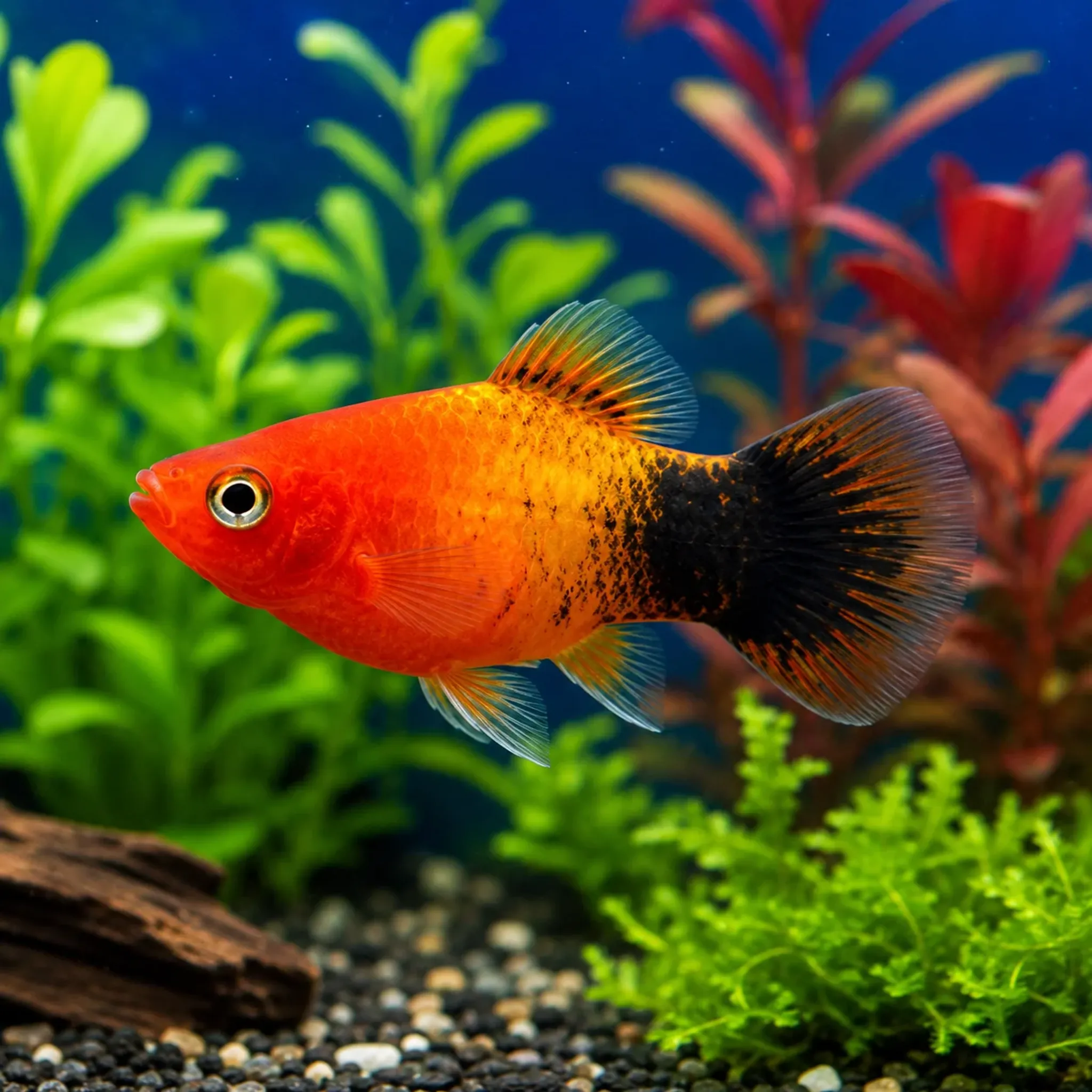
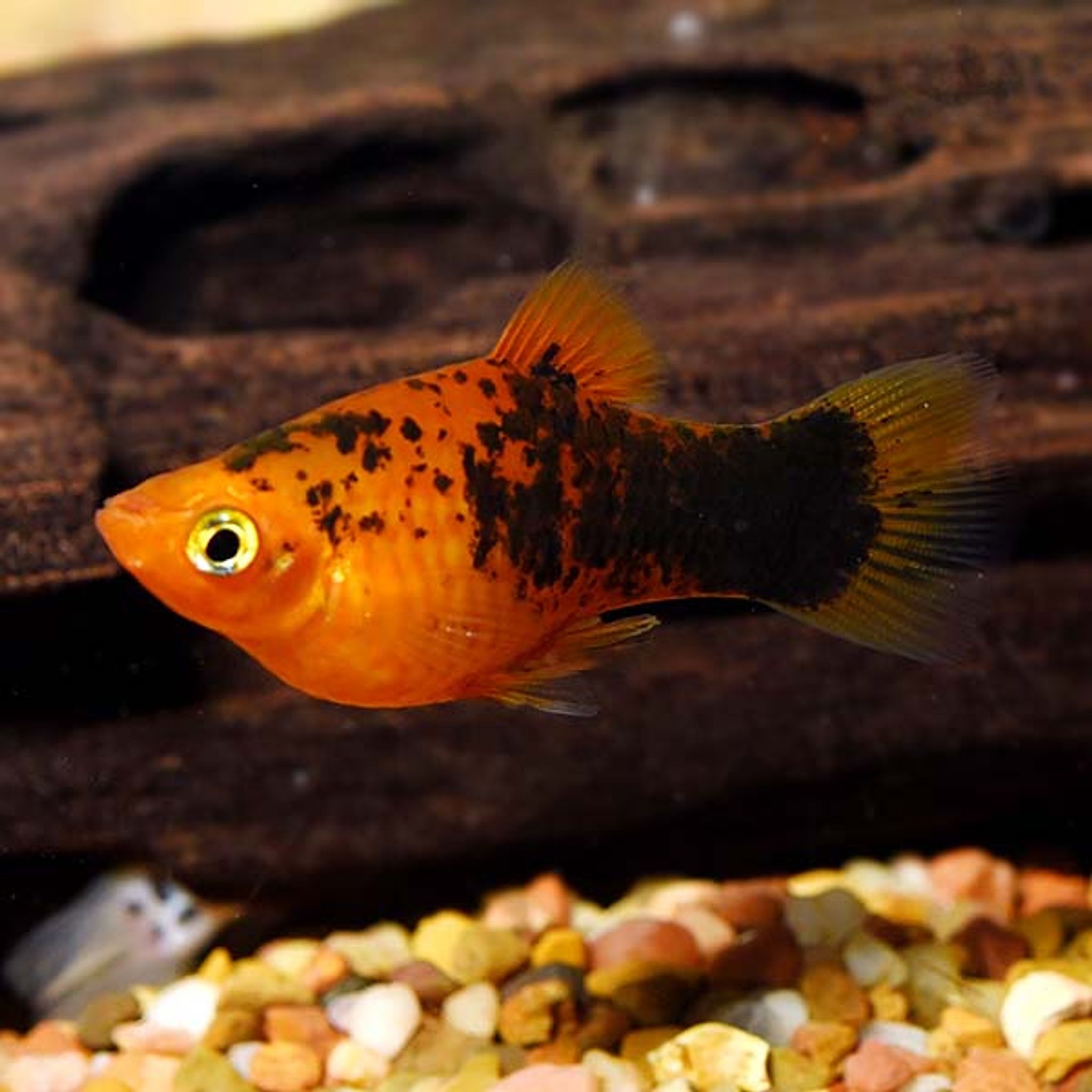
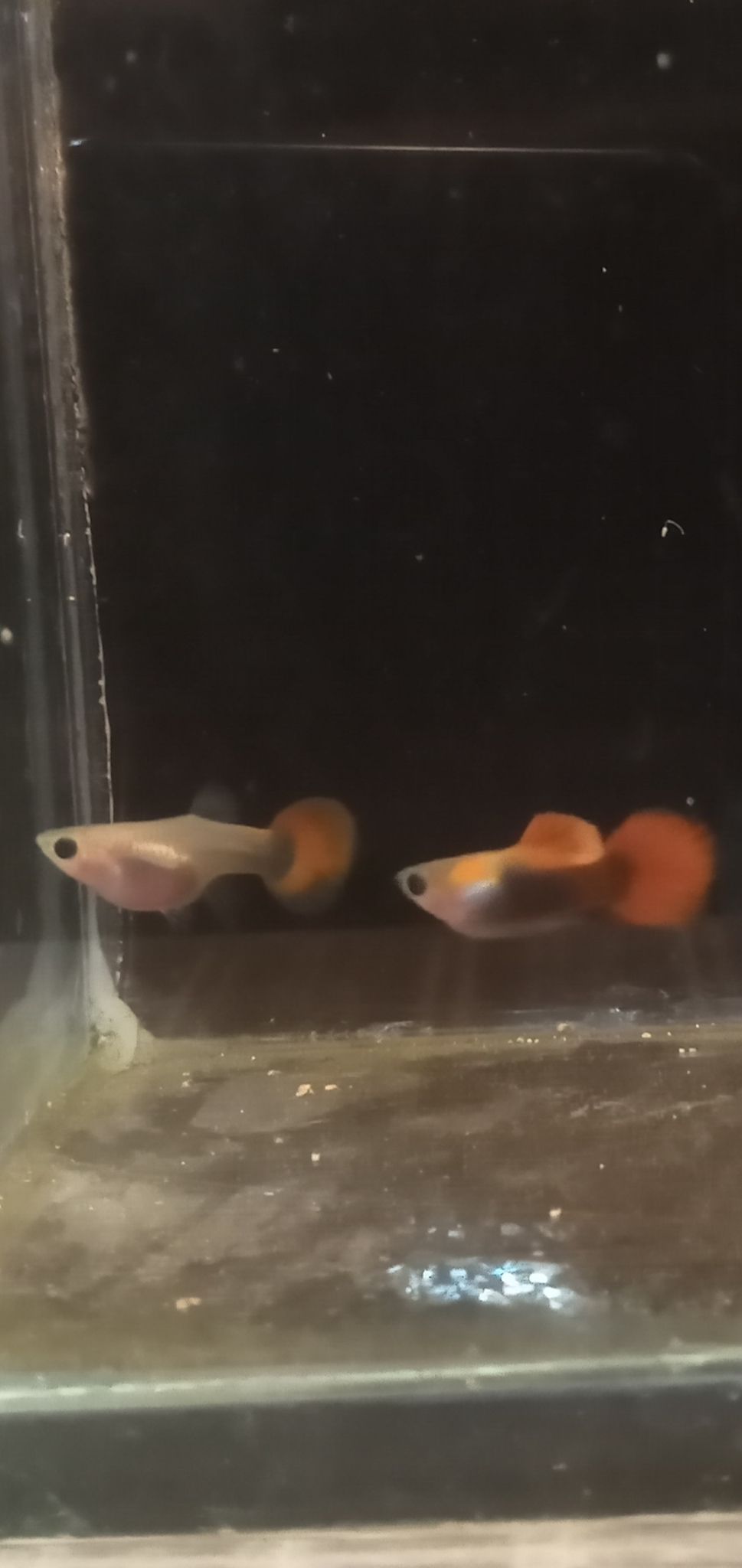
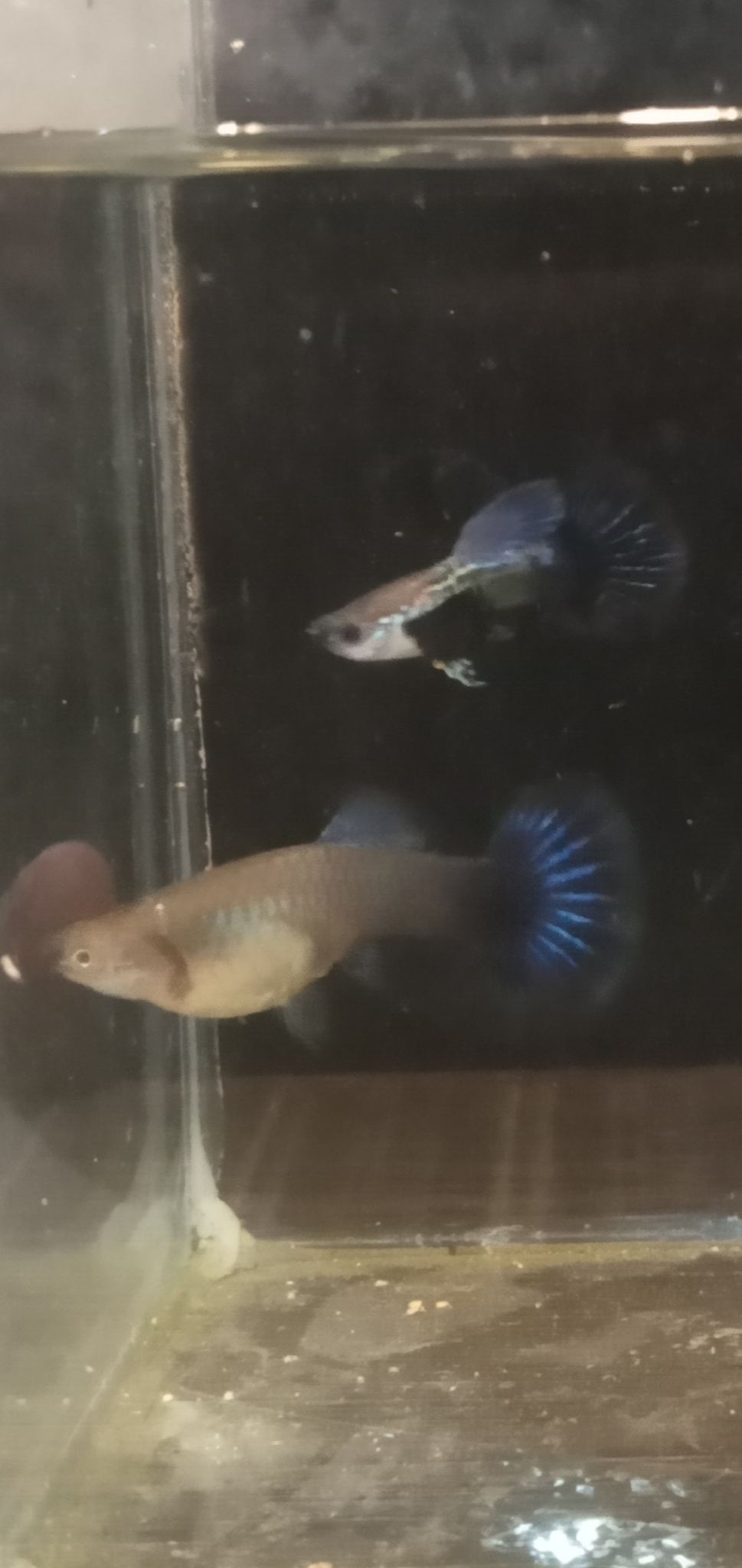
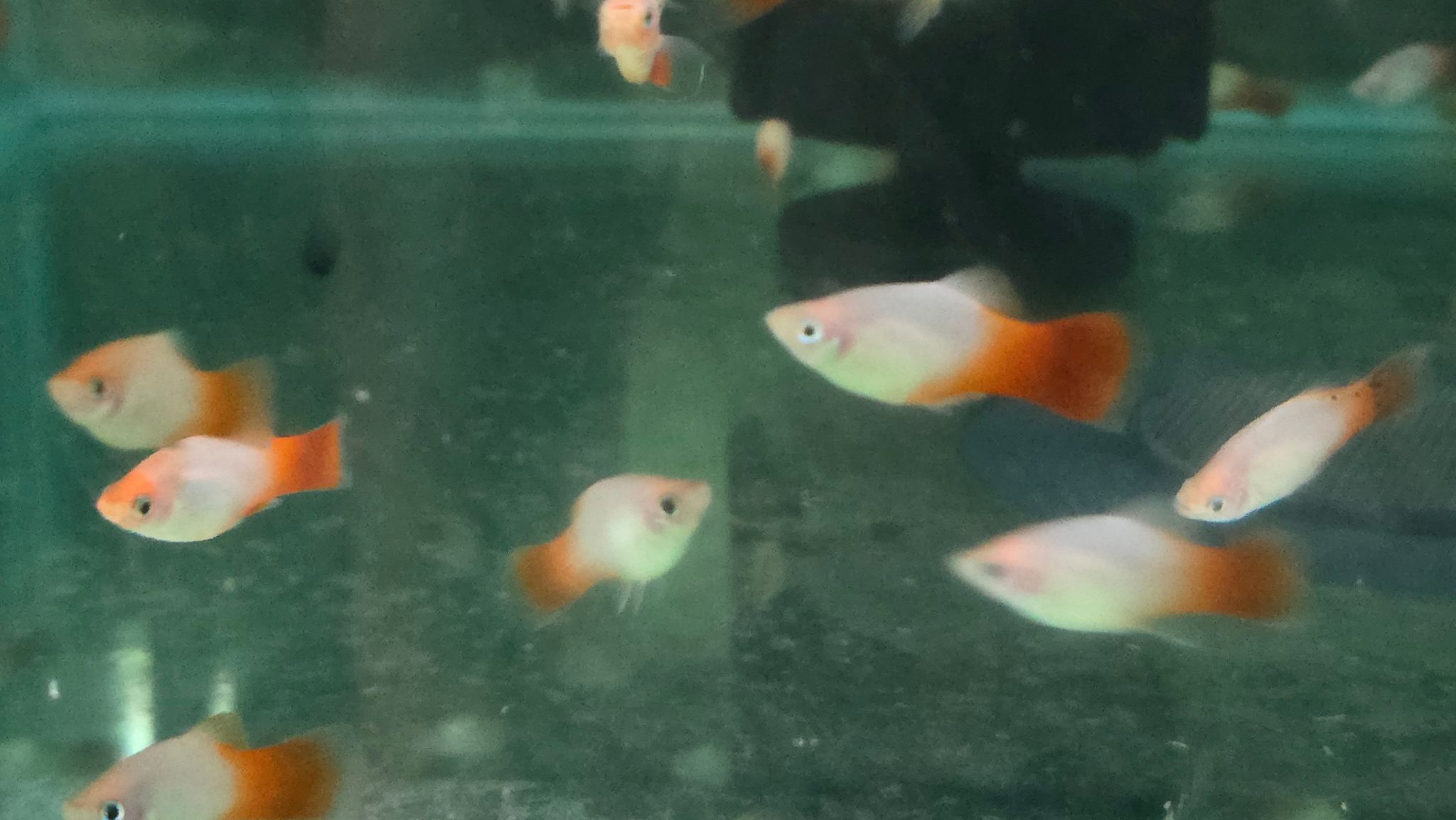
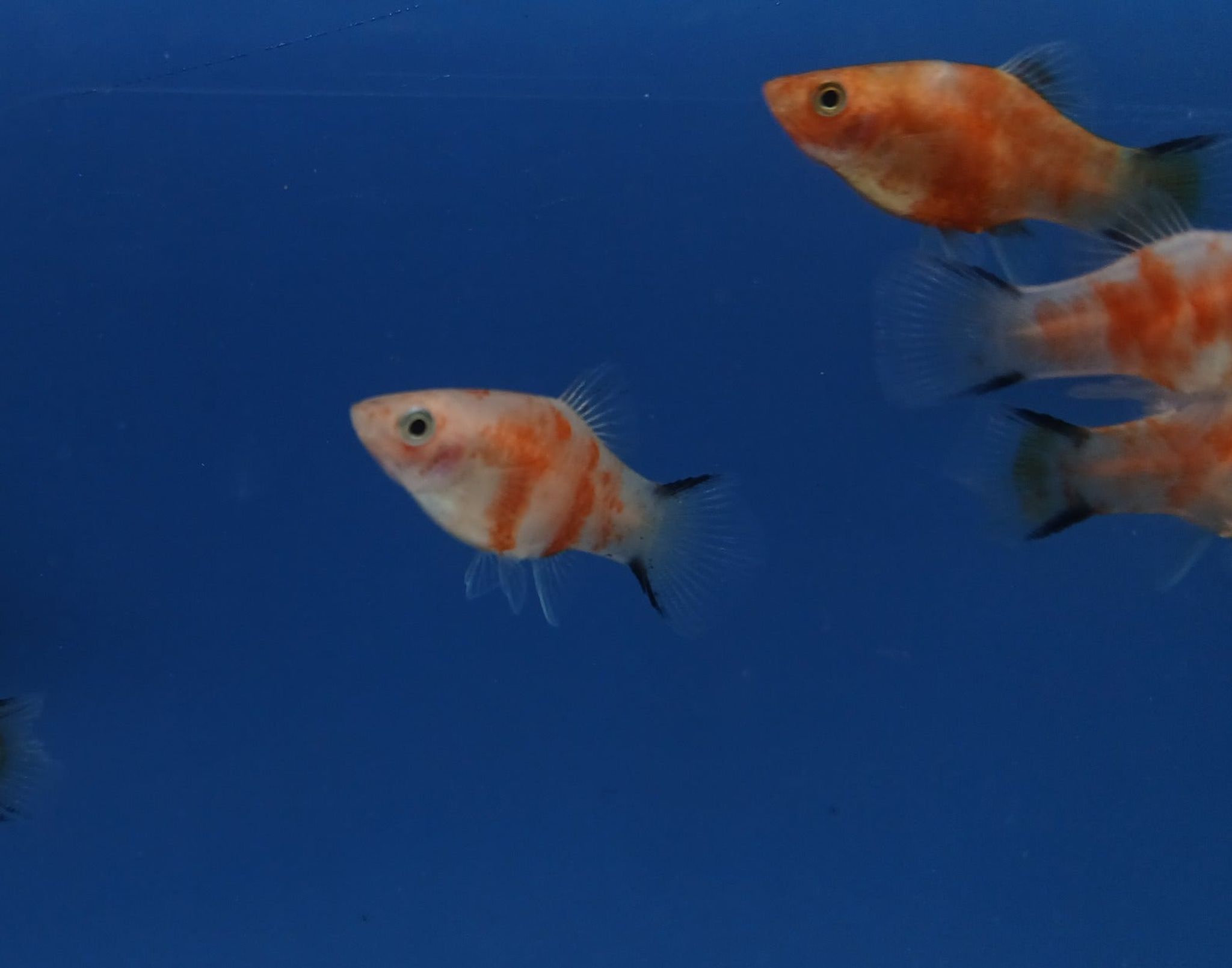
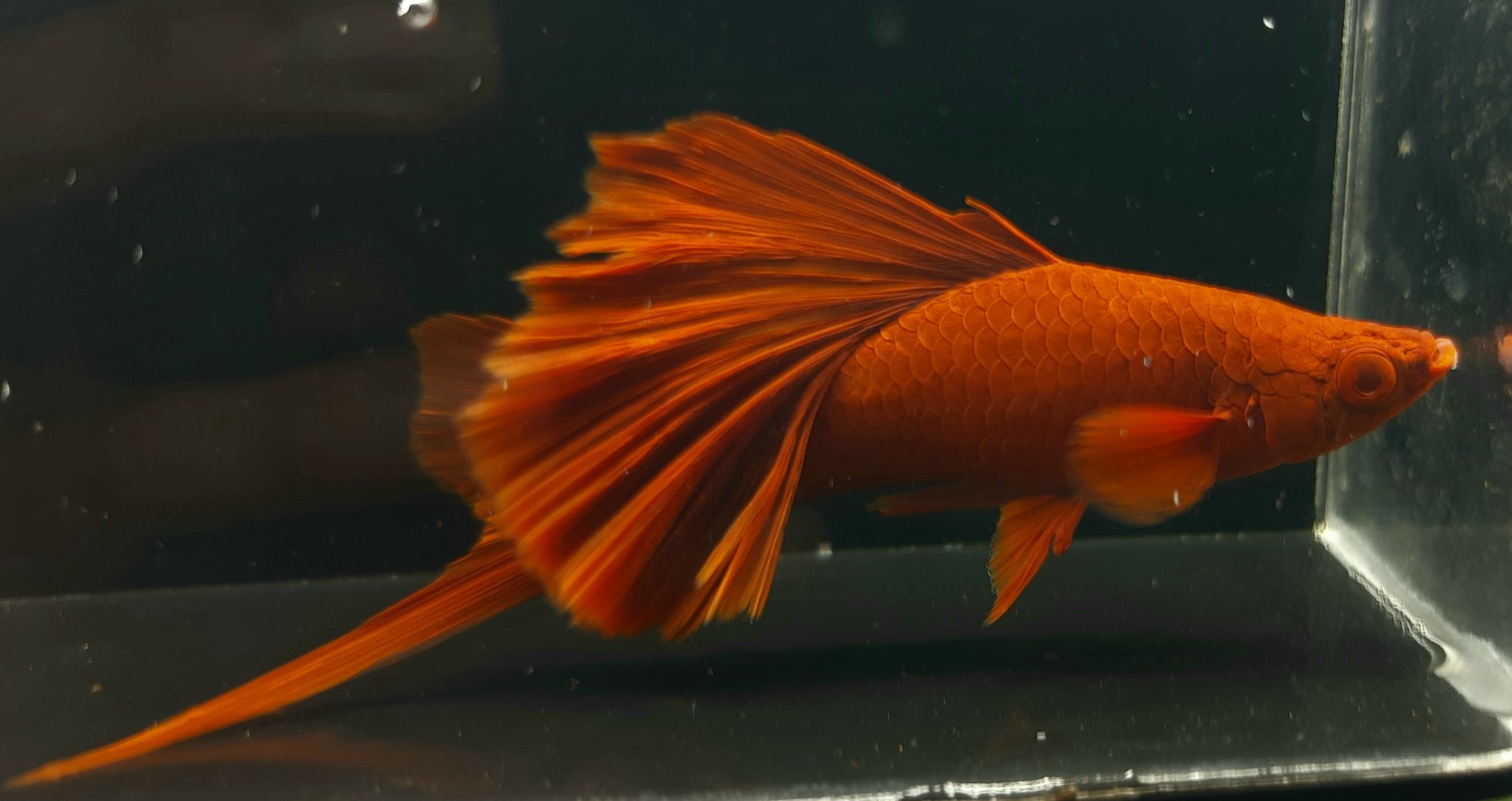
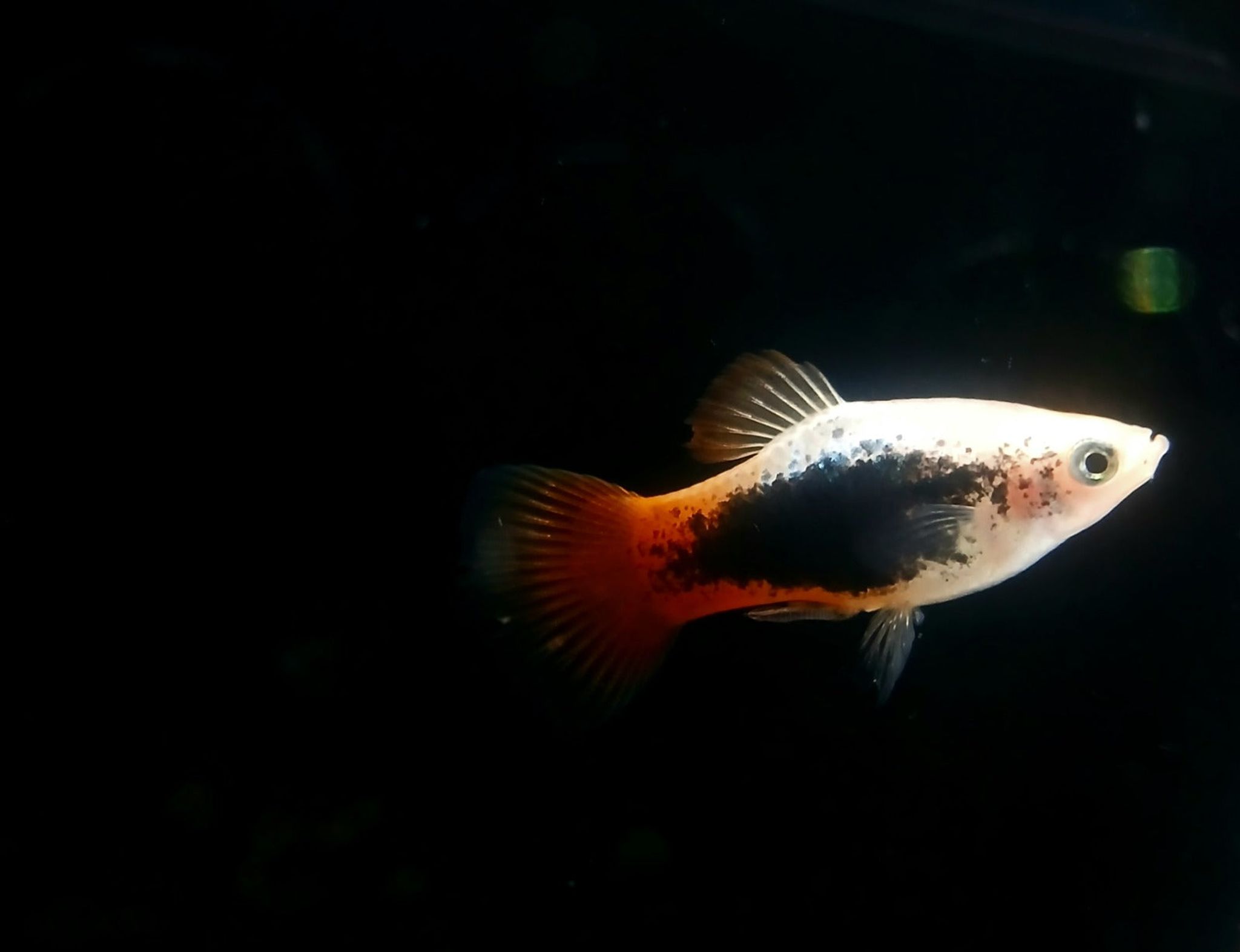
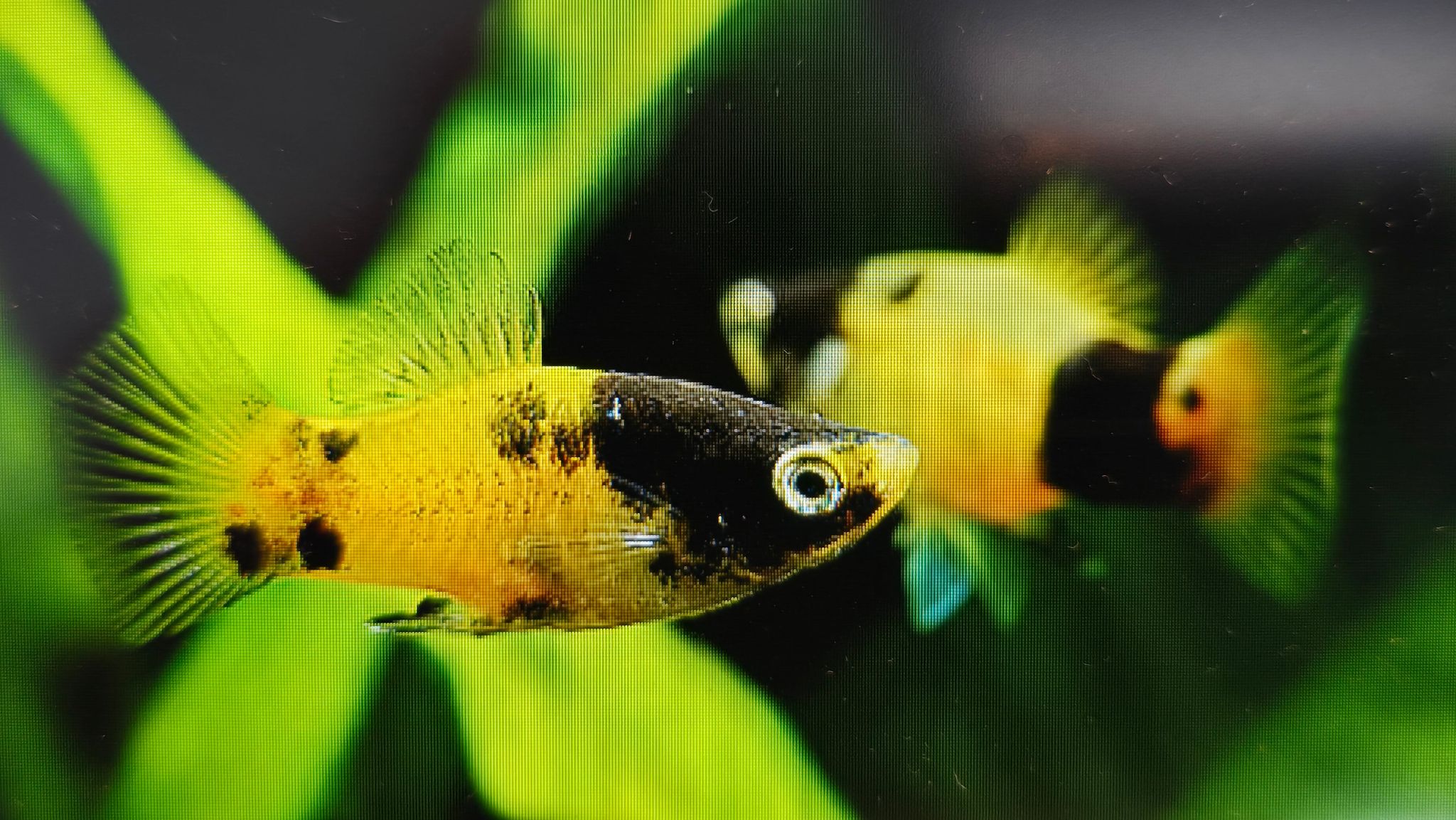
  • Appearance and temperament: The kohaku name comes from the Japanese koi variety — a creamy white base marked with bold saddles and patches of deep red or orange, with no black in the pattern. On top of that, the "wag" refers to the contrasting colour carried through the caudal and dorsal fins, while the lyretail gene stretches the top and bottom of the tail into long, elegant points that flow as the fish swims. Supplied at a young 3–4 cm, they are peaceful, busy, endlessly curious fish that will hover at the glass whenever you approach, and males develop a gonopodium as they mature. They make a superb choice for beginners and nano-community keepers alike.
  • Breeding notes: Like all platies, these are livebearers — the female carries her young for roughly 28 days and then releases 20–60 free-swimming fry, repeating every four to six weeks without any intervention from you. If you want to raise the fry, provide Java moss and hornwort for cover, or move the mother to a dedicated birthing tank. Newborns are large enough to eat crushed flake, spirulina powder, microworms and baby brine shrimp from day one. Do note that the lyretail trait can reduce fertility in some males, so breeders often pair lyretail females with standard-fin males for the best results. Females can store sperm for several months, so expect further broods even after the male is removed.