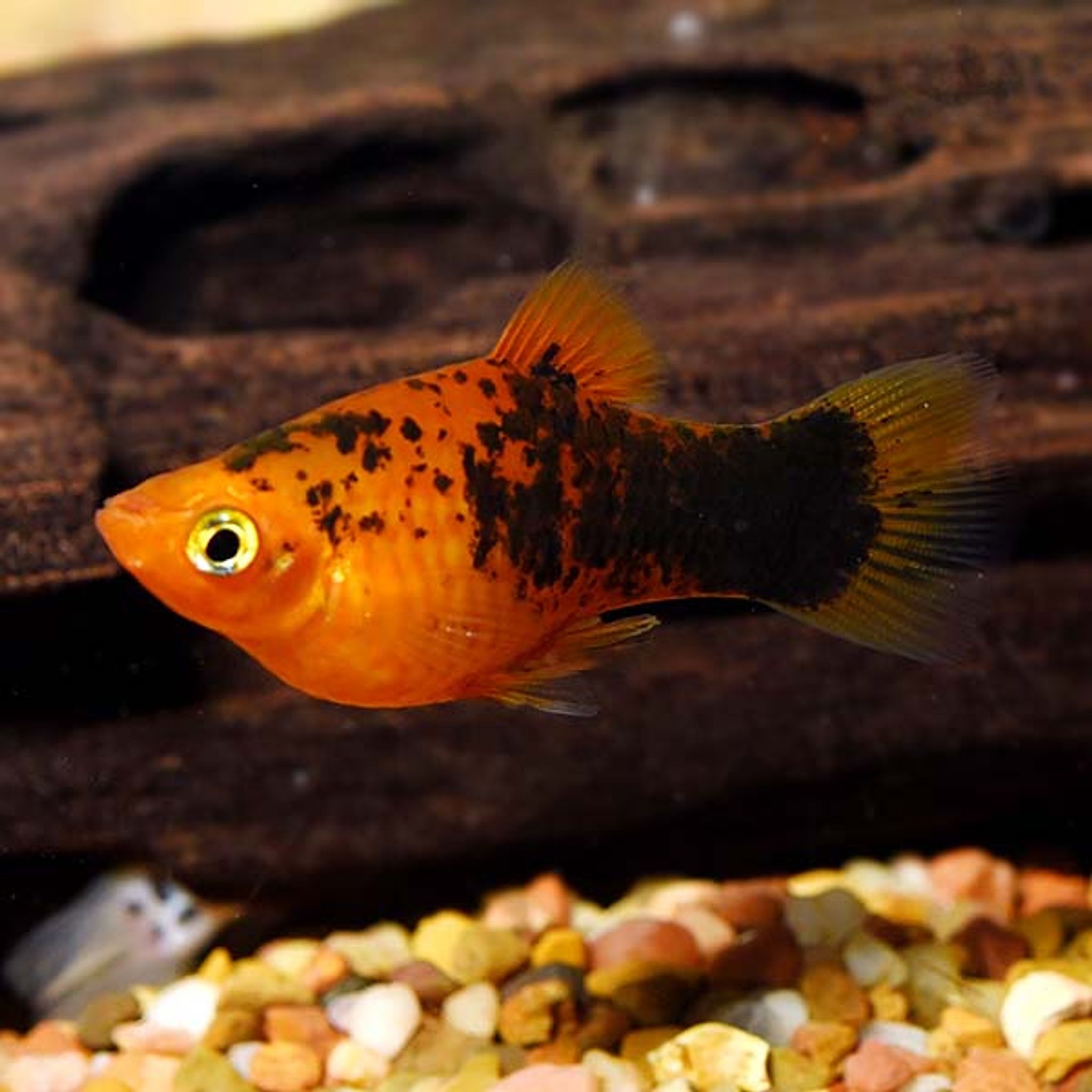

Best Tank Mates for Platy: Compatible Fish and Species to Avoid
The best tank mates for platy are other peaceful fish that like the same warm, hard, slightly alkaline water. Guppies, swordtails, danios, harlequin rasboras, Corydoras and nerite snails are the easiest picks. Aggressive cichlids, goldfish, fin-nippers and brackish species should stay out. Below you'll find a compatibility table, a do-not-buy list, the sex-ratio rule most people miss, and stocking plans for common US tank sizes.
Why Platies Need Careful Neighbors
Platies are peaceful, hardy, omnivorous livebearers. Adults reach about 2–3 inches (5–7.5 cm) and usually live 3–4 years. They have no spines, no speed advantage and no real way to defend themselves, so the first rule of stocking is simple: avoid bullies. A calm tank matters more than any single species choice.
The Water Your Tank Mates Must Accept
Platies come from warm, hard, heavily vegetated waters in Mexico and northern Central America. That history explains why they do best in alkaline water, and it's the filter every tank mate has to pass:
- Temperature: 72–78°F (22–26°C). For mixed tanks, aim for 74–78°F (23–26°C). Some sources push the top to 80°F (27°C), but staying at 78°F or below suits more companions.
- pH: 7.0–8.0, with tolerance down to about 6.8
- Hardness: 10–20 dGH
- Nitrate: under 20 ppm
Check your tap water first. Many US municipal supplies are already moderately hard, which suits platies well. If you have naturally soft water or use RO water, you may need a remineralizing product to hold hardness and pH steady. In practice, pick tank mates that tolerate neutral-to-hard, slightly alkaline water, and skip soft/acid specialists.
Tank Size
Recommended minimums vary from 10 to 30 gallons. Here's a practical breakdown:
- 10 gallons (38 L): a small platy-only group, nothing else
- 20 gallons (76 L): the minimum for any community mix
- 29–30 gallons (110–114 L): the ideal size, and the minimum if you want mollies, angelfish or rainbowfish
Fry are the reason bigger is better. A few platies can become a crowd in a couple of months.
The Sex-Ratio Rule (Count Every Livebearer)
Keep 2–3 females per male. The detail most guides skip is that the ratio should be counted across all livebearers in the tank. Male guppies, swordtails and mollies will chase female platies too, so four male guppies plus one male platy is five males pestering whoever is female.
A 1:1 ratio leads to harassed, stressed females. Fix it by adding females or rehoming males. If you don't want fry at all, an all-male tank avoids them entirely and still looks colorful.
Platy Tank Mate Compatibility Chart
| Species | Group size | Min. tank | Verdict | Notes |
|---|---|---|---|---|
| Guppy | Group of its own | 20 gal (76 L) | Excellent | Same needs; keep at 78°F or below |
| Endler's livebearer | Group of its own | 20 gal (76 L) | Excellent | Count males in the ratio |
| Swordtail | Group | 20–30 gal | Excellent | Will cross with platies |
| Molly | Group | 30 gal (114 L) | Good | Wants harder water |
| Zebra danio | 6+ | 20 gal (76 L) | Good | Active top swimmers |
| Harlequin rasbora | 8+ | 20 gal (76 L) | Good | Calm midwater school |
| Neon, rosy, ember, rummynose tetra | 10+ for neons | 20 gal (76 L) | Good | Choose tank-bred, hard-water-adapted fish |
| Cherry barb | Group | 20 gal (76 L) | Good | Unlike tiger barbs, not nippy |
| Corydoras | 6+ | 20 gal (76 L) | Excellent | Needs sand |
| Bristlenose pleco | 1 | 20–30 gal | Excellent | Under 6 in (15 cm); add driftwood |
| Otocinclus | Group | 20 gal (76 L) | Good | Mature tanks only |
| Nerite / mystery snail | Any | Any | Excellent | Nerite eggs won't hatch |
| Dwarf or honey gourami | 1 male | 20 gal (76 L) | Good | Centerpiece fish |
| Boeseman's rainbowfish | 6 | 30 gal+ | Good | Needs swimming room |
| Angelfish | 1–2 | 30 gal+, tall | Conditional | Adult platies only; eats fry |
| Betta | 1 | 20 gal+ | Conditional | See the betta section |
| White Cloud Mountain Minnow | 6+ | 20 gal (76 L) | Conditional | Only overlaps at the cool end |
| German blue ram | Pair | 30 gal+ | Marginal | Wants soft, warm water |
Best Tank Mates by Role
Other Livebearers
Livebearers are the natural first choice because they share platies' taste for hard, alkaline water.
- Guppies are the easiest pairing of all. Needs are nearly identical, and they can't hybridize with platies. Keep each species as its own group and hold the temperature at 78°F (26°C) or below. You can browse guppies on FishyHub to build a mixed livebearer tank.
- Endler's livebearers behave like small guppies. Their males count toward your ratio.
- Swordtails are close relatives and will interbreed with platies. That's fine if you don't mind mixed offspring.
- Mollies grow larger and prefer harder water, so reserve them for 30 gallons and up.
Schooling Fish
Schools fill the middle and top of the tank and rarely bother platies:
- Zebra danios in groups of 6 or more
- Harlequin rasboras in groups of 8 or more
- Neon tetras in groups of 10 or more, plus rosy, ember and rummynose tetras. Many tetras come from soft water, so choose tank-bred fish that have been raised in harder conditions.
- Cherry barbs, the peaceful member of the barb family
Bottom Dwellers and Cleanup Crew
- Corydoras in groups of 6+ over sand, which protects their barbels. Corydoras catfish clean up food that falls past the platies.
- Bristlenose pleco: stays under 6 inches (15 cm) and appreciates driftwood to rasp on.
- Otocinclus: only for mature, established tanks. Added to a new setup, they starve because there isn't enough biofilm and algae.
- Nerite and mystery snails: platies leave them alone. Nerite eggs won't hatch in freshwater, so they don't overrun the tank.
Centerpiece Fish
- One male dwarf gourami or honey gourami adds color at the surface without bothering the platies.
- Boeseman's rainbowfish work in 30 gallons or more as a group of 6.
- German blue rams are a marginal match. They want soft, warm water, which pulls against platy chemistry.
Conditional Picks
- Angelfish: only with adult platies in a 30-gallon or larger tank with tall water. Angelfish will eat fry, and small juveniles too.
- White Cloud Mountain Minnows: a cool-water fish that only overlaps with platies at the low end of the range, around 72°F (22°C).
The Betta Question
Opinions on bettas range from "fine together in 5 gallons" to "never." The honest answer is sometimes, and only when all of these are true:
- The tank is 20 gallons or larger and heavily planted
- The betta has a calm temperament
- The platies are short-finned, not fancy long-finned forms
- You have a backup tank ready
Watch closely for the first week. Chasing, flared standoffs or torn fins on either fish mean it's time to separate them. Long-finned fancy platies shouldn't share a tank with bettas or with any nipper.
Can Platies Live with Cherry Shrimp?
Sources disagree, and both sides are partly right. Adult cherry shrimp are generally left alone, but shrimplets get eaten. If you want the colony to grow, add dense moss for the babies to hide in, or keep the breeding colony in a separate tank. Amano and ghost shrimp are larger and a safer choice alongside platies.
Tank Mates to Avoid
- Large or aggressive cichlids: they'll bully or kill a platy.
- Predators big enough to swallow a platy: if it fits in the mouth, it's food.
- Goldfish: they prefer cold water and produce heavy waste, a poor match for a tropical community.
- Fin-nippers such as tiger barbs and serpae tetras. Tiger barbs are only worth considering as a school of 8+ in 30 gallons or more, and even then they're not recommended.
- Pea puffers: despite appearing on some lists, they nip and do best in a species-only tank.
- Brackish species such as green spotted puffers, which eventually need salt water.
- Soft/acid specialists that won't thrive in hard, alkaline water.
Sample Stocking Lists for US Tank Sizes
These assume good filtration, live plants and regular water changes.
- 10 gallon (38 L): 3–5 platies, ideally all male, plus a nerite snail. No community fish and no mollies.
- 20 gallon long (76 L): 5 platies (1 male, 4 females or all male), 8 harlequin rasboras, 6 Corydoras, 1–2 nerite snails.
- 29 gallon (110 L): 6 platies, 6 guppies (female-heavy across both species), 10 neon tetras, 6 Corydoras, 1 bristlenose pleco, 1 male honey gourami.
- 55 gallon (208 L): 8 platies, 6 mollies, 6 Boeseman's rainbowfish, 8 cherry barbs, 8 Corydoras, 1 bristlenose pleco, and either 1–2 angelfish added once the platies are adults or a school of danios.
A Basic Molly, Platy and Guppy Tank
A popular all-livebearer setup works best in 29–36 gallons (110–136 L), planted, with pH around 7.5. Stock female-heavy or all male, and count every male across all three species. Mollies don't belong in 10 gallons.
How to Introduce New Tank Mates
- Quarantine every newcomer for 2–4 weeks in a separate tank.
- Add peaceful fish first and more assertive fish last, so no newcomer settles in and claims the tank.
- Plant heavily and add decor to create sight breaks.
- Watch the first few days for chasing, hiding or clamped fins.
Platy Fry: Breeding, Survival and Surplus
Platies drop 10–80 fry every 4–6 weeks, after a gestation of 24–30 days. Parents and tank mates both eat young, and stress and hunger make it worse. In a busy community, most fry are eaten, which works as natural population control.
To raise more fry:
- Add floating and bushy cover such as hornwort and water sprite
- Use a breeder box for short stays only
- Move fry to a separate grow-out tank
- Feed crushed flake, baby brine shrimp and microworms 3–5 times a day
- Return them to the main tank at about 3/4 inch (2 cm)
Plan for surplus before it arrives. Options include a local store trade-in or an aquarium club. Never release aquarium fish into ponds, lakes or streams. It's illegal in many places and harms native wildlife.
What Is a Parrot Platy?
A parrot platy is a hybrid color form with a black-edged V pattern on the tail. Care and compatibility are the same as for any platy. It's unrelated to the blood parrot cichlid, which is a much larger fish and not a platy tank mate.
A Note on Taxonomy
You'll sometimes read that platies and guppies belong to different families. They don't. Both are in the family Poeciliidae but in different genera, which is why they can't cross. Platies and swordtails share a genus, so they do interbreed.
Keeping a Community Tank Healthy
Most disease problems are prevented with clean water, a stable temperature and quarantine. Salt dips can help against some external parasites, but Corydoras, snails and shrimp tolerate salt poorly. Treat affected fish in a separate tank rather than salting the whole community.
Common Mistakes and Troubleshooting
- 1:1 sex ratios: females get harassed. Add females or rehome males.
- Mismatched water: mixing platies with soft-water specialists or goldfish.
- Fry-driven overstocking: have a surplus plan before numbers climb.
- Fancy long-finned platies with nippers or bettas.
- Otocinclus in a new tank: they'll starve.
- Hiding or clamped fins: it usually means a bully or bad water. Test ammonia, nitrite and nitrate before blaming a tank mate.
Frequently Asked Questions
How many platies should I keep together?
Keep at least 3–5, with 2–3 females for every male. An all-male group also works well and produces no fry. Remember to count males of other livebearer species in the ratio.
Can platies live with bettas?
Sometimes. It works best in a heavily planted tank of 20 gallons or more with a calm betta and short-finned platies. Keep a backup tank ready and watch for chasing or torn fins during the first week.
Do platies breed with guppies or mollies?
No. They're in the same family but different genera, so they don't cross. Platies do breed with swordtails, their close relatives.
Will platies eat shrimp or snails?
Platies leave snails alone. They'll eat baby shrimp readily, but adult shrimp are rarely harmed. Amano and ghost shrimp are the safest options.
Can platies live with goldfish?
No. Goldfish prefer colder water than platies and produce far more waste. Neither species does well in a compromise tank.
Do platies need a heater?
In most US homes, yes. Room temperatures often drop below the 74–78°F (23–26°C) range that suits a mixed tank, so an adjustable heater keeps conditions stable.
Build Your Platy Community
Start with a small group of platies, then add companions that match their water and temperament: a livebearer group, a peaceful school and a bottom crew. You can browse platies on FishyHub to pick colors and plan a stocking list that fits your tank.


