


Ranchu vs Oranda: Which Fancy Goldfish (Ikan Emas) Should You Get in Malaysia?
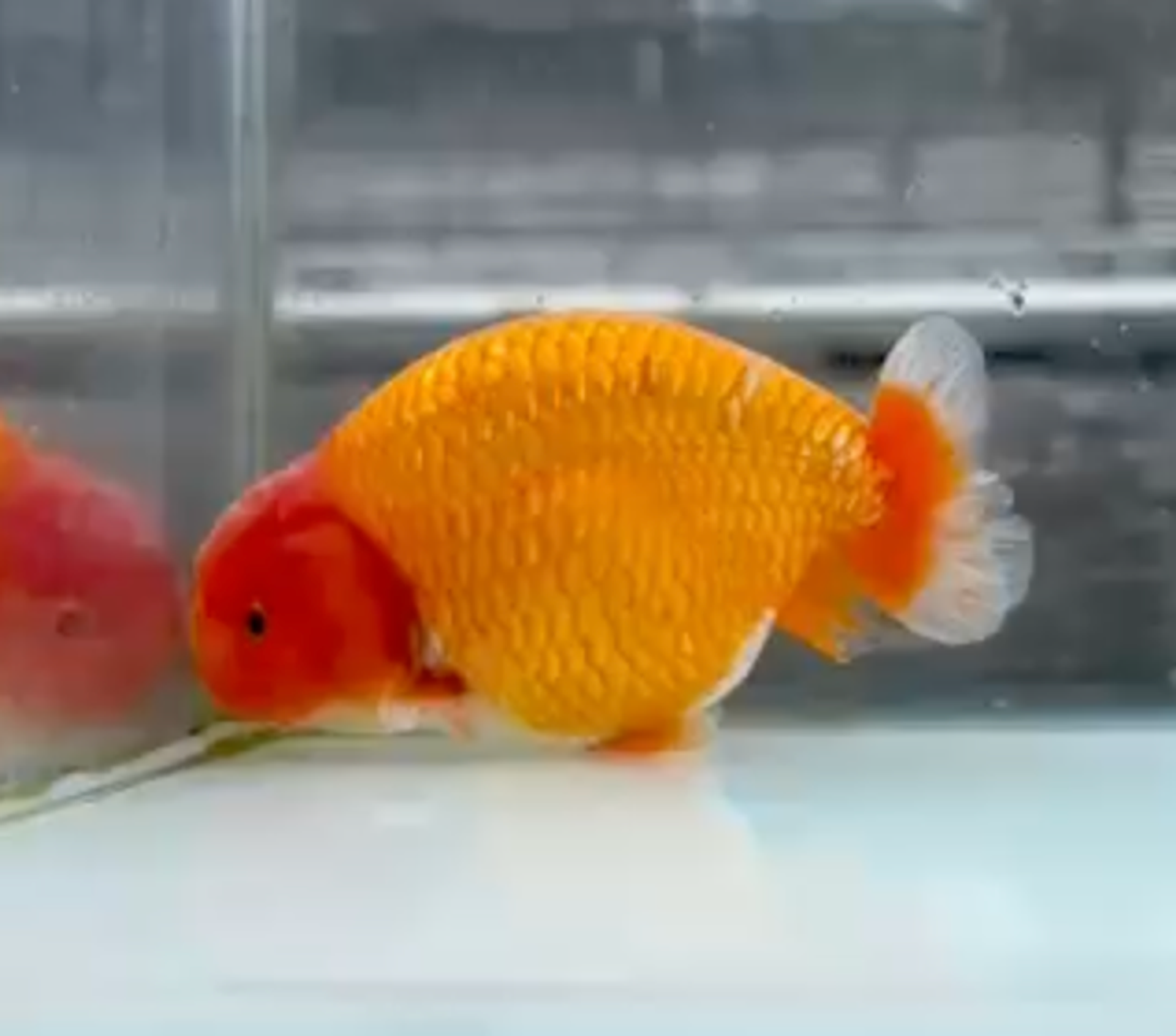
The quickest way to settle ranchu vs oranda is to look at the back. An oranda has a dorsal fin (the tall fin on top of the back) and usually a longer, flowing tail. A ranchu has no dorsal fin, a short, deep, egg-shaped body with a smoothly curved back, and a short tail. Both can grow a wen (the fleshy "hood" on the head). In practice, orandas are better swimmers and a little more forgiving, so they suit beginners; ranchu are slower, more delicate swimmers prized by collectors and need a shallower, calmer tank. Both are ikan emas (fancy goldfish) and both need clean, well-oxygenated water and help coping with Malaysian heat.
Ranchu vs Oranda: Side-by-Side
| Feature | Ranchu (ikan emas ranchu) | Oranda (ikan emas oranda) |
|---|---|---|
| Dorsal fin | None | Yes |
| Back shape | Smooth curve dropping sharply to the tail | Fairly straight back with a fin |
| Body | Short, broad, egg-shaped | Rounded, slightly longer |
| Tail | Short, often angled down | Medium to long, flowing |
| Wen (head growth) | Yes, often covers the whole head | Yes; red-cap and full-hood forms |
| Swimming | Slow, waddling | Stronger, more stable |
| Tank depth | Shallower preferred (30–40 cm water) | Standard depth fine |
| Beginner-friendly | Moderate | Good |
| Show focus | Back curve, top view | Hood and fins, side view |
| Adult size | ~12–18 cm | ~15–20 cm+ |
Body Shape and Wen
The wen grows on both, but it develops differently. Many ranchu grow a large hood covering the cheeks and head, which makes their faces look round and "baby-like". Orandas range from a neat red cap (red-cap oranda) to a heavy full hood. In both, a very large wen can grow over the eyes and gills, which may need gentle trimming by an experienced keeper.
The dorsal fin is the clearest clue. Lionhead goldfish also lack a dorsal fin and are often confused with ranchu; ranchu generally have a more arched back and a tail set at a steeper angle. Our guide to types of goldfish in Malaysia covers lionheads and other varieties.
Swimming Ability
Without a dorsal fin, ranchu are less stable and swim with a wobbly, waddling motion. That's part of their charm but has consequences:
- They struggle in strong current. Use gentle filter outflow.
- They lose out at feeding time to faster fish.
- Deep tanks make them work harder; many breeders keep ranchu in shallow, wide tubs or tanks.
Orandas swim more strongly, cope better with normal filtration and can share a tank with other fancy goldfish more easily.
Care Differences
Basic care is the same: big water volume, strong filtration, regular water changes and good food. Differences are mostly about tank shape and tankmates.
Tank size
- Oranda: a 2 kaki tank (about 55–65 L) is a minimum for one or two; a 3 kaki tank is better for a group
- Ranchu: floor area matters more than height. A wide 2.5–3 kaki tank with water 30–40 cm deep suits a small group
Tankmates
Keep ranchu with other slow, dorsal-less goldfish (lionhead, other ranchu) or calm fancy goldfish. Don't mix them with fast common goldfish or comets, which outcompete them for food. Orandas do well with ryukin, other orandas and pearlscales.
Feeding
Both need sinking pellets or gel food so they don't gulp air at the surface, which can contribute to swim bladder problems. Soak dry pellets briefly before feeding. Find goldfish food under food for goldfish and read the goldfish food guide.
Malaysian Heat: Tips for Both
Goldfish prefer about 20–26°C, but Malaysian homes sit at about 26–31°C. Fancy goldfish do survive local temperatures (many are bred in Malaysia and other parts of Asia), but warm water holds less oxygen and speeds up bacterial infections.
- Keep the tank out of direct sun
- Use a kipas akuarium (cooling fan) or chiller for heavily stocked tanks
- Run an air stone with a pam udara
- Change 25–30% of the water weekly with anti klorin-treated water
- Don't overfeed in hot spells
The aquarium cooling guide has more detail.
Ranchu-Specific Tips
- Shallow water: around 30–40 cm. Many hobbyists use wide tubs or low tanks.
- Gentle flow: a sponge filter or a top filter with a baffled outflow.
- Feed small amounts often: two or three small meals beat one large meal.
- Watch for swim bladder issues: short-bodied fish are more prone. See swim bladder disease.
- Buy from the top: ranchu are judged from above. Check that the back curve is smooth with no bumps or traces of a dorsal fin.
Price Drivers
Both varieties range from affordable pet-grade fish to expensive show-grade fish. Price in RM depends on size, hood development, symmetry, colour (red-white, calico, black, panda) and bloodline. Imported or competition-grade ranchu from Japan, Thailand or China often cost more. Compare current RM prices on listings rather than relying on fixed figures.
Which Should You Get?
- Choose an oranda if you're new to fancy goldfish, want a fish that copes with normal filtration, and like the side view of a flowing tail and hood.
- Choose a ranchu if you can provide a wide, shallow tank with gentle flow, want a collector's fish, and enjoy viewing from above.
For full care, read the oranda care guide and our main goldfish care guide.
Browse ranchu and oranda from Malaysian sellers on FishyHub, or see all goldfish. Check each listing for real photos, size, seller location and delivery or self-collect options.
Frequently Asked Questions
Apa beza ikan emas ranchu dan oranda?
Ranchu tiada sirip belakang (dorsal) dan badannya pendek dengan belakang melengkung, manakala oranda ada sirip belakang dan ekor lebih panjang. Kedua-duanya boleh ada jambul (wen) di kepala.
Ikan emas ranchu sesuai untuk pemula?
Ranchu boleh dijaga oleh pemula, tetapi ia perenang lemah dan perlukan akuarium cetek dengan arus perlahan. Oranda lebih mudah untuk orang baru kerana lebih kuat berenang.
Can ranchu and oranda live together?
Yes, in a spacious tank with gentle flow, but watch feeding time. Orandas swim faster and may eat most of the food.
Why does my ranchu stay at the bottom?
It may just be resting, but staying down with clamped fins or tilting can point to poor water, overheating or swim bladder trouble. Test the water first.
Do ranchu need a chiller in Malaysia?
Not always. Many ranchu live in Malaysian homes with a fan, good aeration and frequent water changes. A chiller helps in very hot rooms or heavily stocked tanks.