

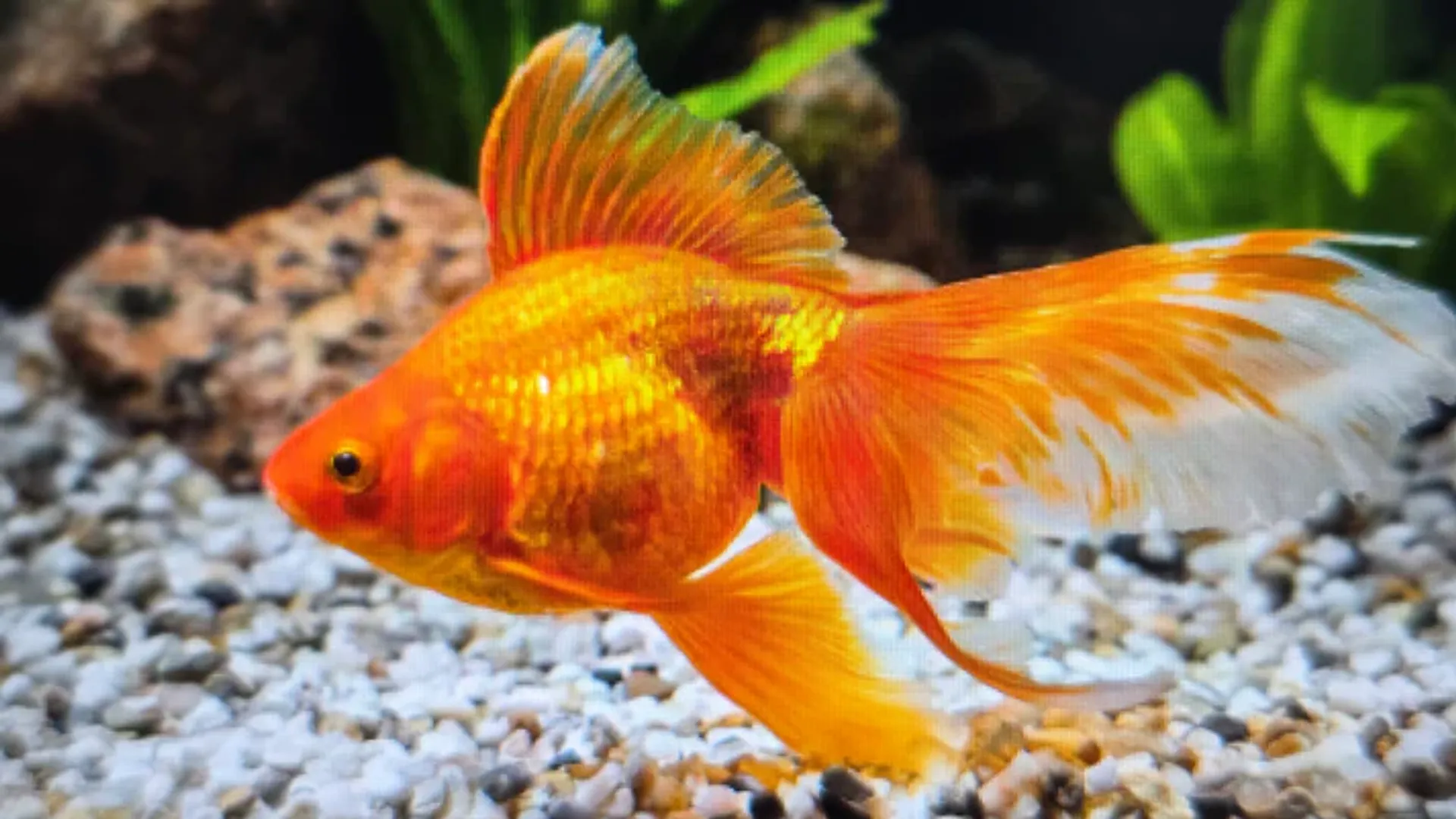

Ikan Berenang Terbalik? Swim Bladder Problems in Goldfish & Bettas
If your ikan berenang terbalik (swims upside down), floats tail-up, swims senget (tilted) or can't leave the bottom, the problem is almost always the swim bladder, the gas-filled organ that keeps a fish level in the water. In most cases, especially in fancy goldfish, it's linked to feeding and digestion and can be fixed with a few days of fasting and a change of food. Sometimes it's an infection or a body-shape problem that won't fully go away. This guide helps you tell which one you're dealing with.
What the Swim Bladder Does
The swim bladder works like a small balloon. The fish adds or removes gas to rise, sink or stay level without effort. When the bladder is squashed, inflamed or damaged, the fish loses balance:
- Floating at the surface, often belly-up or tail-up
- Sinking and resting on the bottom, struggling to swim up
- Swimming tilted or in circles
- A curved or bent posture
A fish that is upside down but still breathing and eating usually has a swim bladder issue, not a fish on its last breath.
Why Ikan Berenang Terbalik: Main Causes
| Cause | Typical fish | Clues |
|---|---|---|
| Overfeeding / gulping air | Fancy goldfish, bettas | Starts after feeding; floating; belly looks full |
| Constipation | Goldfish, bettas | Swollen belly, little or no poop, dry pellet diet |
| Body shape | Ranchu, oranda, ryukin, pearlscale, balloon types | Short, round body; recurring problem |
| Bacterial infection | Any | Other signs: red patches, lethargy, not eating, raised scales |
| Cold shock / temperature swing | Bettas in aircond rooms, any after big water change | Started after temperature drop |
| Injury or physical damage | Any | After a fall, fight or rough netting |
| Old age | Any | Gradual, gets worse slowly |
Why fancy goldfish get it most
Round-bodied fancy goldfish were bred for short, compact bodies. Their internal organs, including the swim bladder and gut, are squeezed into a small space. When the gut is full of dry pellets that swell after eating, or when the fish gulps air while snatching floating food, the swim bladder gets pressed out of shape. That's why ikan emas such as oranda and ranchu are the classic "upside-down" fish.
Bettas
In ikan laga, swim bladder problems usually come from overfeeding, especially with dry pellets or freeze-dried food that hasn't been soaked. A sudden drop in temperature when an air-conditioner runs all night can also slow digestion. Bettas with very large fins can also struggle to stay level, which looks similar.
What To Do: Feeding Fix (Try This First)
- Fast the fish for 2–3 days. No food at all. This lets the gut empty. Healthy adult fish handle this easily.
- Keep water clean and stable. Do a partial water change with dechlorinated water at the same temperature.
- Lower the water level for a fish stuck at the bottom, so it doesn't have to swim far to breathe.
- Offer a cooked, peeled green pea. After fasting, many keepers feed a small piece of blanched, skinned pea. It's a source of fibre that can help move the gut along. This is a traditional remedy, not a cure-all, and it should not become the main diet.
- Switch food. Go from floating pellets to sinking pellets or gel food, and soak dry food in tank water for a few minutes before feeding. Feed small portions, two to three times a day, rather than one big meal.
Many fish improve within a few days. Find sinking pellets and gel foods in goldfish food.
When It's Not Just Food
Infection
If the fish also has red streaks, raised scales, cloudy eyes, white stringy poop or stops eating, the problem is more than digestion. Move it to a hospital tank and consider an antibacterial medicine. Check our guide on dropsy (penyakit sisik nanas) if the belly swells and scales lift.
Epsom salt
Some keepers use Epsom salt (magnesium sulfate) in a hospital tank to help with constipation and swelling, at a low dose such as about 1/8 teaspoon per 4 litres. It is not aquarium salt, and it is not for the main tank.
Water quality
Ammonia and nitrite poisoning can make fish swim erratically. Test the water. If it's high, see kenapa ikan mati for the full checklist.
When Is It Permanent?
Some fish never fully recover, especially:
- Very round fancy goldfish that have had the problem many times
- Fish with a physical injury or deformity of the bladder
- Fish where an infection damaged the bladder
These fish can still live a decent life with adjustments: a shallower tank or lowered water level, smooth decor so they don't scrape, sinking or hand-fed food, and calm tankmates. Some keepers place a flat piece of slate or a leaf-style rest near the surface for bettas.
If a fish is clearly suffering, can't eat and is getting worse, talk to an experienced keeper or a fish-savvy vet about humane options.
Prevention for Malaysian Tanks
- Feed less than you think. Give only what is eaten in a minute or two. Warm Malaysian water (26–31°C) raises appetite, which makes overfeeding easy.
- Use sinking food for fancy goldfish and soak dry food.
- Vary the diet with vegetables and occasional frozen foods.
- Keep temperature stable. Avoid putting tanks directly under aircond vents, or in rooms where the temperature drops sharply overnight. If needed, use a thermometer to check.
- Keep goldfish in a filtered tank, not a small bowl. Our goldfish care guide explains tank sizes.
FAQ
Kenapa ikan emas berenang terbalik selepas makan?
Biasanya sebab terlebih makan atau tertelan udara masa makan makanan terapung. Perut yang penuh menekan pundi renang. Puasakan ikan 2 hingga 3 hari, kemudian beri makanan tenggelam yang direndam dahulu.
Kenapa ikan koi berenang miring?
Koi yang berenang miring mungkin ada masalah pundi renang, tetapi pada koi ia lebih kerap berkait dengan jangkitan atau kualiti air kolam. Uji air kolam dahulu, dan perhatikan jika ada tanda lain seperti luka atau sisik terangkat.
What is swim bladder in Malay?
It's usually called pundi renang in Malay. Keepers often just describe the symptom: ikan berenang terbalik or ikan berenang senget.
Do peas really cure swim bladder disease?
Peas help when the cause is constipation, because they add fibre. They don't fix infections, deformities or poor water. Use them occasionally, not as the main food.
How long does swim bladder take to recover?
Feeding-related cases often improve within 2–5 days of fasting and better food. Infections take longer and may need medicine. If there's no improvement after a week, the cause is probably not food.
Browse goldfish, oranda goldfish and sinking goldfish food from Malaysian sellers on FishyHub.