1–3 of 3
An aquarium thermometer, or termometer akuarium, is one of the cheapest pieces of equipment you will buy, and one of the most useful. In a Malaysian home the room is warm all year, so the question is rarely "is my tank too cold?" but "how hot does it get on a bad afternoon?". A thermometer gives you the answer before your fish start gasping at the surface.
FishyHub lists digital, glass and stick-on thermometers from aquarium sellers around Malaysia, with prices in RM. They suit every setup, from a small betta tank on a desk to a 4-foot community tank or a goldfish tank in a hot living room.
A small LCD unit sits outside the tank, and a wired probe goes into the water. They are easy to read, and many show one decimal place. Some models also record the day's highest and lowest temperature, which is very handy for spotting afternoon heat spikes while you are at work. Most run on a button battery, so keep a spare.
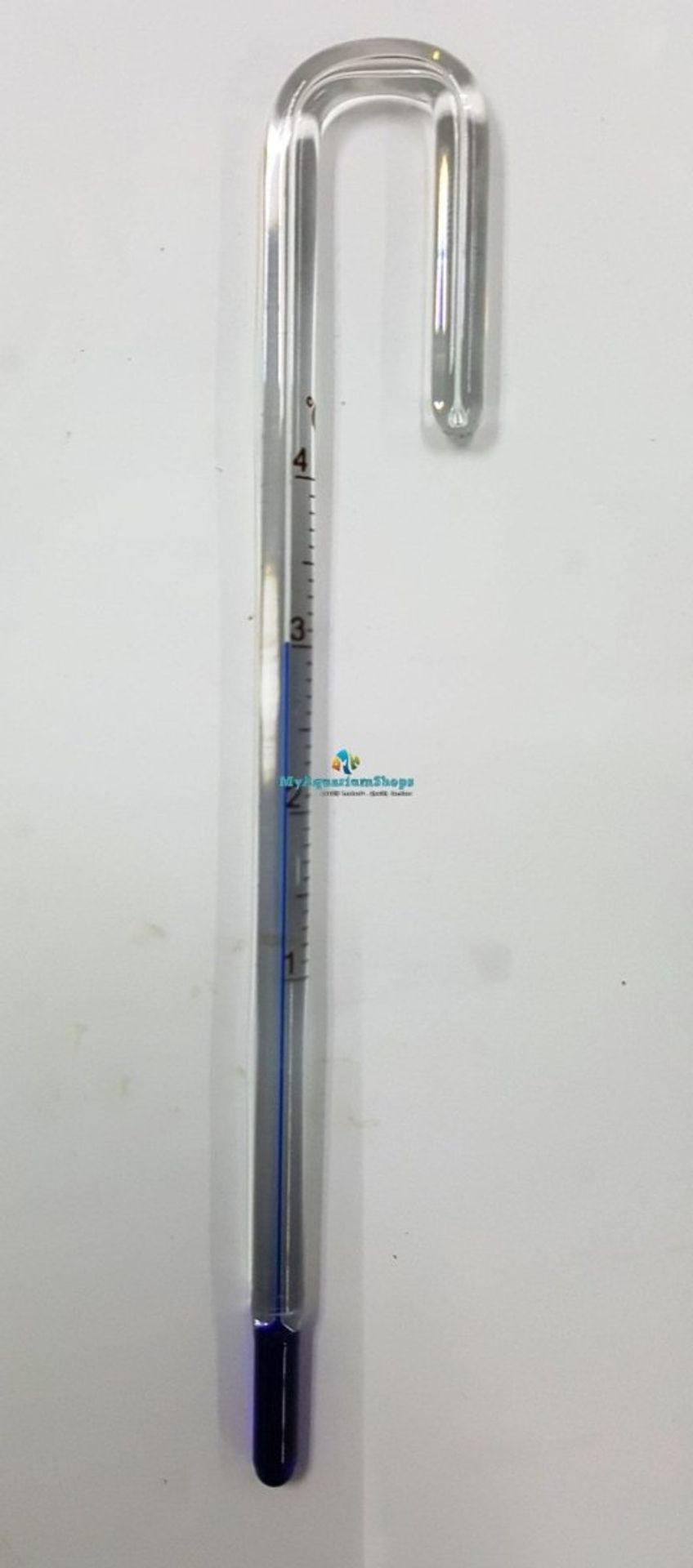
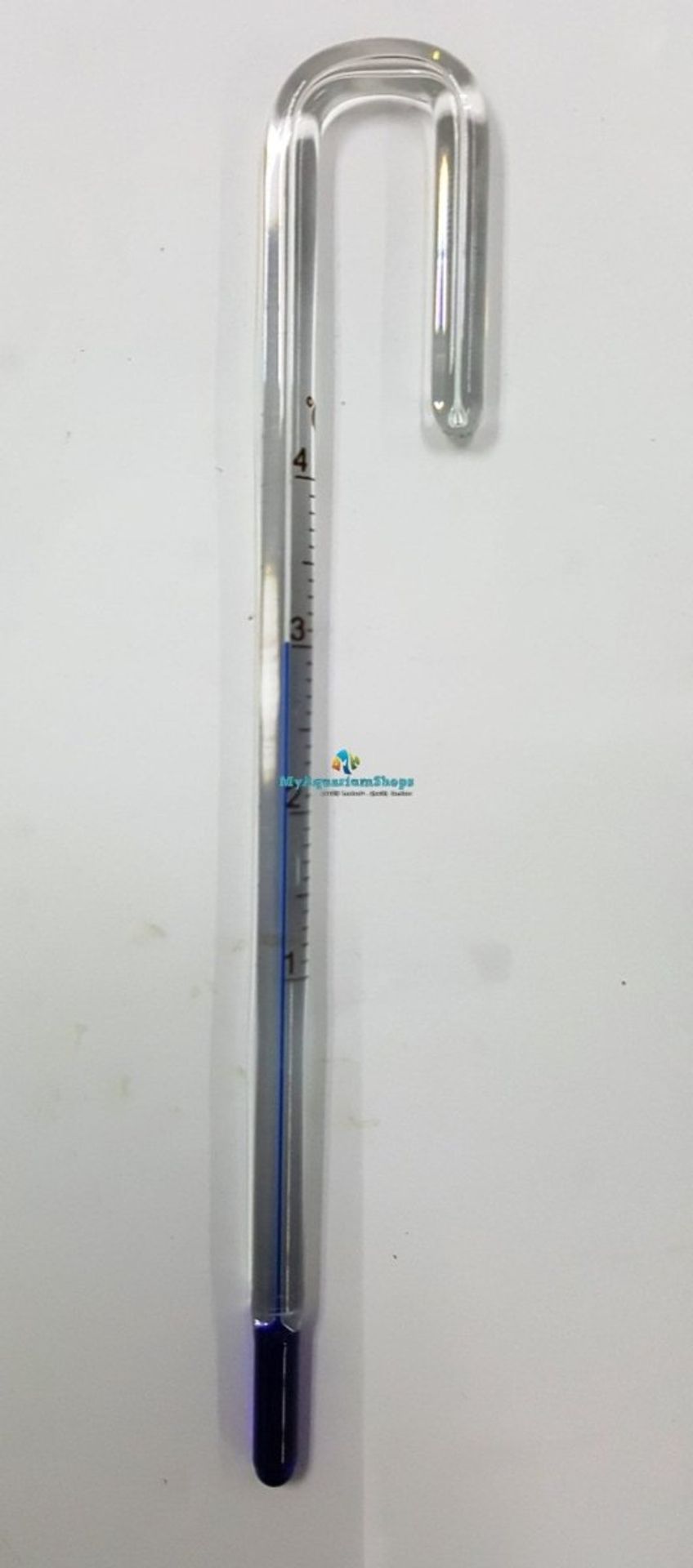
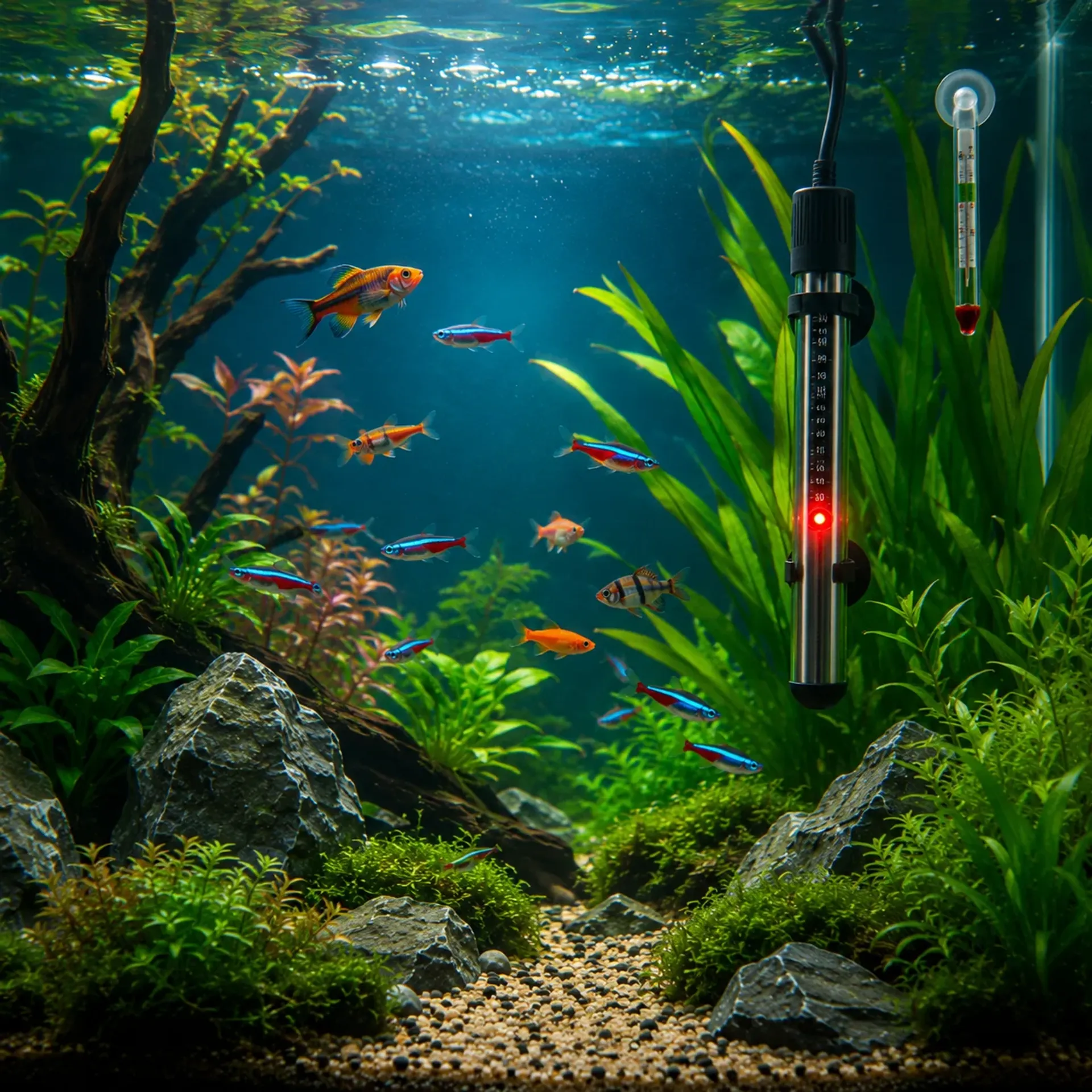
The classic floating or suction-cup glass thermometer stays inside the tank. It needs no battery and is cheap enough to put one in every tank, including breeding and quarantine tanks. Handle it carefully, and choose a sturdy model if you keep large fish that may knock it around.
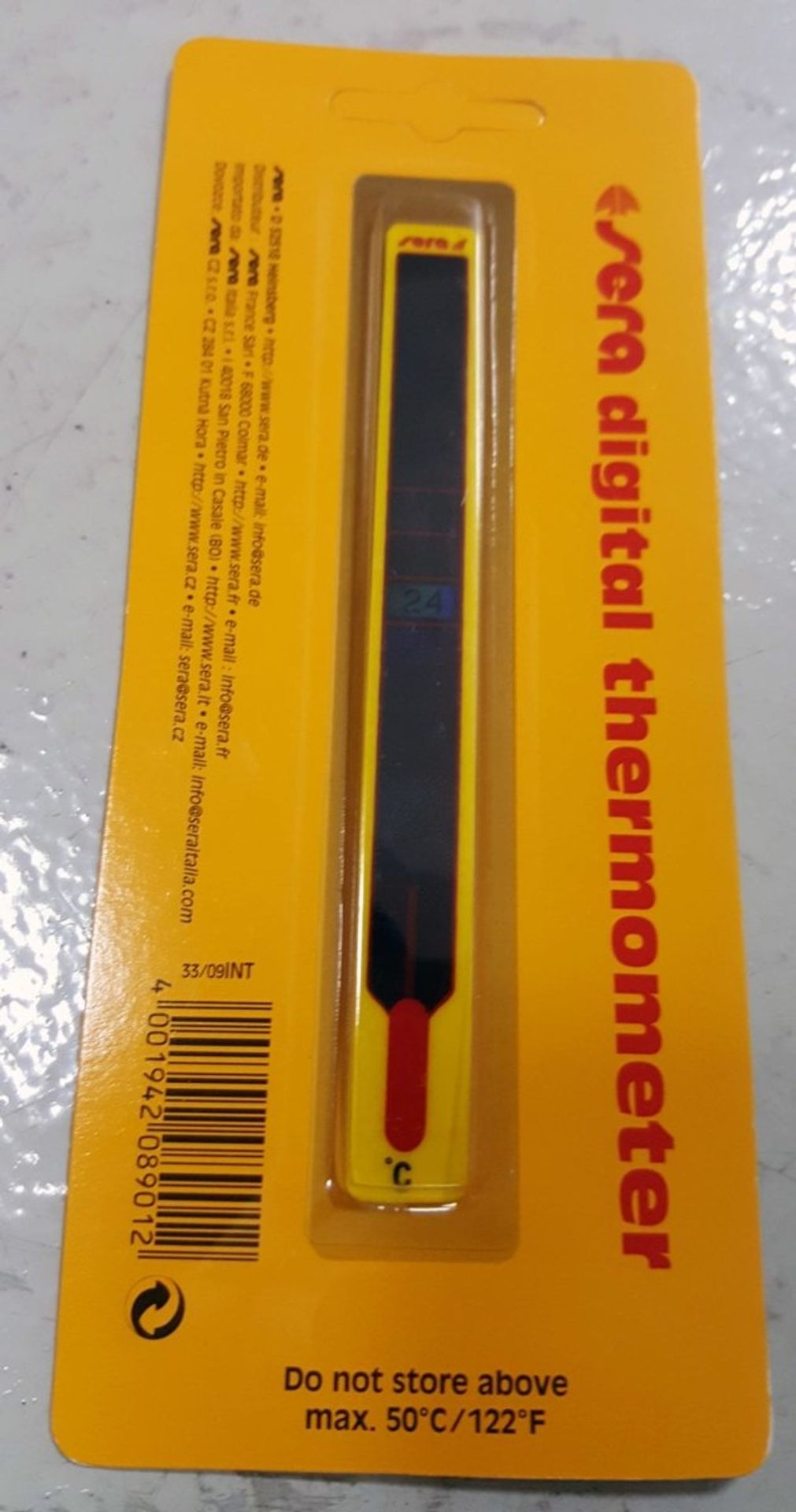
These liquid-crystal strips stick on the outside of the glass and change colour to show the temperature. They are tidy and cost very little, but they read the glass rather than the water. They can be thrown off by sunlight, air-conditioning blowing on the tank, or a nearby lamp, so treat the reading as a rough guide.
Some chillers, controllers and heaters have a temperature display. They are useful, but it is still smart to keep an independent thermometer as a cross-check in case a sensor drifts.
Most Malaysian homes sit at about 26–31°C, and an unheated tank usually follows the room. Here is how common fish compare:
| Fish or setup | Comfortable range | What it means in Malaysia |
|---|---|---|
| Tropical community fish (tetras, rasboras, guppies) | about 24–28°C | Usually fine at room temperature; watch for heat above 30°C |
| Betta (ikan laga) | about 25–30°C | Room temperature suits most bettas |
| Discus | about 28–31°C | Often needs a heater in an air-conditioned room |
| Goldfish | cooler water preferred | Keep out of hot rooms, and use a fan if the tank runs warm |
| Caridina shrimp (e.g. CRS) | cooler water preferred | Often needs a fan or chiller |
| Reef tanks | stable, not too warm | A chiller is usually essential |
Stability matters as much as the number. A tank that swings several degrees between morning and late afternoon stresses fish more than one that stays steady.
On FishyHub, check each listing for the measuring range, the probe cable length, the battery type, and whether the product shown is the actual item or a representative photo. If you need it urgently, check the seller's location and delivery or self-collect options.
Untuk kebanyakan ikan hiasan tropika, sekitar 24–28°C sudah sesuai. Di Malaysia, suhu bilik biasanya sudah cukup panas, jadi yang lebih penting ialah elakkan air terlalu panas melebihi 30°C dan pastikan suhu tidak naik turun dengan mendadak.
Ya, terutamanya kalau akuarium di bilik yang panas, dekat tingkap, atau di bilik berhawa dingin. Termometer murah sahaja, dan ia membantu anda tahu bila perlu pasang kipas akuarium atau tambah pam udara.
They are good enough for a rough check, but they measure the glass, not the water. A digital probe or a glass thermometer inside the tank gives a more reliable reading.
Increase aeration, point a fan across the water surface, close curtains if there is sunlight, and reduce feeding for the day. Avoid dumping ice into the tank, because sudden drops are stressful. If it happens often, consider a cooling fan or a chiller.
Compare digital, glass and stick-on aquarium thermometers from sellers across Malaysia, with prices in RM. While you are at it, browse air pumps and water test kits to keep your tank comfortable through the hottest months.