

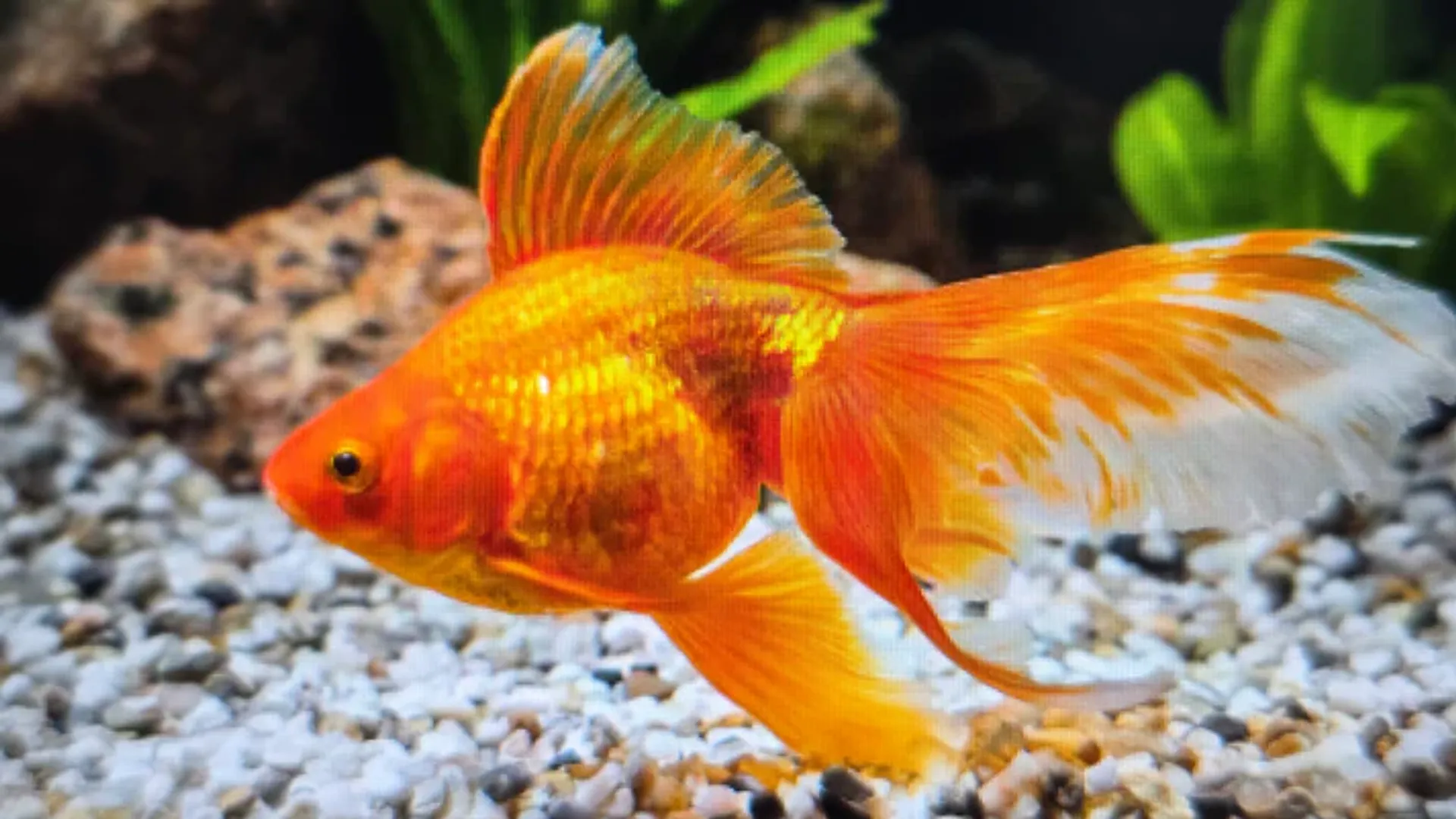

Cara Jaga Ikan Emas: Goldfish Care Guide for Hot Malaysian Homes
Cara jaga ikan emas in Malaysia comes down to four things: give fancy goldfish a bigger tank than you think (a 2-kaki tank for a pair), over-filter because they are messy, keep oxygen high because our water runs warm, and treat every bucket of tap water with anti klorin. Do that and an oranda or ryukin can live for many years, even in a terrace house that sits at 30°C in the afternoon.
This guide is about ikan emas hiasan, the ornamental goldfish (Carassius auratus) sold in aquarium shops, not the food fish that shares the name at the wet market.
Cara Jaga Ikan Emas: Quick Care Sheet
| Need | What to aim for in Malaysia |
|---|---|
| Temperature | Ideally below about 28°C; they tolerate 28–30°C with strong aeration |
| Tank size | 2 kaki (about 55–65 L) for 2 fancy goldfish; 3 kaki (about 155–180 L) for 4–5 |
| Filtration | Turnover of 6–8× tank volume per hour; top filter or canister |
| Water | Tap water treated with anti klorin; 30–50% tukar air weekly |
| pH | About 7.0–8.0, stable matters more than the exact number |
| Food | Sinking goldfish pellets or gel food, 1–2 small meals a day, plus greens |
| Temperament | Peaceful, slow; keep with other goldfish only |
| Beginner-friendly? | Yes, if you can keep up with water changes |
Goldfish Tank Setup: Size in Kaki
The biggest mistake Malaysian beginners make is the round bowl or the 1-kaki starter kit. Fancy goldfish grow to roughly the size of a fist, sometimes larger, and produce a lot of ammonia. A small tank turns toxic quickly, and in hot weather it also loses oxygen faster.
| Tank | Real water volume | Fancy goldfish | Notes |
|---|---|---|---|
| 1 kaki | ~12 L | Not suitable | Only as a temporary hospital tank |
| 2 kaki | ~55 L | 2 | The practical minimum |
| 2 kaki deep (60×45×45 cm) | ~100 L | 3 | Better depth for oranda and ranchu |
| 3 kaki | ~155 L | 4–5 | Ideal home display |
| 4 kaki | ~230 L | 6–8 | Room for growth and a stable temperature |
A goldfish tank size that feels "too empty" with two juveniles is the right size for two adults. See our aquarium tank size guide for dimensions and weight before you buy a cabinet set.
Substrate and decor
Use smooth sand, large pebbles or a bare bottom. Goldfish forage by sucking up gravel, and small gravel can lodge in the mouth. Avoid sharp ornaments: bubble eyes and celestials damage easily. Hardy plants such as anubias and java fern survive goldfish grazing better than soft stem plants.
Filtration for Heavy Waste
Goldfish have no stomach and eat constantly, so their waste load is much higher than a tetra community of the same size. Aim for a filter rated at 6–8 times your tank volume per hour.
- Top filter (filter atas): popular in Malaysia for goldfish because it is cheap, easy to clean and holds a lot of media.
- Canister: quieter and tidier for living rooms; pair it with a spray bar so the current is gentle.
- Sponge filter: good as a backup or in a hospital tank, but not enough on its own for adults.
Fancy goldfish are poor swimmers, so spread the outflow rather than pointing it straight across the tank. Rinse mechanical sponges in old tank water, never under the tap, so you keep the good bacteria. Browse top filters if you're upgrading.
Heat and Oxygen: The Malaysian Problem
Goldfish come from temperate China and Japan. In Malaysian homes, where rooms sit at about 26–31°C, the water is warmer than they prefer, and warm water holds less dissolved oxygen. Signs your goldfish are struggling with heat:
- Gasping at the surface, especially in the late afternoon
- Fast gill movement and sitting near the filter outlet
- Faded colour and less interest in food
What to do
- Run an air pump (pam udara) 24 hours a day. It is the cheapest fix. Pick one from our air pumps range and keep a battery model for power cuts.
- Keep the tank out of direct sunlight and away from west-facing windows.
- Add a kipas akuarium (cooling fan). A fan blowing across the surface usually knocks a few degrees off and improves gas exchange. Evaporation rises, so top up with treated water.
- Consider a chiller only for valuable show fish or a closed room that regularly goes above 30°C. Compare options under chillers and cooling fans, and read our aquarium cooling guide.
- Don't overstock. Fewer fish means less oxygen demand and less ammonia.
Air-conditioned rooms help, but if the aircond goes off every morning the temperature swings. Stable 29°C is safer than 24°C at night and 31°C by day.
Water: Tap Water, Anti Klorin and Water Changes
Malaysian tap water is chlorinated; the Ministry of Health drinking-water standard allows free residual chlorine of 0.2–5.0 mg/L. Always add anti klorin to new water, even if you endap air (let it stand overnight), because standing does not remove chloramine. Standing water only lets some free chlorine escape.
Much Malaysian tap water is soft with low KH, so pH can drift down between water changes. Goldfish prefer neutral to slightly alkaline water. A test kit for ammonia, nitrite, pH and KH is worth having in the first months. Do 30–50% water changes every week, matching the temperature roughly so you don't shock the fish.
Feeding Ikan Emas
- Sinking pellets or gel food reduce gulping air at the surface, which is linked to buoyancy problems in round-bodied fancies.
- Greens: blanched peas (skin removed), spinach or lettuce once or twice a week help digestion.
- Treats: cacing darah (bloodworm) or artemia occasionally, not daily.
- Portion: what they finish in about a minute, once or twice a day. Uneaten food rots quickly in warm water.
Find pellets and gels under food for goldfish. Skip feeding for a day each week; healthy goldfish handle it fine.
Choosing Healthy Goldfish
When you browse goldfish for sale, check each listing for real photos versus representative ones, the fish's size, and the seller's location and delivery or self-collect options. A healthy goldfish:
- Swims upright and steadily, without floating or tipping
- Has fins held open, not clamped
- Has no white spots, red streaks or fuzzy patches
- Eats eagerly (ask the seller for a feeding video if buying online)
Quarantine new fish in a separate container for two weeks before adding them to your main tank. Different varieties suit different setups; see our types of goldfish guide and the oranda care guide.
Common Problems
| Problem | Likely cause | First step |
|---|---|---|
| Gasping at surface | Low oxygen, heat, ammonia | Add aeration, test water, partial water change |
| Floating sideways | Swim bladder, overfeeding | Fast 2–3 days, then feed sinking food |
| Red streaks in fins | Poor water quality | Test ammonia/nitrite, increase water changes |
| White spots | White spot (ich) | Treat with ubat white spot and keep water clean |
| Cloudy water | New tank, overfeeding | Feed less, don't over-clean the filter |
If several fish die suddenly, stop feeding for a day, test the water before buying replacements.
Frequently Asked Questions
Ikan emas boleh hidup tanpa pam udara?
Boleh untuk sementara, tetapi tidak digalakkan di Malaysia. Air yang panas kurang oksigen, dan ikan emas menghasilkan banyak sisa. Pasang pam udara sepanjang masa, terutama jika akuarium kecil atau ikan banyak.
Berapa ekor ikan emas untuk akuarium 2 kaki?
Untuk ikan emas jenis fancy seperti oranda atau ryukin, dua ekor sudah cukup dalam akuarium 2 kaki (lebih kurang 55 liter air). Jika mahu lebih, gunakan akuarium 3 kaki.
Can goldfish live in a pond in Malaysia?
Single-tail goldfish such as comets and wakin do well in shaded ponds. Fancy types are slower and more vulnerable to heat, birds and rain-driven water changes, so they are usually better indoors.
Do goldfish need a heater in Malaysia?
No. The problem here is too much heat, not too little. A heater is only useful in a hospital tank in an air-conditioned room.
How long do goldfish live?
Well-kept fancy goldfish commonly live 5–10 years, and some live longer. Small tanks and poor water quality are the main reasons they die young.
Ready to start? Browse goldfish, goldfish food and cooling fans from sellers across Malaysia on FishyHub, with prices in RM.