

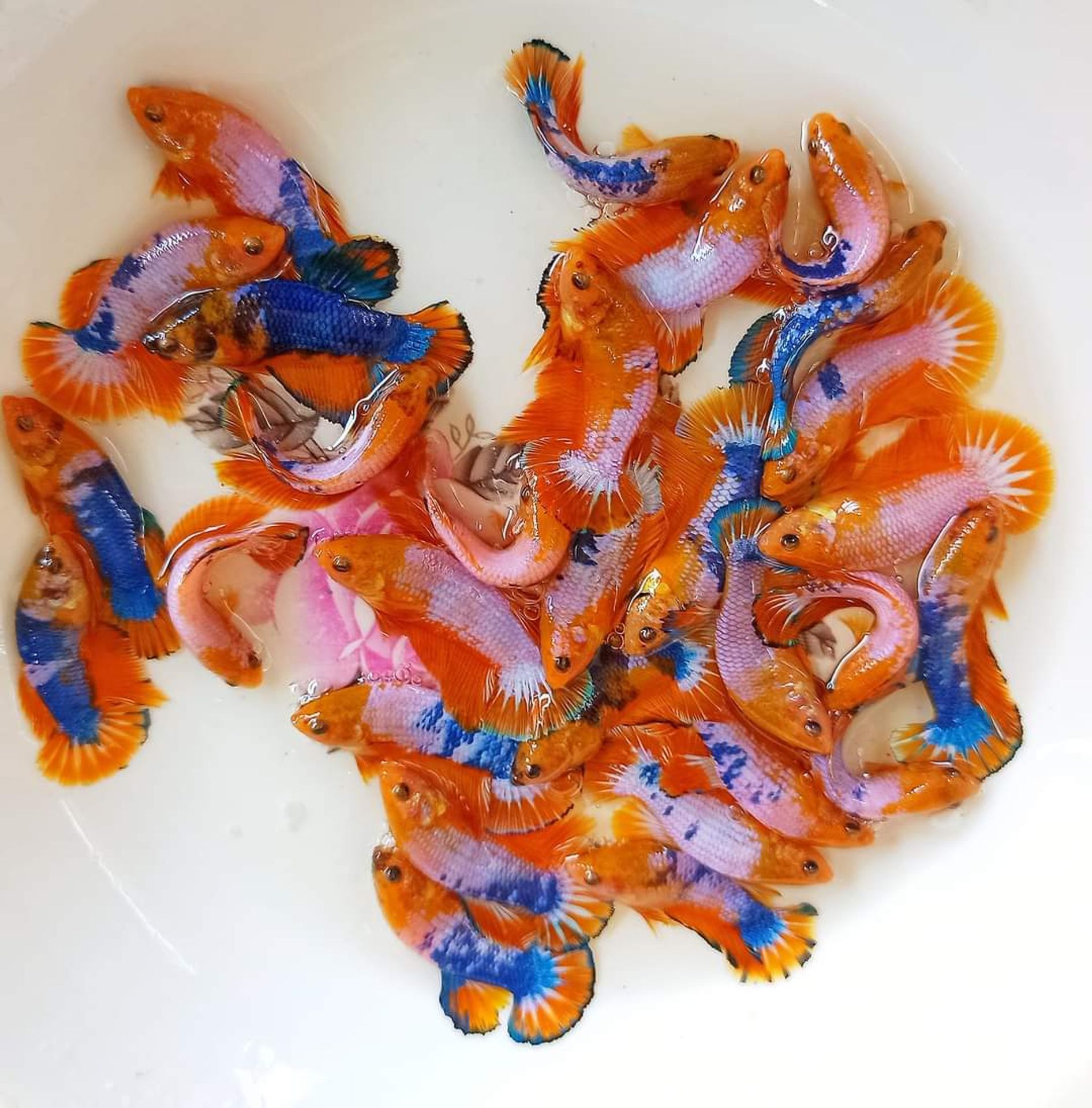

Cara Membiak Ikan Laga: Betta Breeding Step by Step in Malaysia
Here's cara membiak ikan laga (how to breed bettas) in one paragraph: condition a healthy male and female with live or frozen food for 1–2 weeks, set up a shallow tub or tank (about 10–15 cm of water) with a floating leaf or styrofoam for the bubble nest, and let the female see the male through a divider or jar for a day or two. When the male has built a nest and the female shows vertical bars and a visible egg spot, release her. After the spawning embrace, remove the female, leave the male to guard the eggs, and expect them to hatch in about 1–2 days in Malaysian temperatures. Remove the male once the fry swim horizontally, and have infusoria or other first foods ready.
Malaysia's warm climate makes bettas easy to breed at home, and many local breeders still use the simple kampung-style tubs. This guide covers both tub and tank methods, step by step.
Before You Start: Is Breeding Right for You?
A single spawn can produce a hundred eggs or more. A Johor breeder interviewed by Sinar Harian described females laying between 100 and 400 eggs at a time. Plan for:
- Space: fry tubs, then many jars or cups for males once they start fighting
- Food: daily live food for several weeks
- Time: daily water changes and feeding for 2–3 months
- Homes for the fish: friends, hobby groups or selling
Breed captive-bred Betta splendens (the common ikan laga). Malaysia's wild Betta species are a separate topic; several are threatened, so don't collect them from the wild.
Choosing a Breeding Pair
| Check | Male (jantan) | Female (betina) |
|---|---|---|
| Age | Roughly 4–12 months is a common range | Roughly 4–12 months |
| Health | Active, bright colour, fins not clamped | Active, rounded belly |
| Readiness | Builds bubble nests regularly | Vertical bars when near the male, white egg spot (ovipositor) visible under the belly |
| Size | Similar to or slightly larger than the female | Not much smaller than the male |
Pair similar forms (e.g. plakat with plakat, halfmoon with halfmoon) if you want predictable offspring. Long-finned males can struggle to wrap the female, so short-finned plakat and ikan laga kampung types are often easier for first-timers. See our betta care pillar for basic care.
Step 1: Condition the Pair (1–2 Weeks)
- Keep them separate.
- Feed 2–3 small meals a day of high-protein food: bloodworm (cacing darah), artemia, moina, grindal worms, plus good pellets.
- Do frequent small water changes with water treated with anti klorin.
- Let them see each other for part of the day (side-by-side jars or a divided tank).
A conditioned female looks noticeably plump with eggs.
Step 2: Set Up the Breeding Tub or Tank
Kampung-style tub (common in Malaysia)
- A plastic tub or basin, roughly 20–40 L capacity, filled to only 10–15 cm of water
- Aged or dechlorinated water
- A few dried daun ketapang (catappa leaves), which tint the water and give the female hiding places
- A floating leaf, piece of styrofoam cup or plastic lid for the nest
- Placed in bright shade, sheltered from rain and direct afternoon sun, and covered with netting against mosquitoes and predators
Glass tank method
- A 1–1.5 kaki tank (about 10–20 L), also with shallow water
- No filter, or a very gentle sponge filter turned right down (strong flow breaks the nest)
- Plants or ketapang leaves for cover
- A lid to keep humidity in, which helps fry when their labyrinth organ develops
Temperature: typical Malaysian room temperature of about 27–30°C suits spawning. You don't need a heater unless the tank is in an air-conditioned room.
| Tub | Glass tank | |
|---|---|---|
| Cost | Very low | Higher |
| Observation | Harder to see eggs and fry | Easy to watch |
| Temperature stability | Larger, shallow tub is stable in shade | Small tanks swing faster |
| Space | Often outdoors or on a porch | Indoors |
| Rain risk | Needs a roof or cover | None |
Step 3: Introduce the Female
- Put the male in the breeding tub first. Give him a day to settle; he'll usually start a bubble nest.
- Place the female in a clear jar, lamp chimney or breeding box inside the tub so they can see each other.
- Watch for: male flaring and building a larger nest; female showing vertical bars, approaching the nest with her head down.
- After 1–2 days, release the female.
The male will chase and nip her. Some chasing is normal. If the female is badly torn, hiding constantly or the male is relentless for hours without spawning, separate them and try again after a few days of rest. Our guide on why bettas make bubble nests explains nest behaviour.
Step 4: Spawning (Ikan Laga Bertelur)
- The pair meet under the nest and the male wraps around the female in an embrace.
- Eggs drop; the female often appears briefly stunned.
- The male catches the falling eggs in his mouth and spits them into the nest.
- This repeats many times over one to a few hours.
When the female stops releasing eggs and starts hiding, or the male begins chasing her away from the nest, spawning is over.
Step 5: Remove the Female
Take the female out straight after spawning. The male may attack her, and she may eat eggs. Put her in clean water, feed well, and treat any torn fins by keeping water very clean. She'll need a few weeks before breeding again.
Step 6: Egg-to-Fry Timeline
| Time after spawning | What happens | What you do |
|---|---|---|
| Day 0–1 | Eggs in the nest; male guards and replaces falling eggs | Don't feed the male, don't disturb |
| Day 1–2 | Eggs hatch; tiny fry hang tail-down from the nest | Keep lights low and calm |
| Day 2–4 | Fry absorb their yolk; start swimming horizontally | Start infusoria or liquid fry food |
| Around day 3–5 | Most fry free-swimming | Remove the male |
| Week 1+ | Fry eating actively | Move to microworms and baby brine shrimp |
Timing varies with temperature. In warm Malaysian water hatching is usually on the quicker side. If the male starts eating eggs or fry repeatedly, remove him earlier and add an airstone set to a very gentle bubble near the nest.
Step 7: Raising the Fry
First foods matter most. See our guides to makanan anak ikan (infusoria and first foods) and raising anak ikan laga from hatch to jar. Ready-made fry foods are a good backup.
Cara Membiak Ikan Laga: Common Problems
| Problem | Likely cause | Fix |
|---|---|---|
| No bubble nest | Male not settled, flow too strong | Turn off filter, give him time, add a floating leaf |
| Male kills the female | Female not ready, too few hiding places | Use the jar step longer; add plants or leaves |
| Eggs turn white and fuzzy | Infertile eggs, fungus | Normal for some eggs; male usually removes them |
| Male eats all eggs | Young or stressed male, disturbance | Keep the area quiet; try again later |
| Fry die after a few days | Starvation or fouled water | Have food ready; gentle water changes |
Frequently Asked Questions
Cara nak bagi ikan laga bertelur?
Bela jantan dan betina secara berasingan dan bagi makanan hidup seperti cacing darah dan artemia selama satu atau dua minggu. Kemudian letak betina dalam balang di dalam bekas jantan supaya mereka boleh saling melihat. Bila jantan sudah buat buih dan betina ada belang menegak, lepaskan betina.
Berapa lama telur ikan laga menetas?
Dalam suhu biasa di Malaysia, telur ikan laga biasanya menetas dalam masa satu hingga dua hari. Anak ikan akan bergantung pada sarang buih selama dua tiga hari lagi sebelum mula berenang sendiri.
When should I remove the male betta?
Once most fry are swimming horizontally, usually a few days after hatching. Remove him earlier if he starts eating fry.
Do I need a filter in a betta breeding tank?
No, or only a very gentle sponge filter. Strong flow destroys the bubble nest. Keep water clean with small, careful water changes instead.
How many fry does a betta spawn produce?
It varies widely. Spawns often produce dozens to a few hundred eggs, but survival depends on food and water quality.
Ready to try? Browse bettas, breeding boxes and fry foods from Malaysian sellers on FishyHub, with prices in RM.