

Pokok Terapung Akuarium: Floating Plants Like Salvinia, Frogbit & Kiambang
Pokok terapung akuarium (floating aquarium plants) are the easiest live plants you can add to a Malaysian tank. They need no soil, no CO2 and no planting: drop them on the surface and they grow on the light from your lamp and the nitrate from your fish. Salvinia, frogbit, red root floater, duckweed and dwarf water lettuce (kiambang) are the usual choices. They soak up waste, shade shy fish, give bettas somewhere to build nests, and slow algae. The catch is that they grow fast, so you need a plan for thinning them out.
Why Add Pokok Terapung Akuarium?
1. They eat nitrate and starve algae
Floating plants take CO2 straight from the air, so they grow much faster than most rooted plants in a low-tech tank. Fast growth means they pull ammonia and nitrate out of the water quickly, leaving less food for green water and hair algae. In a warm Malaysian tank (often 28–31°C), where fish eat and produce waste quickly, this is a real help between water changes. Removing a handful of plants each week is a way of taking nutrients out of the tank.
2. Shade and security
A partial cover dims the light underneath. Bettas, gouramis, rasboras, killifish and many wild-type fish colour up and act more naturally under shade. It also cuts the amount of light reaching the glass, which helps with green spot algae.
3. Betta and gourami cover
Male ikan laga (bettas) anchor their bubble nests to floating leaves, and fry hide among the roots. Breeders often add salvinia or frogbit to spawning tanks for this reason. See our betta care guide for more on setting up a betta tank.
4. Food and shelter for fry and shrimp
Dangling roots collect biofilm, which shrimp and fry graze on. Livebearer fry (guppy, molly, platy) hide in the roots instead of being eaten.
Common Floating Plants in Malaysia
| Plant | Leaf size | Growth speed | Best for | Watch out for |
|---|---|---|---|---|
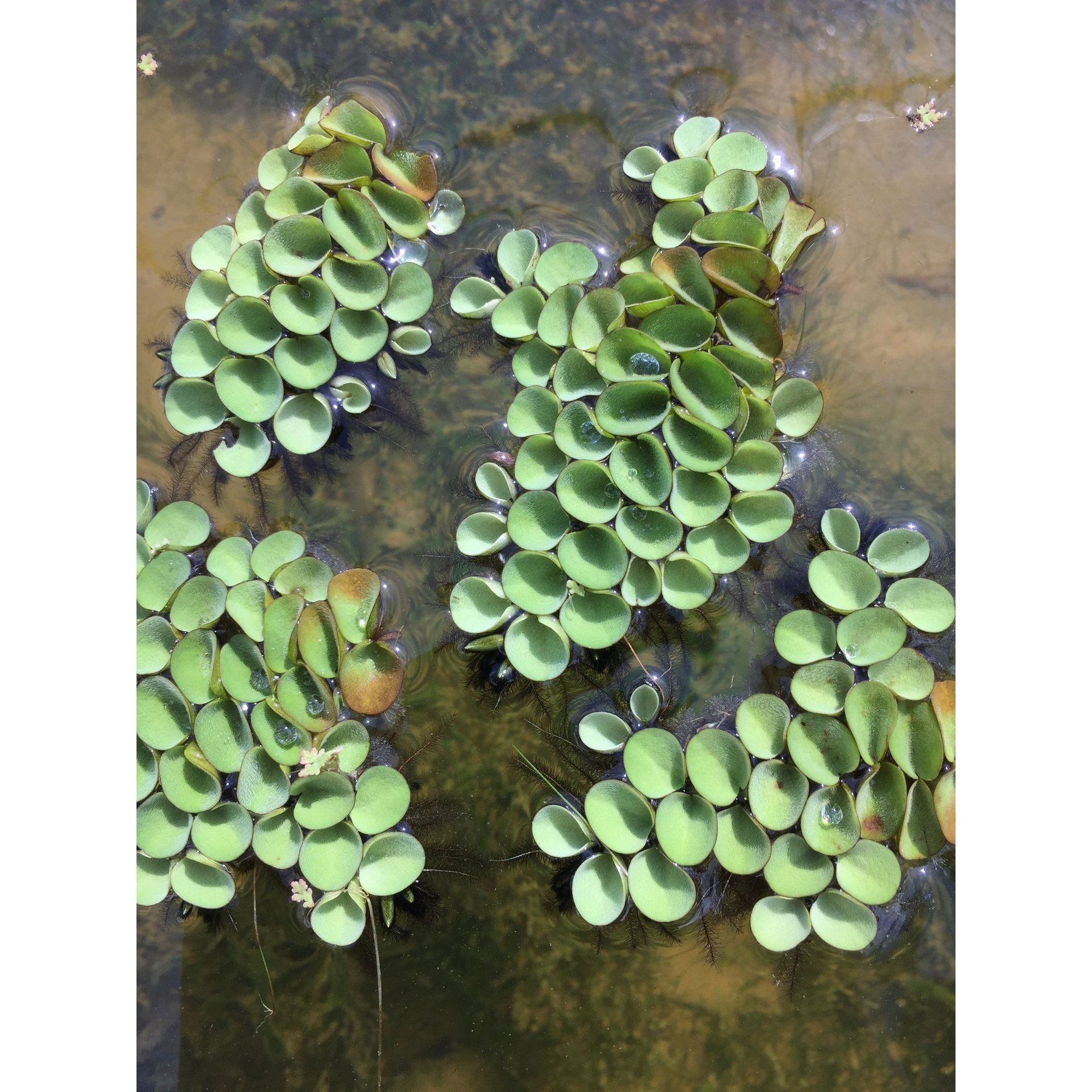
| Salvinia (Salvinia minima / cucullata) | Small, fuzzy, 1–2 cm | Fast | Betta tanks, general cover | Covers the surface quickly |
| Amazon frogbit (Limnobium laevigatum) | Round, 2–4 cm, long roots | Fast | Shade, fry cover, nutrient export | Leaves melt if splashed or crushed under a lid |
| Red root floater (Phyllanthus fluitans) | Small, turns red under strong light | Medium | Planted tanks, colour | Needs decent light and little surface flow |
| Duckweed (Lemna) | Tiny, 2–5 mm | Very fast | Goldfish snacks, nutrient sponge | Almost impossible to remove completely |
| Dwarf water lettuce / kiambang (Pistia) | Rosettes, 3–10 cm | Fast | Big open tanks, ponds | Grows large, needs space above water |
| Riccia (Riccia fluitans) | Fine mossy mats | Medium | Shrimp tanks, fry tanks | Breaks into bits that get into filters |
In Malaysia, kiambang usually means water lettuce (Pistia stratiotes). People also use the name loosely for other floating weeds, so check the photo or the scientific name on a listing.
Browse the current range on FishyHub's floating plants page, or the wider aquatic plants category if you want to mix them with rooted plants.
How to Keep Floating Plants Healthy
Keep the surface calm
Most floaters hate strong surface flow. Hang-on and top filters can push leaves under or into the intake. Point the outflow at the glass, lower the flow, or make a ring from airline tubing to hold the plants in one corner.
Leave a gap under the lid
Condensation dripping on leaves, and leaves pressed against a cover, are the main reasons frogbit and water lettuce rot. Leave a few centimetres of air between the water and the lid, and keep the leaf tops dry.
Light
Any normal aquarium LED is enough for salvinia and duckweed. Red root floater shows its red colour only under stronger light with low nitrate. If floaters turn yellow and small, the tank may be short of iron or potassium; a light dose of a liquid fertiliser from the fertilizers range usually fixes it.
Don't let them cover everything
A full mat blocks light from the plants below and can cut gas exchange at the surface. Warm water already holds less oxygen, so in Malaysian tanks it is safer to keep one-third to one-half of the surface open, especially overnight. If you run an air pump (pam udara), it helps here too.
Controlling Spread
Floating plants can double in a week or two in a warm, well-fed tank. A simple routine:
- Weekly thinning: scoop out a portion with a fish net during your water change.
- Keep a corral: an airline-tube ring or floating feeding ring keeps them away from the filter and leaves open water for feeding.
- Watch the filter intake: duckweed and riccia fragments clog sponges and impellers.
- Share the extra: give surplus to other hobbyists, feed duckweed to goldfish, or compost it.
Duckweed deserves a special warning. Once it is in a tank, a few leaves always survive in corners and on equipment. Many keepers choose salvinia or frogbit instead for this reason. Check plants from other tanks carefully if you don't want duckweed hitchhikers.
Never Dump Floating Plants into Drains or Rivers
This matters more in Malaysia than most places. Floating weeds spread quickly in warm water. Giant salvinia (Salvinia molesta) and water lettuce are rated among the world's worst floating aquatic weeds, and water hyacinth (keladi bunting) already chokes many Malaysian lakes and rivers. A handful thrown into a longkang can end up in a river after the next heavy rain.
- Bin or compost excess plants after letting them dry out completely.
- Never empty tank water with floaters into monsoon drains, lakes or ponds.
- The same rule applies to fish: jangan lepaskan ikan ke sungai. Release rules are set by each state, and several now ban releasing foreign fish into rivers without permission, so ask the Department of Fisheries (DOF) Malaysia first.
Which Fish Like Floating Plants?
- Bettas and gouramis: nest anchors and shade.
- Rasboras, tetras and killifish: calmer behaviour under dim light.
- Guppies and mollies: fry hide in the roots. See our guppy care guide.
- Goldfish: they eat duckweed and salvinia, which is a free snack but means the plants rarely last.
- Shrimp: graze the roots and pick at riccia.
Hatchetfish and other surface feeders still need open water, so don't cover their whole tank.
Frequently Asked Questions
Pokok terapung akuarium perlu baja atau tidak?
Biasanya tidak perlu, sebab pokok terapung ambil nutrien daripada sisa ikan. Kalau daun jadi kuning atau kecil, tambah sedikit baja cecair, tetapi jangan terlebih dos.
Kenapa daun frogbit jadi reput?
Selalunya sebab daun basah dari atas (titisan air dari penutup), arus air terlalu kuat, atau daun tertekan pada penutup akuarium. Biarkan ruang udara di atas air dan kurangkan arus permukaan.
Do floating plants reduce oxygen in the tank?
During the day they produce oxygen. A thick mat covering the whole surface can reduce gas exchange, though, so keep part of the surface open and run an air pump in hot weather.
Are floating plants good for bettas?
Yes. Bettas rest under the leaves and build bubble nests against them. Salvinia and frogbit are the most popular choices for betta tanks.
How do I get rid of duckweed?
Remove as much as possible with a fine net every few days and clean equipment it sticks to. It may take weeks to clear completely, and even then a few leaves often survive.
For an easy start with live plants, combine a few floaters with hardy rooted plants from our low-tech plant guide, then browse floating plants from sellers across Malaysia on FishyHub.