
How to Feed Engineer Goby: Foods, Frequency and Common Feeding Problems
Engineer gobies eat like burrowing carnivores, not open-water grazers, so success comes down to sinking meaty foods, feeding at the burrow entrance, and reading colony behavior. This guide covers exactly what to feed, how often, and how to solve the most common feeding problems reef keepers run into with this species.
What Is an Engineer Goby?
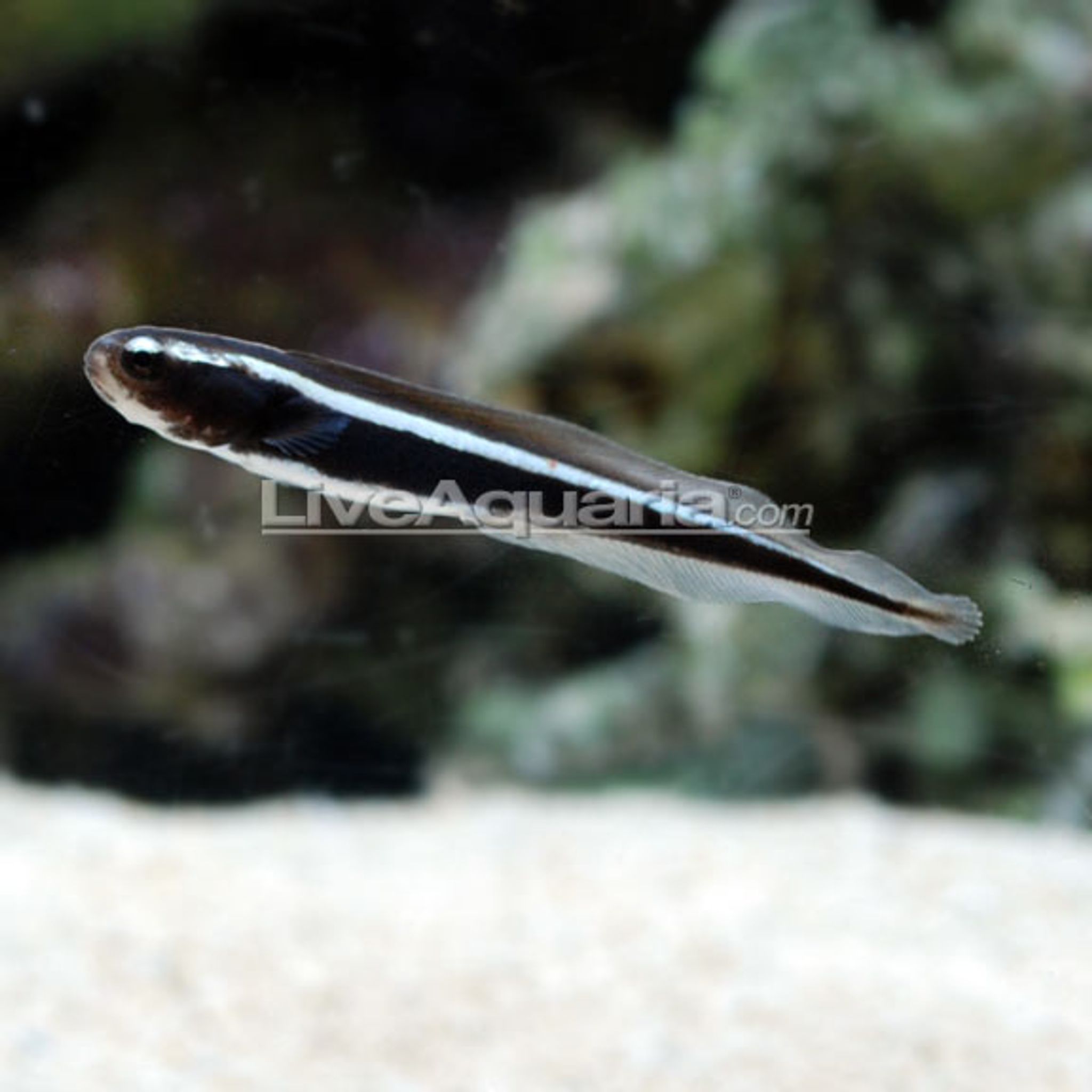
The fish sold as the Engineer Goby is scientifically Pholidichthys leucotaenia. Despite the common name, it isn't a true goby at all — it belongs to its own family, Pholidichthyidae, which is more closely related to blennies. It's also sold under the names "convict blenny" or "engineer blenny," and it's sometimes confused with the true convict goby, an unrelated species. In the trade, however, it's grouped and kept alongside gobies, and its feeding needs are what matter most for keepers.
Dietary classification varies by source: some call it a strict carnivore, others describe it as omnivorous because it feeds so readily. The practical answer is that it's a carnivore-leaning opportunistic feeder. Meaty foods should make up the bulk of the diet, but an occasional algae-based flake or pellet in the rotation does no harm and covers any incidental grazing that happens while the fish sifts through sand.
In the wild, Engineer Gobies forage through sand and rubble for small crustaceans, worms, and other benthic invertebrates and zooplankton. That natural behavior is why sinking, meaty foods that settle near the substrate work far better than anything designed to float or hang in midwater.
Core Foods to Offer
Build the diet around frozen and prepared meaty foods, with pellets and flake as a supplement rather than the base.
| Food type | Role in the diet | Notes |
|---|---|---|
| Frozen mysis shrimp | Primary staple | Most reliably accepted; enrich with a vitamin soak occasionally |
| Frozen brine shrimp | Staple | Enriched (HUFA-boosted) versions are more nutritious than plain |
| Chopped krill | Regular rotation | Mince finely for smaller individuals |
| Chopped table shrimp or marine seafood mix | Regular rotation | Cut into small pieces to match mouth size |
| Bloodworms | Occasional treat | Not a daily staple |
| Sinking carnivore pellets | Daily supplement | Soak briefly before feeding so they sink and soften |
| Marine flake | Occasional supplement | Covers incidental grazing; not a replacement for meaty foods |
You can browse live specimens and compatible tankmates in FishyHub's gobies category if you're still assembling a colony, and shop frozen and dry foods in the food and supplements section to stock a rotation.
Enrichment Matters
Because this fish relies so heavily on frozen foods, gut-loading or soaking those foods with a vitamin supplement or HUFA (highly unsaturated fatty acid) additive before feeding adds nutritional value that plain frozen mysis or brine shrimp alone doesn't fully provide. This is standard practice for marine carnivores generally, and it's worth doing at least a few times a week rather than treating every meal as identical.
How Often and How Much to Feed
Feed adult Engineer Gobies once or twice per day. Offer only what the group can consume within about 2 to 3 minutes — anything left over after that window is excess that will sink into the sand bed and begin to decay.
Juveniles grow quickly and are more vulnerable to starvation than adults, so they need more frequent, smaller feedings. Offer finely minced foods or baby brine shrimp two to three times a day in amounts small enough to disappear almost immediately, rather than one or two larger meals.
Sample Weekly Feeding Rotation
A simple rotation keeps the diet varied without requiring daily planning:
| Day | Morning | Evening |
|---|---|---|
| Mon | Frozen mysis shrimp | Sinking pellet (soaked) |
| Tue | Chopped krill | Frozen brine shrimp (enriched) |
| Wed | Sinking pellet (soaked) | Chopped table shrimp |
| Thu | Frozen mysis shrimp | Marine flake (light amount) |
| Fri | Bloodworms (small amount) | Frozen brine shrimp (enriched) |
| Sat | Chopped krill | Sinking pellet (soaked) |
| Sun | Frozen mysis shrimp | Chopped table shrimp |
Delivery Method: Getting Food to the Burrow
Because Engineer Gobies are bottom and burrow dwellers, delivery matters as much as food choice. Sinking foods are strongly preferred over anything that floats, since these fish rarely venture far from the sand surface to chase food in midwater.
- Soak pellets briefly before adding them so they sink quickly rather than floating and drifting away.
- Use a turkey baster or feeding tube to target-feed directly near burrow entrances. This gets food to the fish before flow sweeps it away or faster tankmates intercept it.
- Feed at multiple points around the tank rather than dropping everything in one spot, especially in a colony setup.
Tank Conditions That Support Good Feeding
Feeding success is tied directly to how secure the fish feels in its environment. Get these basics right and feeding responses improve noticeably:
- Tank size: 55 gallons (208 L) minimum for a pair; 75+ gallons (284+ L) is recommended for a full colony of three or more individuals, since a bigger group increases bioload and needs room for multiple burrow territories, which in turn reduces feeding competition.
- Substrate: a deep sand bed of at least 3 to 4 inches (7.5–10 cm) of fine aragonite, so the fish can burrow and feel secure enough to emerge and feed.
- Rockwork: stable caves and tunnels that connect to or sit near the sand bed.
- Water parameters: temperature 72–78°F (22–26°C), salinity around 1.025 SG, pH 8.1–8.4, with generally low and stable nitrate and phosphate as in any healthy reef system.
Colony Feeding: Keeping Everyone Fed Fairly
Engineer Gobies are typically kept in small colonies or pairs with juveniles rather than as lone individuals. In a group setting, smaller or less assertive individuals can get outcompeted at feeding time, which leads to uneven growth and thin fish. To feed a colony fairly:
- Spread food across multiple burrow entrances instead of one pile.
- Target-feed with a baster near each visible burrow opening.
- Watch individual fish over time for signs one is being consistently outcompeted — a sunken belly, faded color, or lethargy are the clearest signs of malnutrition.
- When adding new members, add similarly sized fish together rather than a single small individual into an established group of larger ones.
Tankmates and Feeding Competition
Fast, aggressive eaters — large wrasses, dottybacks, and boisterous damsels — will often grab food before an Engineer Goby colony surfaces from its burrows. If your tank includes species from categories like wrasse, consider feeding the goby colony first, feeding right after lights-out when faster fish are calmer, or using targeted delivery so food reaches the burrow entrance before it's intercepted.
Common Feeding Mistakes and How to Fix Them
Overfeeding. Excess food that sinks into the sand bed rots and spikes nitrate and phosphate — a particular risk with a species always associated with sand burrows. Feed only what's consumed in 2 to 3 minutes and siphon out any visible leftover debris.
Fish disappearing at feeding time. Engineer Gobies retreat into their burrows when startled by sudden movement or bright lights, and they need to feel secure to come back out. Dim the lights briefly before feeding, keep a consistent feeding schedule, and avoid sudden activity near the tank.
New arrivals refusing food. Shipping stress or simply not yet being trained onto prepared foods is the usual cause. Offer live or frozen mysis or brine shrimp first, since these have the highest acceptance rate, then gradually wean the fish onto pellets. Give it several days to a couple of weeks before assuming there's a bigger problem.
Competition among tankmates. Faster fish steal food before gobies surface. Target-feed near burrow openings, feed in multiple spots, and time meals around when boisterous tankmates are less active.
Thin or malnourished individuals in a colony. Usually the smallest or newest member is being outcompeted. Spot-check color and body condition regularly, isolate a feeding spot for that individual if needed, and favor adding new fish as similarly sized pairs rather than singly.
Assuming sand-sifting equals eating enough. Constant digging looks like foraging success, but a captive tank rarely holds enough natural infauna to sustain the fish long-term. Keep feeding a regular diet even if the colony appears to be finding food on its own.
Cloudy water from frozen food. Not fully thawing or rinsing frozen mysis or brine shrimp before feeding can cloud the water and add unnecessary phosphate. Thaw and rinse frozen foods in a cup of tank water before adding them.
Quarantine and New Arrivals
Freshly imported or unquarantined Engineer Gobies are often shy and slow to accept food. Quarantining new arrivals and offering a variety of foods — starting with live or frozen mysis for the best acceptance rate — helps establish a reliable feeding response before the fish goes into the display tank. If a new fish refuses food for more than a week or two with no improvement, that's the point to reassess water quality, tankmates, and hiding spots rather than waiting indefinitely.
Feeding While You're Away
Because Engineer Gobies need food delivered to substrate level rather than left floating, a standard vacation feeder block often isn't effective for them. An automatic feeder that dispenses sinking pellets on a schedule is a better option than skipping meals for more than a day or two, though for longer absences, having someone target-feed manually near burrow entrances is the more reliable approach.
Frequently Asked Questions
What is the best staple food for an Engineer Goby?
Frozen mysis shrimp is generally the most reliably accepted and nutritious staple. Supplement it with enriched brine shrimp, chopped seafood, and a quality sinking pellet to round out the diet.
How often should I feed an Engineer Goby?
Feed once or twice daily, offering only what the group can finish within a few minutes. Juveniles benefit from more frequent, smaller feedings than adults.
Will Engineer Gobies eat flake food?
Yes, they'll accept quality marine flake and pellets, but these foods should supplement the diet rather than replace meatier frozen offerings, which provide better nutrition for a carnivore-leaning fish.
Why won't my Engineer Goby come out to eat?
This is usually stress, bright lighting, insufficient burrow cover, or the fish being newly introduced to the tank. Give it time, dim the lights at feeding, and make sure the tank has a deep sand bed with adequate hiding spots.
Do Engineer Gobies need live food?
Not as a requirement — most acclimated specimens accept frozen and prepared foods without issue. Live foods like baby brine shrimp or live mysis are mainly useful for coaxing reluctant new arrivals or feeding fry.
Can Engineer Gobies get enough food from sand-sifting alone?
No. Captive tanks rarely have enough natural infauna to sustain them long-term, so regular target feeding is still necessary even in an established, mature system.
How do you feed a colony of Engineer Gobies fairly?
Spread food across multiple burrow entrances, use a turkey baster or feeding tube to target-feed each opening, and watch for individuals that appear thinner or less colorful than the rest, which signals they're being outcompeted.
What do baby or juvenile Engineer Gobies eat?
Finely minced foods or baby brine shrimp work best, fed more frequently than adults since juveniles grow quickly and have smaller stomachs that empty faster.
Whether you're setting up a new colony or troubleshooting an established one, you can find live specimens and the frozen and dry foods covered here by browsing FishyHub's freeze-dried food selection alongside the broader food and supplements category.


