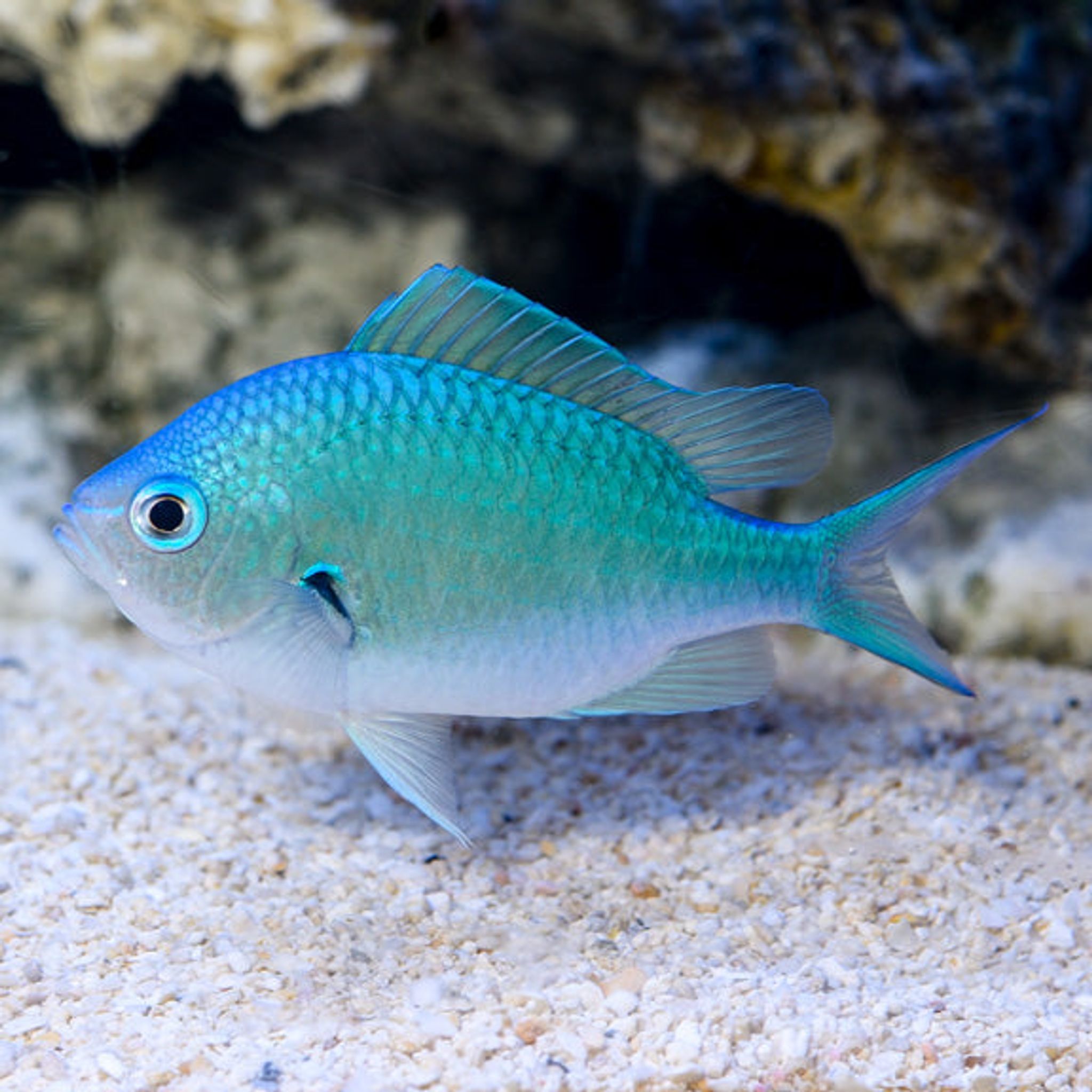
Best Tank Mates for Blue-Green Chromis: Peaceful, Risky and Incompatible Choices
Blue-green chromis (Chromis viridis) are one of the calmest damselfish available for reef and FOWLR tanks, but "peaceful" only holds true when a few conditions are met. This guide sorts realistic tank mates into peaceful, risky, and incompatible categories, and explains the group-size and stocking-order rules that decide whether a chromis shoal thrives or slowly gets picked apart.
What Makes Chromis Different From Other Damsels
At 2–3 inches, blue-green chromis are small, fast, mid-water schoolers. Compared to most Pomacentrids — a family known for territorial bullying — chromis are unusually tolerant of each other and of neighboring fish, as long as they're kept as a proper shoal. They are fully reef safe for corals and invertebrates; they won't nip polyps, graze coralline, or bother snails and crabs. The real compatibility caution with this species isn't coral safety at all — it's fish-on-fish behavior, specifically aggression within their own shoal and against similarly shaped or colored mid-water fish.
Basic reef parameters suit them well: 72–78°F, pH 8.1–8.4, and salinity 1.020–1.025 SG. They're not fussy eaters either — a mixed diet of meaty foods (mysis, brine) plus algae-based flake or a gel food covers their nutritional needs. The catch is that they eat fast and in short, repeated bursts throughout the day, which matters for compatibility more than most stocking guides admit.
Group Size Is the Real Compatibility Variable
Most compatibility problems attributed to "chromis aggression" actually trace back to one thing: too few fish in too small a tank.
- Groups of 6 or more (8–12 is ideal) in 55+ gallon tanks spread out social pressure so no single fish becomes a repeated target.
- Groups of 3–5 are workable but higher risk — the pecking order has too few members to diffuse tension, and one fish, usually the smallest or the last to settle in, often gets singled out and harassed to death.
- Fewer than 6 fish, or tanks under 40–50 gallons, is when chromis start acting territorial toward each other and toward other similarly shaped, similarly colored fish sharing the same swimming zone.
The mechanism matters more than the number: it isn't generalized aggression spread evenly across the group, it's concentrated bullying of one individual once the group is too small to absorb it. Buying only two or three chromis "to start small and add more later" is one of the most common mistakes in this hobby — it almost guarantees that outcome. Buy the full intended group at once, ideally from a single tank, so they're already schooling together before you add them to your display.
Peaceful Tank Mates
These fish either occupy a different niche in the water column, aren't territorial toward chromis, or are simply too laid-back to compete with them.
- Clownfish – claim a coral or rock territory rather than chasing chromis through open water; generally peaceful together, especially when added around the same time.
- Gobies and blennies – bottom- or rock-dwelling, no overlap with the chromis' mid-water zone.
- Fairy and flasher wrasses – active but non-territorial toward chromis-sized schoolers.
- Firefish and dartfish – shy, retreat to burrows, no competition for swimming space.
- Cardinalfish (Banggai, pajama) – slow, non-aggressive, similar peaceful temperament.
- Dwarf angelfish – generally tolerant when added with appropriate rockwork.
- Tangs – compatible, but should be added after chromis are established, not before (see stocking order below).
You can browse an established selection of marine wrasse and clownfish on FishyHub when planning a peaceful mid-water community around a chromis shoal.
Risky or Conditional Tank Mates
These aren't automatic no-gos, but they need the right tank size, rockwork, and timing to work out.
Other Damselfish in General
Other damsel species and similarly shaped, similarly colored small schoolers can trigger territorial disputes with chromis, particularly in tanks without enough visual breaks. Dense rockwork that interrupts sightlines reduces the chance of running conflict.
Yellowtail Blue Damsel (Chrysiptera parasema)
This roughly 3-inch damsel is hardy, colorful, and moderately aggressive — a step up from chromis but not in the "will kill them" category. It's generally workable with a chromis shoal in 40+ gallon tanks when:
- It's added around the same time as the chromis, not afterward.
- The rockwork is dense enough to break line of sight.
- It's kept singly or in a mated pair rather than as an unpaired group (an unpaired single often becomes more territorial from being the odd one out).
As it matures, a yellowtail blue damsel can become more territorial, so ongoing observation matters even after a good initial introduction.
Semi-Aggressive Fish Added Too Early
Chromis are timid founders. Any semi-aggressive species — a boisterous wrasse, a tang, a larger goby — that's already established and holding territory before chromis arrive will likely harass them on introduction, regardless of the species' general reputation.
Fast, Boisterous Feeders
Some tangs and larger wrasses can simply out-eat chromis at feeding time without any direct aggression. It's a slower, less obvious compatibility issue — chromis look fine day to day but gradually decline from getting outcompeted at every meal. Slow or specialist eaters like mandarins, pipefish, and seahorses face the same risk from the chromis' side: chromis are the fast opportunistic feeder in that pairing, so mixing them with deliberate, slow-feeding fish creates a competition risk even without aggression involved.
Incompatible Tank Mates
Two distinct problems fall under "incompatible," and it's worth keeping them separate.
Predators that will eat chromis outright — anything large enough to view a 2–3 inch fish as food:
- Lionfish
- Eels
- Groupers
- Larger triggerfish
- Larger angelfish
- Large hawkfish
Aggressive damsels that will kill chromis through sheer territorial hostility, not predation:
- Domino damsel (Dascyllus trimaculatus)
- Three-spot dascyllus
- Most large Pomacentrus and Abudefduf-type damsels
Why Domino Damsels Specifically Don't Work
Dascyllus trimaculatus starts out small and reasonably tolerable as a juvenile, which is exactly why it gets mixed with peaceful shoals in the first place. It grows to up to 5 inches and becomes markedly more aggressive with age, eventually bullying or outright killing smaller peaceful tank mates including chromis. Expecting a domino damsel to "grow out of" this behavior is a common and costly mistake — aggression in this species typically worsens, not improves, as it matures. It's best avoided in typical home-size reef tanks and reserved only for very large systems with extensive rockwork, if kept at all.
Stocking Order Matters as Much as the Species List
A fixed compatibility list only tells half the story. When a fish is introduced changes the outcome just as much as which fish it is.
| Stocking stage | What to add | Why |
|---|---|---|
| Early (after cycling) | Full chromis shoal (6+) | Lets them establish as a group before any competition arrives |
| Early–mid | Peaceful gobies, blennies, firefish, clownfish | Low competition for the same niche |
| Mid | Wrasses, cardinalfish, dwarf angels, conditional damsels | Chromis already have shoal confidence and territory |
| Later | Tangs, larger semi-aggressive fish | Chromis are established enough not to be displaced |
| Never | Domino damsels, predators, aggressive triggers | No safe stocking point for these with chromis |
Adding chromis last into an already-established, semi-aggressive tank is a frequent and avoidable mistake. They arrive as newcomers with no territory, get harassed by fish that already own the space, and respond by hiding and refusing to eat.
How to Tell Bullying From Illness
A stressed chromis and a sick chromis can look similar at first glance, which leads some owners to treat the wrong problem. Look for this pattern:
- Pale or faded color compared to the rest of the shoal
- Hiding in rockwork instead of swimming in open water
- Not schooling with the rest of the group
- Reduced or stopped eating
If one fish shows these signs while the rest of the shoal looks normal, the more likely cause is a specific tank mate or group-mate targeting that individual — not disease. Moving the aggressor, adding rockwork to break sightlines, or in some cases re-homing the bullied fish addresses the actual problem, where medication would not.
A Note on Jumping
Chromis are known jumpers, especially when startled by a more aggressive tankmate chasing them across open water. A well-fitted lid or tank cover is a simple, often-overlooked step that prevents one of the more common and entirely avoidable causes of unexplained losses in a chromis shoal. You can browse a current lineup of chromis and other damselfish on FishyHub when planning your stocking list.
Frequently Asked Questions
Can blue-green chromis live with clownfish?
Yes. They're generally peaceful together, especially when added around the same time. Clownfish tend to claim a specific coral or anemone territory rather than chasing chromis through open water, so the two rarely compete directly.
How many blue-green chromis should I keep together?
At least 6, ideally 8–12, in a tank of 55 gallons or more. This spreads out social pressure within the shoal and prevents one fish from being repeatedly singled out, which is the most common cause of chromis losses.
Will chromis fight with other damselfish?
Sometimes. Smaller, peaceful damsels can coexist if introduced at the same time in a sufficiently large tank with plenty of rockwork. Larger or more aggressive damsels, particularly domino damsels and three-spot dascyllus, generally will not work with a chromis shoal.
Are blue-green chromis reef safe?
Yes, for corals and invertebrates — they won't nip polyps or bother snails, crabs, or shrimp. The real caution with this species is fish-on-fish aggression within their own niche, not any risk to coral or invert safety.
Can chromis be added to an established aggressive tank?
It's not recommended. Chromis do best when added early or mid-way through the stocking sequence, while they can still establish shoal confidence and territory. Added last, they tend to get bullied, hide, and stop eating.
Can I mix blue-green chromis with a yellowtail blue damsel?
Usually, in tanks of 40 gallons or more with dense rockwork and simultaneous introduction. Monitor the pairing as the damsel matures, since it can become more territorial with age and limited space.
If you're building out a peaceful reef community around a chromis shoal, FishyHub's marine fish category is a good place to compare compatible species side by side before you finalize a stocking order.

