

Shrimp Tank Setup Malaysia: Building an Akuarium Udang That Lasts
A good shrimp tank setup comes down to four things: a filter that cannot suck in babies, a tank that has matured for at least 4–6 weeks, plenty of moss and surfaces for biofilm, and stable, chlorine-free water kept below about 28°C. Get those right and udang hiasan (ornamental shrimp) such as cherry shrimp will breed on their own. Skip them and you get the classic Malaysian story: you buy ten shrimp on Saturday and find three on Wednesday.
This guide walks through a shrimp tank built for Malaysian conditions: warm rooms, soft chlorinated tap water and small condo spaces.
Shrimp Tank Setup Checklist (Step by Step)
| Step | What to do | Why it matters |
|---|---|---|
| 1 | Choose a 1–2 kaki tank (12–65 L) | Bigger water volume is more stable; 2 kaki is the easiest |
| 2 | Add substrate (inert sand/gravel for Neocaridina, active soil for Caridina) | Soil buffers pH down for crystal-type shrimp |
| 3 | Fit a sponge filter or guard every intake | Baby shrimp are 1–2 mm and get sucked into normal filters |
| 4 | Add hardscape, moss and epiphytes | Surfaces grow biofilm, the shrimp's main food |
| 5 | Fill with dechlorinated water (anti klorin) | Chlorine kills shrimp faster than fish |
| 6 | Cycle and mature for 4–6 weeks | Ammonia and nitrite at zero, plus biofilm |
| 7 | Test GH, KH, pH, ammonia, nitrite | Match readings to the species you plan to keep |
| 8 | Drip-acclimatise and add shrimp | Sudden water changes cause failed molts |
Choosing the Tank and Location
A shrimp tank does not need to be big, but tiny tanks swing in temperature and chemistry. In Malaysia, a 1 kaki desk tank in a sunny room can climb above 30°C by afternoon, which is hard on shrimp. A 2 kaki tank (about 55 L of real water) is much more forgiving.
Place it away from windows and away from the aircond vent. Cherry shrimp (Neocaridina) cope with normal Malaysian room temperatures of 26–28°C. Crystal red and other Caridina shrimp want it cooler, around 22–25°C, which usually means an aircond room, a kipas akuarium (cooling fan) or a chiller. Our guide to cooling an aquarium with a chiller or fan covers the options.
Shrimp Tank Filter: Sponge First
The single most important piece of kit is the shrimp tank filter. Shrimp keepers love sponge filters because:
- they cannot trap baby shrimp
- the sponge grows biofilm the shrimp graze on
- they are cheap and run off a pam udara (air pump), which also adds oxygen to warm water
If you prefer a hang-on or canister filter for looks, slip a fine sponge pre-filter or a stainless intake guard over the intake. You can find sponges, guards and spare media under filter accessories.
Keep the flow gentle. Shrimp like some current, but strong flow blows food away and stresses berried females.
Power cuts
A sponge filter on an air pump stops the moment the power trips. For a shrimp tank this is less dangerous than for a crowded fish tank, but in the heat oxygen drops fast. A battery-backup air pump is worth having if your area gets frequent TNB interruptions.
Substrate: Neocaridina vs Caridina
| Shrimp type | Examples | Substrate | Target water |
|---|---|---|---|
| Neocaridina | Cherry, blue dream, yellow, orange | Inert sand or fine gravel | pH 6.5–7.8, GH 6–10, KH 2–6 |
| Caridina | Crystal red, crystal black, Taiwan bee | Active aquasoil | pH 5.8–6.8, GH 4–6, KH 0–1 |
Malaysian tap water is often soft with low KH, so pH can be unstable. That actually suits Caridina if you remineralise RO or tap water to the right GH, but it can leave Neocaridina short of minerals for molting. Test your own water before you decide; don't assume. A GH/KH kit from the water test kits section pays for itself.
Moss, Plants and Biofilm
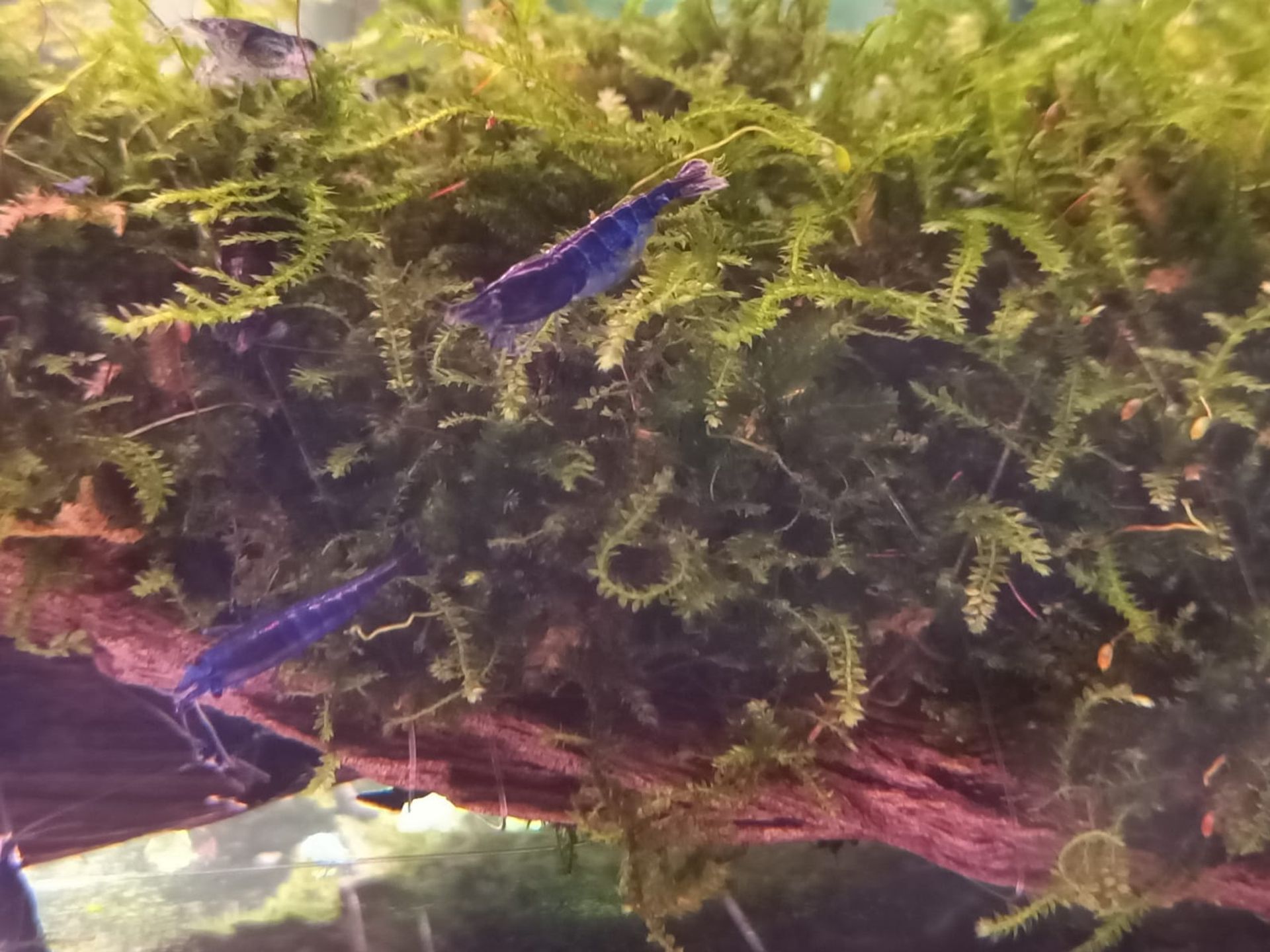
Shrimp spend all day picking at surfaces. Every leaf, stone and twig grows a film of bacteria, algae and microorganisms called biofilm, and that is the best shrimp food there is. More surface area means more food and more hiding spots during molting.
Good plants for an akuarium udang:
- Java moss, Christmas moss and other mosses: the classic shrimp plant; babies hide in it
- Anubias and Java fern: tied to wood or stone, no substrate needed. Find them under epiphytes
- Bucephalandra: a Borneo native that grows slowly and holds biofilm well
- Floating plants: salvinia or frogbit soak up nitrate and give shade
Malaysian driftwood and dried daun ketapang (catappa leaves) also feed biofilm as they break down. Boil or soak driftwood first; see our Malaysian driftwood guide.
Mature the Tank Before Adding Shrimp
This is where most shrimp tanks fail. A tank that has just finished cycling has zero ammonia, but it does not yet have biofilm. Shrimp go hungry and the population never takes off.
- Cycle the tank as you would for fish (add an ammonia source and bacteria starter).
- Once ammonia and nitrite read zero, wait another 2–3 weeks.
- Look for a soft brown or green film on glass and hardscape. That's what you want.
- Add a few shrimp first, then more after a month.
Using a matured sponge from an established tank shortens this a lot. Read the full process in cara cycle akuarium.
Shrimp Tank Mates: What Is Safe?
Almost every fish will eat baby shrimp if it can fit them in its mouth. Good shrimp tank mates:
| Tank mate | Safe for adults? | Safe for babies? |
|---|---|---|
| Otocinclus | Yes | Yes |
| Snails (nerite, ramshorn, mystery) | Yes | Yes |
| Chili rasbora (Boraras) | Yes | Mostly; may take newborns |
| Small rasboras, ember tetras | Yes | Will eat some babies |
| Kuhli loach | Yes | Will eat some babies |
| Betta (ikan laga) | Depends on the betta | No |
| Guppies, platies | Usually | No |
| Angelfish, gouramis, cichlids | No | No |
If you want a breeding colony, a shrimp-only tank with snails is best. If you want a display tank, accept that fish will thin out the babies and give plenty of moss.
Adding Shrimp: Drip Acclimatisation
Shrimp react badly to sudden changes in GH and temperature. When your shrimp arrive:
- Float the bag for 15–20 minutes to equalise temperature.
- Tip the shrimp and water into a clean container.
- Drip tank water in with airline tubing (a knot slows it) for 45–90 minutes until the volume triples.
- Net the shrimp into the tank. Don't pour in the shop water.
Ongoing Care
- Feed lightly: once a day or every other day, only what they finish in 2–3 hours. Specialised shrimp food is available under food for shrimps and crabs.
- Change 10–15% weekly with temperature-matched, dechlorinated water. Big changes can trigger molts.
- No copper: many fish medications contain copper, which is lethal to shrimp.
- Rinse new plants: pesticide residue on plants kills shrimp. Our guide to kenapa udang hiasan mati explains more.
Browse live shrimp from Malaysian sellers under shrimps, and check each listing for the seller's location and delivery or self-collect options.
Frequently Asked Questions
Akuarium udang perlu filter apa?
Span filter (sponge filter) yang disambung kepada pam udara adalah pilihan terbaik. Ia tidak menyedut anak udang dan permukaan span menjadi tempat tumbuh biofilm untuk udang makan. Jika guna filter lain, pasang span pada salur masuk.
Berapa lama perlu tunggu sebelum masukkan udang?
Sekurang-kurangnya 4–6 minggu. Akuarium perlu habis cycle (ammonia dan nitrit sifar) dan ada lapisan biofilm pada kaca dan kayu sebelum udang dimasukkan.
Can I keep shrimp in a 1 kaki tank?
Yes, cherry shrimp do fine in a 1 kaki tank if it's out of the sun and you keep up small weekly water changes. A 2 kaki tank is more stable in Malaysian heat.
Do shrimp need a heater in Malaysia?
No. Malaysian rooms are warm enough for cherry shrimp. The bigger worry is overheating, especially for Caridina shrimp, which may need a fan or chiller.
Can I keep shrimp with my betta?
Some bettas ignore adult shrimp and some hunt them. Babies will almost always be eaten. Try it only with a well-planted tank and be ready to separate them.