

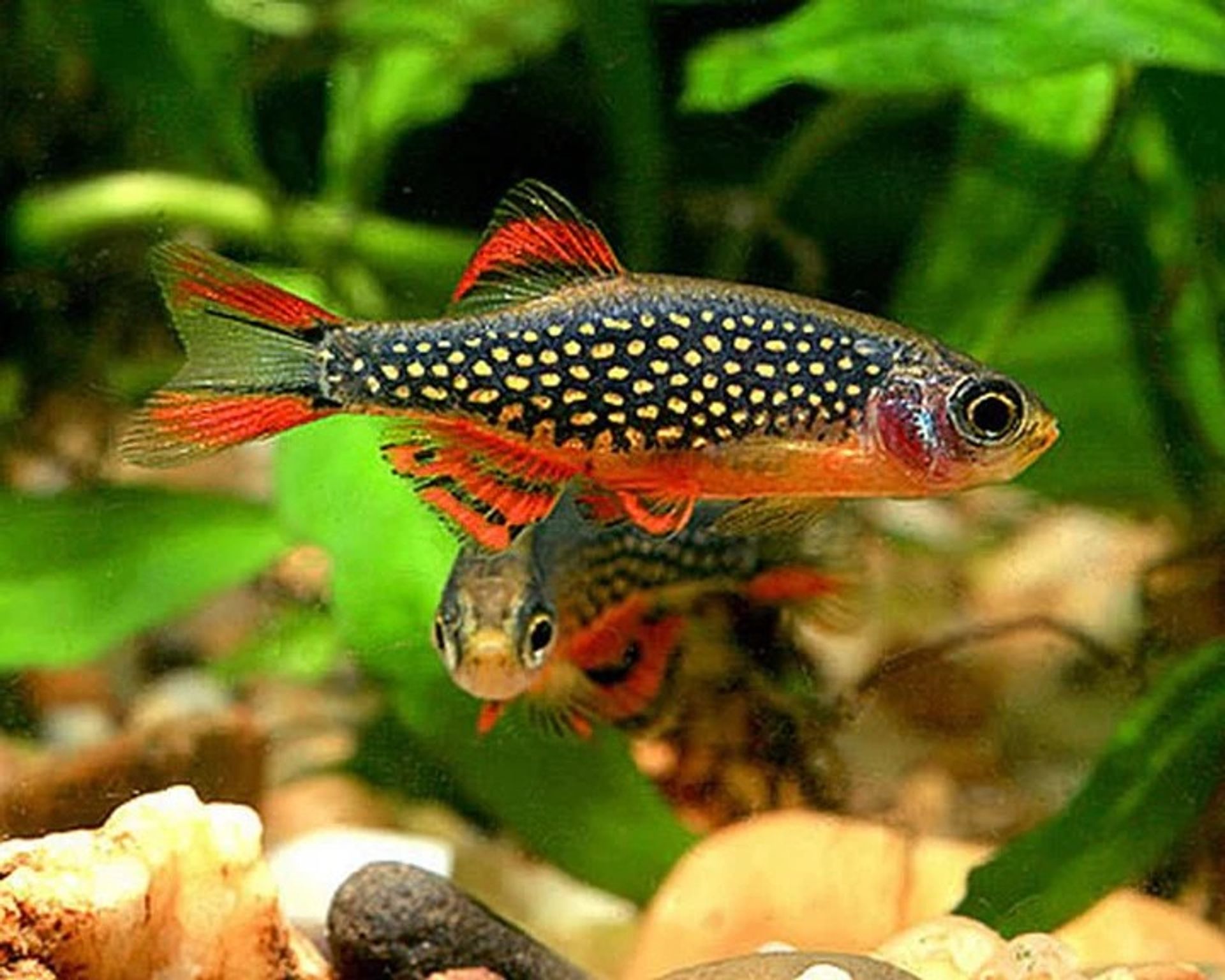

Ikan Rasbora Harlequin: Harlequin Rasbora Care for Malaysian Tanks
The harlequin rasbora (Trigonostigma heteromorpha, or ikan rasbora harlequin) is a peaceful, copper-orange schooling fish about 4–5 cm long with a black triangle patch near the tail. It is one of the easiest community fish you can keep in Malaysia, because it is a Malaysian fish: it lives wild in the peat swamps of Peninsular Malaysia and thrives in the soft water that comes out of most local taps. Keep at least 8–10 in a planted 2-foot tank, feed small foods, and it will happily share a tank with a betta.
A Native Malaysian Fish
Harlequins are not an imported exotic. The species was described from Kuala Lumpur, and scientific sources record wild populations in peat swamp forest across Peninsular Malaysia, including Selangor, Pahang, Johor, Kelantan and Terengganu, with populations also in southern Thailand and Sumatra. These habitats have soft, acidic, tea-coloured water, shaded by forest and full of leaf litter.
That background explains its care needs: stable soft water, cover from plants, gentle flow and the company of its own kind. Wild populations depend on peat swamps that are under pressure, so buy captive-bred fish from shops or hobbyist breeders rather than collecting from streams.
Harlequin Rasbora Care Table
| Factor | What harlequins need |
|---|---|
| Temperature | 23–28°C ideal; fine in Malaysian rooms of 26–30°C with aeration |
| Minimum tank | 2 kaki (60 × 30 × 36 cm, ~55 L) for a group of 8–10 |
| Water | Soft, pH 6–7; tolerates neutral tap water once acclimatised |
| Temperament | Very peaceful |
| Diet | Micropredator: flakes, micro pellets, frozen and live foods |
| Group size | Minimum 8, ideally 10–15 |
| Lifespan | Around 5 years with good care |
| Beginner? | Yes |
Setting Up the Tank
Size and layout
A 2 kaki tank is the minimum for a proper school, and a 3 kaki tank lets you keep a large shoal that moves as one. Harlequins swim in the middle of the water column, so leave open swimming space in front, with plants at the back and sides. Our tank size guide converts kaki to litres.
Plants, wood and blackwater
Recreate their peat-swamp home:
- Low-light plants such as Cryptocoryne (also native to Malaysia), java fern, anubias and floating plants. See our list of aquarium plants without CO2.
- A piece of driftwood. Local wood works well if prepared properly, as explained in our Malaysian driftwood guide.
- A few daun ketapang (catappa leaves) to tint the water and soften pH slightly.
- Dark substrate. Harlequins show deeper colour over dark sand or soil.
Filtration and flow
Gentle flow is best. A sponge filter, hang-on filter or small canister is ideal for a 2 kaki tank. If your filter blasts water across the tank, aim the outlet at the glass or use a spray bar.
Water: Why Malaysian Tap Water Suits Harlequins
Most Malaysian tap water is soft with low KH. That can be a headache for mollies and African cichlids, but harlequins like it. What they cannot handle is chlorine or sudden swings.
- Always use anti klorin when you tukar air. Malaysian tap water is chlorinated, and leaving it to stand overnight (endap air) does not remove chloramine. Read our anti klorin guide.
- Change 20–30% weekly to keep nitrate low.
- Match temperature roughly when you add new water.
- Test pH and KH occasionally. If KH is near zero and pH crashes, add a small amount of buffer rather than chasing a number.
In very hot weeks, warm water holds less oxygen. An air pump or a cooling fan keeps a dense school comfortable.
Feeding
Harlequins have small mouths and pick food from mid-water. Feed:
- Quality micro pellets or crushed flakes once or twice daily.
- Frozen or live daphnia, baby brine shrimp (artemia) or chopped bloodworm a few times a week.
- Mosquito larvae from a clean source are eaten eagerly too.
Feed only what they finish in a minute or two.
Harlequin Rasbora With Betta
This is one of the classic pairings, and it works well because both fish come from the same kind of habitat in Southeast Asia: warm, soft, slow water with lots of plants.
Tips for success:
- Use at least a 2 kaki tank, well planted.
- Add the rasbora school first, then the betta, so the betta does not claim the whole tank.
- Avoid long-fin bettas if the rasboras are kept in too small a group. Stressed small schools can occasionally nip.
- Watch the first few days; a very aggressive individual betta may chase everyone.
See our betta care guide for the betta's side of the setup.
Other good tank mates
- Other small rasboras (chili rasbora, lambchop, espei)
- Kuhli loaches and pygmy corydoras
- Honey and sparkling gouramis
- Cherry and other dwarf shrimp (adult shrimp are safe; baby shrimp may be eaten)
Avoid big or boisterous fish like large barbs and cichlids.
Harlequin vs Lambchop Rasbora
| Harlequin rasbora | Lambchop rasbora | |
|---|---|---|
| Scientific name | Trigonostigma heteromorpha | Trigonostigma espei |
| Black patch | Broad triangle, wedge-shaped | Narrow "lamb chop" shape |
| Size | ~4–5 cm | ~3 cm |
| Range | Peninsular Malaysia, southern Thailand, Sumatra | Thailand and Cambodia |
| Care | Same | Same |
There is also Trigonostigma hengeli, a smaller, brighter cousin. All three need the same care and can be kept together.
Breeding Harlequins
Harlequins are egg layers that stick their eggs on the underside of broad leaves, such as Cryptocoryne or anubias. In a mature community tank you may spot this behaviour, but adults eat the eggs. To breed them on purpose, move a pair or small group into a separate tank with soft, slightly acidic water and broad-leaved plants, then remove the adults after spawning and feed the tiny fry infusoria followed by baby brine shrimp.
Buying Harlequin Rasbora on FishyHub
Browse rasbora for sale or the wider small community fishes category. Check:
- Whether the price is per fish or per group.
- The size and whether the photo is the actual batch.
- The seller's location, delivery or self-collect options and live-arrival terms; ask the seller about anything unclear.
Buy the whole school in one go if you can, so they settle together.
Frequently Asked Questions
Ikan rasbora harlequin boleh campur dengan ikan laga?
Boleh. Ini antara gabungan paling popular kerana kedua-duanya suka air lembut, panas dan banyak pokok. Gunakan akuarium sekurang-kurangnya 2 kaki dan simpan 8 ekor rasbora atau lebih.
Ikan rasbora harlequin makan apa?
Pelet halus atau flakes yang dihancurkan, ditambah makanan beku atau hidup seperti artemia, daphnia dan cacing darah yang dipotong kecil.
Is the harlequin rasbora really native to Malaysia?
Yes. It was described from Kuala Lumpur and lives wild in peat swamp forests across Peninsular Malaysia. Please buy captive-bred fish rather than collecting wild ones.
How many harlequin rasboras should I keep?
At least 8, and 10–15 is better. Bigger schools show tighter shoaling and better colour.
Why are my harlequins pale?
Common causes are stress from a small group, bright bare tanks, poor water quality or recent transport. Add plants and floating cover, check ammonia and nitrite, and give them a week to settle.
Harlequin rasboras are a beautiful way to bring a piece of Malaysia's peat swamps into your living room. Browse rasboras and other small community fish from Malaysian sellers on FishyHub.