

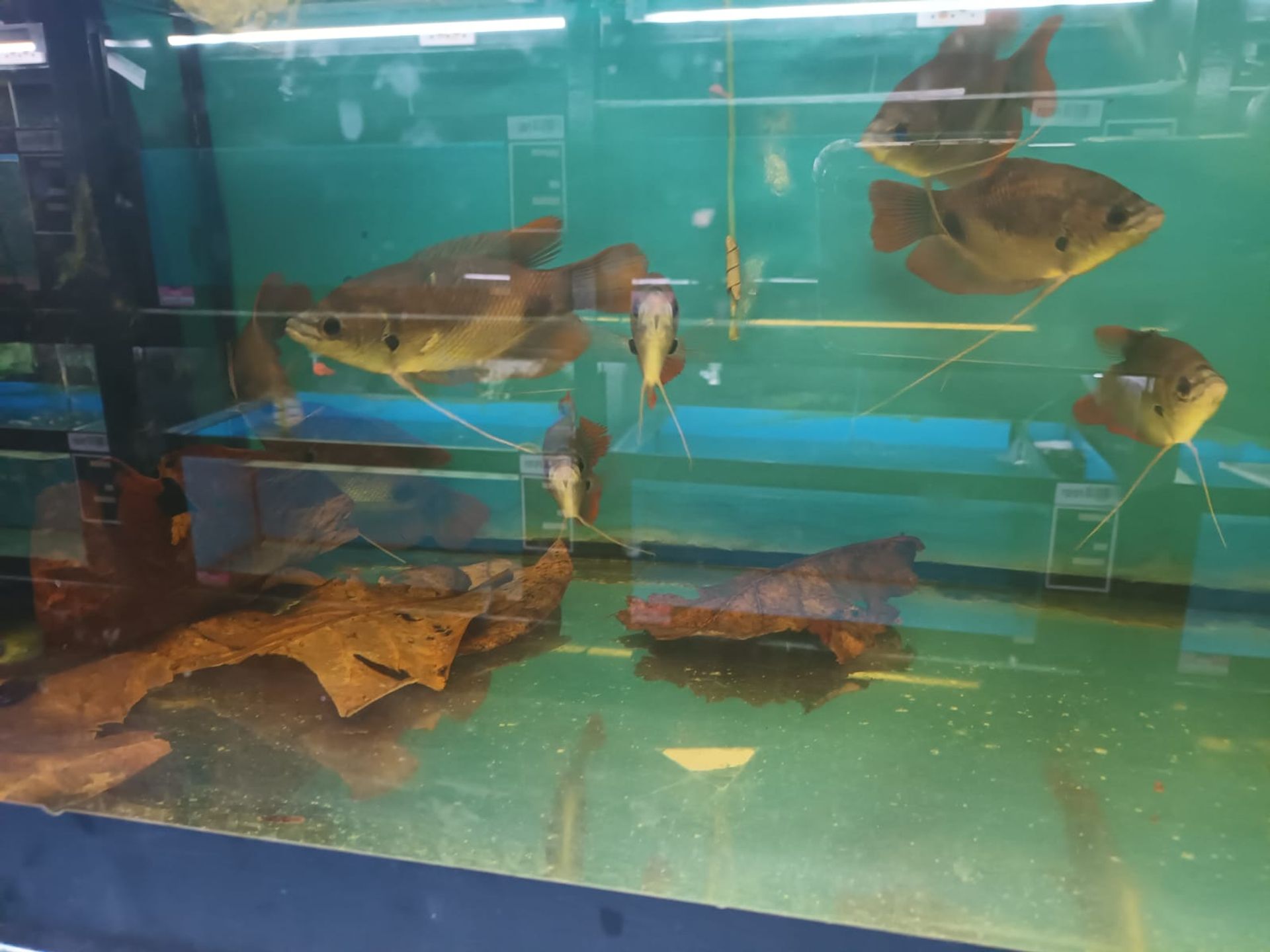

Ikan Gurami Hiasan: Dwarf, Honey & Pearl Gourami Care in Malaysia
Ikan gurami hiasan (ornamental gourami) are small, peaceful labyrinth fish that suit planted community tanks. They are very different from the big ikan kaloi or food gurami sold for cooking. The three most popular are the dwarf gourami (about 5–6 cm), the honey gourami (about 4–5 cm) and the pearl gourami (about 10–12 cm). All three like warm, soft, calm water, which suits Malaysian homes. Keep them in a planted tank with gentle flow, and one male per tank unless the tank is large. With dwarf gourami, buy carefully from healthy stock, because many carry a virus called dwarf gourami iridovirus (DGIV).
Ornamental Gourami vs Food Gurami
In Malaysia, "gurami" can mean two very different fish:
| Ikan gurami hiasan | Food gurami / ikan kaloi | |
|---|---|---|
| Example species | Dwarf, honey, pearl, moonlight, kissing (not a true gourami) | Giant gourami (Osphronemus goramy) |
| Adult size | 4–15 cm | 45–60 cm or more |
| Kept for | Aquariums | Eating, large ponds, or as a "pet" in very big tanks |
If you want the giant gourami as a pet, see the giant gourami category and plan a very large tank or pond. This article focuses on small ornamental gouramis.
Malaysia also has its own wild gouramis, including the pearl gourami, the chocolate gourami and the local ikan sepat (three-spot/blue gourami types), found in peat swamps, paddy fields and slow streams. Wild pearl gourami habitat is shrinking, so buy captive-bred fish.
Popular Types of Ikan Gurami Hiasan
| Gourami | Size | Temperament | Notes |
|---|---|---|---|
| Dwarf gourami (Trichogaster lalius) | 5–6 cm | Peaceful; males may squabble | Many colour forms: powder blue, flame red, neon blue |
| Honey gourami (Trichogaster chuna) | 4–5 cm | Very peaceful | Best for beginners and small tanks |
| Pearl gourami (Trichopodus leerii) | 10–12 cm | Peaceful | Native to Malaysia; stunning pearl spots |
| Moonlight gourami | 12–15 cm | Peaceful | Silver; needs 3 kaki or more |
| Blue / gold / opaline gourami | 12–15 cm | Can be territorial | Hardy; colour forms of the three-spot gourami |
| Sparkling gourami | ~4 cm | Peaceful, shy | Tiny; makes croaking sounds |
| Chocolate gourami | ~5 cm | Peaceful, delicate | Needs very soft, acidic water; for experienced keepers |
Gourami Care Table
| Factor | What gouramis need |
|---|---|
| Temperature | 25–30°C; Malaysian rooms are ideal |
| Minimum tank | Honey: 1.5–2 kaki. Dwarf: 2 kaki. Pearl and moonlight: 3 kaki |
| Water | Soft to moderate, pH 6–7.5 |
| Flow | Gentle; strong currents stress them |
| Temperament | Peaceful; males can be territorial |
| Diet | Omnivore: flakes, small pellets, frozen foods |
| Lifespan | About 4–6 years |
| Beginner? | Yes (honey and pearl especially) |
The Labyrinth Organ and Low-Flow Tanks
Gouramis are labyrinth fish, like bettas. They have a special organ that lets them breathe air from the surface. That is why you see them swimming up for a gulp of air.
What this means for your tank
- Leave space at the surface. Do not fill the tank right to the brim, and keep the lid slightly above the water so the air above stays warm and humid.
- Keep flow gentle. Gouramis come from calm, plant-filled waters. Use a sponge filter, a hang-on filter with the flow turned down, or a canister with a spray bar.
- Floating plants help. Salvinia, frogbit and water lettuce give cover and are used for bubble nests.
The labyrinth organ does not mean gouramis can live in small bowls or without filtration. They still need clean water.
Dwarf Gourami Iridovirus (DGIV)
Dwarf gourami iridovirus is a viral disease that affects dwarf gouramis in particular. Studies of imported dwarf gouramis in several countries have found a high share of infected fish.
Signs
- Loss of colour and appetite
- Lethargy and hiding
- Sores, swelling or bloating
- Death, often within weeks
What to do
- There is no reliable cure.
- Remove sick fish quickly to protect others.
- Quarantine new dwarf gouramis for at least 2–4 weeks.
- Buy from sellers with healthy, active, eating fish, and ask where their stock comes from.
If dwarf gouramis keep dying on you, try the honey gourami or pearl gourami instead; they are generally hardier. Our guide to why aquarium fish die helps rule out water problems.
Water and Setup in Malaysia
- Dechlorinate every water change. Malaysian tap water is chlorinated; read our anti klorin guide.
- Soft water is fine. Most gouramis prefer soft water, which suits much of Malaysia.
- Plants and cover. Use dense planting with open swimming space in front. See aquarium plants without CO2.
- Avoid direct sunlight, which heats small tanks and causes algae.
- Change 20–30% weekly.
Feeding
- Small floating pellets or flakes as a staple
- Frozen bloodworm, brine shrimp and daphnia
- Spirulina or vegetable flakes once or twice a week
Feed once or twice a day. Gouramis have small mouths, so choose small food.
Gourami With Betta: Can They Live Together?
This is one of the most common questions. Both are labyrinth fish and both can be territorial near the surface.
| Combination | Verdict |
|---|---|
| Male betta + honey gourami | Often works in a planted 2–3 kaki tank, but monitor |
| Male betta + dwarf gourami | Risky; similar shape and colour can trigger fights |
| Male betta + pearl gourami | Possible in a 3 kaki tank or bigger with lots of plants |
| Male betta + blue/gold gourami | Not recommended; can be aggressive |
Add the gourami first, then the betta, and have a backup tank ready. Read our betta care guide for more on tank mates.
Other Good Tank Mates
- Harlequin and other rasboras
- Small tetras
- Corydoras and kuhli loaches
- Otocinclus
- Cherry shrimp (adult gouramis may eat shrimplets)
Avoid fin-nippers, large cichlids and very active fish.
Breeding Basics
Male gouramis build bubble nests at the surface, like bettas. In a calm tank with floating plants, a male may build a nest and court a female. After spawning, the male guards the nest. Remove the female after spawning to protect her. The fry are tiny, so they need infusoria at first, then baby brine shrimp.
Buying Gouramis on FishyHub
Browse gouramis for sale from Malaysian sellers. Check:
- The species and expected adult size
- Whether the photo is the actual fish
- Whether the fish is male or female, if it matters for your tank
- The seller's location, delivery or self-collect options and live-arrival terms
Frequently Asked Questions
Ikan gurami hiasan boleh campur dengan ikan laga?
Boleh untuk jenis yang tenang seperti honey gourami, dalam akuarium 2 kaki atau lebih yang banyak pokok. Elakkan dwarf gourami dan gourami biru kerana boleh bergaduh dengan ikan laga.
Ikan gurami hiasan makan apa?
Pelet kecil yang terapung, flakes, cacing darah beku, artemia dan makanan sayur seperti spirulina. Beri makan sekali atau dua kali sehari.
What is gourami in Malay?
"Gurami" is used in Malay for both the large food fish (also called kaloi) and small ornamental gouramis. Ornamental types are often called ikan gurami hiasan. Some native gouramis are also called ikan sepat.
Why do my dwarf gouramis keep dying?
Possible causes are poor water, stress, or dwarf gourami iridovirus, which has no cure. Quarantine new fish and consider hardier honey or pearl gouramis.
Do gouramis need an air pump?
They can breathe air at the surface, but an air pump still helps in warm Malaysian water. Keep the flow gentle.
Ornamental gouramis bring calm colour to a planted tank. Browse dwarf, honey and pearl gouramis from Malaysian sellers on FishyHub, and see our harlequin rasbora guide for an ideal companion.