

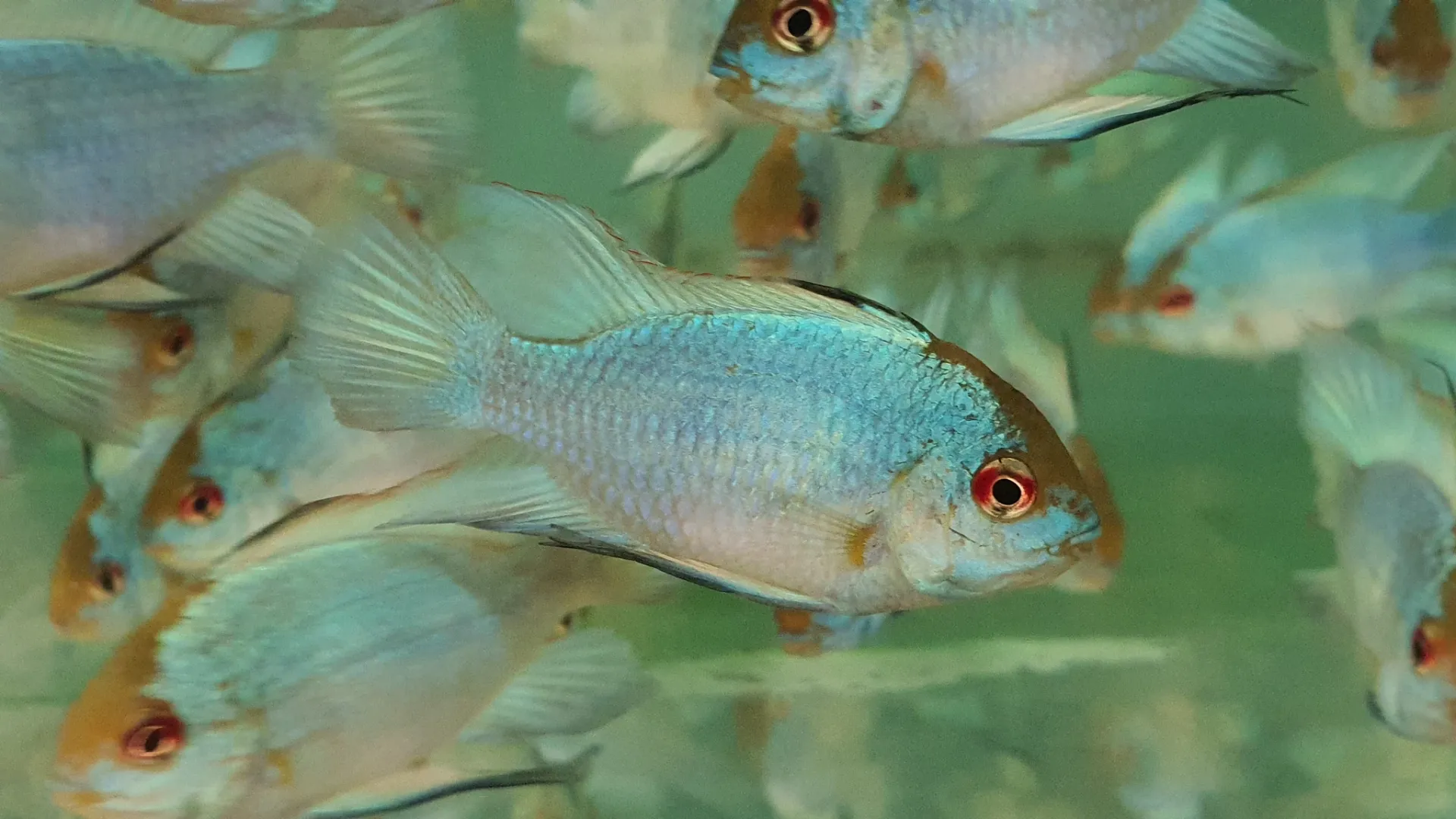

German Blue Ram (Ikan Ram): Ram Cichlid Care in Warm, Soft Malaysian Water
The German blue ram (Mikrogeophagus ramirezi), often just called ikan ram, is a small dwarf cichlid, about 5–7 cm long, with electric-blue spangles, a red eye and a black dorsal fin. In many countries it has a reputation for dying easily, but Malaysia is one of the better places to keep it: rams want warm water of about 27–30°C and soft, slightly acidic water, which is close to what most Malaysian homes and taps already provide. What rams need from you is stability: a mature, cycled tank, steady temperature, clean water and gentle tank mates.
Why Rams Suit Malaysia
Rams come from the warm, slow waters of the Orinoco basin in Venezuela and Colombia. Compare that to a typical Malaysian setup:
| Ram preference | Typical Malaysian condition |
|---|---|
| 27–30°C | Rooms at 26–31°C year-round |
| Soft water, low KH | Much of Malaysia's tap water is soft with low KH |
| pH 6–7 | Tap water around neutral; drifts lower in soft water |
| Gentle flow, planted cover | Easy to provide |
In cooler countries, keepers have to heat tanks hard and soften hard water. Here, you mostly need to remove chlorine and keep things steady. Note that air-conditioned rooms are an exception: if water drops below about 26°C for long periods, add a heater.
German Blue Ram Care Table
| Factor | What rams need |
|---|---|
| Temperature | 27–30°C |
| Minimum tank | 2 kaki (60 × 30 × 36 cm, ~55 L) for one pair |
| Water | Soft, pH 6–7, ammonia and nitrite always zero |
| Temperament | Peaceful; pairs defend a small territory when breeding |
| Diet | Omnivore leaning carnivore: small pellets, frozen foods |
| Lifespan | Short, typically 2–3 years |
| Beginner? | Advanced beginner; only into a mature tank |
Ram Varieties You Will See
- German blue ram: the classic wild-type colour, line-bred for brighter blue.
- Electric blue ram: almost entirely metallic blue.
- Golden ram: yellow-gold body with orange highlights.
- Black ram: dark-bodied strain with blue spangles.
- Balloon ram: short, round body. Some keepers avoid these because the body shape can affect swimming.
- Bolivian ram (Mikrogeophagus altispinosus): a different species, a little larger and plainer, and more tolerant of cooler and harder water. A good backup choice if rams keep failing.
Setting Up a Ram Tank
Tank and layout
A 2 kaki tank fits one pair; a 3 kaki tank fits a pair plus a school of tetras or rasboras. Rams are bottom-to-middle dwellers that sift sand, so use fine sand rather than sharp gravel. Add:
- Driftwood and a few flat stones (possible spawning sites)
- Plants that cope with warmth: anubias, java fern, Cryptocoryne, Amazon sword
- Floating plants to soften bright light
- A few daun ketapang leaves for a light tint
Filtration
Rams dislike strong current. A hang-on, sponge or small canister filter with the outlet aimed at the glass works well. Make sure the tank is fully cycled before adding rams; they are one of the first fish to suffer from ammonia or nitrite spikes.
Keeping Water Stable
Stability matters more than any perfect number.
- Anti klorin every time. Malaysian tap water is chlorinated, and chloramine is not removed by letting water stand. See our tap water and anti klorin guide.
- Small, regular water changes of 20–30% weekly. Avoid huge changes that swing temperature and pH.
- Match temperature of new water within 1–2°C.
- Test regularly. Soft water with very low KH can drop in pH between changes. If it does, a small amount of buffer is better than letting it crash.
- Do not overstock. Excess waste is the fastest way to lose rams.
During heatwaves, if tanks climb above 31–32°C, add an air pump and a cooling fan. Our aquarium cooling guide explains options.
Feeding
Rams pick food from the substrate and mid-water. A varied diet keeps colour bright:
- Small sinking pellets or granules as the staple
- Frozen bloodworm, brine shrimp and daphnia
- Live baby brine shrimp, especially for conditioning a pair
Feed small amounts twice a day. Rams are sometimes shy at first; if tankmates are greedy, the rams may not get enough.
German Blue Ram Tank Mates
Choose calm, warm-water fish that will not out-compete rams for food:
Good choices:
- Cardinal, rummy nose and other small, peaceful tetras
- Harlequin and other rasboras
- Peaceful corydoras that handle warm water
- Otocinclus and bristlenose plecos
- Discus (rams are a classic discus companion because they share the same temperature)
Avoid:
- Other territorial dwarf cichlids in a small tank (including Apistogramma, unless the tank is large)
- Large or boisterous cichlids
- Fin-nippers like tiger barbs and serpae tetras
With bettas: possible in a 3 kaki tank, but both are territorial near the bottom and middle, so it is not ideal in small tanks.
Pairs and Spawning Basics
Telling males from females
- Male: longer front rays on the dorsal fin, usually larger, often more intense colour.
- Female: pink or reddish belly, more rounded body, dorsal fin rays shorter.
The best way to get a pair is to buy a small group of young fish and let them pair up naturally, or buy a seller's confirmed pair.
Spawning
A bonded pair cleans a flat stone or a dip in the sand and lays a few dozen to a few hundred eggs. Both parents guard. Eggs hatch in about 2–3 days at Malaysian temperatures, and fry swim freely a few days later. Young pairs often eat the first few batches; this is normal and they usually improve.
To raise fry, feed infusoria or fine fry food first, then newly hatched artemia. Keep water very clean.
Common Problems
- Rams dying within days of purchase: usually an uncycled tank, ammonia, chlorine or temperature shock.
- Hiding and dark colour: stress; check water and tank mates.
- White spot or flukes after transport: rams are sensitive to some medications, so follow dose instructions carefully. See our white spot guide.
Buying German Blue Ram on FishyHub
Browse ram cichlids for sale or the full angelfish, discus, rams and cichlids category. Check the size, whether fish are sold as pairs, if the photo is the actual fish, and the seller's delivery or self-collect and live-arrival terms. Ask the seller what water the fish are kept in so you can acclimatise slowly.
Frequently Asked Questions
Ikan ram sesuai untuk pemula?
Sesuai untuk pemula yang sudah ada akuarium matang (sudah cycle). Ikan ram suka air panas dan lembut seperti air di Malaysia, tetapi sangat sensitif kepada ammonia dan perubahan air yang mendadak.
Ikan ram boleh campur dengan ikan apa?
Ikan yang tenang seperti tetra kecil, rasbora, corydoras dan discus. Elakkan ikan yang suka gigit sirip dan cichlid besar.
Do German blue rams need a heater in Malaysia?
Usually not in a normal room, as Malaysian homes stay close to their 27–30°C range. Use a heater if the tank is in an air-conditioned room or the water regularly drops below about 26°C.
How long do German blue rams live?
Typically 2–3 years. They are short-lived for a cichlid, so do not assume an old ram died from a care mistake.
Golden ram or German blue ram: which is easier?
Care is the same. Choose by colour. If you struggle with both, try the Bolivian ram, which is hardier.
German blue rams are one of the best "upgrade" fish for Malaysian hobbyists ready to move beyond guppies and tetras. Browse rams and other dwarf cichlids from Malaysian sellers on FishyHub, and see our discus care guide if you want to build a warm-water South American tank.